Defit vs Make Good: What Sydney Tenants Need to Know
Updated 21 October 2026. Written by the Sydney City Rubbish team.
A defit is the physical work of stripping a commercial space at the end of a lease. Make good is the legal obligation in your lease that decides what condition you must hand the space back in. The defit is usually one part of the make good, which is why asking contractors for “a defit” can leave you with a bare floor plate and a landlord who still says you are not finished.
This guide explains where the two terms overlap, where they split, how the lease controls the scope, and what to check before you book a contractor for an office, retail shop or warehouse in Sydney. If you searched for the term and found fitness apps, you are not alone: in Australian property, “defit” is trade shorthand for an end-of-lease strip-out, and it helps to add words such as commercial, office or lease when you search.
TL;DR
- Make good is the lease obligation. A defit is the strip-out work that often forms part of meeting it.
- Your lease, and any conditions recorded when the landlord approved your fit-out, decide what you must remove and restore. Not a trade term.
- Ask contractors to quote against your make good clause, not just for a defit, so reinstatement trades are included.
- Keep proof of lawful disposal, such as weighbridge receipts, for everything that leaves the site.
- Start planning well before lease expiry, and get a written scope the landlord’s agent can sign off.
Table of Contents
- What a defit actually is
- What make good means
- Defit vs make good: the practical difference
- How the lease decides the scope
- Why you should quote against the make good clause
- Cost: what to expect and what not to guess
- Where disposal and compliance come in
- A sensible timeline for a Sydney handover
- Which service fits your situation
- Get your scope priced properly
- Common mistakes to avoid
- FAQ
- Sources
What a defit actually is
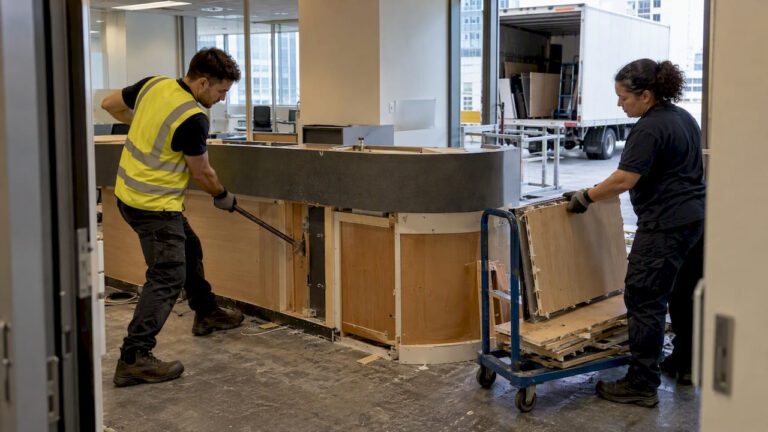
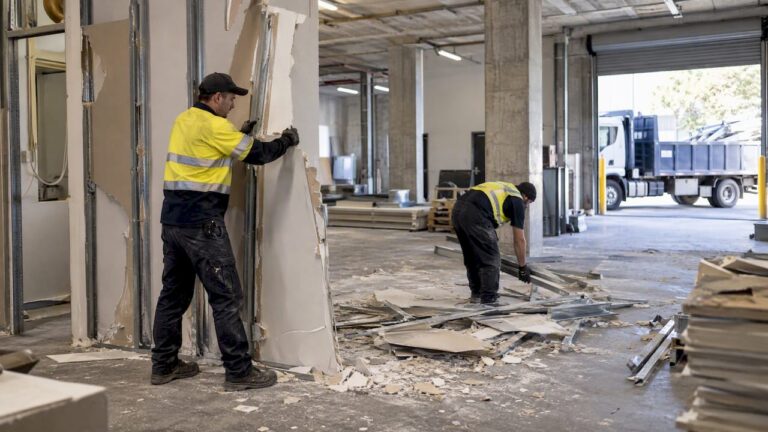
“Defit” is short for de-fit: taking out what the tenant fitted. In practice that means partitions, joinery, kitchenettes, ceilings and ceiling tiles, floor coverings, data cabling, signage and loose furniture. In a retail tenancy it also covers shopfront fixtures, display systems and back-of-house fittings. In a warehouse it can include mezzanines, racking, offices built inside the shed and sometimes floor coatings.
It is a trade colloquialism rather than a defined legal term. You will not find a statutory definition, and different contractors use the word to mean anything from a light strip-out to a full return to the base building. That looseness is the main reason the term causes trouble. When a contractor says “defit”, ask them to write down exactly which elements come out, what is left behind and who is responsible for services such as electrical and fire.
For a closer look at the demolition side, our page on office defits and strip-outs sets out how we approach the work, and our overview of what a Sydney office strip-out involves walks through the typical sequence on site.
What make good means
Make good is a contractual obligation. At the end of the lease, the tenant must return the premises in the condition the lease requires. The idea comes from the UK concept of dilapidations, and RICS guidance on make good in Australia notes that most Australian precedents originate there.
What the clause demands varies widely. Some leases ask for little more than a clean, broom-swept space with repairs for damage. Others require full reinstatement to the original base-building configuration, including ceilings, services and finishes. No universal standard applies, so two tenants in the same tower can face very different obligations.
Two things sit alongside the clause and often override it. The first is the consent given when your fit-out was approved. The NSW Small Business Commission’s discussion of make good and retail leases points tenants to the conditions recorded at that stage. The second is any condition report prepared at the start of the lease, which is the best evidence of what you took on.
Defit vs make good: the practical difference
Think of it as subtraction versus restoration. A defit subtracts: it removes what you installed. Make good restores: it leaves the space at the standard the lease names. Finishing trades such as plasterers, painters, ceiling-grid repairers and service contractors often have to follow the demolition team, and this is the cost that tenants most often forget to budget.
Here is how the same office might look under three different leases.
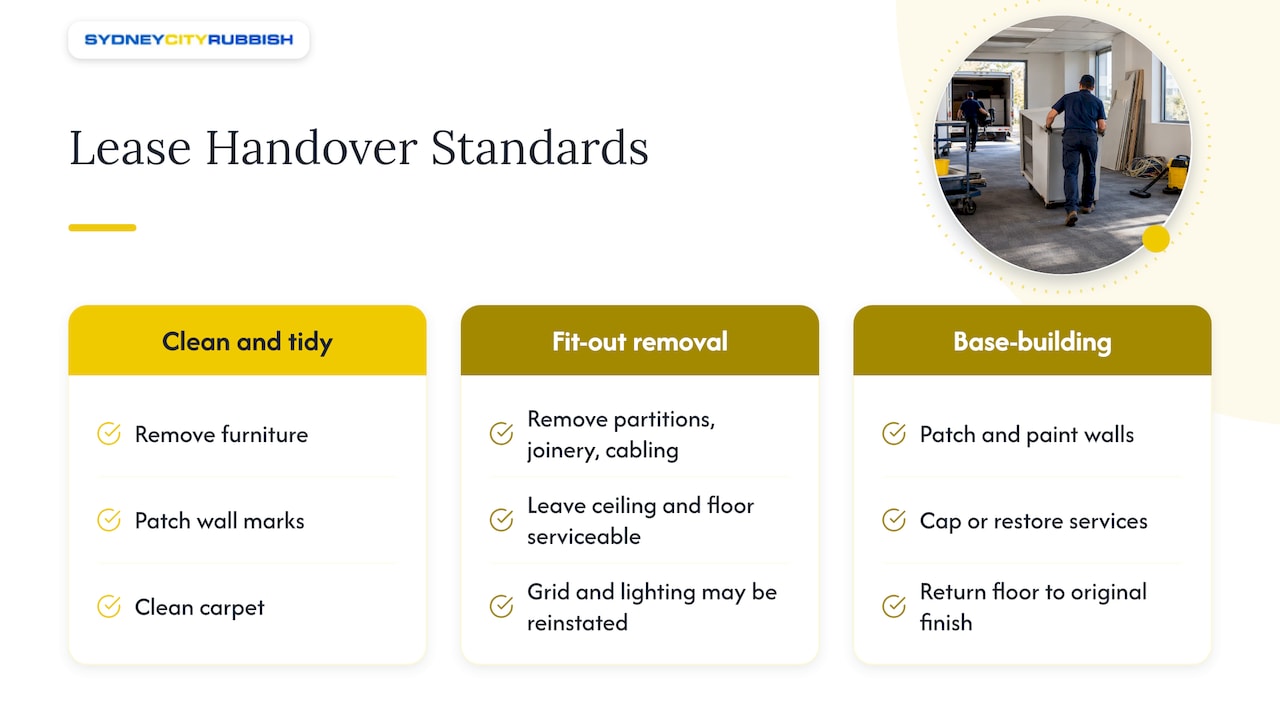
Under a lease that requires only a clean and tidy handover, you might remove furniture, patch a few wall marks and clean the carpet. Very little demolition is involved, and calling the job a defit would overstate it.
Under a lease that requires removal of tenant fit-out, the work is a genuine defit: partitions, joinery and cabling come out, and the landlord expects the ceiling and floor to be left in a serviceable state. Reinstating the ceiling grid and lighting may be part of the same scope.
Under a lease that requires full base-building reinstatement, the defit is the first phase. Walls are patched and painted, services are capped or restored, and the floor is returned to the original finish. The strip-out is a fraction of the total job.
The word “defit” is the same in all three conversations. The scope is not, which is why the lease has to lead.
How the lease decides the scope
Ambiguity is expensive. LegalVision notes that unclear make good provisions are a leading source of commercial lease disputes, because courts read undefined terms in context and the result can differ from what either party expected. A common clash is that the tenant reads “good condition” as clean and tidy while the landlord reads it as the original base-build layout.
A general make good clause also does not automatically require you to remove everything you installed. A Legal 500 commentary on make good obligations says a general clause does not, by itself, require removal of installed fit-out, and that landlords are advised to make reinstatement a condition of consent to fit-out works. If your fit-out was approved with written conditions, those conditions matter as much as the clause.
If you hold a retail lease in NSW, the Small Business Commission’s retail lease information is a sound starting point. For anything contested, speak to a commercial property solicitor before you commit to a scope or pay for works you may not owe.
Documents to gather before you ask for quotes
Collect your lease and any variations, the landlord’s written consent for your original fit-out, any condition report from the start of the lease, and the as-built drawings if you have them. Photograph the premises before work begins. A contractor can only price against a scope you can prove, and your landlord’s agent can only dispute a scope that is vague.
Why you should quote against the make good clause
When you ask for a defit price, many contractors will quote the demolition and removal only. That is a legitimate quote for what was asked, but it may not satisfy your lease. If the clause requires ceilings repaired, walls painted and services made safe, those items sit outside a bare strip-out price. The tenant finds this out at the landlord’s inspection, with days left before handover, and the cost of rushing finishing trades lands on them.
A better request reads: “Please quote to meet clause of the attached lease, including all reinstatement works, and list any items you have excluded.” Ask for the exclusions in writing. That single sentence moves the risk of an incomplete scope from you to the contractor.
We would add one more instruction. Ask who is responsible for each category: demolition, waste removal, services disconnection, reinstatement and cleaning. If a single company can cover demolition and disposal, you have one point of contact for the part of the job that generates the most physical volume.
Cost: what to expect and what not to guess
Tenants regularly ask for a figure per square metre. Published ranges exist, but they depend on the lease standard, the building, the floor level, access and the volume of material, and they are only as reliable as the scope behind them. A cosmetic handover and a full base-building restoration are different jobs priced in different ways, so a general rate tells you little about your own premises.
What moves the price most is predictable. Access to the building matters: loading dock hours, lift bookings, and a landlord’s requirements for protecting common areas. The volume and type of waste matter too, since heavy materials such as concrete, plasterboard and floor finishes cost more to remove and tip than furniture. Hazardous materials, including suspected asbestos, change the process entirely. And timing matters: a compressed program costs more than a planned one.
We quote per truckload or per project rather than publishing a fixed rate, because the scope is what sets the price. Our electronic quoting is quick, and a site photo set plus your lease clause is usually enough to start. You can see the range of work we price on our services page.
Where disposal and compliance come in
The waste from a defit is often larger than tenants expect. Ceiling tiles, plasterboard, carpet, timber, glass, e-waste, steel framing and old furniture all leave the site, and as the party that generated the waste, you want that to be lawful and traceable.
The NSW EPA’s construction and demolition waste management toolkit is the official resource for this, and its guidance is clear in spirit: keep evidence that waste went to an appropriately licensed facility. In practice that means weighbridge receipts or equivalent dockets from the tip or recycler. If your contractor cannot produce them, you may be exposed if the material is later found dumped.
Transport carries its own rules. The EPA’s page on transporting waste sets out obligations under the Protection of the Environment Operations (Waste) Regulation 2014, including requirements for covering loads and for tracking certain asbestos waste. Penalties apply for uncovered loads. Check the current figures on that page rather than relying on a summary, as they can be updated.
Asbestos deserves particular care. Buildings in Sydney constructed before the late 1980s may contain asbestos-containing materials in ceilings, floor tiles, sheeting and lagging. If there is any doubt, stop and arrange an assessment through a licensed professional before demolition starts. That is a safety and legal step, not a contractor preference.
At Sydney City Rubbish, we remove waste using registered recycling partners and coordinate directly with building management for access. Carbon-neutral disposal is available as an opt-in for corporate clients. Our commercial waste removal service is the place to start if your main need is clearing what a strip-out leaves behind.
A sensible timeline for a Sydney handover
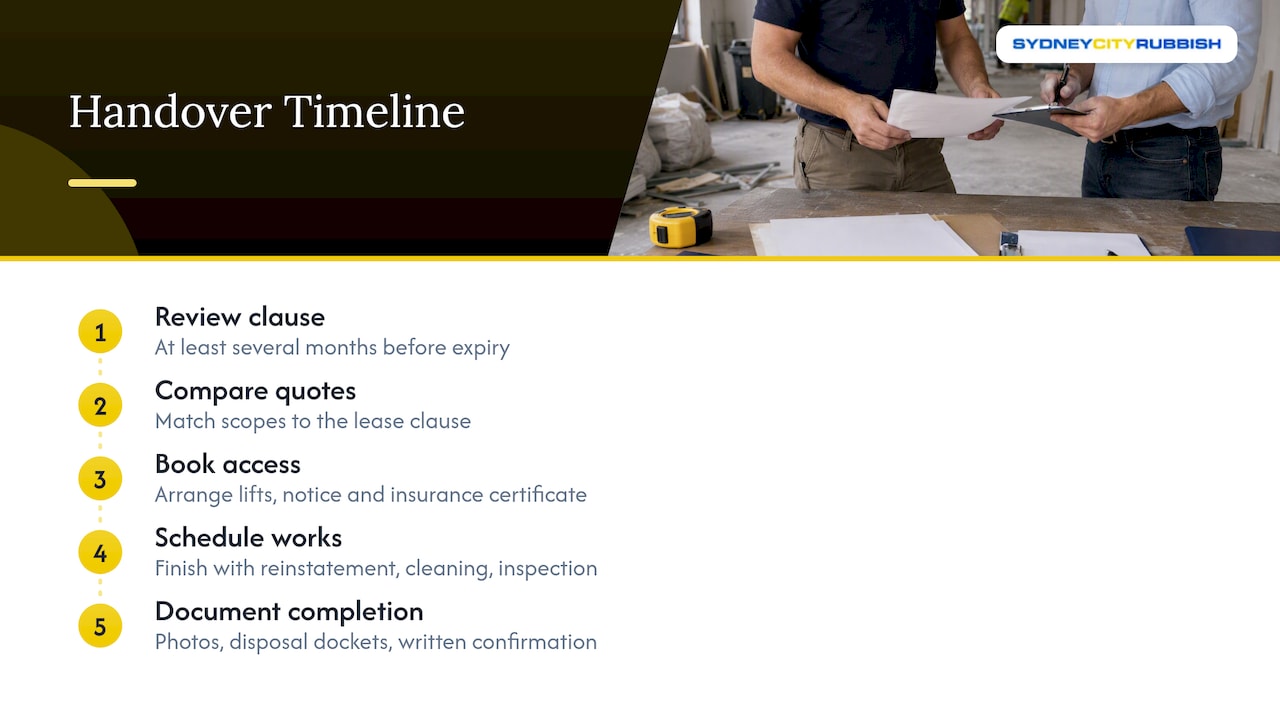
Begin with the lease, not the calendar. Read the make good clause and any consent conditions at least several months before expiry, and confirm in writing with the landlord’s agent what they expect. Notice requirements and access rules for the final period are often in the lease, so check them early.
Next, obtain quotes against the clause. Compare scopes, not just totals: two quotes that differ greatly usually differ in what they include. Book building access and lift times with building management, who often need notice and a certificate of currency for insurance before trades can enter.
Then schedule the works so that the demolition and waste removal finish with enough time for reinstatement, cleaning and a pre-handover inspection. Retail tenants in shopping centres and strata-managed buildings often face stricter access windows, which makes early booking more important.
Finally, document everything. Take photos at completion, keep disposal dockets, and ask the landlord’s agent to confirm in writing that the premises meet the clause. That record supports the return of your bond or bank guarantee if a dispute arises.
Which service fits your situation
If your lease only requires furniture and rubbish removal, you need a commercial cleanout, not a defit. Our office cleanout and junk removal service covers desks, chairs, filing, appliances and electronics.
If your lease requires removal of fit-out, you need a strip-out. Our commercial strip-out and demolition team handles partitions, ceilings, joinery, floor finishes and the disposal that goes with them. Retail tenants can read about stripping out retail spaces.
If your lease requires full reinstatement, you need a program that coordinates demolition, waste removal and finishing trades under one scope. We handle the strip-out, makegood and de-fit, flooring removal and concrete grinding side, and you can discuss the remaining trades with us when you request a quote.
Get your scope priced properly
Send us your lease clause, the address and a few photos, and we will quote the strip-out and waste removal against what your lease requires, with exclusions listed. Our punctuality guarantee includes compensation if we are late, and we clean up meticulously so nothing is left behind. Get a free quote now or see our office defit and strip-out page.
Common mistakes to avoid
The most frequent error is treating strip-out and make good as the same thing. A strip-out leaves the space bare. If the lease asks for a presentable finish, someone still has to pay for the trades that follow.
The second is assuming you must remove everything. Check your consent conditions first, since removing items you were allowed to leave wastes money, and leaving items you were required to remove invites a claim.
The third is leaving disposal to chance. Skipping proof of lawful disposal means you carry risk for waste you no longer control.
The fourth is leaving it late. Rushed finishing trades, limited loading dock slots and compressed programs all cost more and increase the chance of failing the landlord’s inspection.
FAQ
Is a defit the same as a make good?
No. A defit is the physical removal of tenant-installed fit-out, while make good is the lease obligation that sets the condition you must hand back. A defit is often one part of satisfying a make good clause, but the clause may also require repairs, painting and services work.
Do I always have to remove my fit-out at the end of a lease?
Not necessarily. It depends on your lease and on any conditions recorded when the landlord approved the fit-out. A general make good clause does not by itself always require removal, so read both documents and seek advice from a commercial property solicitor if they conflict.
What should I ask a contractor to quote?
Ask them to quote against the specific make good clause in your lease, and to list exclusions in writing. That way reinstatement items such as ceiling repairs and painting are either priced or clearly flagged, rather than discovered at handover.
What proof of disposal should I keep?
Keep weighbridge receipts or dockets from licensed facilities for all waste removed from the premises. The NSW EPA’s guidance supports keeping evidence of lawful disposal, and it protects you if the material is later questioned.
Why do I only find fitness apps when I search “defit”?
Because DeFit is also the name of a mobile app. Add words such as commercial, office or lease, or search for end-of-lease strip-out, to find property results.
Sources
- Make Good Australia, RICS
- Make good and retail leases, NSW Small Business Commission
- Make Good Obligations in Commercial Leases, LegalVision
- What Do Landlords And Tenants Need To Know About Make Good Obligations, Legal 500
- Construction and demolition waste management toolkit, NSW EPA
- Transporting waste, NSW EPA