Defit vs Demolition: Which Does Your Sydney Space Need?
By the Sydney City Rubbish team. Updated 18 October 2026.
A defit removes what a tenant installed and returns the space to the condition the lease requires. Demolition takes out parts of the structure itself, such as load-bearing walls, slabs and columns, or an entire building. If your lease is ending and the landlord wants the floor handed back as it was, you almost certainly need a defit. If the brief is to change what the building is, you need demolition, with different approvals, different risks and a different waste stream.
The two are often quoted together and sometimes confused, and the confusion costs money. A defit scoped as demolition is over-engineered. Demolition scoped as a defit can stall on site when someone finds a structural element in the way. This guide explains where the line sits, how each job runs in a Sydney commercial building, and what to settle before anyone swings a hammer.
TL;DR
- A defit (also called a make good in many leases) removes tenant-installed fit-out: partitions, ceilings, joinery, floor finishes, cabling and furniture.
- Demolition removes structure that is load-bearing or tied to the building’s physical integrity, and is classed as high risk construction work in NSW.
- Both need an asbestos check first. Asbestos found mid-job can reclassify the whole waste load and rule out recycling.
- Most real projects mix the two, so the lease clause, the building’s approvals and the waste plan should decide the scope, not the label on the quote.
- Ask for dockets that prove where waste went. The NSW EPA recommends tying payments to that evidence.
Table of Contents
- What a defit actually covers
- What demolition covers
- Defit vs demolition at a glance
- Deciding which one you need
- Asbestos comes before both
- The waste each job produces
- How the work runs in a Sydney building
- What it costs and how to compare quotes
- Combining the two on one project
- A practical checklist for your brief
- Book the right scope with Sydney City Rubbish
- FAQ
- Sources
What a defit actually covers
A defit is a tenancy job. At the end of a commercial lease, most leases require the tenant to remove the fit-out they installed and repair what that removal leaves behind. Landlords and agents call this making good, and the lease’s make good clause sets the scope. The physical work of stripping the fit-out is the defit.
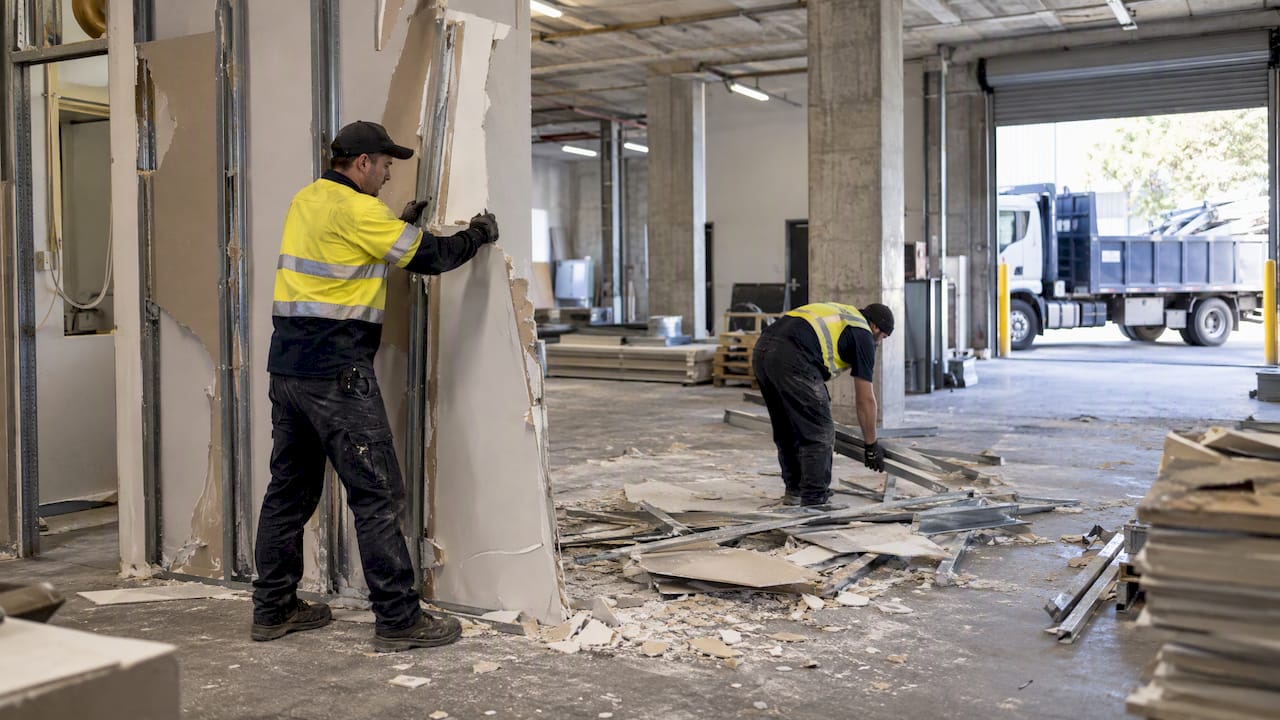
In an office that usually means demountable and fixed partitions, plasterboard walls and glazed screens, suspended ceiling tiles and grids, doors and hardware, built-in joinery and kitchenettes, carpet or other floor finishes and their adhesives, data and power fit-off, and loose furniture. It leaves the base building, meaning the slab, columns, external walls, risers and core, intact.
The defining feature is that nothing structural is being altered. Workers are taking out what a previous tenant’s builder put in, usually in reverse order of installation, and finishing with the surfaces and services the landlord has asked to be restored. Our makegood and de-fit work sits in this category, alongside furniture and joinery removal, ceilings, walls and doors, and floor finish removal and grinding.
Where strip-out fits
Strip-out is the term you will see next to defit on many quotes. It describes removing non-structural internal elements. A defit is a strip-out with a lease attached: the scope is dictated by what the tenant must hand back, not by what a new occupant or designer wants. A strip-out for a refurbishment may go further than a lease requires, for example by removing a base-building ceiling the landlord would have kept.
What demolition covers
Demolition is a regulated category of work. Under the model code of practice, demolition work means work to demolish or dismantle a structure or part of a structure that is load-bearing or otherwise related to its physical integrity. The definition excludes some minor dismantling, so the test is always what the element does for the building, not how big it is.
In NSW, SafeWork NSW treats demolition work as high risk construction work. That has practical consequences. It brings in planning, safe work method statements, engineering input where structure is involved, and licensing requirements for the people carrying it out. A removed office partition rarely triggers that regime. A removed transfer beam or a cut through a post-tensioned slab certainly does.
Typical commercial demolition jobs include taking out internal structural walls to open a floor plate, cutting stair or lift penetrations, removing a mezzanine, demolishing a warehouse or a retail pavilion, and full building demolition ahead of redevelopment. Our structural demolition and commercial demolition in Sydney pages describe how those jobs are handled, and the supporting trades, concrete cutting, core drilling, jackhammering and concrete grinding, are what make them possible.
Defit vs demolition at a glance
| Defit / make good | Demolition | |
|---|---|---|
| Purpose | Return a tenancy to its lease condition | Remove structure or a whole building |
| Typical scope | Partitions, ceilings, joinery, floor finishes, cabling, furniture | Load-bearing walls, slabs, columns, mezzanines, buildings |
| Who sets the scope | The lease and the landlord’s make good notice | The design, the engineer and the approvals |
| Regulatory weight | Building management rules, asbestos checks, waste rules | High risk work regime, asbestos checks, waste rules, usually more approvals |
| Main waste | Plasterboard, ceiling tiles, timber, carpet, furniture, electronics, metals | Concrete, brick, steel, masonry, mixed rubble |
| Recycling potential | Good if sorted at source | Good for clean concrete and steel, poor for mixed loads |
The table simplifies, because real sites blur the categories. A tenant exiting a warehouse might need a defit of the office pod and a small amount of demolition to remove a dock-level slab modification. That is normal. What matters is that each part of the job is named correctly so it gets the right controls.
Deciding which one you need
Start with the document that creates the obligation. If you are a tenant, read the make good clause and any landlord notice. It will say what must be removed, what the landlord will accept as is, and what standard of reinstatement applies. If you are a property or strata manager, your brief comes from the building’s plans and the owner’s intentions for the space.
Then ask three questions. Does any element being removed carry load or brace something that does? Will the work change the building’s fire, structural or services layout? Is the end result a restored tenancy or a different building? Yes to any of these points to demolition, or to a defit with a demolition component that needs an engineer’s view before work starts.
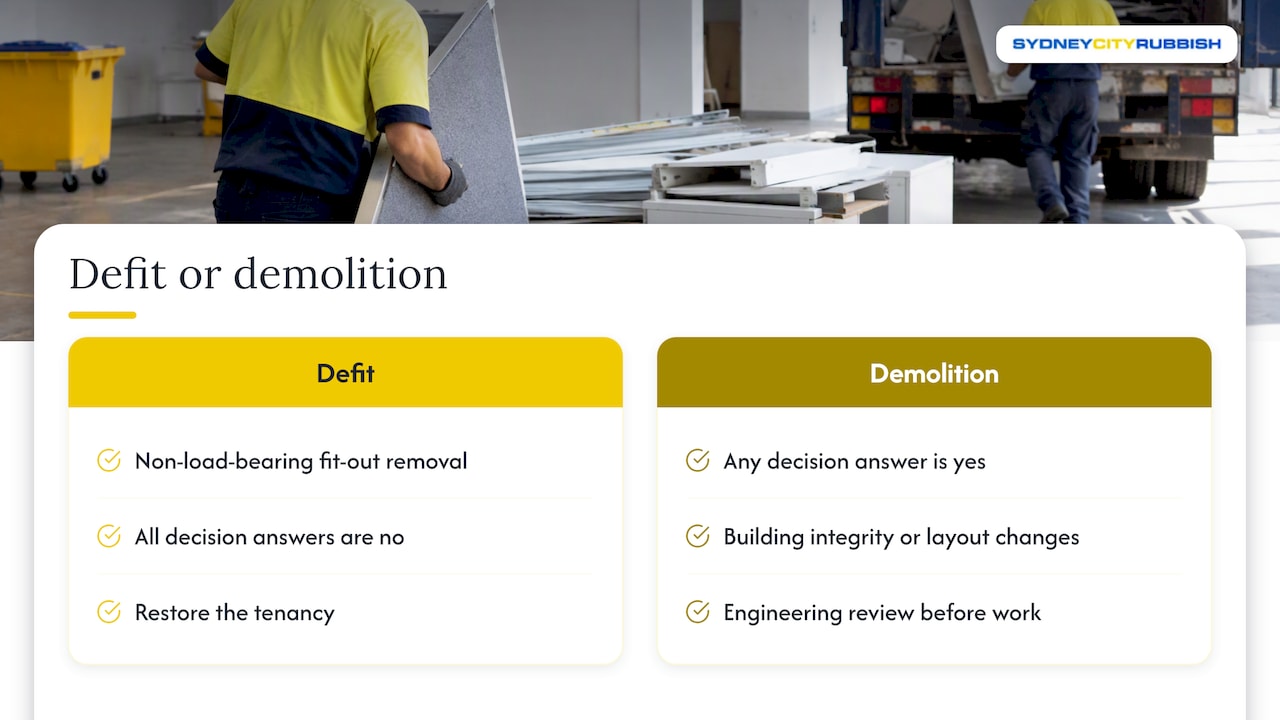
If the answers are all no, you have a defit and the job is mainly about sequence, access and waste. Landlords sometimes agree to leave quality elements in place. That kind of exception should be agreed in writing, in the lease or in a consent letter, before the crew starts removing anything, because reinstating a ceiling is dearer than leaving one.
Asbestos comes before both
The same rule governs both jobs, and it is the one most likely to disrupt your programme. Under the model code, all demolition or refurbishment work that may disturb asbestos requires checking the asbestos register first. If no register exists, a competent person must inspect the structure, and identified asbestos must be removed safely before demolition begins. The code cites WHS Regulation 451 for this duty.
Buildings of a certain age are the usual suspects, and the materials hiding it, such as old ceiling tiles, vinyl floor adhesives, fire doors and sheeting behind joinery, are exactly what a defit touches. A defit is not exempt because it feels light.
The order matters too. Research on Australian office refurbishment notes that asbestos remediation should happen before renovation work starts rather than alongside it, to avoid cross-contamination of materials that could otherwise be recycled. The same research warns that the presence of asbestos can lead to precautionary classification of all generated waste as contaminated, which rules out recycling or crushing concrete for road base. One undiscovered sheet can therefore turn a recyclable load into a restricted one.
Once asbestos is identified and removed by a licensed contractor, the waste has its own paper trail. In NSW, asbestos waste loads over 100 kilograms or 10 square metres must be tracked through WasteLocate. Landfill operators are also required to cover asbestos waste with virgin excavated natural material unless the EPA has approved another cover, so only facilities licensed to receive it can take it. Your waste contractor should be able to tell you which facility a load is going to before it leaves.
A note for hospitality tenants
Cafes, restaurants and commercial kitchens add a layer. Exhaust hoods, ductwork and appliances are part of the tenant fit-out in many leases, and they carry grease and fire-safety obligations as well as waste. One Canadian kitchen exhaust specialist publishes a restaurant takeover kitchen exhaust checklist that is written around Winnipeg regulations, so the legal references will not apply in NSW, but the inspection logic of documenting the condition of hoods, ducts and fans before taking over or handing back a kitchen translates well. For a Sydney tenancy, confirm local fire and hygiene requirements with your landlord and the relevant authority.
The waste each job produces
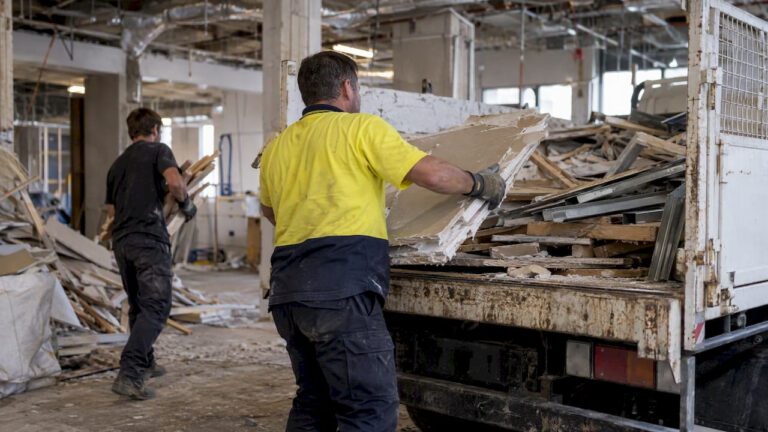
A defit generates volume. A floor of a mid-sized Sydney office can produce dozens of cubic metres of plasterboard, ceiling tiles, timber framing, carpet tiles, workstations, chairs, cabling, light fittings and e-waste. Much of it is light and bulky and sorts well when crews separate it at the point of removal.
Demolition produces weight. Concrete, brick, block and steel dominate, with services and glazing mixed in. Clean, separated concrete and steel are readily accepted by recyclers. Mixed loads are not, and the Australian refurbishment research notes that mixed waste ends up as low-value aggregate or landfill.
The starting position across the industry is not strong. The Better Buildings Partnership reports that only about 21% of office fit-out waste in Sydney is diverted from landfill on average, against a best practice target of a minimum 60% resource recovery rate in its strip-out guidelines. That gap is the opportunity. A tenant who specifies recovery and asks for evidence is asking for something the market can deliver, and landlords with sustainability reporting obligations increasingly want it.
Two project realities work against recycling. The first is contract structure: splitting a refurbishment into small, separate contracts tends to remove the economies of scale needed for on-site sorting, so waste that was meant to be recycled often goes to landfill. The second is occupancy. Where the building stays occupied during works, space and time constraints limit how much sorting can happen on site and stretch durations. In a CBD tower with a single goods lift and a booked loading dock, both pressures apply at once.
How the work runs in a Sydney building
Commercial buildings in the Sydney CBD, North Sydney, Parramatta, Macquarie Park and Sydney Olympic Park have their own rules, and the building manager’s requirements shape the programme more than most tenants expect. Loading dock bookings, lift protection, after-hours noise limits, dust and fire system isolations all come before the first partition comes down.
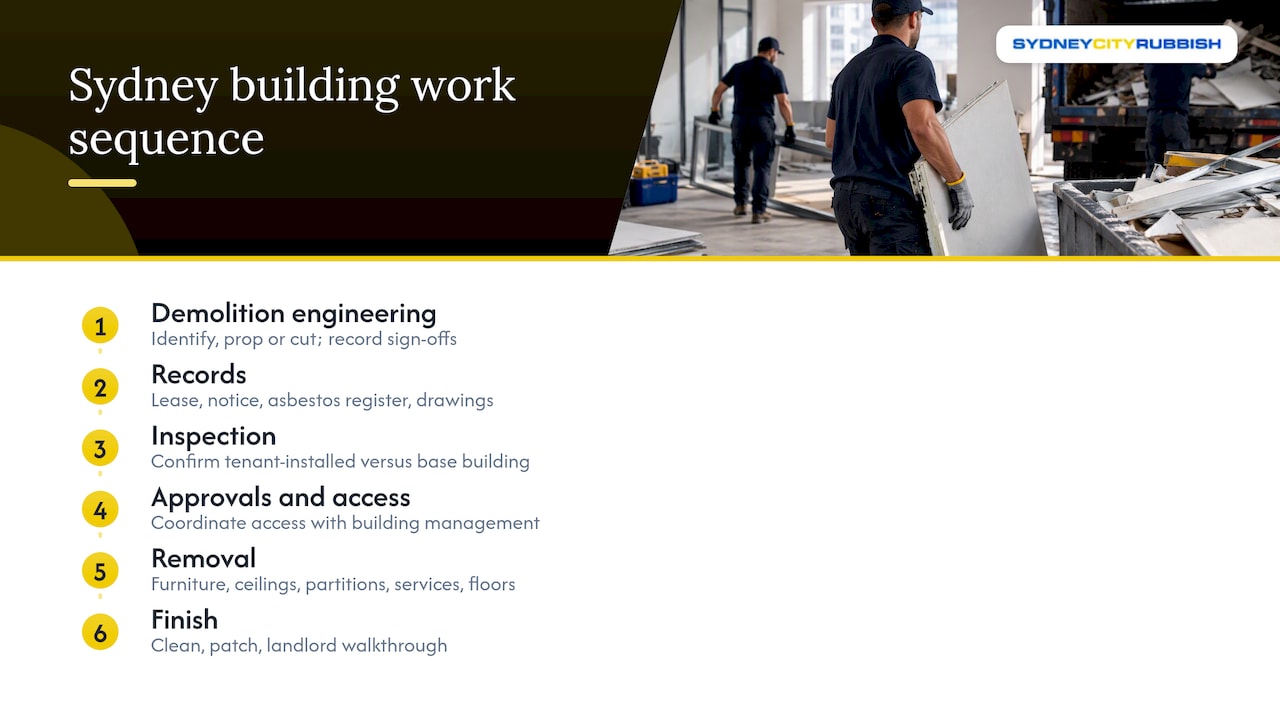
A sound defit follows a sequence. Records first: the lease clause, the landlord’s make good notice, the asbestos register and any as-built drawings. Then an inspection, to confirm what is tenant-installed and what is base building. Then approvals and access with building management. Then the removal itself, working from furniture and loose items through ceilings, partitions, joinery and services to floor finishes. Last come the clean, the patching and the walkthrough with the landlord’s representative.
Demolition adds an engineering layer to the front of that sequence. Structural elements need to be identified, propped or cut in a defined order, and sign-offs recorded. Concrete cutting and core drilling, done with controlled dust and slurry management, often replace brute force inside occupied buildings. Our team also covers concrete cutting safety as a distinct discipline, because silica dust from cutting and grinding is a hazard that needs controls every time.
For property and strata managers, the point of difference is coordination. Sydney City Rubbish coordinates directly with building management for access, which keeps the tenant out of the loop of lift bookings and dock times, and the crew works to the agreed window. We also guarantee punctuality, with compensation if we are late, which matters when a handover date is fixed in a lease.
What it costs and how to compare quotes
We do not publish set prices for these services, because the scope varies too much for a headline number to be honest. Quotes are built per truckload or per project, and the fastest way to a figure is to send floor area, access details, the lease clause and photos through our electronic quote request. If you want general context first, our page on rubbish removal prices in Sydney explains how truckload pricing works.
When you compare quotes, compare scope before price. A low defit number often leaves out floor finish removal, adhesive grinding, patching or the disposal of flagged materials. A demolition quote that does not name the engineering, the approvals and the disposal route is not complete. Ask each contractor how they treat waste: where it goes, whether it is sorted, and what documents you receive.
On that last point the NSW EPA has clear guidance. Its construction and demolition waste toolkit recommends linking payment milestones to evidence of lawful reuse, recycling or disposal, such as verified dockets and waste classification reports, rather than paying only for bulk removal. For a tenant, that protects you if waste is ever traced back to your site. For a property manager, it gives you the paper to show an owner or auditor.
Combining the two on one project
Many Sydney jobs sit between the categories. A retail tenant exiting a tenancy might need a defit of shopfittings, a ceiling and a floor finish, plus demolition of a non-original mezzanine. A warehouse tenant may need an office pod defit, a racking clearance and the removal of a concrete plinth. A refurbishment client may want a strip-out, selective demolition of a stair opening and then a fresh fit-out.
In those cases a single contractor with both capabilities removes handover gaps, and it avoids the contract fragmentation that the research flags as a recycling killer. It also makes responsibilities clear: one party sorts the waste, one party holds the dockets and one party answers for the finished surfaces. We carry out strip-out, defit, demolition, concrete work, truck and driver hire and rubbish removal in one scope, which is why commercial waste removal in Sydney is part of every project rather than an afterthought.
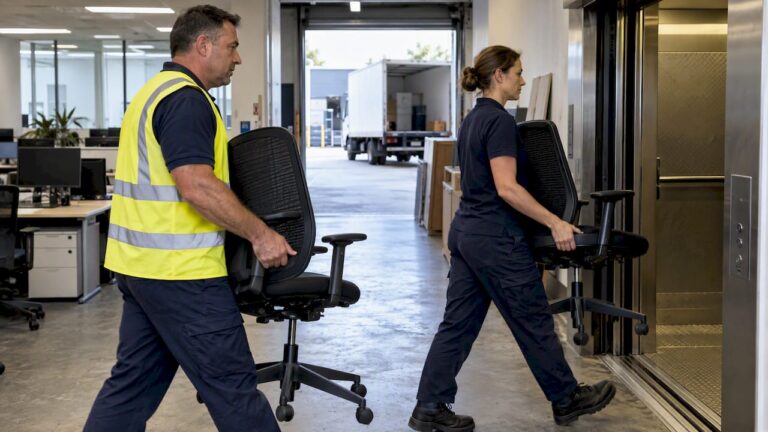
If you are only clearing an office of furniture and general junk before a defit, a separate clean-out is usually enough. Our office clean out and junk removal service handles desks, chairs, filing and electronics, and the end of lease recycling services page describes how items are diverted from landfill through registered recycling partners.
A practical checklist for your brief
Before you request quotes, gather the lease and any make good notice, the building’s asbestos register, floor plans marking what the tenant installed, access arrangements including dock and lift details, and the handover date. Decide whether you want waste diversion reported. Tell the contractor whether the building will be occupied during the works, because that changes the sequence and the noise windows.
Walk the space with the contractor and the landlord’s representative where you can. Mark anything that might be structural or that you suspect is base building. Agree in writing any items the landlord will accept as is. Confirm who is responsible for asbestos inspection, and do not allow any removal of suspect materials until that is resolved.
After the job, collect the disposal dockets, any asbestos clearance and WasteLocate records, and a record of the finished condition with photos. Those documents are what you hand the landlord to support the return of your bank guarantee, and what a property manager files for the building’s compliance record.
Book the right scope with Sydney City Rubbish
We handle defit and makegood, strip-out, structural demolition and the waste that follows, for offices, retail spaces, warehouses, construction sites and strata buildings across Sydney. Carbon-neutral removal is available as an opt-in for corporate clients, and disposal goes through registered recycling partners. You can see the full list of services on our what we do page, or get a free quote now with your lease clause and floor plan.
FAQ
Is a defit the same as a make good?
The terms overlap and many Sydney leases use them interchangeably. Strictly, the defit is the physical removal of the tenant’s fit-out, while the make good is the lease obligation that requires it and the reinstatement of surfaces afterwards. Always follow the wording of your own lease and the landlord’s notice.
Does a defit need a demolition licence?
Not usually, because a defit removes non-structural fit-out. Demolition work that affects load-bearing or integrity-related elements is classed by SafeWork NSW as high risk construction work, with licensing and planning duties. If your defit includes any structural element, have the scope checked before work starts.
Do I need an asbestos check before a defit?
If the work may disturb asbestos, the asbestos register must be checked first, and a competent person must inspect if no register exists. Older ceilings, floor adhesives and sheeting are common sources. Any asbestos found has to be removed safely before the work continues.
Can the waste from a defit be recycled?
Much of it can, particularly metals, timber, e-waste, carpet tiles and clean plasterboard when sorted at source. Average diversion for Sydney office fit-out is only about 21%, so it pays to ask for a recovery plan and disposal dockets up front. Contamination with asbestos can rule recycling out for the affected load.
How long does a defit take compared with demolition?
It depends on floor area, access and whether the building is occupied, so a fixed answer would be a guess. A defit of a single floor is generally a matter of days to weeks, while structural demolition adds engineering and approval time before the physical work. Send us your details and we will give you a programme with the quote.
Sources
- Model Code of Practice: Demolition work, Safe Work Australia
- Demolition, SafeWork NSW
- Waste minimisation in office refurbishment projects: an Australian perspective, QUT ePrints
- Asbestos waste, NSW EPA
- BBP Stripout Waste Guidelines, Better Buildings Partnership
- Construction and demolition waste: a management toolkit, NSW EPA