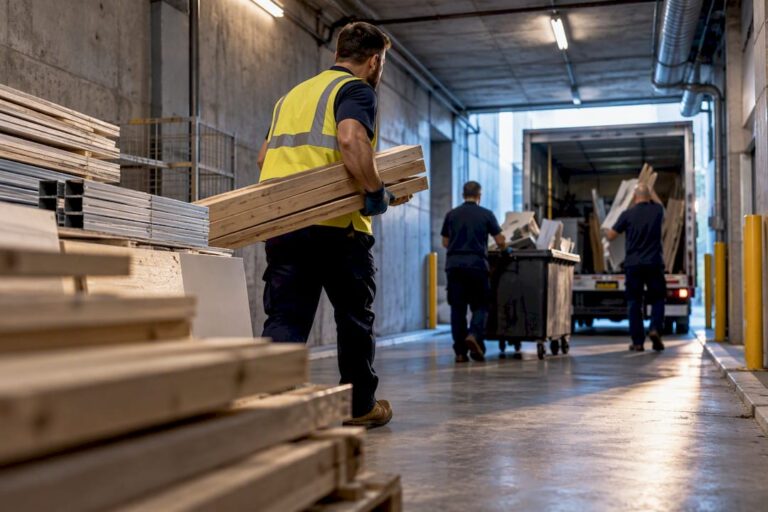
Sydney Strata Managers: 6 Point Contractor Pack for Bulky Waste
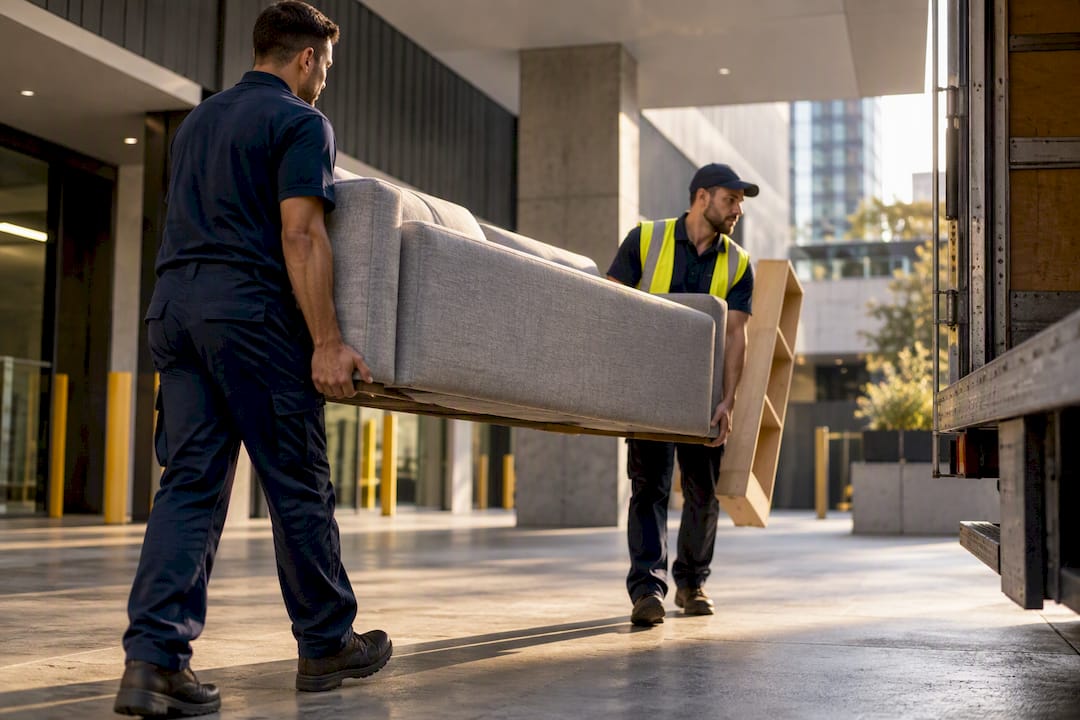
For a single wardrobe or a few chairs that meet your council’s volume limits, book the free council bulky-goods service. For anything larger, time-critical, hazardous, or construction-related, a private managed collection like Sydney City Rubbish is the safer route. Either way, confirm owners corporation approval and check access constraints before you book.
TL;DR:
- Private contractors are essential for large, hazardous, or time-sensitive waste removals that exceed council volume limits or require supervision on site.
- Owners corporations must obtain written approval and keep detailed records for any placement of waste containers on public land or high-cost jobs involving common property access.
- Accurate site measurements, especially for lift dimensions and truck turning radii, are critical to avoid delivery delays and unexpected costs during waste removal.
- A supervising resident or contractor should monitor drop-offs to prevent misuse, illegal dumping, and ensure compliance with presentation rules.
- Using Sydney City Rubbish simplifies booking, coordination, and compliance for bulky-waste jobs, especially in complex strata buildings requiring fixed scheduling.
Table of Contents
- Council bulky goods vs private hire: which to pick for your Sydney strata building
- Approvals, permits and owners corporation responsibilities in NSW strata schemes
- Site logistics checklist: delivery route, clearances, size and protection
- Managing residents and preventing misuse during a bulky-waste event
- Contractor pack and checklist you can send to a bulky-waste provider
- How Sydney City Rubbish helps strata managers get this done without the back-and-forth
- Sources
- FAQ
Council bulky goods vs private hire: which to pick for your Sydney strata building
Council bulky-goods bookings suit small, predictable jobs. The City of Sydney’s booked pick-up service sets defined size groups per collection, and most councils apply similar volume caps, often in the vicinity of a few cubic metres per booking, with strict rules on what can be left kerbside. For an apartment building, the booking is normally arranged by the strata manager or nominated building contact, not individual residents. That single point of contact matters: Northern Beaches Council guidance makes clear that unit blocks face limits on how often they can book and how much volume goes out at once, and that the strata manager carries responsibility for keeping the pile within those limits.
Private contractors give you more room to move. They can schedule around your building’s access windows rather than the council’s calendar, take construction and demolition debris councils won’t touch, and supervise the drop off point so items don’t pile up unmonitored on common property. That supervision is often the deciding factor for larger jobs.
Work through this before you commit to either option:
- Volume: does the load fit within your council’s per-booking limit, or will it need a skip bin, bulka bag, or truck?
- Item type: are there mattresses, whitegoes, e-waste, or renovation debris that your council excludes?
- Timeline: can you wait for the next council collection window, or does the building need it cleared this week?
- Access and disruption: will the collection block a driveway, lift, or fire path during business hours?
A one-off wardrobe clear-out rarely needs anything more than a council booking. A unit renovation, a full building declutter, or anything involving construction waste almost always points toward private hire.
Approvals, permits and owners corporation responsibilities in NSW strata schemes
The owners corporation, not any individual lot owner, is legally responsible for common property, and NSW Fair Trading’s strata guidance requires at least two independent quotes for works above certain cost thresholds. Bulky waste removal that involves a booked truck, a skip bin on common property, or a contractor accessing shared areas generally falls under that same procurement discipline, even when the job feels routine.
Two approval triggers come up constantly in Sydney strata buildings:
- Placement on public land: putting a skip bin on the street or footpath usually needs a council permit, and councils publish lists of approved providers you must choose from, as Inner West Council’s skip bin rules demonstrate.
- Spend above quote thresholds: larger jobs need documented committee or owners corporation sign off before you engage a contractor.
Keep a simple paper trail: committee minutes approving the job, written authorisation for the strata manager to proceed, the contractor’s written quote, and a copy of their public liability insurance. That file protects you if a resident later disputes the cost or the disruption.
Site logistics checklist: delivery route, clearances, size and protection
Failed deliveries cost time and money, and they’re almost always caused by something that could have been measured in advance. Skip trucks need a wider turning radius and more overhead clearance than a standard removalist van, and a truck that can’t complete the delivery route often triggers a dry run fee.
Before you confirm a booking date, work through these checks in order:
- Measure the drive height at the entry gate, basement ramp, and any covered car park section the truck must pass under.
- Check ramp gradients on basement or underground access routes, particularly in older Sydney blocks with steep entries.
- Confirm turning radii at every corner the truck needs to navigate, including visitor car park bays used for staging.
- Verify lift dimensions if items are coming down from upper floors, including door width and internal cabin depth, not just the stated weight limit.
- Choose the right vessel for the geometry: a skip bin for ground-level, open-access sites; a bulka bag where a crane or a balcony hoist is the only practical route; a hand-loaded truck for buildings with lift restrictions or tight internal corridors.
- Protect common property with driveway mats under wheels, temporary signage marking the presentation zone, and a fixed time window so the area isn’t blocked longer than necessary.
Pro Tip: Send a contractor a short video walkthrough of the delivery route, including gate heights and any tight turns, before they quote. It’s the fastest way to avoid a refused delivery on the day.
For lift-restricted buildings, staged removals often work best: agree a schedule where each resident presents their items at a set time, keeping each individual load within what the lift and the truck can handle in one pass.
Managing residents and preventing misuse during a bulky-waste event
A bulky-waste booking without supervision tends to attract more than what was planned for. Appoint a waste champion, either a committee member or the contractor’s on-site supervisor, for the full hire period. Their job is straightforward: check what’s being left, redirect anything that doesn’t belong, and keep the presentation area tidy between pick-ups.
Set the rules before the bin or truck arrives, and put them in the resident notice, especially guidance on handling overflow areas as explained in Apartment package lockers full? What to do about overflow:
- List permitted items explicitly, and name what’s excluded (mattresses without covers, gas bottles, paint tins).
- Fix a presentation window, not an open-ended “any time before collection” arrangement.
- Require supervised drop off rather than allowing residents to leave items unattended overnight.
If residents ignore the rules and dump items outside the agreed window, the owners corporation can look at by-law options that allow cost recovery from the responsible lot. For repeat offenders or genuine illegal dumping on common property, involve council rangers. Northern Beaches Council specifically flags this as a real risk for unit blocks that don’t communicate limits clearly to residents.
Contractor pack and checklist you can send to a bulky-waste provider
A contractor working blind on access details will quote defensively, padding the price to cover unknowns. A short brief with the right details attached removes most of that guesswork and gets you a tighter, more accurate number.
Send this with every quote request:
- Access contact and mobile number for the day of the job.
- A simple map or photos of the delivery route, including any gate codes.
- Lift keys or fob access arrangements if items are coming from upper floors.
- Hazard notes, flagging anything that might contain asbestos or sharps so the contractor can plan handling correctly.
- Parking and timing windows, especially where loading zones are shared with other tenants.
- Insurance and licence copies requested, including public liability cover and, where diversion matters to your owners corporation, waste transfer dockets showing where the load actually went.
If your building has sustainability targets or simply wants proof the job was done properly, ask for a short disposal report listing tonnage sent to recycling versus landfill. Council bulky-goods collections often send material straight to landfill, while private contractors with recycling partners can usually offer better diversion, provided you ask for the paperwork to confirm it.
A well-run job follows a predictable sequence: pre-inspection of the site, a supervised delivery and presentation window, a monitored hire period if a skip or bag is left on site, then a post-clean sweep to confirm common property is left as it was found.
How Sydney City Rubbish helps strata managers get this done without the back-and-forth
Sydney City Rubbish is the alternative to juggling council booking windows and chasing multiple contractor quotes yourself. For a Sydney strata building with a genuine bulky-waste job on hand, whether that’s a full-floor declutter, a unit strip-out, or a mixed load of furniture and construction debris, the team coordinates directly with building management on access, timing, and resident notices, so the job runs to a fixed schedule rather than around gaps in a council calendar.
Services cover general bulk rubbish removal, bulka bags for lift-restricted buildings, and strip-outs and de-fits where a unit or common area needs clearing back to a bare shell. Every job is quoted per truckload or per project through a fast electronic quote, with punctuality supported by client commitments and cleanup intended to leave nothing behind. If your building runs on carbon targets, some disposal options may consider carbon impact as well.
If you’re planning a strata clean-up in the coming weeks, request a quote through the commercial waste removal Sydney page, or send through your access details using the bulk waste checklist for NSW strata buildings to get an accurate price back faster.
Sources
Before locking in a date, confirm the rules for your specific building against the primary sources. The City of Sydney’s bulky items booking page sets out size groups and presentation rules for the CBD area, while Northern Beaches Council’s strata guidance and Strathfield Council’s clean-up collection rules cover frequency limits and excluded materials for their respective areas.
- NSW government: repairs and maintenance for strata and owners corporations
- City of Sydney — book a pick-up for bulky items
- Northern Beaches Council — bulky goods collection: information for strata and property managers
FAQ
How do I dispose of furniture in Sydney?
Small items that fit council volume limits can go through your local council’s free booked bulky-goods pick-up. Larger volumes, damaged furniture, or anything from a renovation is better handled by a private contractor who can take it straight to a recycling-focused disposal partner. See the furniture disposal guide for Sydney households and strata buildings for methods that avoid fines and landfill.
Who offers the cheapest rubbish removal service in Sydney?
Council bulky-goods collections are free but limited in volume and frequency, making them the cheapest option for small jobs that fit within the rules. For larger or mixed loads, pricing varies by truckload and project, so it’s worth getting a direct quote from a private provider like Sydney City Rubbish, whose current prices are listed on the website rather than published as a flat rate.
How much does it cost to take rubbish to the tip in Sydney?
Tip and transfer station fees in Sydney vary by waste type, weight, and the specific facility you use. A breakdown of typical tip and disposal costs covers the main factors that affect the final price.
What is the typical cost of hiring a removalist in Sydney?
Removalist costs depend on the volume of items, distance, and whether it’s a straightforward furniture move or a full clean-out job with disposal included. For strata bulky waste specifically, a bulk rubbish removal quote is usually a more accurate comparison than a general removalist rate, since it accounts for access, lift restrictions, and disposal fees together.
Do I need council approval to place a skip bin at my strata building?
Placing a skip bin on a street or footpath usually requires a council permit, and most councils publish an approved provider list you need to choose from. Skips kept entirely on private property, such as a basement car park, typically don’t need a street permit, but check with your specific council before booking.