Pallet disposal options: reuse, recycle or remove
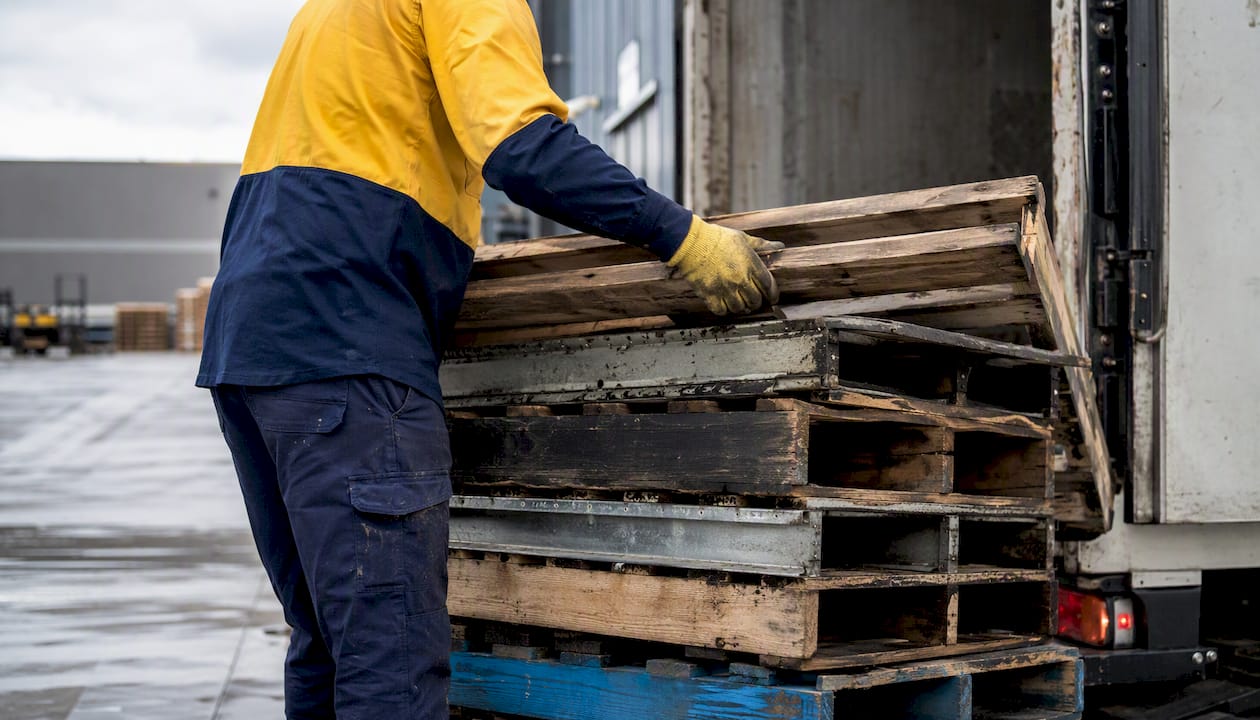
If you’ve got pallets stacking up at your site, the fastest route is this: check if they can be reused or repaired first, recycle whatever’s left by material type, and only send genuinely contaminated or treated timber to landfill. That order matters because reuse and repair cost nothing (or earn you money back), while landfill is the most expensive and least sustainable option on the list.
Here’s what to do in the next 24 to 72 hours:
- Sort and count what you’ve got. Separate wood, plastic and metal pallets, and pull aside anything visibly damaged, stained, or marked with chemical treatment stamps.
- Check for buy-back or reuse value. Standard-size timber pallets (particularly the common 1165 × 1165 mm format) often retain resale or exchange value, so contact a local pallet recycler or repairer before assuming removal is your only option.
- Book collection or drop-off for anything you can’t reuse, using a council service, recycler directory, or a commercial waste partner if you’re clearing a site rather than a single load.
Watch for a few red flags that change your options fast. Pallets stamped MB (methyl bromide fumigated) should never be burned and need careful handling. Heavy oil, chemical, or food contamination usually rules out recycling and pushes the pallet toward landfill. And if you’re dealing with more than 50 units, DIY drop-off stops being practical and a scheduled commercial pickup makes far more sense.
The pallets sitting behind your loading dock aren’t rubbish yet. A clean, standard-size timber pallet has resale or exchange value, and even a damaged one usually has recyclable components. Treat disposal as the last step, not the first.
Table of Contents
- Pallet disposal options at a glance
- How do you reuse, repair or upcycle a pallet?
- What happens to wood, plastic and metal pallets when recycled?
- How do you prepare pallets for collection or drop-off?
- How much does pallet collection cost and how long does it take?
- Can you burn treated timber pallets or is it illegal?
- When is landfill the only realistic option?
- How Sydney City Rubbish handles pallet and site waste removal
- Key takeaways for choosing the right pallet disposal route
- Where to check official rules and find local recyclers
- Sources
Pallet disposal options at a glance
Not every pallet needs the same treatment, and picking the wrong route wastes time and money. Here’s the fast version of each realistic pathway.
- Reuse or resell — clean, structurally sound pallets in standard sizes. Best for low volumes and businesses with regular pallet turnover.
- Repair — pallets with broken boards or protruding nails but a sound frame. Worth doing in-house if you handle more than a handful a month.
- Recycler pickup or drop-off — timber pallets bound for mulching, chipping or biomass, and plastic pallets bound for remoulding. Best when reuse isn’t viable but the material is clean.
- Council collection services — smaller volumes from households or small operators; check what your local council actually accepts before loading the ute.
- Waste-to-energy or biomass — chemically untreated wood only, usually arranged through a commercial recycler rather than direct drop-off.
- Landfill — genuinely contaminated, treated, or mixed-material pallets that no recycler will take.
Use this checklist to pick fast:
- More than 50 pallets on site? Go straight to a commercial collection service rather than council drop-off.
- Damaged but structurally sound? Repair before you recycle.
- Marked MB or visibly treated? Skip reuse and burning entirely, and confirm acceptance with a specialist recycler or authorised facility.
- Plastic pallets? Don’t mix them with timber loads. They need a separate recycling stream.
For location-specific options, council recycling pages commonly list pallet pick-up services and note what they will and won’t accept, and directories like RecyclingNearYou let you search by postcode for a processor near you.
How do you reuse, repair or upcycle a pallet?
Reuse is genuinely the cheapest and most sustainable option, and it’s usually faster than arranging a pickup. Before you write a pallet off, run through this quick assessment.
- Check the frame. If the stringers (the long runners underneath) are intact and not split, the pallet is worth fixing.
- Replace damaged deck boards. A pallet with two or three broken top boards is a five-minute repair with a hammer, a pry bar and a handful of spare timber.
- Remove or hammer down protruding nails. This is the single biggest safety issue with reused pallets, and it’s the easiest to fix.
- Check the treatment stamp. HT (heat-treated) pallets are safe to repair and reuse. MB-marked pallets are best kept out of DIY projects entirely and sent to a specialist recycler.
- Sort by size and grade. Standard pallets go back into your supply chain or get sold; oddball sizes and lower-grade stock go to upcycling or recycling.
Once you’ve got sound pallets, the upcycling options are genuinely useful, not just Pinterest fodder:
- Garden beds and compost bays (a favourite for retail and hospitality sites with outdoor space).
- Simple shelving or storage racking for stockrooms and warehouses.
- Reception or breakout-area furniture, if you’re willing to sand and finish the timber properly.
- Signage bases or display stands for retail fit-outs.
Pro Tip: If your business regularly receives palletised freight, set up a return or credit arrangement with your supplier or a local pallet recycler before you accumulate a backlog. Many recyclers will collect standard-size pallets for free, or offer a small buy-back, when volumes are consistent, which turns a recurring disposal cost into a recurring saving.
What happens to wood, plastic and metal pallets when recycled?
Each material follows a different end-of-life path, and knowing which one applies to your stock saves a wasted trip to the wrong facility.
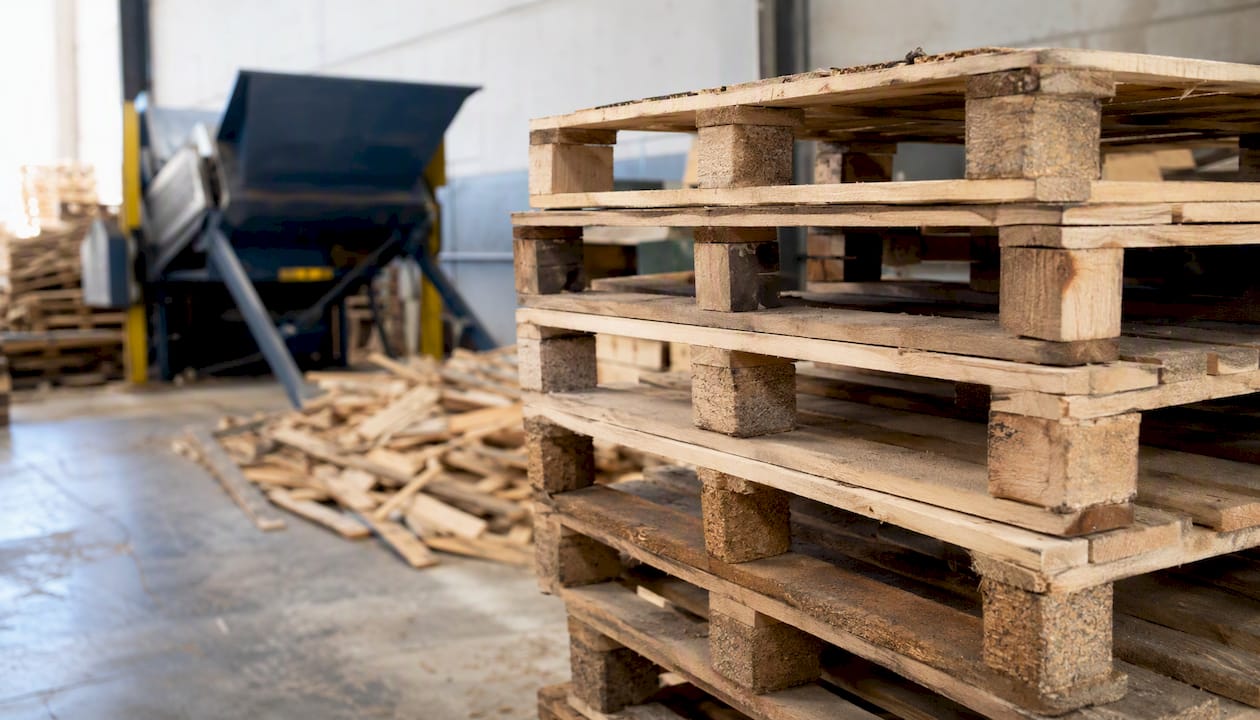
Timber pallets that are clean and untreated typically go to chipping or mulching operations, and some processors convert waste timber into biomass fuel. Non-chemically treated wood is widely recyclable, and recycling it reduces landfill volume and can lower your business’s waste disposal charges. A DECCW audit found roughly 13 percent of commercial and industrial landfill material was wood, which is a significant share sitting in bins that could have gone to a chipper instead.
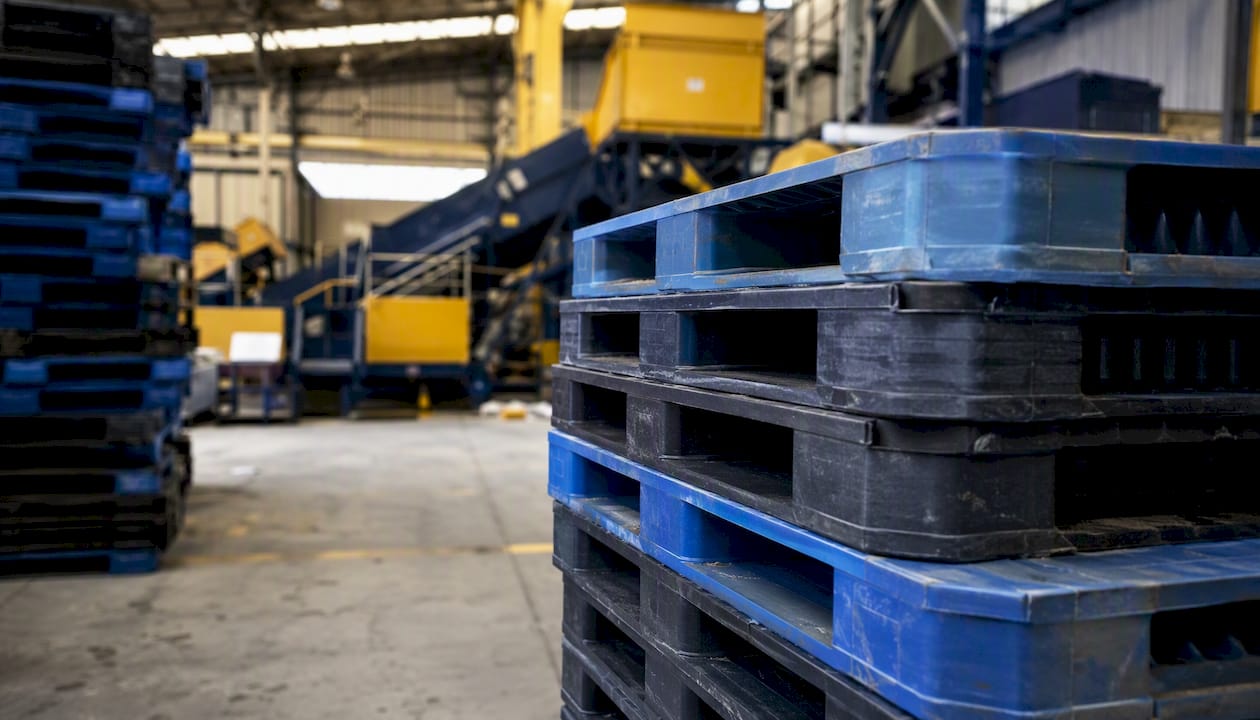
Plastic pallets follow a completely different stream. Specialist plastic recyclers can melt them down and remould the material into new pallet components or other industrial products, but they need to be kept separate from timber loads and free of major contamination.
Metal pallets and steel pallet components are straightforward scrap metal, accepted by most standard scrap dealers with no special preparation beyond removing non-metal attachments.
| Material | Typical recycler outcome | Remove before drop-off |
|---|---|---|
| Wood (untreated) | Mulch, chipping, biomass fuel | Nails, plastic strapping, paint or coatings |
| Wood (HT stamped) | Reuse, repair, standard recycling | Nails, damaged boards |
| Wood (MB stamped) | Specialist disposal only, not general recycling | Do not attempt to burn or mulch on-site |
| Plastic | Remoulding into new pallets or industrial feedstock | Metal fasteners, heavy contamination |
| Metal | Standard scrap metal recycling | Non-metal attachments |
Export pallets stamped HT are heat-treated and generally carry less risk of fumigant residue than MB-marked pallets, which affects both resale value and which facilities will accept them. Always check the stamp before assuming a pallet is reusable.
How do you prepare pallets for collection or drop-off?
Recyclers and council services reject loads that arrive unsorted, and some charge extra for contaminated or mixed-material drop-offs. A bit of prep at your end avoids both problems.
- Separate pallets by material: timber, plastic and metal never go in the same load.
- Remove loose nails, screws and metal strapping where practical, and hammer down anything you can’t remove.
- Stack pallets flat and stable, ideally in groups of similar size, so a forklift or ute can load them in one pass.
- Label or physically isolate any pallets stamped MB, or anything you suspect has been chemically treated.
- Keep contaminated pallets, especially those with oil, food waste or chemical residue, away from your clean stock.
A few practical notes worth keeping in mind:
- Nails and splinters are the most common injury on a pallet job site, so gloves and closed footwear aren’t optional.
- Small volumes (under ten pallets) are usually fine for a single ute trip to a council drop-off point.
- Larger volumes need proper staging, ideally on a hard, level surface near your access point, so a collection truck can load without manual double-handling.
How much does pallet collection cost and how long does it take?
Collection generally happens one of three ways: on-demand pickup for one-off clearouts, scheduled recurring collections for businesses generating consistent pallet waste, and self-managed drop-off at a recycler or council facility.
Pricing depends on a handful of factors that shift the quote up or down:
- Volume. Larger loads often reduce the per-pallet cost, and some recyclers waive fees entirely above a certain quantity.
- Distance from the processing facility. Regional sites usually pay more for the same service than those closer to a metro recycling hub.
- Contamination level. Clean, sorted loads cost less to process than mixed or dirty ones.
- Pallet type and size. Standard timber pallets are the cheapest to move; oversized, plastic, or non-standard pallets can attract higher handling fees.
Most operators price by the load, by weight, or with a minimum collection fee for small jobs, and turnaround for a scheduled commercial pickup typically runs from same-week to within a fortnight depending on demand and your location. Standard-size timber pallets sold through recycler and repairer directories can sometimes be collected for free or attract a small buy-back when volumes are worthwhile for the processor.
Pro Tip: If you’re generating consistent pallet volumes, ask your recycler about a buy-back or free-collection arrangement upfront. Processors are far more willing to negotiate favourable terms for a predictable, standard-size supply than for a one-off mixed load.
Can you burn treated timber pallets or is it illegal?
No. Do not burn treated or unknown pallets, and in most urban council areas, burning any waste timber without authorisation is against local rules.
Burning MB-marked or chemically treated pallets releases toxic residue into the air, and it’s one of the clearest safety lines in pallet disposal: if you don’t know how a pallet was treated, don’t burn it.
Environmental approvals for burning activities are issued through specific channels, not assumed by default:
- Local council sets and enforces open-burning rules for your area, and many council areas restrict or ban open burning entirely.
- NSW EPA governs broader air quality and pollution controls that apply on top of council rules.
- Fire and Rescue NSW issues environmental approvals for certain burning activities, and burning treated timber sits among the activities that are either tightly controlled or prohibited outright.
Where backyard burning is permitted at all, the rules generally limit it to clean, dry, untreated timber, with chipping, composting or council collection recommended as the safer default. If a pallet smells chemically odd, shows staining, or carries an MB stamp, isolate it from your other stock and arrange disposal through an authorised recycler or waste facility rather than guessing.
When is landfill the only realistic option?
Landfill should be your last stop, not your first call, but a few situations genuinely leave no better option.
- Pallets are severely contaminated with chemicals, oil, or food waste that no recycler will process.
- Timber is chemically treated and unsuitable for mulching, chipping or biomass recovery.
- Pallets are mixed in with general construction or demolition debris and can’t be economically separated.
Landfill facilities typically charge by weight (per tonne) or by volume (per cubic metre), and you’ll usually need to declare the waste type at the gate, particularly for anything flagged as treated timber. Expect paperwork if the load includes hazardous or treated material, since facilities need to record what they’re accepting.
Before you commit a full load to landfill, salvage what you can: pull out any sound boards, separate metal fasteners for scrap, and set aside anything reusable. Cutting even 20 to 30 percent of a mixed load out through segregation can meaningfully reduce your landfill fee, since you’re paying by weight or volume either way.
How Sydney City Rubbish handles pallet and site waste removal
If you’re managing a site clearout rather than a handful of spare pallets, Sydneycityrubbish is the practical alternative to sorting, transporting and lodging the paperwork yourself. Sydneycityrubbish collects and lawfully disposes of pallet waste alongside general commercial rubbish for offices, retail fit-outs, construction sites and strata buildings, with sorting handled on your behalf and treated timber managed through appropriate channels rather than guesswork.
Before you book, have a rough count of pallets on hand, note whether any are visibly treated or contaminated, and flag site access so the crew can plan the pickup properly. Sydneycityrubbish also offers a carbon-neutral disposal option for businesses that want their waste stream managed sustainably without extra admin on their end. For large demolition or construction sites generating mixed pallet and debris loads, a dedicated haul-off partner like O’Leary Development Group is worth considering alongside a standard pickup.
Ready to clear the yard? Book a pickup with Sydneycityrubbish and get a straightforward quote based on your actual load, not a guess.
Key takeaways for choosing the right pallet disposal route
The most reliable approach to pallet disposal is a strict hierarchy: reuse first, repair second, recycle by material third, and landfill only when nothing else applies.
| Point | Details |
|---|---|
| Follow the hierarchy | Try reuse, then repair, then material-specific recycling before considering landfill. |
| Check treatment stamps | HT pallets are safe to reuse and recycle; MB-marked pallets need specialist handling and must never be burned. |
| Sort before you call anyone | Separate wood, plastic and metal, and isolate contaminated or treated stock to avoid rejected loads. |
| Confirm local rules first | Check council and EPA guidance before burning or attempting on-site disposal of any timber. |
| Use a managed service for volume | Sydneycityrubbish handles sorting, lawful disposal and cleanup for larger commercial pallet and site waste loads. |
Where to check official rules and find local recyclers
Local rules on burning, landfill acceptance and recycling vary between councils, so treat these as your starting points rather than the final word for your specific address.
- NSW EPA guidance on open burning for restrictions and approval pathways.
- Fire and Rescue NSW environmental approvals page for which burning activities need authorisation.
- RecyclingNearYou’s pallet directory to search for processors and drop-off points by postcode.
- City Services recycling and waste page as an example of how council pages list acceptable pallet waste items.
| Resource | What it covers | Why it helps |
|---|---|---|
| NSW EPA open burning guidance | Rules and approvals for burning waste materials | Confirms whether burning is permitted in your area |
| Fire and Rescue NSW approvals page | Which burning activities need authorisation | Clarifies who to contact before any burning |
| RecyclingNearYou pallet directory | Local recyclers and drop-off points by postcode | Finds a processor without cold-calling multiple sites |
| Council recycling and waste pages | Local acceptance rules and collection services | Confirms what your specific council will and won’t take |
Council policies shift more often than state-level guidance, so it pays to check your local page directly before loading a truck, particularly if you’re dealing with treated timber or larger commercial volumes.
Sources
- Reducing business waste materials fact sheet: Wood and timber
- Pallets — RecyclingNearYou
- Environmental approvals – Fire and Rescue NSW
- Open burning and reducing pollution – NSW EPA
- Rules for backyard burning — Tasman Council factsheet
- Pallets — Recyclopaedia — City Services