Avoid Victoria’s $169.79/Tonne Levy on Office Moves, Waste Management
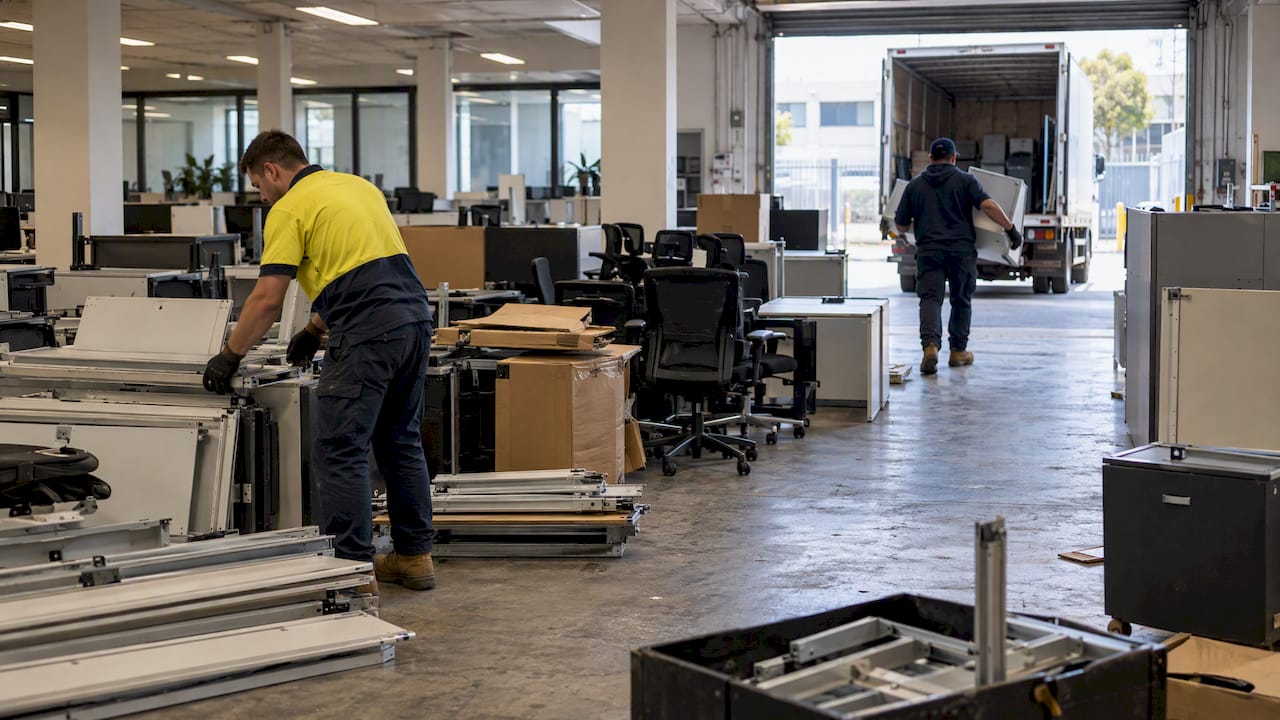
Treat your office move as a waste reduction project, not a clearance job. The right sequence is audit, then reuse or donate, then separate hazardous and electronic items, then contract a waste service that reports where everything ends up. The biggest levers are furniture reuse, early e-waste separation, sensible skip bin planning, and landfill levies that make diversion the cheaper option.
TL;DR:
- Reuse and refurbishment of office furniture can reduce embodied emissions by up to 80 percent and deliver significant procurement savings.
- Early segregation and proper disposal of hazardous and e-waste items are crucial to avoid contamination, liability, and delays in the move process.
- Proper planning of skip bin placement, source separation, and staged waste collection can minimize contamination, lower costs, and improve recycling rates during the move.
- Using destination reporting and licensed disposal providers ensures waste is properly processed and mitigates compliance risks, especially for e-waste and hazardous materials.
- Scheduling waste pickups and donation windows six to twelve weeks in advance enables maximum reuse, reduces landfill, and leverages landfill levies as a financial incentive to divert waste.
Table of Contents
- Pre-move waste audit and decluttering checklist
- Reuse, donation and refurbishment: where good assets should go
- E-waste and hazardous items: separation and specialist disposal
- Skip bins, hard waste collection and safer bin practices
- Recycling and source separation systems during the move
- Contracting a commercial waste service for your relocation
- Timeline and cost drivers: landfill levies and scheduling
- How a professional removal partner supports a low-waste move
- Quick ways Sydney City Rubbish can help your relocation
- Sources
- FAQ
Pre-move waste audit and decluttering checklist
A structured audit gives you control before anything is lifted. Walk each department and tag items by condition and destination: keep, sell, donate, repair, recycle, or dispose. This single step usually prevents the scramble that sends reusable furniture to landfill because nobody decided what to do with it in time.
Materials matter here. Single-material items such as steel filing cabinets or solid timber desks are straightforward to recycle or resell. Mixed composite furniture, laminated particleboard desks bonded with foam and fabric, for instance, is harder to separate and more often destined for landfill, so flag these early and look at refurbishment before assuming disposal is the only option.
Assign clear roles so decisions do not stall:
- A move lead who owns the overall schedule and budget.
- Move captains for each floor or department who run the tagging exercise.
- An IT asset owner who manages data wiping and device disposal.
- A facilities contact who liaises with the building manager on access and timing.
Start this process six to twelve weeks out for medium and large offices. IT equipment needs its own lead time too: confirm data security steps, including certified wiping or physical destruction of storage media, before any device leaves the building.
Reuse, donation and refurbishment: where good assets should go
Furniture and equipment that still work deserve a second life rather than a tip run. Reusing or refurbishing office furniture can deliver substantial carbon and procurement savings compared with buying new, and case studies from agencies such as the University of Melbourne and IP Australia show meaningful diversion and procurement savings when reuse is prioritised ahead of disposal.
Several practical routes exist for rehoming assets:
- Charities and social enterprise refurbishers often take desks, chairs, and storage units in good condition.
- Government and public-sector exchange platforms, similar in spirit to Govtree, let agencies pass on usable furniture internally before it reaches the open market.
- Refurbishment specialists can restore worn but structurally sound furniture to a resellable or reusable standard.
- Rental or product-as-a-service arrangements reduce the volume of furniture you own outright in the first place, which cuts disposal problems at the next move.
Reusing or refurbishing office furniture can cut embodied emissions by as much as 80% compared with buying new, according to a sustainable commercial furniture guide, which makes refurbishment one of the highest-impact choices available during a relocation.
E-waste and hazardous items: separation and specialist disposal
Some items legally cannot go in a general skip or landfill bin, and mixing them with regular waste contaminates recycling streams and creates liability. Common hazardous items found during office moves include:
- Batteries from laptops, UPS units, and emergency lighting.
- Fluorescent tubes and other mercury-containing lamps.
- Compressed gas cylinders from kitchens or fire systems.
- Sharps from first aid stations.
- Any materials suspected of containing asbestos in older fit-outs.
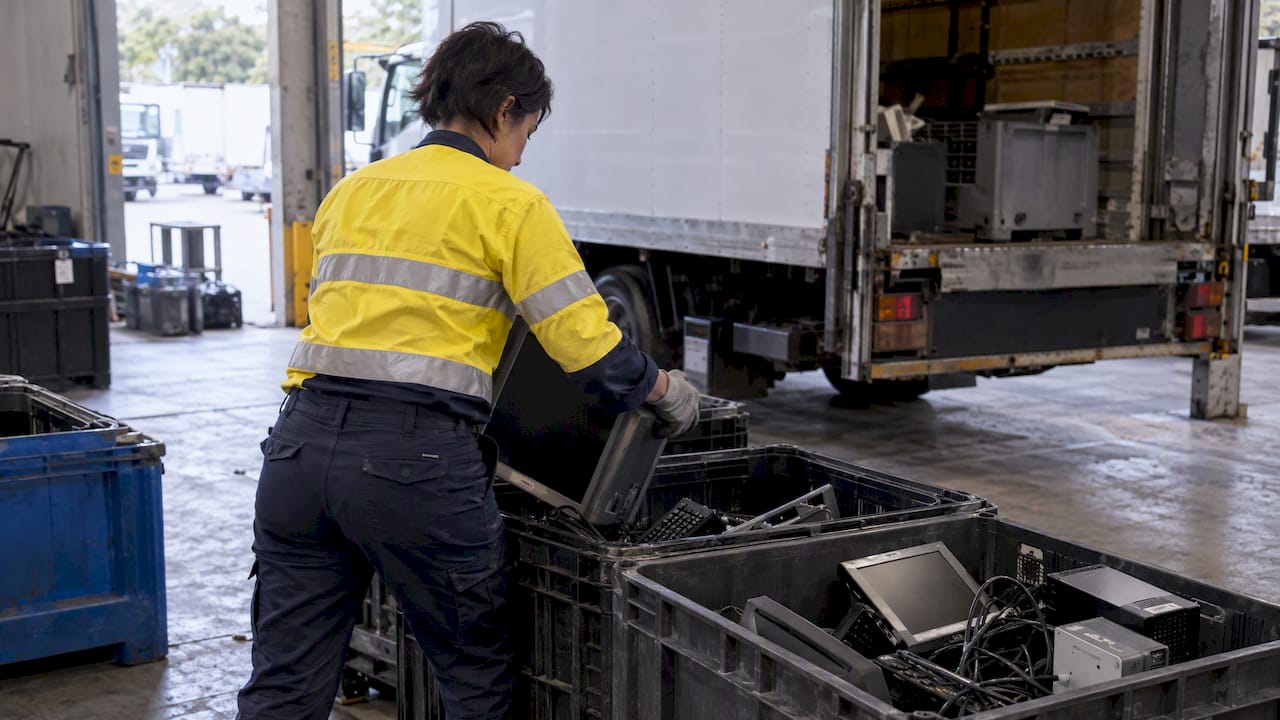
Typical e-waste includes computers, monitors, printers, networking gear, and phones. Data-bearing devices need a licensed IT asset disposal provider, and local council waste centres such as the one described in Albury City’s hazardous waste guidance accept some hazardous items only with bookings and specific acceptance rules, so check your own council before assuming a drop-off is straightforward.
Segregate these items early, label them clearly, and keep manifests and receipts from every collector. That paper trail protects you if a compliance question ever comes up. Book specialist pickups two to four weeks ahead, since licensed collectors run on their own schedules.
Skip bins, hard waste collection and safer bin practices
Choosing between a skip bin and a hard waste collection depends on volume and timing. A single skip suits a small office clearing out in one hit, while staged hard waste collections work better for larger moves spread over several weeks.
Placement matters as much as size. Guidance for commercial buildings recommends designing storage and collection points for easy truck access, avoiding kerbs, steps, or long manual carries that slow down collection and add cost.
A few practices cut contamination and downstream sorting costs:
- Separate recyclables from general waste at the point of disposal, not after the skip is full.
- Use clear signage at each bin so staff and movers know what goes where.
- Keep hazardous and e-waste streams physically apart from general skips at all times.
Pro Tip: Stage your final bin lifts after the donation and resale windows close, not before, so usable items never get buried under general waste.
Recycling and source separation systems during the move
A temporary but organised recycling setup keeps materials out of landfill while the office is in flux. The minimum useful streams are paper and cardboard, commingled containers, organics where a collection service is available, soft plastics, e-waste, and separate timber or metal.
Set up central collection stations rather than scattering bins everywhere:
- Use consistent colour-coding and labelling across every station so the system reads the same on every floor.
- Supply certified organics liners where food waste is collected, since standard plastic bags often contaminate that stream.
- Brief cleaning staff and move-day crews on the system before the first box is packed, not during the clean-up.
- Keep a simple count of bags or bin lifts per stream so you have real numbers for reporting afterwards.
This structure echoes what South Australia’s government office waste strategy recommends for ongoing office operations, including minimum-standard services and diversion targets as high as 90% in metropolitan areas, and it carries over neatly into relocation planning.
Contracting a commercial waste service for your relocation
A written brief gets you comparable quotes and avoids vague promises. Specify the following when you approach providers:
- The exact waste streams to be collected and how each will be processed.
- Destination reporting: where materials actually go, not just a general assurance of recycling.
- Weight or volume reporting frequency, so you have figures for internal sustainability reporting.
- Certifications or licensed partners for e-waste handling.
- Scheduling, site access responsibilities, insurance cover, and a remedy if a collection is missed.
Ask for manifests, recycling facility details, and references from similar office moves before signing anything. A provider that cannot produce destination reporting or a licensed e-waste partner on request is a red flag, regardless of how confidently they talk about recycling.
Pro Tip: Put destination reporting in writing before the move, not as a follow-up request afterwards; it is far harder to get once the truck has already left.
Timeline and cost drivers: landfill levies and scheduling
Landfill levies are one of the clearest financial arguments for diverting waste rather than binning it. The Victoria metropolitan landfill levy for 2025–26 sits at $169.79 per tonne, a figure that turns every tonne of avoidable landfill waste into a direct, avoidable cost.
Scheduling is the practical lever that lets you capture that saving. Allow enough lead time for donation partners and specialist collectors to take reusable items before the final skip lift, because once furniture is mixed into a general waste load, it is landfill-bound regardless of condition. A simple budgeting approach is to estimate volume in cubic metres per workstation, then apply levy assumptions for your state to build a sensible contingency into the move budget.
How a professional removal partner supports a low-waste move
When timelines are tight or hazardous items are involved, a professional partner handles disposal decisions that are otherwise easy to get wrong. Sydney City Rubbish offers hassle-free commercial rubbish removal and office waste services, which matters most when a lease deadline leaves no room for DIY sorting and multiple trips to a transfer station.
A carbon-neutral disposal opt-in can also form part of a move quotation, so it is worth asking any provider for destination reporting as a standard line item, not an afterthought.
When requesting a quote, be ready to provide site photos, estimated volumes by area, a list of hazardous and e-waste items, and your preferred donation window so reusable furniture has a genuine chance to be rehomed before collection day.
Quick ways Sydney City Rubbish can help your relocation
A relocation runs smoother when one provider handles the waste side from start to finish instead of juggling several bookings. Sydney City Rubbish’s commercial waste removal service covers office rubbish removal, furniture and joinery removal, scheduled pickups through truck and driver hire, and a carbon-neutral opt-in for clients who want their disposal reported against that standard.
To get a workable quote, share your estimated volumes, the waste streams involved, site access details, and your preferred collection window. Compare any quote against what it offers on destination reporting and insurance cover, since those two details separate a reliable partner from one that simply moves boxes out the door. You can request a quote here once your audit and donation plan are locked in.
Sources
These sources support the figures and standards referenced above: the Victoria landfill levy page confirms the current per-tonne rate, the Green Industries SA guide sets out diversion targets, the DCCEEW furniture sustainability guide backs the reuse savings, and EPA NSW’s better-practice guidelines support the collection point advice.
- EPA Victoria — waste levy
- Government office waste: Strategy and better-practice guide (Green Industries SA)
- Sustainability ideas: furniture (DCCEEW)
- Better Practice Guidelines for Waste Management and Recycling in Commercial and Industrial Facilities (EPA NSW)
FAQ
What does “office relocation” mean?
An office relocation is the process of moving a business’s staff, furniture, equipment, and operations from one premises to another. It typically involves planning for packing, transport, IT disconnection and reconnection, and the disposal or rehoming of items that will not move with the business.
How do I announce my office relocation?
Most businesses announce a move through an internal staff memo first, followed by updates to clients and suppliers via email, website notices, and signage at the old and new premises. Giving staff several weeks’ notice also supports the audit and donation process described earlier, since early warning means more time to decide what moves and what gets rehomed.
Who is the biggest waste management company in Australia?
There is no single authoritative ranking of the largest waste management company in the country, since market position depends on how you measure it, by revenue, fleet size, or contract coverage. For office relocations specifically, it is more useful to choose a provider based on destination reporting and licensed e-waste handling than on overall company size.
What should be included in an office moving checklist?
A solid checklist covers the audit and tagging process, donation and refurbishment arrangements for usable furniture, segregation of hazardous and e-waste items, bin or skip bookings, and a written brief for any waste contractor covering streams, reporting, and scheduling. Building in six to twelve weeks of lead time for a medium or large office, as outlined in the audit section above, gives each of these steps room to happen properly.
How far in advance should I book specialist e-waste or hazardous waste collection?
Book specialist collectors two to four weeks before your move date, since licensed providers for e-waste and hazardous materials often run on fixed schedules rather than short notice. Booking early also gives you time to gather the manifests and receipts needed for an audit trail.