$180.20 Levy and Scope Locked Quote for Sydney Office Clearance Costs
Most Sydney office clearances fall between a few hundred dollars for a single room and several thousand for a full floor, with the exact figure shaped by volume, waste type and building access. From 1 July 2026, the NSW waste levy adds $180.20 per tonne to landfill-bound mixed waste in the Metropolitan Levy Area, which covers Sydney. The fastest way to get a number you can trust is a photo-reviewed, scope-locked quote rather than a phone estimate.
TL;DR:
- A photo-based, scope-locked quote is the most reliable method to confirm costs, as it accounts for volume, waste type, access, and scope variations.
- The NSW waste levy rate will increase to 180.20 per tonne from July 2026, significantly impacting landfill disposal costs in Sydney.
- Separating recyclables and e-waste before pickup can reduce landfill volume and, consequently, overall clearance expenses.
- Small clearance jobs typically take a few hours and involve flat truck-load fees, while large jobs may extend over multiple days due to complexity.
- Accurate quotes should include labor, transport, disposal costs, and specifics on scope scope-locking, with building access arrangements confirmed upfront.
Table of Contents
- Sydney price ranges for common office-clearance jobs
- What actually drives the total cost
- What a reliable quote should include
- How long an office clearance takes from quote to completion
- Cutting costs through reuse and recycling
- Getting a quick, accurate quote from a professional rubbish removal service
- Sources
- FAQ
Sydney price ranges for common office-clearance jobs
Office clearance pricing in Sydney tends to cluster around three scopes, and knowing which one matches your job makes budgeting far simpler.
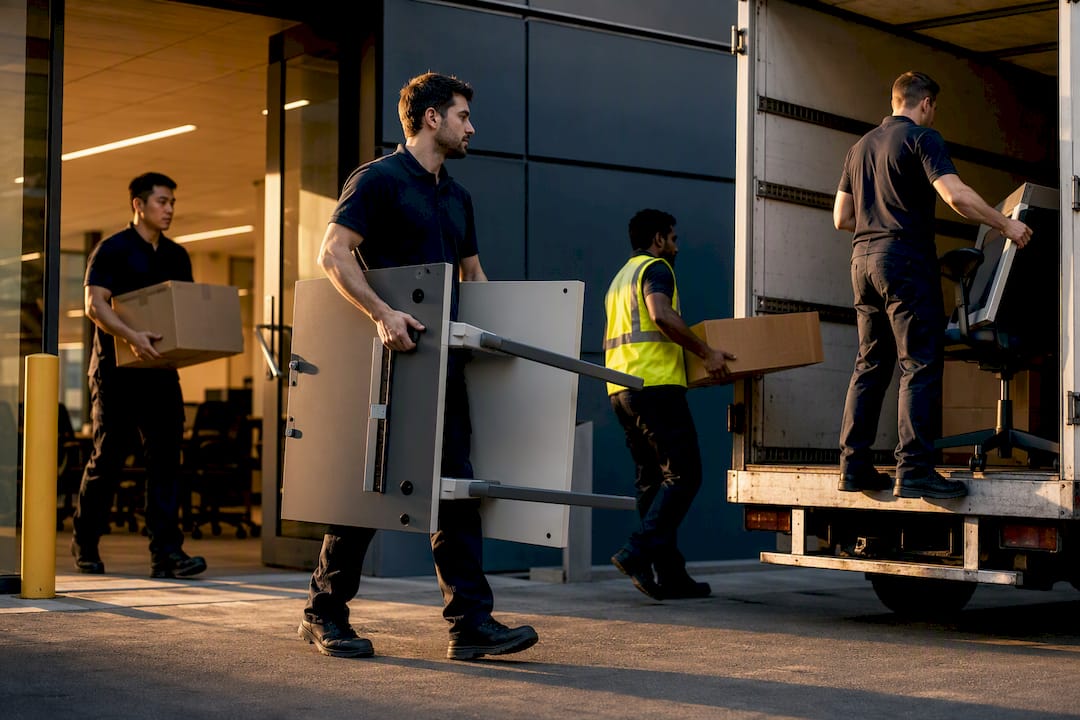
A small job, such as clearing a single office or a compact meeting room with a few chairs, a desk and some boxes, sits at the lower end of the market. These jobs typically involve one vehicle trip and a couple of hours of labour, and pricing is usually a flat truck-load fee rather than an hourly rate.
A medium job, covering a single suite of roughly 80 to 150 square metres with several desks, chairs and a small meeting area, costs more because it usually needs multiple trips or a larger vehicle, plus more labour hours to dismantle furniture and manage lift bookings.
Large jobs, including full-floor fit-outs and strip-outs, sit at the top of the range. These often bundle in wall and ceiling removal, floor finish stripping or concrete work, which pushes the total well beyond a straightforward furniture clearance.
Quoted prices commonly include:
- Labour and loading time for the crew on site
- Truck or trip fees for transporting the waste
- Standard disposal costs, including the NSW waste levy component
They typically exclude:
- Hazardous waste handling, which is quoted separately
- After-hours or weekend loading fees
- Specialist work such as concrete grinding or structural demolition
Because background pricing varies so much between suppliers and scopes, a photo-based quote remains the only reliable way to confirm where your job lands.
What actually drives the total cost
Several variables move the price more than anything else, and understanding them helps you control the final invoice rather than being surprised by it.
- Volume and truckloads: more furniture and equipment means more vehicle trips and more labour hours to load them.
- Waste type: general waste, recyclables, e-waste and hazardous materials each follow separate disposal streams with different costs.
- Access and logistics: stairs, shared lifts, loading-dock bookings and after-hours restrictions can all add time and building-specific fees.
- Specialist services: dismantling workstations, moving heavy items or grinding concrete floors requires extra equipment and sometimes permits.
The waste levy is the most consistent driver of disposal cost, and it applies regardless of which contractor you use.
$180.20 per tonne is the NSW waste levy rate for the Metropolitan Levy Area from 1 July 2026, and it applies to landfill-bound mixed waste generated in Sydney. That figure alone explains why separating recyclables and e-waste before a clearance can noticeably reduce your total bill.
What a reliable quote should include
A quote you can trust is built on specifics, not guesswork, and asking for the right details upfront avoids surprises when the crew arrives.
- Send photos of the space, or a floor plan for larger suites, along with notes on lift access, stairs and any loading-dock restrictions.
- Confirm the quote lists labour, truck or trip fees, disposal costs including the waste levy, and any recycling or e-waste handling separately.
- Ask whether the price is scope-locked, meaning it holds firm once the supplier has reviewed your photos or plan, rather than being an estimate that can shift on the day.
Before requesting quotes, it’s worth asking suppliers three things: what insurance and certifications they carry, how they handle hazardous or e-waste items, and how they coordinate building access such as lift bookings and loading-dock timeslots. A scope-locked quote based on photos protects you from the most common source of disputes at handover, which is a supplier adding line items once they see the job in person.
Pro Tip: Take wide, well-lit photos of every room, including cupboards and storage areas, so the quote accounts for everything before the truck arrives.
How long an office clearance takes from quote to completion
Turnaround times in Sydney vary by scope, but most suppliers can confirm a photo-based quote within a day or two and schedule the job soon after, which matters when you’re working to a lease handover date.
- Small jobs are usually completed within a few hours on the day of the booking.
- Medium suites with multiple rooms often take a full working day, particularly if furniture needs dismantling.
- Large floor clearances or strip-outs can run over multiple days, especially where stairs, heavy items or hazardous materials extend the work.
Building coordination adds its own timeline. Loading-dock bookings, lift reservations, after-hours access windows and security sign-in requirements should all be confirmed before the job date, not on the morning of the clearance.
Cutting costs through reuse and recycling
Reducing what goes to landfill is one of the most direct ways to lower your total clearance cost, since levy charges apply specifically to landfill-bound waste.
- Separate recyclables and e-waste from general rubbish before pickup to reduce the volume charged at the higher landfill rate.
- Use City of Sydney doorstep recycling and donation partners to rehome desks, chairs and cabinets that are still usable.
- Ask your supplier whether they work with certified recycling partners and offer a carbon-neutral disposal opt-in.
- Bundle strip-out and make-good work into one booking to avoid paying for a second truck and crew call-out.
City of Sydney also confirms that council rates do not cover business waste collection, so businesses need a private contract in place regardless of size.
| Approach | Cost impact |
|---|---|
| Separating recyclables and e-waste before pickup | Reduces landfill volume subject to the waste levy |
| Donating usable furniture via doorstep recycling | Avoids disposal cost for items that don’t need to be landfilled |
| Bundling strip-out and make-good in one booking | Avoids a repeat truck and crew call-out fee |
Getting a quick, accurate quote from a professional rubbish removal service
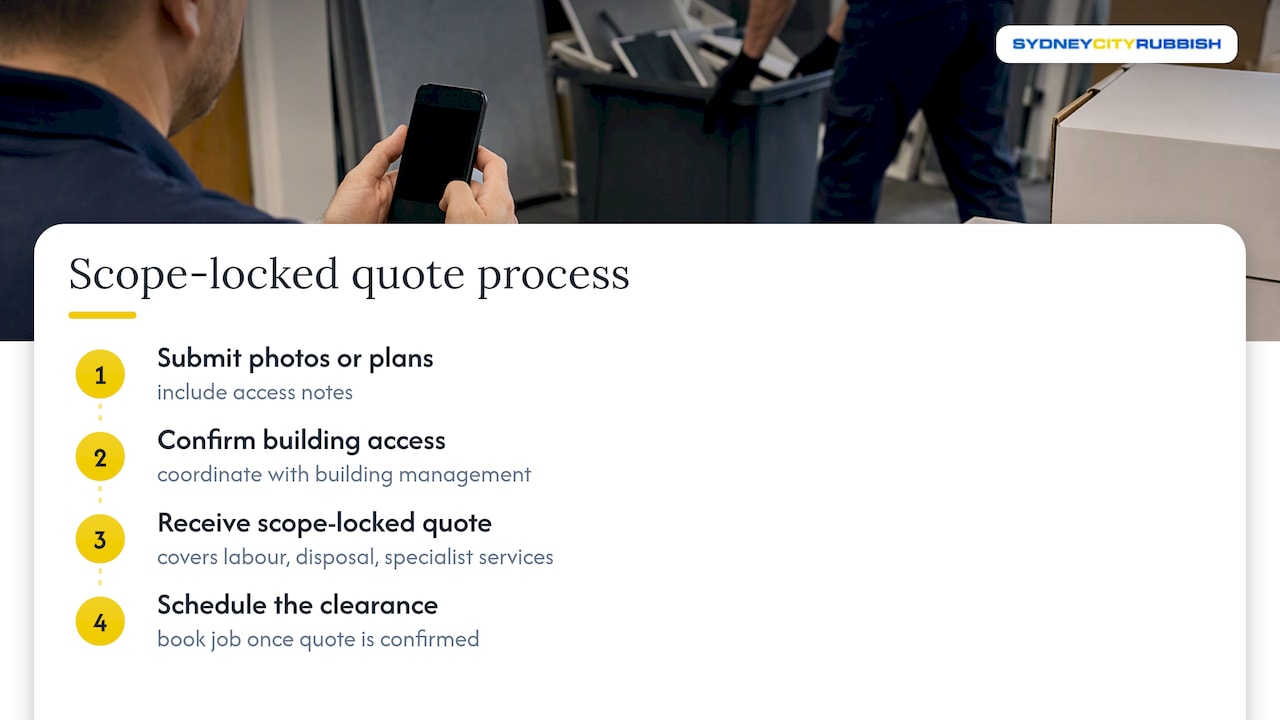
Getting a quote from a rubbish removal supplier that works from photos rather than estimates means the price is locked to your scope, not a starting figure that may increase once the crew arrives. The process generally includes coordination with building management for building access and aims for a thorough cleanup.
Typically, to get a reliable quote, you provide photos or floor plans with access notes, confirm building access arrangements, and receive a detailed, scope-locked quote covering labour, disposal, and any specialist services before scheduling the job.
If you’re planning a clearance around a lease handover or office move, the commercial waste removal Sydney page is the fastest way to start that process and get a firm number for your job.
FAQ
Who offers the cheapest rubbish removal service in Sydney?
Pricing varies by scope, access and waste type, so the cheapest option for one office may not suit another. Getting a photo-based, scope-locked quote from a Sydney supplier such as Sydney City Rubbish is the most reliable way to compare true costs rather than relying on advertised low rates.
What is the cheapest tip in Sydney?
Landfill and transfer station fees across Sydney all reflect the NSW waste levy, which sits at $180.20 per tonne for the Metropolitan Levy Area from 1 July 2026, so tip pricing does not vary as much as people expect. Separating recyclables and e-waste before disposal reduces the volume charged at the landfill rate, which has more impact on your total cost than shopping between tips.
How can I dispose of furniture in Sydney?
Usable furniture can be rehomed through City of Sydney doorstep recycling and donation partners, while items beyond reuse need a private waste collection service, since council rates don’t cover business waste. For office quantities, a commercial rubbish removal service can collect, sort and dispose of furniture in a single visit.
How can I get garbage picked up in Sydney?
Businesses need to arrange private waste collection, as City of Sydney confirms that council rates do not include business waste services. A commercial rubbish removal provider can schedule pickup around your building’s access rules, including lift bookings and loading-dock timeslots.