Sydney Retail Defit Costs $3,000–$60,000: Itemised Quotes, NSW Checks
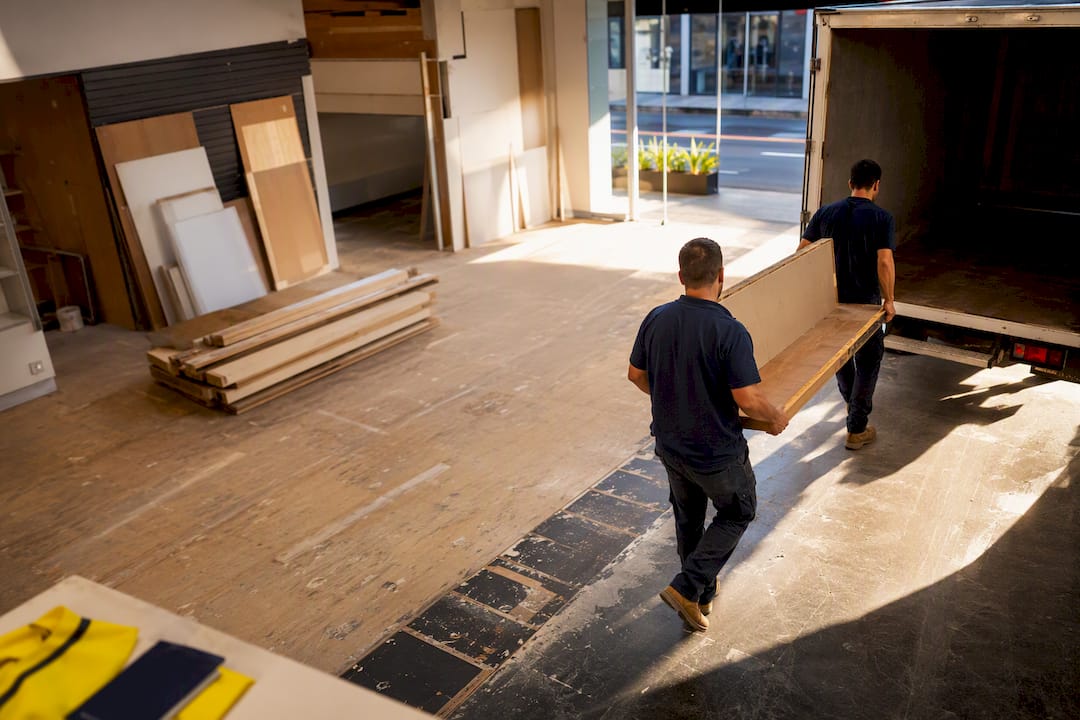
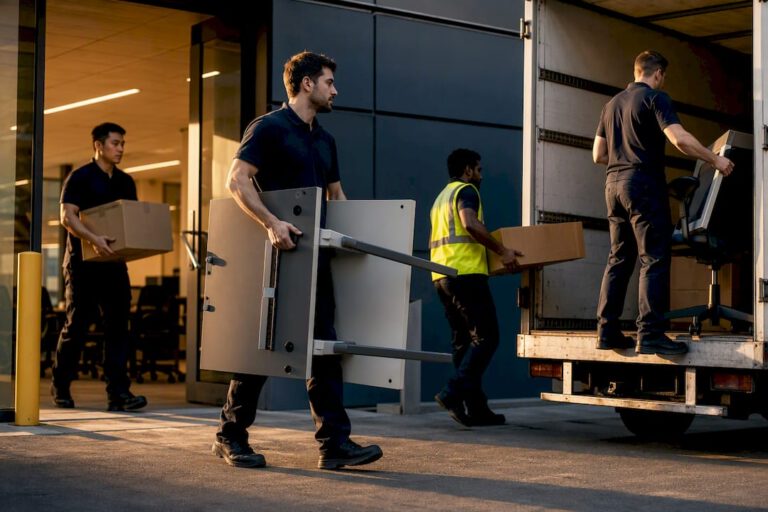
A typical retail de-fit in Sydney runs from around $3,000 for a small kiosk strip-out to $60,000 or more for a large tenancy inside a shopping centre. The two biggest swing factors are whether the site is inside a managed centre and whether asbestos or other regulated materials are present. This guide breaks down the cost bands, the compliance traps that inflate a quote, and how to get an itemised price you can trust.
TL;DR:
- Over half of the Sydney retail de-fit costs fall between $25,000 and $60,000, especially for shopping centre tenancies of 120 square metres or more.
- Costs inside shopping centres are approximately 20 to 40% higher than standalone strip shops due to mandatory design, contractor, and access requirements.
- Itemised quotes should break down labour, disposal, specialist trades, and centre-specific fees to avoid hidden charges and ensure lawful waste disposal.
- Asbestos removal costs escalate significantly if more than 10 square metres of bonded asbestos are involved, requiring licensed professionals and compliance with strict rules.
- Reducing costs involves choosing demountable fixtures during fitout, negotiating lease make-good clauses, and reselling reusable fixtures instead of paying disposal fees.
Table of Contents
- Cost estimates by tenancy size and location
- What a retail de-fit timeline looks like in Sydney
- How to reduce your retail de-fit costs
- Sydney City Rubbish: a local, compliant option for your de-fit
- Where to verify the rules cited here
- Sources
- FAQ
Cost estimates by tenancy size and location
Cost depends heavily on floor area, the amount of fixed joinery to remove, and where the tenancy sits. As a general guide, small tenancies of 30 square metres or less, such as a kiosk or a narrow strip-shop unit, typically involve straightforward fixture removal and a single truck run. Medium tenancies between 30 and 120 square metres carry more joinery, flooring and often ceiling work, while large tenancies above 120 square metres usually involve multiple trades, bulk waste volumes and a longer program.
Location within Sydney changes the equation too. Shopping centre tenancies commonly cost 20 to 40% more than an equivalent strip shop on a public street, and a full strip-out of a 120 square metre centre tenancy back to base building shell commonly falls between $25,000 and $60,000, according to industry cost guidance. That premium comes from centre-specific requirements: design manuals, nominated contractors, mandatory night works, and induction or escort fees that a standalone shop simply does not face.
Every quote, regardless of size, should show these line items broken out rather than bundled into a single figure:
- Labour for demolition, joinery removal and finishing trades.
- Truck or skip hire, priced by load size and number of trips, coordinated with top logistics companies in Sydney for fast, cheap parcel delivery.
- Tip fees and disposal costs, which vary by waste classification.
- Specialist trades such as electricians, HVAC technicians or asbestos removalists where needed.
- Centre-imposed fees, including access permits, security escorts and after-hours loading.
Our demolition and strip-out services page outlines the fixtures and materials typically involved in a retail strip-out, from shopfront joinery to ceiling grids and floor coverings.
What a retail de-fit timeline looks like in Sydney
Most retail de-fits in Sydney run over one to three weeks, depending on tenancy size and centre restrictions. The process usually starts with a site inspection and waste audit, where a contractor identifies fixed joinery, flooring, ceiling tiles and any materials that need testing before removal begins.
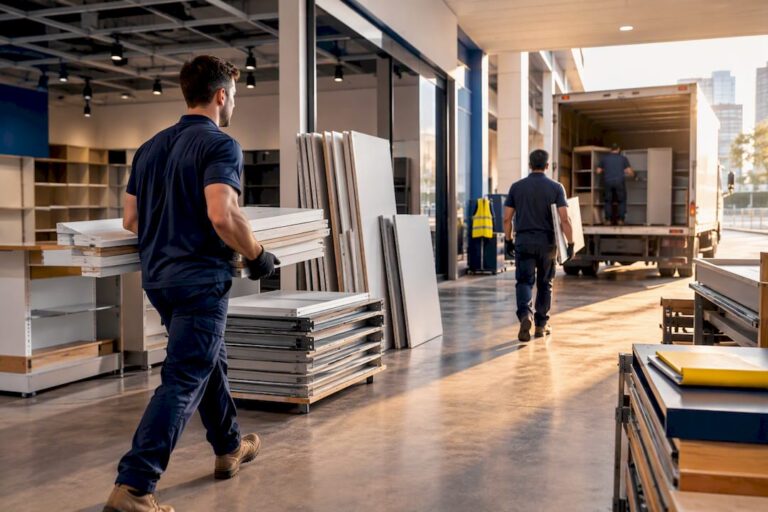
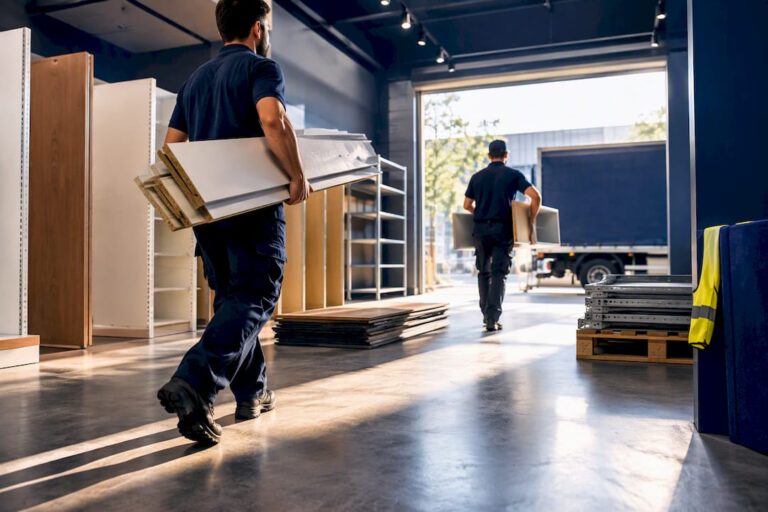
Once the scope is confirmed, demolition and strip-out work follows: joinery and shopfittings come out first, then services such as electrical and data cabling are capped or removed, and finally floor coverings, ceiling grids and any partition walls are stripped back to base building condition. Waste is sorted on site into streams for recycling, general waste and any hazardous material requiring separate handling.
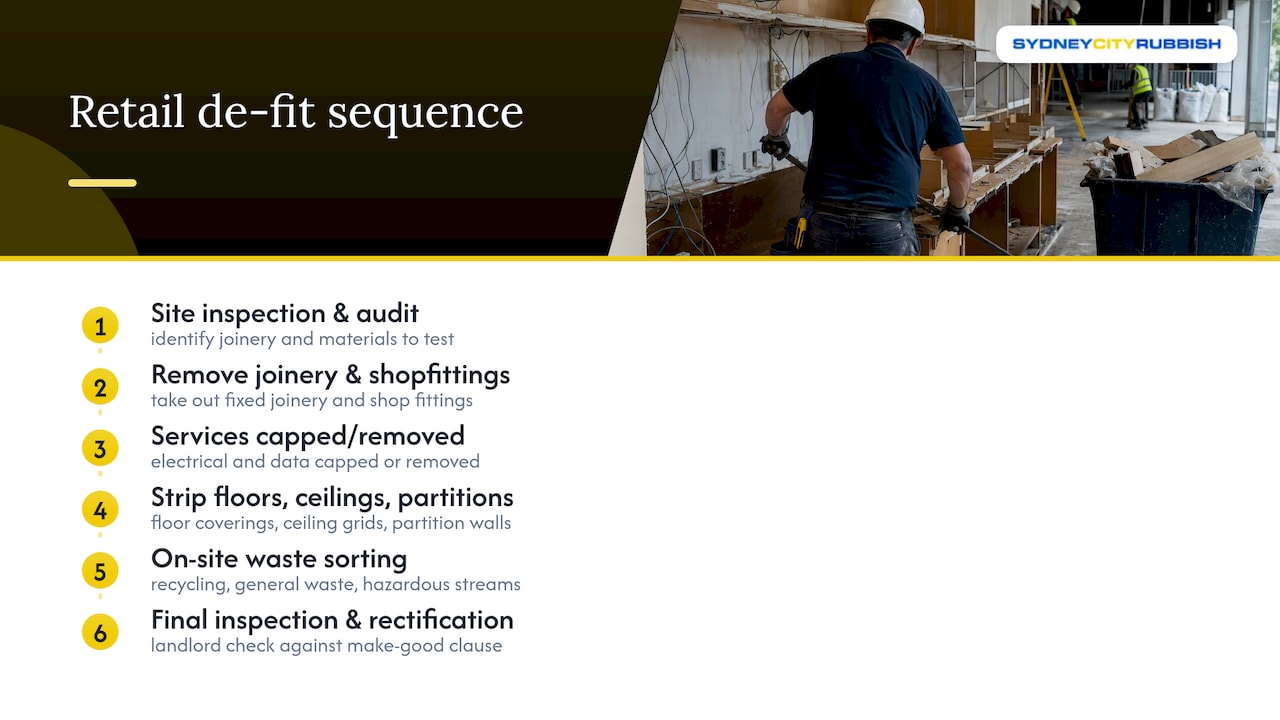
Centre tenancies add scheduling constraints. Many shopping centres restrict noisy work to overnight hours and require bookings for loading dock access, which stretches the same scope of work over more days than an equivalent strip shop. Landlords or centre management typically conduct a final inspection against the make-good clause before the tenant is released from the lease, so building in time for rectification work is worth planning for from the outset. Our guide to what a strip-out involves sets out the practical steps in more detail.
How to reduce your retail de-fit costs
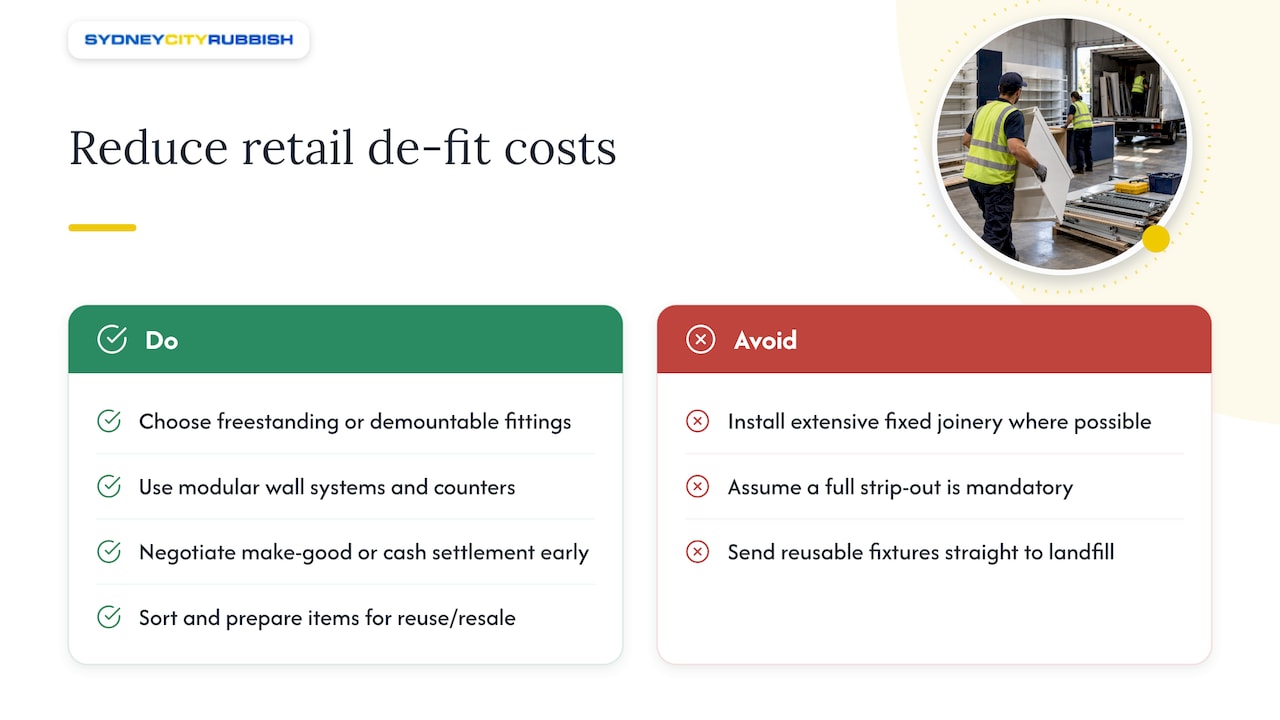
The single biggest lever tenants control is fitout design at the start of the lease. Freestanding gondolas, modular wall systems and demountable counters reduce the amount of fixed joinery that has to be demolished later, and they can be sold or reused rather than sent to landfill, according to retail fitout cost guidance. Fixed joinery, by contrast, is paid for twice: once to install, once to rip out.
Negotiating the make-good clause before signing a lease is the second lever. Some landlords accept a cash settlement in lieu of a full strip-out, particularly where the next tenant plans to reuse existing fixtures. It is worth raising this early rather than assuming a full strip-out is mandatory.
Reuse and resale also cut costs directly. Shelving, refrigeration units, lighting and counters often have resale value to other retailers or fitout companies, and diverting them from a skip reduces both disposal fees and the volume charged against your job. Our commercial waste tips page covers practical ways to sort and prepare waste to maximise what can be recycled or resold before the truck arrives.
Sydney City Rubbish: a local, compliant option for your de-fit
A professional rubbish removal company can handle the full scope of a retail de-fit: strip-out, makegood, floor finish removal and grinding, concrete cutting, truck and driver hire, and furniture and joinery removal, alongside e-waste and hazardous material disposal. Quotes may be provided electronically and promptly, with options for carbon-neutral disposal. Such companies often coordinate directly with building and centre management to arrange access, inductions and after-hours work, and may offer punctuality guarantees.
When you request a quote, ask for an itemised schedule of rates, support with your waste management plan, and disposal dockets or weighbridge receipts as proof of lawful disposal. Start with our commercial waste removal Sydney page to get a quote for your tenancy.
Where to verify the rules cited here
For current requirements, check SafeWork NSW’s asbestos licensing rules, the NSW EPA’s waste management toolkit, and City of Sydney’s asbestos disposal guidance.
Sources
- Construction and demolition waste: A management toolkit (NSW EPA)
- Remove and dispose of asbestos safely (City of Sydney)
- Management of asbestos in recycled construction and demolition waste – guide (SafeWork NSW)
- Retail fitout cost calculator (Going Rate)
FAQ
How much does a retail de-fit cost in Sydney?
Costs range from around $3,000 for a small kiosk to $60,000 or more for a large shopping centre tenancy. A full strip-out of a 120 square metre centre tenancy commonly falls between $25,000 and $60,000, according to industry cost guidance, with centre tenancies costing 20 to 40% more than an equivalent strip shop.
Why do shopping centre de-fits cost more than strip shops?
Shopping centres impose design manuals, nominated contractor lists, mandatory night works and access or escort fees that standalone strip shops do not face. These requirements extend the timeline and add labour costs on top of the base strip-out scope, according to retail fitout cost guidance.
What should I ask for on a de-fit quote?
Ask for an itemised schedule of rates covering labour, disposal and specialist trades separately, along with support for your waste management plan and disposal dockets or weighbridge receipts as evidence of lawful disposal, as recommended in the NSW EPA’s toolkit. These documents protect you against hidden charges and rejected loads.
Does asbestos affect de-fit costs in Sydney?
Yes. Removing more than 10 square metres of bonded asbestos requires a Class B licensed removalist, and friable asbestos requires Class A licensing under SafeWork NSW rules. Improper handling can also trigger significant penalties, so any older fitout should be inspected before demolition starts.
Can I reduce de-fit costs before my lease ends?
Choosing demountable fixtures such as freestanding gondolas and modular counters at fitout stage reduces the strip-out scope later and lets you resell fixtures instead of paying to dispose of them, according to retail fitout cost guidance. Negotiating the make-good clause in your lease before signing is another practical way to limit costs.