1–2 week Sydney retail strip outs: asbestos, waste, lease rules
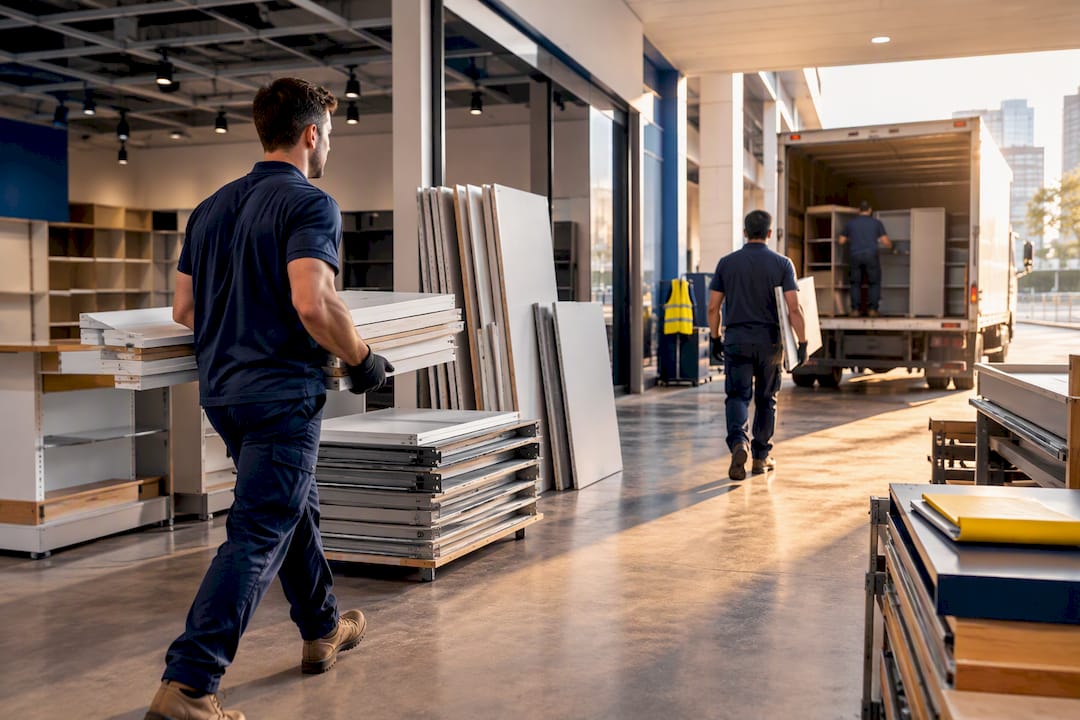
A retail strip out is the removal of non-structural fit-out (fixtures, joinery, ceilings, flooring, signage and services) to return a shop to base building or ready-for-refurbishment condition. Most retail businesses commission this work either to prepare a space for a new fit-out or to satisfy a lease make-good clause at exit. Before booking any trade, arrange a site inspection and check the make-good wording in the lease so the scope matches what the landlord actually expects.
TL;DR:
- Asbestos inspections are required before stripping out older retail sites, and budget contingencies should account for unexpected findings.
- Waste disposal must follow a detailed construction and demolition waste management plan, including waste classification, tracking, recycling, and proof of lawful disposal.
- Lease make-good clauses vary; verifying scope against initial condition reports and securing written agreements before works mitigate dispute risks.
- Timelines range from one to four weeks depending on size and complexity, with additional delays possible for asbestos or restricted access.
- Coordinated access and environmentally conscious waste tracking services can reduce delays and improve compliance during retail strip-out projects.
Table of Contents
- Step-by-step retail strip out process
- Timeline and cost considerations
- Safety, asbestos and regulatory requirements
- Waste management: preparing a CWMP and tracking disposal
- Make-good obligations and lease handover preparation
- Practical checklist and minimum timeline to manage a retail strip out
- How Sydney City Rubbish can help with your retail strip out
- Authoritative regulator and guidance links
- Sources
- FAQ
Step-by-step retail strip out process
A retail strip out follows a predictable sequence, whether it is being run by an internal project manager or briefed out to a contractor.
- Site inspection and scope definition: walk the space, check the existing condition report against current fit-out and confirm whether an asbestos register exists for the building.
- Planning and approvals: liaise with the landlord or building management on access times and loading dock bookings, schedule disconnection of power, water and data, and check whether any local council permits apply to the works.
- Execution: soft strip fixtures, joinery, ceiling tiles, floor finishes, lighting and signage, then isolate mechanical, electrical and plumbing services before engaging licensed trades for any asbestos or high-risk tasks.
- Waste segregation and handover: separate waste streams as the strip proceeds, complete a final clean, and walk the site with the landlord or property manager to confirm it meets the agreed condition.
Retail tenants preparing for lease exit should read the retail tenancy guide before finalising scope, since it sets out what an early inspection should cover. A managed demolition and strip out service can run this whole sequence, which is useful where a business has no in-house project manager.
Timeline and cost considerations
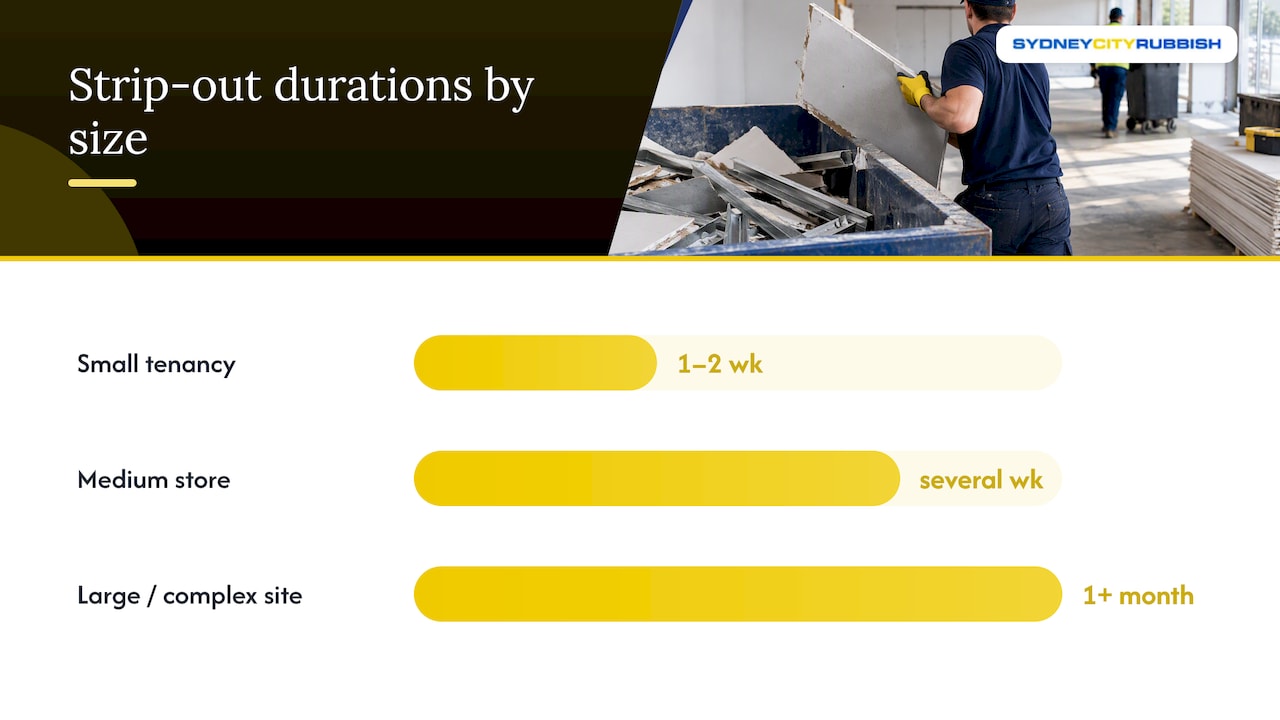
Duration depends heavily on size and complexity. Small retail tenancies generally take from about one to two weeks, medium format stores take several weeks, and large or architecturally complex sites can require a month or longer. Asbestos findings or restricted after-hours access can extend any of these timelines.
Quotes vary because of several cost drivers rather than the strip-out labour alone:
- Asbestos remediation, where licensed removal and disposal add both time and cost.
- Loading access, since sites needing hoists or cranes cost more to service than ground-floor shops with a rear dock.
- Out-of-hours work, often required in shopping centres with strict trading-hour restrictions.
- Skip bin, transport and disposal levies, plus recycling costs that shift with material mix.
A written Safe Work Method Statement is required before any high-risk construction work begins, according to SafeWork NSW, and pricing that skips this step is missing a mandatory compliance cost. To get a reliable quote, supply a clear scope, condition photos and the waste outcomes you need documented, rather than asking for a rough estimate over the phone.
Safety, asbestos and regulatory requirements
Retail buildings built or fitted out before the 1990s carry a real chance of containing asbestos in floor tiles, ceiling sheets or wall linings, and the compliance burden sits with the person controlling the workplace, not with an assumption that the building is clear. Where records are missing, treat the site as a suspect asbestos site until a competent inspection says otherwise, based on SafeWork NSW’s asbestos hazard guidance.
Several obligations apply once asbestos or other high-risk work is on the table:
- A written SWMS must be prepared before demolition or strip-out work that could disturb asbestos begins.
- Licensed asbestos removalists must give at least five calendar days’ notice before removal starts, per SafeWork NSW.
- Larger or structural demolition activities may trigger separate licensing requirements beyond a standard soft strip.
- Exclusion zones, PPE and supervised access apply for the duration of any asbestos-related task.
Pro Tip: Budget a contingency for unexpected asbestos findings on older retail sites, since a positive test partway through a strip out will otherwise blow out both schedule and cost.
Waste management: preparing a CWMP and tracking disposal
A construction and demolition waste management plan (CWMP) turns a strip out from a demolition job into a documented, defensible process. The NSW EPA’s Construction and Demolition Waste Management Toolkit sets out what a workable plan should contain.
- Waste classification for each material stream, since general waste, C&D waste and hazardous waste each have different handling rules.
- Estimated quantities by material, which supports accurate skip bin sizing and levy calculations.
- Nominated receival sites with a valid environment protection licence (EPL), checked before waste leaves site.
- Reuse and recycling options for timber, metal and masonry rather than defaulting everything to landfill.
- A contingency plan for contamination, covering what happens if asbestos or other hazardous material turns up mid-strip.
Weighbridge receipts and tracking records for each load give a paper trail matching what left the site to where it was received. Linking milestone payments to proof of lawful disposal, an approach the toolkit recommends, reduces the chance a contractor dumps illegally or uses an uncertified facility, which in turn lowers exposure to fines and unplanned levy costs.
Make-good obligations and lease handover preparation
The make-good clause in a retail lease determines how much of the strip out is actually compulsory. Some clauses require a full return to bare shell, others only ask for repair of damage beyond normal wear, and the difference can represent a large swing in scope and cost. Prosper Law’s guidance on make-good obligations notes that undisclosed make-good terms may not be enforceable, which makes it worth checking exactly what was agreed at lease signing rather than assuming the worst case applies.
- Compare the lease wording against the entry condition report and dated photos taken at the start of the tenancy.
- Where no entry report exists, current photos and a written record of disputed items still help at negotiation.
- Decide between three paths: complete the works yourself, negotiate a cash settlement with the landlord, or have the landlord manage reinstatement at the tenant’s cost.
- Put whichever agreement is reached in writing before works begin, since verbal understandings are the most common source of exit disputes.
Practical checklist and minimum timeline to manage a retail strip out
A working project brief can be built around three stages.
- Pre-works: review the lease and make-good clause, take condition photos, arrange an asbestos survey, prepare or request a CWMP, and confirm contractor insurance before accepting a quote.
- Onsite sequence: mobilise the crew, complete the soft strip, isolate mechanical and electrical services, segregate waste as it is generated, then clean and prepare for handover.
- Closeout: walk the site jointly with the landlord or property manager, collect waste receipts and disposal records, and confirm sign-off before requesting return of the security deposit.
Pro Tip: Keep every waste receipt and the signed condition report in one folder. If a make-good dispute arises later, this is the evidence that settles it fastest.
How Sydney City Rubbish can help with your retail strip out
Running a compliant strip out on top of day-to-day trading pressure is a lot to manage alone. Sydney City Rubbish handles building strip out, make-good and de-fit work, truck and driver hire, and concrete cutting and grinding for retail tenancies of any size, alongside construction waste disposal that keeps every load tracked and accounted for.
- Coordinated access booking directly with building management, removing one of the more common causes of strip-out delay.
- An option for environmentally conscious waste disposal is available for clients who want their waste stream tracked against sustainability standards.
- Fast electronic quoting is offered to provide pricing for a scope without a lengthy back and forth.
- Punctuality and thorough cleanup are priorities in service delivery.
For sites needing secure temporary storage for removed fixtures or joinery before final disposal decisions are made, a shipping and storage container can bridge the gap between strip out and refit. To brief Sydney City Rubbish for a quote, send through the lease scope, condition photos and any make-good clause details, then request a quote via commercial waste removal Sydney.
Authoritative regulator and guidance links
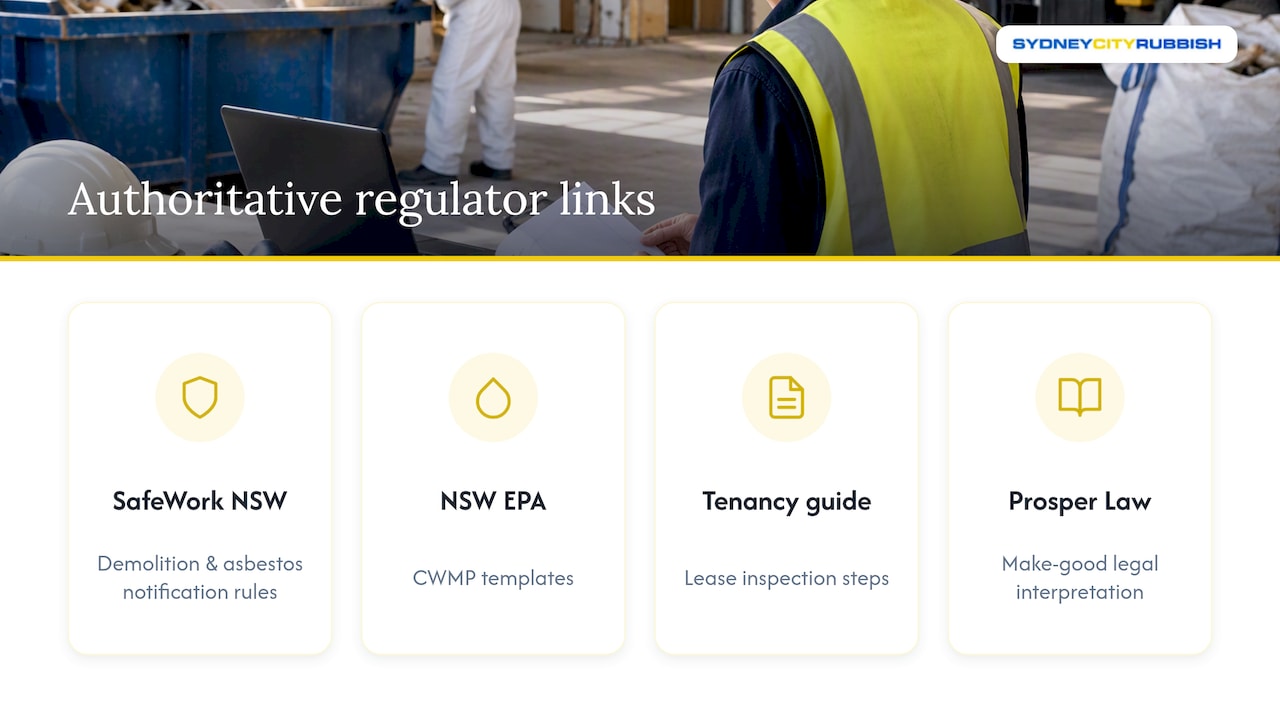
For direct reference, SafeWork NSW covers demolition and asbestos notification rules, the NSW EPA toolkit provides CWMP templates, the retail tenancy guide explains lease inspection steps, and Prosper Law sets out make-good legal interpretation.
Sources
- Make Good Obligations in Commercial Leases Explained | Prosper Law
- Demolition | SafeWork NSW
- Construction and Demolition waste management toolkit | NSW EPA
- Retail tenancy guide | NSW Small Business Commissioner
FAQ
What does “strip out” mean?
A strip out is the removal of a fit-out’s non-structural elements, including fixtures, joinery, ceilings, flooring and services, to return a space to base building or shell condition. It is distinct from structural demolition, which involves load-bearing walls or the building’s core structure.
What does “soft strip out” mean?
A soft strip out refers to removing fixtures, fittings, partitions, ceilings and finishes by hand or with light tools, without touching structural elements. It is usually the first phase of a full strip out and is completed before any licensed demolition or asbestos removal work begins.
Do I need an asbestos survey before a retail strip out?
Yes, if the building’s asbestos status is undocumented or it was fitted out before the 1990s, a competent inspection is needed before works start. SafeWork NSW places the legal responsibility for identifying asbestos with the person in control of the workplace.
How long does a typical retail strip out take?
A small retail tenancy generally takes one to two weeks, a medium-sized store two to four weeks, and a large or complex site four weeks or longer. Asbestos findings or restricted access hours can extend any of these ranges.
What happens if I don’t meet my lease’s make-good clause?
Failing to meet a make-good clause can lead to disputes over the security deposit or landlord-managed reinstatement charged back to the tenant. Reviewing the clause early and documenting the site’s condition, as outlined in Prosper Law’s make-good guidance, reduces this risk.