Protect Your Deposit: End of Lease Plan for Australian Tenants

End of lease work means the strip-out, rubbish removal and make-good obligations a commercial tenant completes before handing back the keys. The single most important action is to check your lease schedule and the condition report signed at commencement, then open make-good discussions with your landlord 6 to 12 months before expiry, as recommended by Bold Property Group. A professional rubbish removal service is one option for delivering the physical works once the scope is agreed.
TL;DR:
- Start make-good discussions six to twelve months before lease expiry to allow for inspection, quoting, and scope negotiation, reducing costs and delays.
- The standard of make-good work varies from simple clean-up to full building reinstatement, with the heaviest and most expensive being base building removal.
- Obtain detailed, itemised quotes from licensed contractors early, including waste disposal and hazardous materials handling, to avoid unexpected expenses.
- Document the property condition thoroughly at lease commencement and during final inspection with photos, reports, and receipts to support your compliance and dispute defense.
- If the landlord plans to refurbish the space, a cash settlement may be preferable, but it requires a clear written deed outlining the payment scope and settlement terms.
Table of Contents
- What make-good and strip-out mean in commercial leases
- When to start planning and realistic timelines
- Services contractors supply for end-of-lease handovers
- Cost drivers and how to budget or evaluate a cash settlement
- How to choose a contractor: vetting questions and a procurement checklist
- Handover checklist: actions in the final 12 weeks
- Detailed legal obligations and tenant rights at lease end
- Steps to document property condition and conduct final inspections
- How landlord expectations and lease terms influence end-of-lease requirements
- Implications of deposit retention and return process
- Strategies for negotiating lease end terms and potential disputes resolution options
- How Sydney City Rubbish can help deliver end-of-lease works
- Sources
What make-good and strip-out mean in commercial leases
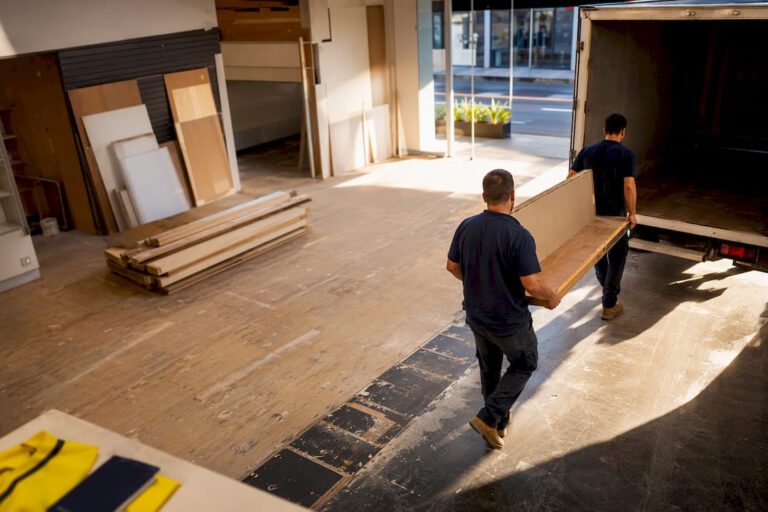
A strip-out is physical work: ripping out partitions, joinery, carpet tiles and ceiling grids until the tenancy is empty. Make-good is the contractual promise behind it, and it can mean far more than a strip-out. According to Tau Constructions, make-good often bundles the strip-out with repainting, patching walls, replacing damaged flooring and general repairs, so the space meets whatever standard the lease demands. Vacant possession, meanwhile, is the legal state the landlord is entitled to receive: an empty premise, free of your goods and rubbish, at the agreed date.
Three standards turn up repeatedly in commercial leases. The lightest is “clean and in good repair”, which mostly means removing your fit-out and fixing obvious damage. The middle standard returns the space to its condition at lease commencement, which is why that original condition report matters so much. The heaviest is base building or bare shell reinstatement, stripping the tenancy back to raw slab and services, and LegalVision notes this is consistently the most expensive standard to meet. Your lease wording, any annexed make-good schedule, and the commencement report together fix which standard applies to you.
When to start planning and realistic timelines
Six to twelve months before lease expiry is the window most industry practitioners recommend for opening make-good talks, according to Bold Property Group. That lead time gives you room to inspect the premises, gather competing quotes, and negotiate scope before the landlord’s expectations harden into a formal demand.
Typical works on an average commercial tenancy run 2 to 6 weeks once contractors are booked, though larger premises, multi-level fit-outs or hazardous material clearances stretch well beyond that. Council permits for demolition or scaffolding add their own lead time on top.

Leave planning too late and the costs compound quickly. Rushed contractors charge a premium for compressed schedules, quality suffers, and if the space isn’t handed back on time you risk hold-over rent, penalty clauses or a dispute over what condition you actually left behind. Early planning is the cheapest insurance you can buy against all three.
Services contractors supply for end-of-lease handovers
A properly scoped end-of-lease quote should cover:
- Rubbish removal and truck or crew hire for general waste, old furniture, and construction debris left behind after the fit-out comes down.
- Strip-out and light demolition, including partition walls, joinery, ceiling tiles and floor coverings.
- E-waste handling and secure data destruction for computers, servers and networking gear, so sensitive information doesn’t leave the building on a hard drive.
- Asbestos and hazardous waste procedures, relevant in older buildings where flooring adhesives, ceiling tiles or insulation may contain regulated materials.
- Final cleaning, painting and minor repairs to bring the space up to whatever standard the lease specifies.
Missing any of these from your quote request is how “surprise exclusions” creep into a final invoice. Ask every contractor to itemise each service line separately, not bundle it into one lump figure.
Cost drivers and how to budget or evaluate a cash settlement
Quotes for the same premises can vary enormously, and the gap usually comes down to five factors: the scope required (a basic clean versus a full base building strip), the materials that need removing (carpet tiles and suspended ceilings cost more to strip and dispose of than bare concrete), site access and staging (a loading dock on street level is cheaper to service than a fourth-floor tenancy with one lift), timing (weekend or after-hours work costs more than standard business hours), and whether hazardous materials are present.
A basic clean-and-repair job sits at the low end of the cost scale; base building reinstatement, involving ceiling grids, services capping and full demolition, sits at the top, consistent with LegalVision’s observation that this standard is usually the most costly to achieve.
Sometimes a cash settlement makes more sense than physical works, particularly where the landlord plans to refurbish the space regardless. ProRealty notes cash settlements are common precisely because landlords prefer to control their own refurbishment. If you go this route, insist on a written deed that states exactly what the payment discharges and closes off any future claim.
How to choose a contractor: vetting questions and a procurement checklist
Before you sign anyone up, run through this checklist:
- Confirm insurance and licences. Ask for current public liability cover, workers’ compensation, and, where the site requires it, asbestos-safe credentials or specific licences for hazardous material removal.
- Check operational fit. Can the contractor work within your landlord’s timeline? Do they understand site access constraints, loading dock booking, or traffic management if the building sits on a busy street?
- Confirm equipment and crew capability. A strip-out with structural partitions needs different gear and different hands than a simple furniture and rubbish clearance.
- Require an itemised quote. Line items for rubbish removal, strip-out, e-waste, and cleaning let you compare contractors properly and spot gaps before work starts.
- Ask for waste transfer dockets and disposal destinations in writing. RICS guidance points to documented disposal evidence as standard industry practice, and it protects you if a landlord later questions where materials ended up.
- Request photo evidence at completion, timestamped and matched against the original condition report.
- If settling in cash, get a signed deed, not an email exchange, confirming what the payment covers.
- Ask for references from similar make-good projects, ideally in comparable commercial buildings.
Pro Tip: Ask every quoted contractor the same question: “What happens to the waste after it leaves site?” A vague answer is a red flag; a specific answer naming a transfer station or recycling facility is what you want in writing.
Handover checklist: actions in the final 12 weeks
Working backwards from your handover date keeps the process orderly instead of frantic.
- Weeks 12 to 10: Confirm the make-good scope with your landlord in writing, referencing the lease schedule and commencement condition report.
- Weeks 10 to 8: Obtain at least two or three competing quotes and compare them line by line.
- Weeks 8 to 6: Book your chosen contractor and lock in dates, allowing buffer time for hazardous clearances if needed.
- Weeks 6 to 2: Supervise the strip-out and rubbish removal, collecting waste dockets and progress photos as work proceeds.
- Final week: Complete cleaning, touch-up painting and minor repairs, then request landlord sign-off before returning keys.
Keep these documents on file, ideally in a single folder you can produce on request:
- The original commencement condition report and photos.
- Every invoice and waste transfer docket from the job.
- Dated completion photos matched against the commencement report.
- A signed acceptance letter or, if applicable, a deed of settlement.
The items tenants most often forget are the ones that aren’t visible in a walkthrough: cabling above ceiling tiles, old signage brackets, adhesive residue from carpet tiles, IT racks bolted to walls, and plant equipment on the roof. Walk the whole tenancy, including the roof and any storage cages, before you call the job finished.
Detailed legal obligations and tenant rights at lease end
Your make-good obligation comes directly from the lease document, not from a general industry norm, so the specific wording of your clause governs everything. Most commercial leases specify one of the three standards discussed earlier, and many attach a schedule describing exactly what must be removed or repaired. Tenants have the right to see and rely on that wording rather than accept a landlord’s verbal description of what’s expected.
Failing to hand back vacant possession by the expiry date carries real consequences. LegalVision points out that leaving goods or rubbish behind, or failing to complete agreed make-good works, can trigger hold-over rent, penalty provisions, or legal action to recover the landlord’s costs of completing the work themselves.
Tenants also have a right to negotiate variations to the make-good clause during the tenancy or at renewal, but any variation needs to be confirmed in writing before you rely on it. A landlord’s informal agreement to “let it go” on a particular item means nothing if it isn’t documented, and disputes at handover time often trace back to exactly this gap between a verbal understanding and the written lease.
Steps to document property condition and conduct final inspections
Documentation starts long before the final inspection. Your best asset is the condition report signed at lease commencement, matched with dated photographs and, ideally, an inventory of fixtures and finishes. QSBC identifies this report as the single strongest protection a tenant has against a disputed make-good claim, because it establishes the baseline everything else gets measured against.
As expiry approaches, conduct your own pre-inspection walkthrough at least four to six weeks out, photographing every room, service riser and external area against the original report. This lets you spot discrepancies while there’s still time to address them, rather than discovering a problem the day the landlord’s agent walks through.
At final inspection, bring your own photo record and invite the landlord’s representative to note any disagreement in writing on the spot. Where the landlord’s assessor flags an item you dispute, ask for their reasoning against the specific lease clause, not a general standard. A written record of what was agreed, disputed or deferred at that inspection becomes critical if the matter later escalates.
How landlord expectations and lease terms influence end-of-lease requirements
Landlord expectations vary enormously depending on what they intend to do with the space next. A landlord planning to re-lease to a similar tenant may accept a lighter clean-and-repair standard, since a full strip-out achieves little for their next fit-out. A landlord planning a complete refurbishment often prefers a cash settlement over physical works entirely, because tenant-performed reinstatement gets demolished again within months anyway.
This is where the specific lease terms matter more than any general industry practice. A make-good schedule attached to the lease overrides a landlord’s informal preference, and a base building clause locks in the heaviest standard regardless of what the landlord actually plans to do with the space. Bold Property Group suggests that when a landlord clearly intends to refurbish, tenants have a genuine argument that a full reinstatement causes no demonstrable loss, strengthening a case for a reduced cash settlement instead.
Building type and location shape expectations too. A ground-floor retail tenancy in a busy strip typically faces stricter shopfront and signage removal requirements than a back-office suite in a commercial tower, simply because the landlord’s next tenant will judge the space on street presentation.

Implications of deposit retention and return process
Most commercial leases secure the make-good obligation with a bank guarantee or security deposit, and the landlord’s right to draw on it depends entirely on whether the agreed standard has been met. If the premises fall short of the make-good clause at final inspection, the landlord can typically retain funds to cover the cost of completing the work themselves, then bill the tenant for any shortfall beyond the deposit.
This is why matching your handover documentation against the exact lease standard matters so much. A landlord withholding a deposit over a dispute you can counter with photos, dockets and a signed condition report is in a far weaker position than one facing a tenant with no records at all. Ask your landlord in writing to confirm deposit release, or the specific deductions applied, within a set number of business days of final inspection, and keep that request on file.
Where a cash settlement replaces physical make-good works, the deposit question usually resolves at the same time. The settlement deed should state explicitly whether the deposit is released, applied against the settlement figure, or retained for some other purpose, so there’s no ambiguity once the keys are handed over.
Strategies for negotiating lease end terms and potential disputes resolution options
Most make-good disagreements settle commercially rather than in a courtroom. Bold Property Group reports that quantifying the disputed work with competing contractor quotes, then negotiating a cash figure from that range, resolves the majority of disputes faster and cheaper than formal proceedings.
The strongest negotiating position comes from documentation, not argument. A tenant holding a commencement condition report, dated photographs, and multiple contractor quotes can counter an inflated landlord claim with concrete numbers rather than a verbal disagreement. If the landlord intends to refurbish regardless of what you do, gathering quotes for their intended works can support an argument that your reinstatement causes no real loss, a point RICS links directly to poor documentation as a root cause of drawn-out disputes.
Where negotiation stalls, most commercial leases specify a dispute resolution clause, often mediation or expert determination before litigation. Escalating straight to legal action is usually the slowest and costliest path, and it’s worth exhausting the negotiated cash settlement route first, backed by a clear written record of every quote, inspection note and email exchange along the way.
How Sydney City Rubbish can help deliver end-of-lease works
Once your make-good scope is agreed, the work itself still needs a contractor who turns up on time and leaves nothing behind. Sydney City Rubbish handles the physical side of commercial handovers across Sydney, from general rubbish removal and truck hire to strip-outs and small demolition, including secure e-waste handling for old office electronics and a carbon-neutral disposal option for clients who want their waste stream managed responsibly.
What sets a dedicated commercial provider apart from a general handyman or a strip-out subcontractor juggling five sites is documentation. Reputable commercial providers often supply itemised quotes, keep waste receipts on hand, and can provide photo evidence of completed work, providing the paper trail needed if a landlord disputes the standard achieved or if you’re negotiating a cash settlement instead of physical works.
If your lease expiry is on the horizon, get a quote for your end-of-lease rubbish removal and cleanout or contact the team directly to talk through your scope of works before you lock in dates with anyone else.
Sources
- Make Good Obligations in commercial leases | LegalVision
- Make-good Australia, 3rd edition | RICS
- Make-good factsheet | QSBC
- Make-good obligations in commercial leases | Bold Property Group