$150–$250 Minimums in Sydney: Cubic Metre Rubbish Costs & Permits
A cubic metre is a cube one metre on each side, roughly the space taken up by a mattress laid flat or three or four filled wheelie bins. Sydney businesses can generally expect a moderate range of prices per cubic metre for general waste removal, though most suppliers apply a minimum job charge regardless of load size. Photograph your rubbish, estimate the volume roughly, and request a quote before committing to a bin or truck booking.
TL;DR:
- A cubic metre of rubbish can fit a queen mattress, six to eight moving boxes, or one small armchair, with weight affecting cost for heavier materials like soil or rubble.
- Prices for waste removal in Sydney vary based on waste type, with construction debris and soil costing more due to weight and levy charges, and green waste usually cheaper.
- Most suppliers charge a minimum fee between $150 and $250, and factors like access, hazardous materials, and distance to the receival facility influence the final quote.
- Accurate measurement and clear photos of rubbish, along with access details, can prevent price revisions and help secure a precise quote upfront.
- For quick, volume-based quotes, suppliers like Sydney City Rubbish accept photos and rough estimates and handle compliance paperwork, saving property managers time.
Table of Contents
- What a cubic metre of rubbish looks like in Sydney
- What does cubic metre rubbish removal cost in Sydney?
- Skip bins, bulka bags or truck removal: which suits your job?
- Council rules, asbestos limits and the waste levy you need to know
- How to measure your rubbish and prepare it for pickup
- Choosing the right service and vetting your supplier
- Sydney City Rubbish: fast, compliant quoting by the cubic metre
- Sources
- FAQ
What a cubic metre of rubbish looks like in Sydney
A cubic metre measures one metre wide, one metre deep and one metre high, giving you 1,000 litres of space to fill. That is not an abstract figure once you picture it against everyday junk. Property managers and site supervisors quoting cubic metre rubbish in Sydney find it easier to work from real examples than from the raw maths.
Here is roughly what fits into common load sizes:
- 1 m³: a queen mattress laid flat, or six to eight standard moving boxes, or one small armchair.
- 2 m³: an office desk with a filing cabinet, or a full lounge suite minus the frame, or ten to twelve garbage bags of mixed office waste.
- 3 m³: a small kitchenette strip out, or a studio apartment’s worth of furniture, or a Ute tray piled high with garden waste.
- 4–6 m³: a full one-bedroom office fit-out clear, a small bathroom demolition’s rubble, or several cubic metres of green waste after a site clean-up.
Loose material behaves very differently from compacted material. A skip full of broken furniture looks enormous but weighs little, while the same skip packed with soil or masonry rubble weighs several times more and often hits weight limits before it looks full.
What does cubic metre rubbish removal cost in Sydney?
Pricing in Sydney generally runs in bands rather than fixed rates, because waste type changes cost more than almost anything else. General household or office waste tends to be priced moderately per cubic metre. Green waste from garden clearing or landscaping usually costs less, often at a lower range per cubic metre, because it’s lighter and easier to process. Construction and demolition waste, including rubble, tiles and plasterboard, typically runs higher, driven by weight and stricter receival requirements.
Why the numbers move so much: the NSW EPA’s metropolitan waste levy is charged per tonne at licensed receival facilities across Greater Sydney, and that levy sits on top of the facility’s own gate fee. A heavier load of the same volume, such as soil or concrete, pushes the levy cost up sharply even when the cubic metre count stays identical.
Most suppliers apply a minimum charge, commonly somewhere from $150 to $250, so a tiny load rarely gets a proportionally tiny price. Beyond waste type and the levy, five things move your quote:
- Weight and material type. Rubble and soil cost more per m³ than furniture or cardboard.
- Hazardous items. Asbestos, batteries, paint and e-waste require separate handling and add cost.
- Access and parking. Multi-storey buildings, loading dock restrictions or street permit needs add time and labour.
- Distance to the receival facility. Sites further from a licensed tip pay more in transport time.
- Whether tipping and levy fees are already included. Some quotes bundle these in; others add them afterwards.
Before requesting quotes, gather a few photos of the load, a rough cubic metre estimate, and a note on access, including stairs, lifts or restricted parking windows. Suppliers quoting cubic meter waste disposal jobs sight unseen almost always revise the price once they see the real volume.
Skip bins, bulka bags or truck removal: which suits your job?
Skip bin sizes are usually sold under simple labels, but each one maps directly to a cubic metre volume. Getting this translation right avoids paying for a bin that’s the wrong size for the job.
- 2 m³ skip: suits small clean-ups, a single room strip out or garden waste from a modest yard.
- 4 m³ skip: the most common choice for office clear-outs, bathroom renovations or medium construction jobs.
- 6 m³ skip: fits a kitchen renovation, a larger strip out or several rooms of mixed office furniture.
- 10 m³ skip: suited to whole-floor fit-out removals, larger demolition jobs or bulky construction waste.
- Bulka bags: roughly 1 m³ each, useful where a full skip won’t fit or where council permits make bin placement difficult.
Skip hire works well when you control the site, have space for delivery and collection, and don’t need the bin cleared same day. Truck or hand-loaded removal suits jobs where access is tight, timing is tighter, or waste needs carrying from upper floors, because a crew loads and removes it in one visit rather than leaving a bin on site for days.
Council rules, asbestos limits and the waste levy you need to know
Placement rules and disposal law affect both cost and legal risk, and ignoring them is the fastest way to end up with a rejected load or a fine. The City of Sydney’s bulky-item collection rules cap volume for residential pick-ups, typically around 1 m³ for single dwellings and up to 4 m³ for multi-unit buildings, with strict placement instructions for kerbside collection.
Placing a private skip bin on a public road in inner Sydney generally needs a council permit. The Inner West Council’s skip bin permit form sets maximum bin dimensions, limited free placement periods and fixed permit durations, with fines for bins left beyond the approved window.
Asbestos changes everything. Under SafeWork NSW’s guidance on asbestos in recycled construction and demolition waste, asbestos-contaminated material requires a licensed contractor and documented tracking. Handling it outside those rules carries real legal exposure under NSW environmental law, not just a rejected tip run.
The EPA’s construction and demolition waste guidance makes clear that generators and transporters share liability if a load ends up at a facility without a valid Environment Protection Licence. If a load is rejected for undeclared contamination, that liability doesn’t disappear because you hired someone else to move it.
Before hiring anyone for a commercial job, ask for:
- The receival facility’s current EPL number.
- A weighbridge receipt or docket for the completed job.
- Written confirmation of whether asbestos or hazardous items are excluded from the quoted price.
Pro Tip: Keep every weighbridge docket on file for at least two years. If a facility is ever investigated for accepting non-compliant loads, that paperwork is what proves your business met its duty of care.
How to measure your rubbish and prepare it for pickup
Getting an accurate cubic metre estimate before you call anyone saves time on both sides and avoids a quote that changes on arrival.
- Measure the pile’s rough dimensions. Multiply length by width by height in metres for a boxed estimate, or count typical items (a desk is roughly 0.3 m³, a filing cabinet about 0.2 m³).
- Add a buffer. Mixed rubble and demolition debris often expand once moved, so add 10 to 20% to your estimate to avoid an on-the-day surprise.
- Photograph the load from multiple angles, including close-ups of anything heavy, hazardous or awkward to shift.
- Note access constraints: stairs, lifts, loading docks, parking restrictions or permit needs.
- Separate hazardous items such as batteries, paint tins or anything suspected of containing asbestos, and flag them clearly to the supplier.
Pro Tip: Send your photos with something recognisable in frame, a doorway, a standard pallet, a person, so the supplier can judge scale without a site visit.
Choosing the right service and vetting your supplier
Match the job to the right solution rather than defaulting to whatever’s fastest to book. A small office clear-out suits truck removal. A contained construction job with road access suits a skip. A tight inner-city site with no bin space suits bulka bags. Anything involving asbestos needs a licensed specialist contractor, full stop.
Before booking, confirm:
- Current EPL for the disposal facility they use.
- Whether tipping fees and the waste levy are included in the quoted price.
- The minimum job charge and how it applies to small loads.
- Who handles council permits if a bin will sit on a public road.
- Arrival window and whether the quote is fixed or subject to on-site revision.
Treat a very low quote given without seeing the job, a vague answer on tipping fees, or no EPL on request as reasons to get a second opinion.
Sydney City Rubbish: fast, compliant quoting by the cubic metre
Some rubbish removal companies quote commercial and construction jobs by volume, which means the cubic metre estimate you send through is what shapes your price, not a guess made from a phone call. Send photos, a rough m³ figure and a note on access, and their team returns a quick quote without needing a site visit for most jobs. That’s a real advantage over waiting days for a traditional quote-and-inspect process, particularly for property managers juggling multiple sites.
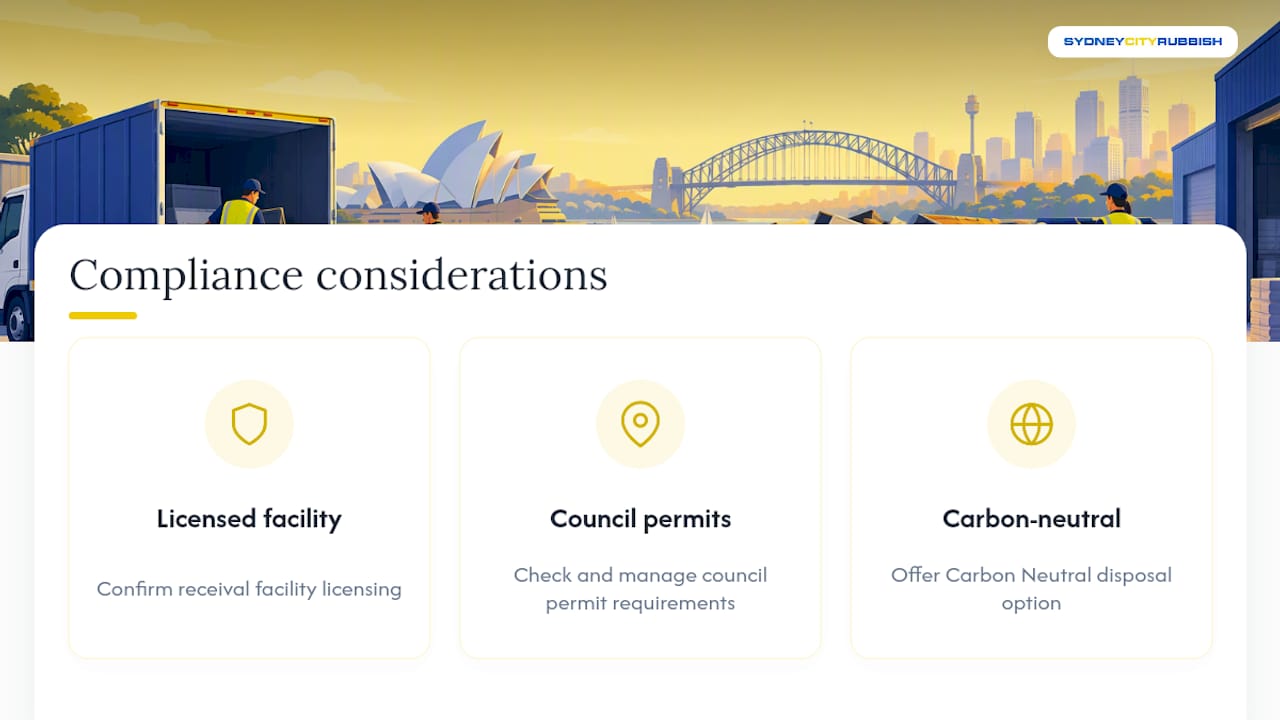
Some rubbish removal teams coordinate the compliance side too, confirming receival facility licensing and managing council permit requirements where a job needs one, so site managers aren’t left chasing paperwork on top of running a project. Sydney City Rubbish also offers a carbon-neutral disposal option through its partnership with Carbon Neutral, useful for businesses tracking their own environmental commitments.
Whether you’re clearing a commercial office fit-out or managing construction debris across a live site, the fastest path to an accurate price is the Commercial Waste Removal Sydney quote form. Have your photos, rough cubic metre count and access notes ready, and you’ll get a number back the same day.
Sources
FAQ
How much does a 4-cubic-metre skip bin cost in Sydney?
A 4 m³ skip typically costs within a moderate price range in Sydney, depending on waste type and how far the supplier travels to a licensed receival facility. Construction waste sits at the higher end because of weight and the NSW EPA waste levy, while general household or office waste tends to cost less.
How big is a 10 cubic metre skip bin?
A 10 m³ skip holds roughly the volume of a small one-bedroom apartment’s furniture, or the rubble and debris from a substantial bathroom or kitchen demolition. It’s the size most commonly booked for whole-floor office fit-out removals and larger construction clean-ups.
How much does it cost to remove soil per cubic metre in Sydney?
Soil removal generally costs more than general waste because it is heavy, and tipping fees are charged by weight rather than volume. Prices are often at the higher end of the construction waste range once the waste levy and transport distance to a licensed facility are factored in.
What is the cheapest company to collect rubbish in Sydney?
Price varies too much by waste type, volume and access to name a single cheapest provider, and a very low quote given without inspection is often a red flag rather than a bargain. Getting quotes from a few local suppliers, including Sydney City Rubbish, based on the same photos and cubic metre estimate is the only reliable way to compare like with like.