Construction debris types: a site classification guide
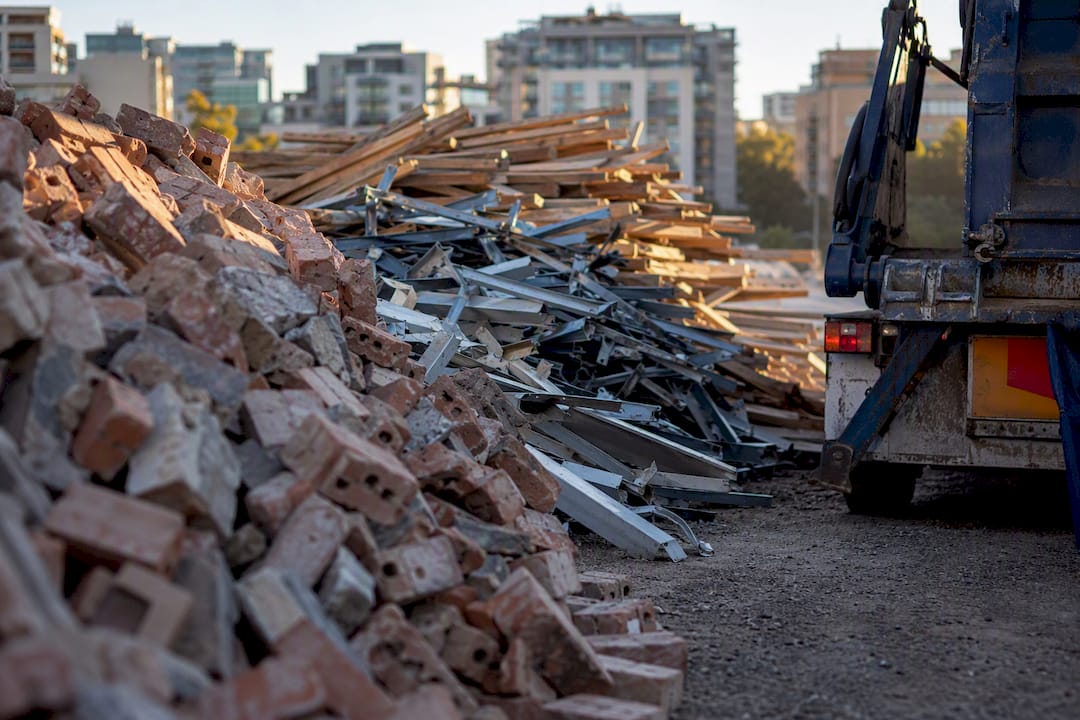
Concrete, timber, metals, plasterboard, asbestos and contaminated soils, excavated material, plastics, and hazardous liquids make up the bulk of construction debris on any Australian site. Each category demands a different pathway, and getting that wrong is what causes rejected loads, blown budgets, and, in the case of asbestos, real legal exposure.
Here’s the fast reference for a site supervisor walking the yard:
- Concrete, brick and masonry — segregate into a clean stockpile; crush or send to a recycler.
- Timber — separate untreated from treated (CCA, creosote); treated timber cannot go to green waste.
- Metals — bundle by type; ferrous and non‑ferrous go to different scrap buyers.
- Plasterboard — keep bone dry and free of masonry; contamination kills its recycling value.
- Asphalt and road base — stockpile separately for reclamation.
- Excavated soils (VENM/ENM) — classify before you move a single truckload.
- Asbestos and contaminated soil — stop work, test, and call a licensed specialist.
- Plastics, glass, packaging — sort recoverables from film and contaminated wrap.
- Hazardous liquids, paints, chemicals — store bunded, label, and arrange licensed collection.
- Tyres and e‑waste — track and send to designated licensed receivers.
Construction and demolition activities typically generate concrete, bricks, plasterboard, timber, metals, asphalt, excavated rock and soil, and hazardous wastes including asbestos and contaminated soil. Asbestos and contaminated soils carry the highest risk on this list: mishandle either and you’re looking at stop‑work orders, fines, and potential prosecution, not just a rejected skip bin.
Key Takeaways
Correctly classifying construction debris at the point of generation determines legal disposal pathways, recycling value, and project cost far more than volume ever does.
| Point | Details |
|---|---|
| Classify before you move it | Test excavated soil and suspected hazardous material before transport to avoid rejected loads and fines. |
| Segregate at the source | Run at least five separate streams (general, recyclables, masonry, timber, hazardous) to preserve recovery value. |
| Treat asbestos as a stop‑work trigger | Engage a licensed contractor immediately and retain clearance certificates for the project file. |
| Document every load | Keep weighbridge dockets, classification reports, and receival records to satisfy duty of care obligations. |
| Budget testing and transport early | Factor soil sampling, licensed hazardous transport, and levy costs into the WMP before work starts, not after. |
Table of Contents
- What are the main construction debris types on site?
- How do you handle timber and vegetation waste?
- What metal waste comes off a construction site?
- Why does plasterboard need separate handling?
- What counts as hazardous construction waste?
- VENM and ENM: how do you classify excavated soil?
- Which plastics and packaging are worth recycling?
- What are the specialist waste streams on a construction site?
- What are your duty of care obligations for waste transport?
- How should you segregate and label waste on site?
- Where do recycled construction materials actually go?
- How do you write a waste management plan (WMP)?
- When should you hire a professional rubbish removal service?
- What does disposal actually cost, and where can you save?
- Where can you find authoritative guidance on construction debris?
- FAQ: common questions about construction debris types
- Sources
What are the main construction debris types on site?
The term you’ll hear from regulators and waste auditors is C&D waste, short for construction and demolition waste, and it covers everything generated during building, renovation, and demolition work. Most sites produce a predictable mix: mineral debris (concrete and masonry), timber, metals, plasterboard, excavated soils, and a smaller but higher‑risk tail of hazardous materials.
Concrete, bricks and masonry debris
Concrete, brick, tile, and crushed rock form the heaviest and highest‑volume stream on almost every job. It’s dense, it’s bulky, and it’s also one of the easiest streams to turn back into a usable product, provided it stays clean.
The problem is contamination. A stockpile of clean concrete becomes worthless the moment plasterboard offcuts, timber, or coal tar residue get mixed in, because recycling facilities test incoming loads and reject anything outside their specification. Organic matter and gypsum are the two most common contaminants that turn a saleable load into a landfill bill.
- Keep separate stockpiles for concrete, brick, and tile from day one of demolition.
- Never let demolition crews toss timber offcuts or plasterboard into the masonry pile “for convenience”.
- Document which receival site each load goes to, and keep the weighbridge tickets.
- Crush on site where volumes justify it, or arrange bulk pickup with a recycler who can.
Recycled concrete and masonry have established reuse markets, and reclamation rates depend heavily on how clean the load arrives.
Pro Tip: Walk the demolition crew through the stockpile layout before the first swing of the excavator. A five-minute briefing on day one saves a rejected load and a re-sort fee three weeks later.
How do you handle timber and vegetation waste?
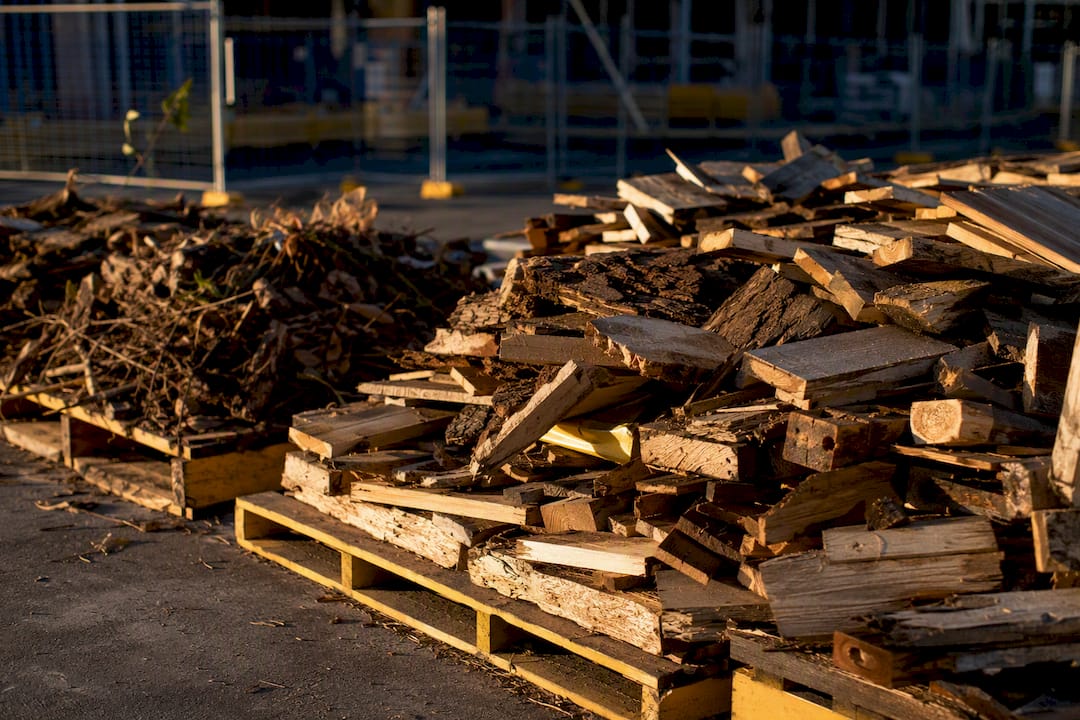
Untreated hardwood, structural pine offcuts, and cleared vegetation are genuinely salvageable, and salvage yards will often take good stock for free or even pay for it. Treated timber is a different animal entirely.
Timber treated with CCA (copper chrome arsenate), creosote, or LOSP (light organic solvent preservative) can’t go to green waste or general mulching operations. It’s excluded from most standard recycling streams and needs to be managed as a restricted material depending on the treatment type and your local council rules.
- Set up a dedicated timber bay, separate from the general skip, before demolition starts.
- Inspect offcuts for the greenish tinge of CCA treatment or the tar smell of creosote before they hit the pile.
- Keep a salvage contact on speed dial for clean hardwood; it often has resale value.
- Never burn treated timber on site, even in states where burning untreated offcuts is permitted.
Segregating on day one preserves the resale value of the good stuff and keeps you clear of disposal restrictions on the bad.
What metal waste comes off a construction site?
Reinforcement steel, structural offcuts, roof flashings, and old cabling are the usual suspects, and they split into two broad families: ferrous (steel, iron) and non‑ferrous (copper, aluminium, brass). Scrap buyers pay differently for each, so mixing them at the collection point costs you money.
Preparation matters more than people think. De‑nailing timber‑framed offcuts, bundling similar lengths, and stripping insulation from cabling all lift the price per tonne. A load riddled with contaminants like concrete fragments or plastic sheathing gets discounted on arrival, sometimes heavily.
- Sort ferrous from non‑ferrous at the point of removal, not at the scrap yard.
- Bundle reinforcement bar and structural offcuts separately from lighter gauge material.
- Keep cabling and flashings in their own bin; copper and aluminium fetch far more than mixed steel.
- Record approximate weights before pickup and reconcile against the scrap receipt.
High‑value metal loads attract theft on unsecured sites, so lock the bin or cage it if the load’s been sitting for more than a day.
Why does plasterboard need separate handling?
Plasterboard, or gypsum board, is the single most common contaminant that ruins an otherwise clean masonry load, and that’s the operational headache most site managers underestimate. A few sheets of broken plasterboard mixed into concrete rubble can be enough for a recycling facility to reject the entire truckload.
Recovery options exist. Several manufacturers run take‑back schemes for offcuts, and dedicated plasterboard recyclers can process clean, dry material into new board or soil conditioner. The catch is that it has to arrive dry and unmixed. Wet, mouldy, or contaminated plasterboard has almost no recovery value and usually ends up in general waste.
- Store plasterboard offcuts under cover, away from weather, from the first fix-out stage onward.
- Keep a dedicated, clearly labelled bin separate from masonry and general waste.
- Contact the board manufacturer or supplier early; many run offcut collection arrangements.
- Never let plasterboard sit in an open skip during wet weather.
Pro Tip: If your project has a plasterboard-heavy fit-out, ask your supplier about take-back arrangements before the job starts, not after the offcuts have already piled up in the wrong bin.
What counts as hazardous construction waste?
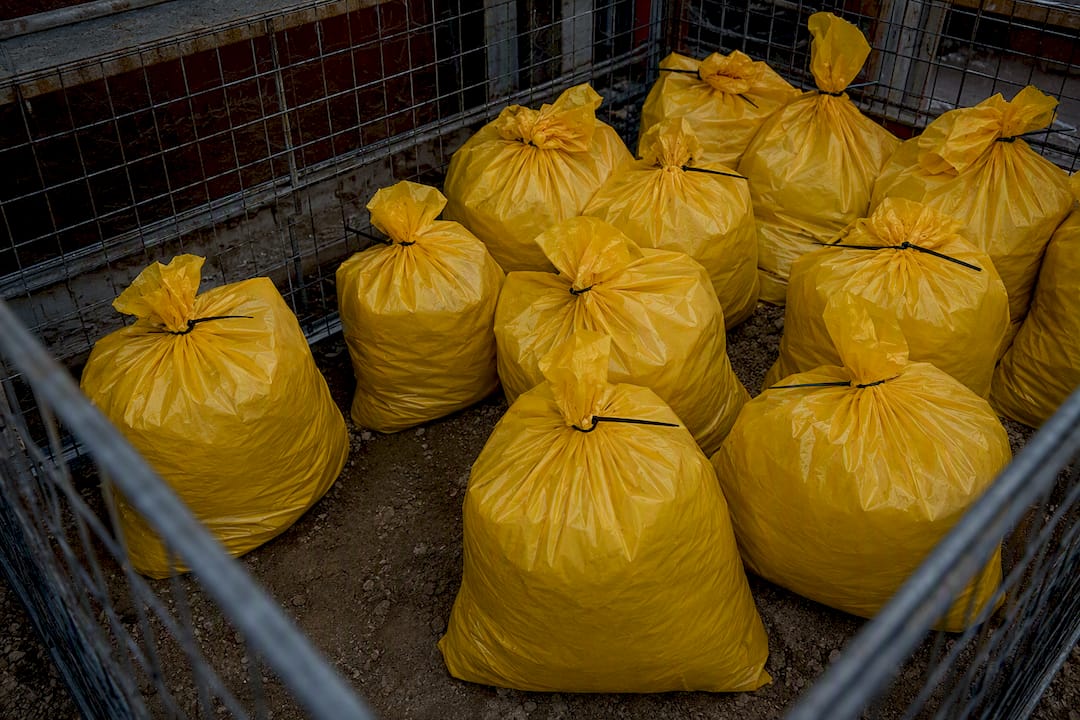
Asbestos, contaminated soil, paints, solvents, and adhesive residues sit in a different regulatory tier to everything else on this list, because they carry health and legal consequences that mineral or metal debris simply doesn’t.
Asbestos splits into two categories that determine how it’s handled: friable asbestos, which crumbles and releases fibres easily, and bonded (non‑friable) asbestos, found in older cement sheeting, which is more stable but still requires licensed removal. Strict removal, transport, and disposal procedures apply to both, and contractors must retain clearance certificates and sampling reports as evidence.
Contaminated soil is trickier to spot. Discolouration, chemical odour, or a site history involving fuel storage, old workshops, or agricultural chemical use are all red flags that warrant laboratory testing before you move a single scoop.
- Stop excavation the moment you suspect asbestos or chemical contamination in soil.
- Commission laboratory testing and a classification report before transport.
- Store hazardous liquids, paints, and solvents in bunded, weatherproof containers, clearly labelled.
- Engage a licensed contractor for removal, transport, and disposal, and keep every certificate.
- Retain sampling reports and clearance documentation for the life of the project, and beyond.
Fines for illegal disposal of hazardous waste in NSW can run into the tens of thousands of dollars for individuals, and considerably more for corporations. That’s before accounting for remediation costs if contamination spreads.
VENM and ENM: how do you classify excavated soil?
Not all dirt is equal in the eyes of the law, and that distinction decides whether your excavated material becomes clean fill or an expensive disposal problem. VENM (virgin excavated natural material) and ENM (excavated natural material) are the two categories that matter most.
VENM is soil, clay, gravel, or rock that has never been chemically or physically altered, hasn’t been in contact with contaminating substances, and can often be reused directly as clean fill without further testing. ENM has been excavated from a site with some history of disturbance and usually requires sampling and testing before it can be reused or transported, because it might carry residual contamination even without visible signs.
- Allocate separate stockpile areas for VENM, suspect soil, and general excavated rock before digging starts.
- Budget for geo‑tech sampling and laboratory testing up front, not as an afterthought when a load gets knocked back.
- Keep documentation ready for receival sites, including any statement of compliance they require.
- Treat any soil with an uncertain history as suspect until testing proves otherwise.
Pro Tip: Failing to classify soil early is one of the most common causes of project delay. Get sampling booked in the same week you schedule excavation, not the week you’re trying to truck material off site.
Which plastics and packaging are worth recycling?
Rigid plastics like PVC conduit, HDPE piping offcuts, and polystyrene packaging have genuine recycling value when kept clean. Soft plastics, shrink wrap, and food‑contaminated packaging generally don’t, and mixing the two drags the whole load down to landfill‑only status.
Glass, similarly, holds value in a clean state. Crushed glass fines from broken windows or packaging can feed back into construction products such as aggregate substitutes or, as with Expleco’s glass sand applications, specialised industrial feedstocks.
- Keep rigid plastics in a dedicated bin, separate from soft plastic film and wrap.
- Rinse or discard food‑contaminated packaging rather than mixing it with clean recyclables.
- Crush glass separately where volumes justify collection by a specialist recycler.
- Brief subcontractors on what belongs in the “recyclables” skip versus general waste, because this is where most contamination happens.
What are the specialist waste streams on a construction site?
Tyres, e‑waste, carpets, and soft furnishings from strip‑outs and refurbishments don’t fit neatly into the mineral, timber, or metal categories, and they need licensed receivers rather than a general skip.
Tyres can’t legally go to most general waste facilities and typically require a dedicated tyre recycler. E‑waste, including old switchboards, light fittings, and electrical equipment, often needs tracking or manifesting depending on the volume and material composition.
- Segregate tyres, e‑waste, and carpet offcuts into their own labelled bins from the outset of a strip‑out.
- Confirm the licensed receiver before the job starts, not once the material’s already piled up.
- Keep basic records (weight, date, receiver) for any regulated stream, even where formal manifesting isn’t mandatory.
What are your duty of care obligations for waste transport?
Waste classification isn’t a paperwork exercise, it’s the mechanism that determines where a load can legally go. Get the classification wrong and even a licensed receiver can refuse the truck at the gate.
Duty of care obligations sit with the person generating and transporting the waste, not just the disposal facility. That means selecting a properly licensed transporter, confirming the destination facility can legally accept that waste category, and retaining the sampling and classification evidence that proves you did your homework.
- Confirm the transporter holds the correct licence for the waste category being moved.
- Check the receiving facility is licensed to accept that specific classification.
- Retain classification reports, sampling results, and weighbridge dockets for the project file.
- Reconcile quantities transported against what the WMP estimated, and flag discrepancies early.
Tools that give procurement officers visibility over driver progress and delivery confirmation can help close the loop on chain‑of‑custody, particularly on larger sites juggling multiple transporters across a single week. Non‑compliant disposal, whether through an unlicensed transporter or a misclassified load, exposes both the contractor and the site principal to penalty notices that can run well into five figures for serious or repeat breaches.
How should you segregate and label waste on site?
Medium and large sites should run at least five segregated streams: general waste, recyclables, concrete and masonry, timber, and hazardous or chemical waste. Colour coding each bin (a common approach uses red for hazardous, blue for recyclables, and green for timber) cuts down on subcontractor confusion fast.
- Set fixed bin locations at the start of the job and mark them on the site plan.
- Bund liquid waste storage areas to contain spills and leaks.
- Cover plasterboard and timber stockpiles against weather damage.
- Label every bin clearly, including what does and doesn’t belong in it.
- Run a two‑minute toolbox talk each morning covering that day’s expected waste streams.
Pro Tip: Assign one supervisor to do a five-minute segregation check at knock-off each day. It catches the “wrong bin” mistakes before they compound into a rejected load next week.
Mixing materials that could otherwise be recovered is one of the most common reasons recoverable debris ends up in landfill unnecessarily, and it’s almost always a segregation failure rather than a genuine lack of recycling options.
Where do recycled construction materials actually go?
Crushed concrete typically becomes road base or aggregate substitute; reclaimed asphalt pavement (RAP) gets blended back into new asphalt mixes; scrap metal returns to steel mills and foundries. These markets exist and pay, but only for material that meets quality thresholds.
Plasterboard and mixed plastics face steeper barriers to recovery, largely because contamination rates are higher and manufacturer take‑back schemes aren’t universally available. Moving recovered material out of the “waste” category and into a genuine product market means meeting end‑of‑waste criteria, which requires both the technical quality of the material and the paperwork proving it.
- Specify recycled aggregate or RAP in project procurement documents where local standards allow it.
- Ask suppliers whether take‑back arrangements exist for plasterboard offcuts before ordering.
- Treat quality control (moisture, contamination, particle size) as a cost saver, not a compliance burden.
Reclamation rates and permitted recycled content vary by jurisdiction and local market conditions, so check with your regional recycler on current specifications before locking in a procurement plan.
How do you write a waste management plan (WMP)?
A workable WMP doesn’t need to be a fifty‑page document. It needs a classification method, an estimate of quantities by material type, nominated receival sites for each stream, and a contingency line for unearthed contamination that nobody budgeted for.
- List expected waste streams and estimate quantities based on the demolition or building scope.
- Nominate a receival site or recycler for each stream, with licence numbers recorded.
- Include a monitoring schedule, weekly for most jobs, to track actual versus estimated volumes.
- Build in a contingency clause for unexpected contamination discovered mid‑excavation.
- Attach contractor evidence: ABN, relevant licences, and insurance, before work starts.
- Get sign‑off from the project manager or environmental officer before the WMP goes into the tender pack.
- Budget transport and disposal costs per tonne, not as a lump‑sum guess.
- Review the WMP at major project milestones, not just at the start.
When should you hire a professional rubbish removal service?
Large site clearances, asbestos removal, contaminated soil, and jobs running on a tight programme are the situations where a licensed specialist earns their fee. Trying to self‑manage a hazardous stream to save money almost always costs more once fines, delays, or re‑testing enter the picture.
A reputable contractor should hand you lawful transfer documentation, facility receival records, and evidence of current licences before the first truck leaves site. Some, including Sydney City Rubbish, also offer a carbon‑neutral disposal option for clients who want their waste stream to align with broader sustainability commitments.
- Ask for licence numbers and destination facility details before confirming a booking.
- Request weighbridge or receival documentation for every load, not just the big ones.
- Confirm whether carbon‑neutral or verified recycling options are available if that matters for your project reporting.
Pro Tip: Get the paperwork commitment in writing before the job starts, not after the truck’s already loaded. A contractor who hesitates to confirm licensing details up front is a red flag, not a formality.
What does disposal actually cost, and where can you save?
Disposal cost swings enormously depending on classification, not just volume. General waste and mixed C&D loads attract landfill levies that vary by state and by material type, and those levies are usually the single biggest line item on a disposal invoice, well ahead of transport.
Recycling routes tend to undercut landfill on a per‑tonne basis once volumes are decent, mainly because recyclers don’t pass on the same levy and, in some cases, pay for high‑value scrap like clean metal. Hazardous streams sit at the opposite end: asbestos removal and licensed disposal carry a premium because of the specialist handling, testing, and transport requirements involved, and there’s no way around that cost if the material’s genuinely contaminated.
Segregation is the lever most site managers underuse. A mixed skip that goes straight to general waste treats everything, including recoverable metal and clean concrete, at the highest cost tier. Split that same load into clean masonry, sorted metal, and general waste, and you’re often paying landfill rates on a fraction of the volume while banking a rebate on the scrap.
Soil classification adds another cost variable. Unclassified excavated material sitting on site while you wait on lab results isn’t just a delay, it’s often a demurrage or storage cost on hired plant and trucks that were meant to be moving material that week. Budgeting for testing early tends to be cheaper than the alternative in almost every case.
Where can you find authoritative guidance on construction debris?
Site managers building a WMP or vetting a contractor should keep a handful of primary references bookmarked rather than relying on secondhand summaries.
- The NSW EPA construction and demolition waste page for the core list of C&D waste streams.
- The NSW EPA management toolkit for VENM/ENM definitions and sampling expectations.
- The Construction and Demolition Waste Guide for recycling and reuse market case studies.
- The Asbestos for licensed removal and disposal requirements.
- The Business Queensland end‑of‑waste framework for documentation needed to move recovered material into product markets.
Keep these links handy when drafting a WMP or vetting a transporter’s compliance credentials.
FAQ: common questions about construction debris types
What is C&D waste?
C&D waste stands for construction and demolition waste, and it covers everything generated during building, renovation, or demolition work, from concrete and timber to hazardous materials like asbestos.
What is construction debris?
Construction debris is the general term for waste materials generated on a building or demolition site, spanning mineral debris (concrete, brick), timber, metals, plasterboard, excavated soils, and hazardous streams.
What’s the difference between VENM and ENM?
VENM (virgin excavated natural material) has no history of contamination and can often be reused as clean fill without testing. ENM (excavated natural material) has some disturbance history and usually needs sampling before reuse or transport.
Can treated timber be recycled?
Generally not through standard green waste or timber recycling streams. Timber treated with CCA, creosote, or LOSP needs to be managed as restricted material, so segregating it from untreated offcuts at the point of removal matters.
Who is responsible for classifying waste correctly?
The person or business generating and transporting the waste carries duty of care obligations, which includes selecting a licensed transporter and confirming the receiving facility can legally accept that waste category.
Does plasterboard have any recycling value?
Yes, provided it stays dry and free of contamination. Several manufacturers and specialist recyclers accept clean plasterboard offcuts, but wet or mixed material usually has no recovery value and ends up in general waste.
Sources
- Construction and demolition waste | EPA
- Construction and demolition waste: A management toolkit (NSW EPA)
- Construction and Demolition Waste Guide — Recycling and reuse across the supply chain
- End‑of‑waste framework — Business Queensland