Avoid fines: 4 concrete recycling options for Sydney businesses
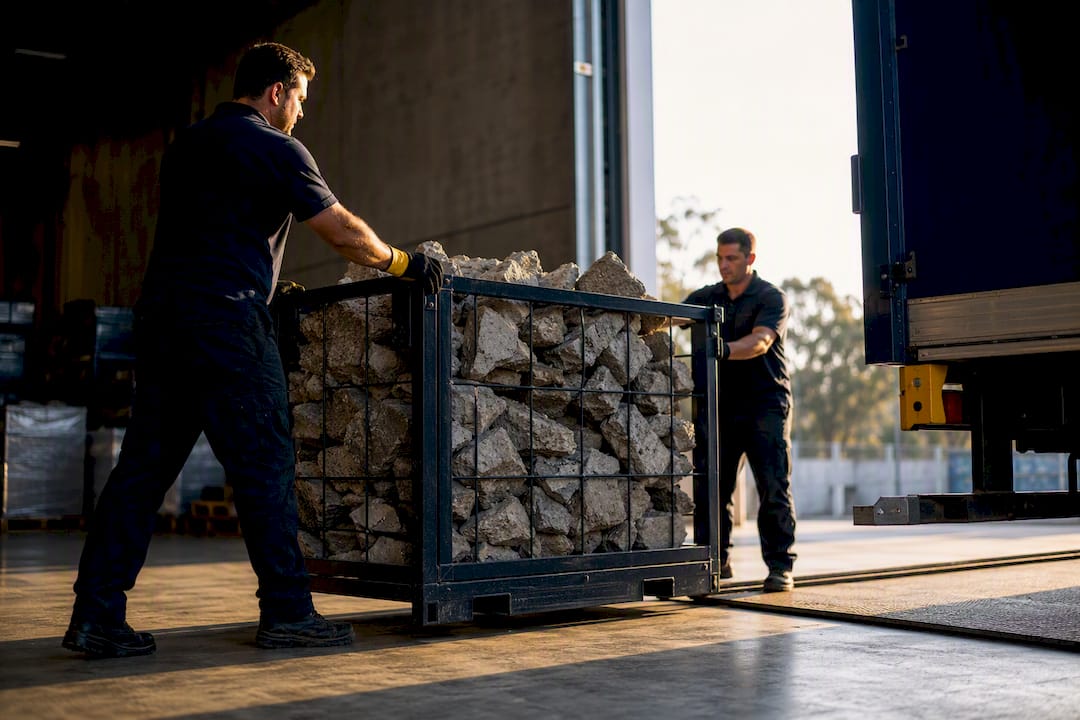
The fastest, most practical concrete recycling options are a council transfer station, a commercial recycler with fixed crushing plant, a mobile crusher brought to site, or a licensed rubbish-removal contractor who manages the whole process for you. Which route suits you depends on volume and whether the concrete is contaminated. Before you commit to any of them, confirm the receiving facility holds proper approvals and ask for a weighbridge receipt, then sort and prepare your material so it is accepted on the first attempt.
TL;DR:
- Small loads from residential projects are best handled at transfer stations, which may charge fees and require prior confirmation of acceptance.
- Large volumes or contaminated concrete are more cost-effectively processed by commercial fixed plants or mobile crushers, especially when transport costs are high.
- Proper site preparation, including removing contaminants and embedded materials, is essential to avoid rejection or higher fees upon arrival at recycling facilities.
- Recycled concrete is primarily used for road base, fill, and landscaping, but rarely meets the standards for structural or load-bearing applications.
- Coordination with licensed recyclers or contractors ensures compliance, proper documentation, and reduces administrative burdens for construction projects.
Table of Contents
- Where to take or arrange concrete recycling
- How concrete gets processed and where it ends up
- Preparing concrete for recycling before it leaves site
- Regulatory checklist before you send a load to a receival facility
- What concrete recycling actually costs
- When on-site reuse beats sending concrete offsite
- Sydney City Rubbish handles the compliance so you don’t have to
- Where to check the official guidance
- Sources
Where to take or arrange concrete recycling
Your choice of route depends largely on how much concrete you have and how quickly you need it gone. Small loads from a home renovation or minor commercial job usually suit a transfer station; larger commercial or construction volumes usually don’t.
Council transfer stations accept concrete for recycling in many areas, but fees apply and conditions vary by site, so phoning ahead is worth the two minutes it takes. Commercial recyclers running fixed crushing plants handle bigger tonnages, and many produce recycled aggregate products for resale once the material is processed. Mobile crushing becomes economical once you’re dealing with genuinely large volumes, tight sites, or jobs where trucking rubble offsite would eat the budget alive.
Your practical options break down like this:
- Transfer stations — good for smaller loads, but call first to confirm fees and acceptance criteria.
- Commercial recyclers/fixed plants — suited to medium and large volumes, and many operate on-site bins or tipping arrangements for regular customers.
- Mobile crushers — worth it when volume is high or transport distance makes off-site processing costly.
- Rubbish-removal contractors — the right call when you need permits, safe handling of reinforced slabs, or transport logistics managed for you.
For sites with safety hazards, awkward access, or a strict deadline, a contractor who handles removal, transport and documentation removes the guesswork entirely.
How concrete gets processed and where it ends up
Once concrete reaches a recycling facility, it goes through crushing, screening, and magnetic separation to strip out reinforcing steel and other ferrous metal. What comes out the other end is graded aggregate, tested and classified for specific uses, not just generic “recycled rubble.”
Australia recovers roughly 6 million tonnes of concrete waste annually, with concrete making up a majority of recycled masonry waste and the construction and demolition sector contributing most of that total. That’s a genuinely large recovery stream, and it exists because recycled concrete aggregate has real markets.
Where it’s used well:
- Road base and pavement subgrade (the biggest single market)
- General fill and levelling under slabs
- Landscaping material, drainage layers, and erosion control
- Aggregate blended into new non-structural concrete
Where it isn’t suitable: structural concrete mixes still rely mostly on virgin aggregate, because recycled material can’t consistently meet the strength and durability specifications engineers need for load-bearing elements.
This is the difference between downcycling (using crushed concrete as road base or fill) and upcycling (processing it back into higher-grade concrete products). Downcycling into road base is often the more sensible route both environmentally and economically. Repeated high-grade upcycling increases energy intensity and can reduce the net carbon benefit, so more processing isn’t automatically the greener choice.
Preparing concrete for recycling before it leaves site
Clean concrete, meaning material free of soil, timber, plasterboard, adhesives, or suspected asbestos, is what every recycler wants to see arrive on a truck. Contaminated loads get rejected, cost you a wasted trip, or attract higher fees at the gate.
Work through preparation in this order:
- Remove timber formwork, fixtures, and any attached fittings before the concrete is broken up.
- Cut out embedded services (conduit, plumbing) where it’s practical to do so on site.
- Separate reinforced concrete from plain concrete if your volumes justify the extra handling.
- Collect washout slurry from cutting or grinding in a lined container. Never let it run into a stormwater drain.
- Call a specialist immediately if you suspect asbestos-containing materials are mixed into the rubble.
Pro Tip: If you’re grinding or cutting concrete on site, the washout water is highly alkaline and will kill nearby garden beds or contaminate drains fast. A lined bunded area or a professional grinding service that manages runoff properly saves you a much bigger cleanup bill later.
Regulatory checklist before you send a load to a receival facility
Skip this step and you risk a rejected load, a fine, or a legal headache down the track, so it’s worth locking in before the first truck moves.
Receival facilities may need planning approval or an Environment Protection Licence to lawfully accept concrete waste, and it’s your job to confirm they hold it, not the facility’s. Keep every weighbridge receipt, invoice, and consignment record as proof the material was handled lawfully; these documents matter if a client, council, or auditor asks questions later.
A few things worth building into your process:
- Confirm the facility’s EPL or development consent before the first load, and keep a copy on file.
- Get a weighbridge receipt and invoice for every load, not just the big ones.
- Cover loads during transport and keep transport records if material crosses jurisdictions.
- Track quantities against your project waste management plan where one exists.
Nationally, recovery rates vary a lot between jurisdictions. Where there’s strong market demand for recycled aggregate and clear specifications, the best-performing regions can achieve high recovery rates. Separating waste streams properly at the point of removal is one of the biggest levers you have over which category your job falls into.
What concrete recycling actually costs
Tipping fees at council transfer stations tend to sit lower than commercial recyclers per tonne, but commercial plants handle bigger volumes faster and often take contaminated loads that transfer stations won’t touch, usually at a premium.
Budget around these variables:
- Tipping fees per tonne, higher for contaminated or mixed loads.
- Truck or trailer hire scaled to volume; a skip bin often works out cheaper for smaller demolition jobs.
- Mobile crusher hire, typically quoted as a day rate for larger on-site jobs.
- Lead time for weighbridge receipts and processed product, which can add days to project timelines if not planned for.
Volume drives unit cost more than anything else. A single trailer load costs more per tonne than a fleet of trucks moving a whole slab removal.
When on-site reuse beats sending concrete offsite
On-site reuse makes sense when you’ve got large intact slabs or blocks, short transport distances, and enough site area to store or process material without holding up other trades.
The trade-offs are real, though. Cutting concrete into pieces too small to reuse structurally, or trucking it further than necessary, can erase the environmental benefit reuse is supposed to deliver. Bigger, intact elements travel and reuse better than crushed fragments.
Practical on-site options worth considering:
- Temporary on-site batching for larger developments, provided approvals are in place.
- Direct delivery arrangements with a local batching plant instead of a general transfer station.
- Bunded washout areas with pH-controlled wastewater if you plan to irrigate with runoff.
- Coordinating cutting and grinding schedules so reusable pieces aren’t accidentally reduced to unusable rubble.
For larger jobs, a properly designed on-site facility can be efficient. It still needs the same approvals as sending material offsite.
Sydney City Rubbish handles the compliance so you don’t have to
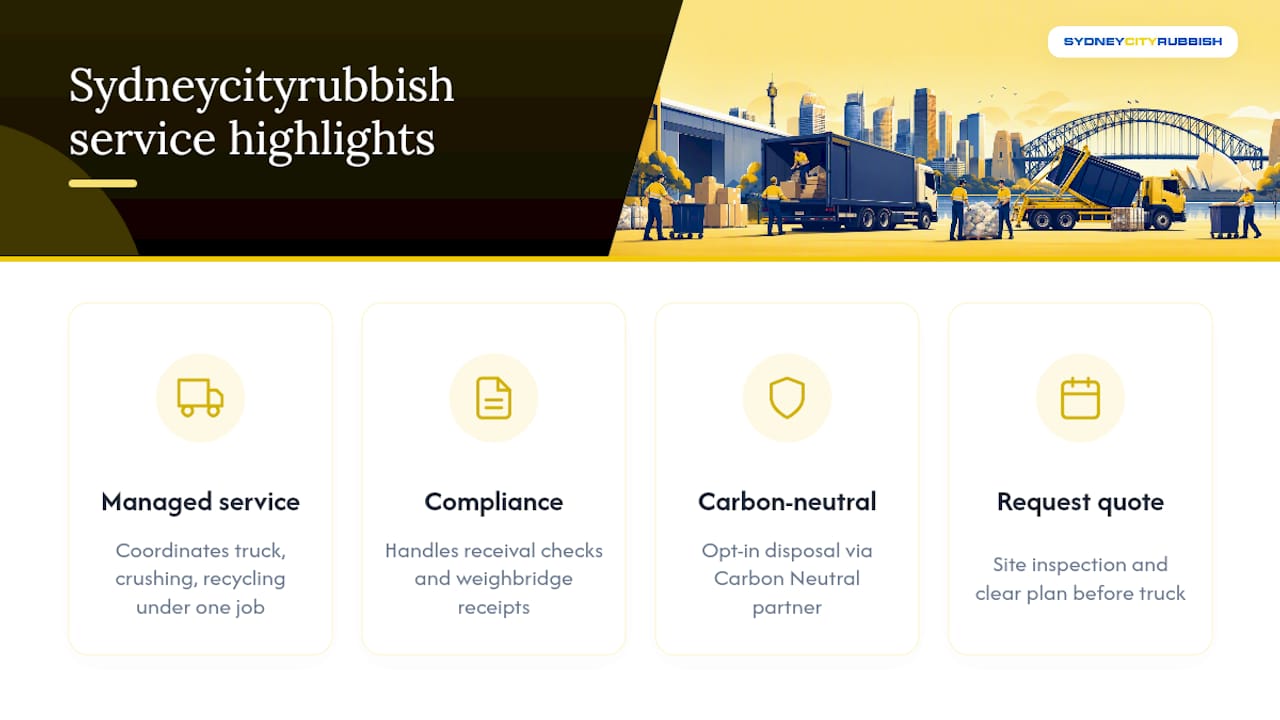
If chasing weighbridge receipts, EPL checks, and transport logistics across a busy site sounds like more admin than you’ve got time for, Sydneycityrubbish runs that whole process for you as a single managed service. Rather than juggling a transfer station booking, a truck hire, and a separate recycler, you get concrete rubble removal, truck and driver hire, and grinding or cutting coordinated under one job, with recycling or mobile crushing arranged on your behalf.
Sydneycityrubbish also handles the paperwork that keeps you compliant: receival facility checks, weighbridge receipts, and invoicing you can hand straight to a client or auditor if needed. Businesses that want to go further can opt into carbon-neutral disposal through Sydneycityrubbish’s partnership with Carbon Neutral, at no extra complexity on your end. If you’re clearing a construction site, a warehouse, or an end-of-lease space in Sydney and want the whole job handled properly the first time, request a site inspection or quote and get a clear plan before the first truck arrives.
Where to check the official guidance
For the rules and data behind this guide, start with NSW EPA’s concrete waste guidance, the national construction and demolition waste status report, and a concrete recycler directory to find facilities near you. Always confirm a facility’s current EPL and your council’s transfer station conditions before transporting a load.
Sources
- Concrete – CD Waste Portal
- Concrete wastes – NSW EPA
- Assessing environmental impacts of upcycling recycled aggregates – Scientific Reports (2025)
- Construction and demolition waste status report – DCCEEW
- Recycling Concrete – RecyclingNearYou