Property managers: require 60% recovery in compactus removal contracts
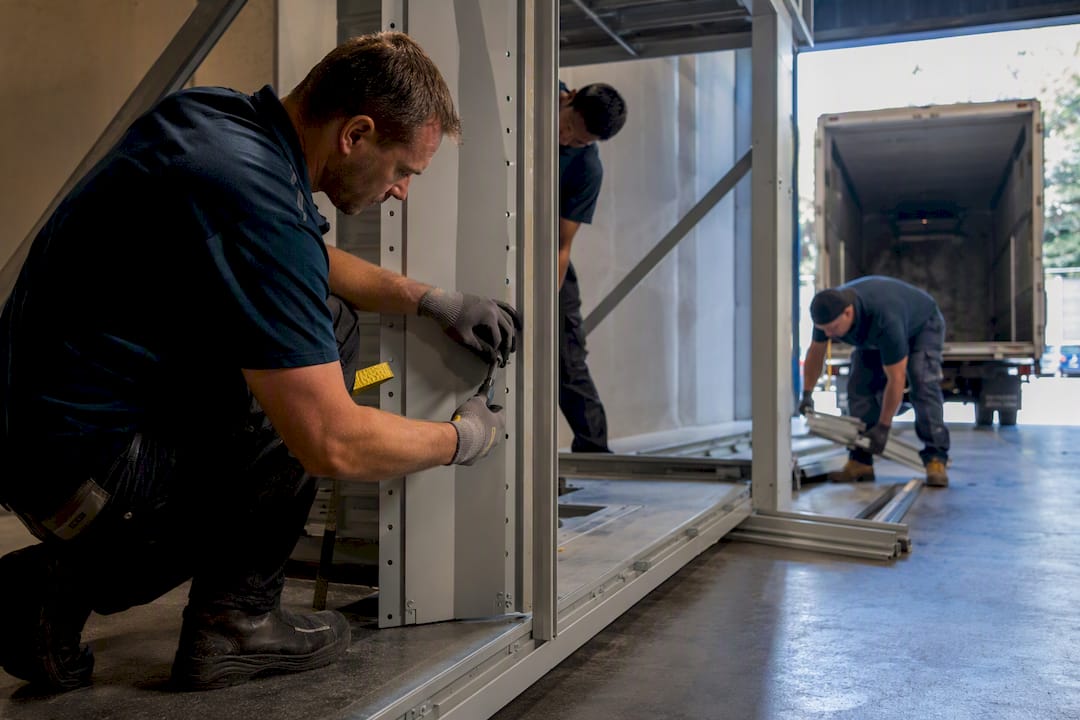
Compactus removal means hiring a licensed contractor who can dismantle mobile shelving units, transport the material lawfully, and hand you documentary proof it was disposed of correctly. Before signing anything, insist on a pre-works survey (with an asbestos check if the building is older), a written waste management plan, and disposal dockets on completion. Some contractors are set up to deliver exactly that.
TL;DR:
- Ensure a pre-works survey, asbestos screening, and detailed waste management plan are completed and documented before demolition begins.
- Verify that waste is classified, sent to licensed receival sites, and tracked with proper disposal dockets to meet legal and environmental standards.
- Obtain itemized quotes, considering access restrictions and the complexity of disassembly to accurately estimate costs and schedule lead times.
- Implement resource recovery targets of at least 60 percent by segregating materials like steel, timber, plastics, and e-waste for recycling or salvage.
- Confirm contractors have valid public liability insurance, proper transportation monitoring, and supply comprehensive records for compliance and disposal verification.
Table of Contents
- Quick action checklist: six steps before you appoint a contractor
- What are your legal obligations for lawful disposal?
- Logistics, timing and cost drivers for compactus removal
- How do you hit resource recovery and recycling targets?
- How do you verify a contractor before signing?
- What should happen on site, and what records do you keep?
- Get a compliant compactus removal quote from Sydney City Rubbish
- Official guidance and toolkits worth attaching to your tender
- Sources
Quick action checklist: six steps before you appoint a contractor
Compactus units are heavy, awkward, and often bolted to floor tracks, so rushing the appointment stage is where most compliance problems start. Work through these six steps before a truck arrives on site.
- Arrange a pre-works survey covering site access, an asbestos screen, and isolation of any electrical or data services connected to the units.
- Get itemised written quotes that separate labour, truck and time charges, disposal fees, and the waste levy, rather than one lump sum.
- Ask for a waste management plan (WMP) listing the expected waste streams, from steel framing to old files and cabling.
- Request the receival facility details and ask how the contractor documents weighbridge dockets or receipts for each load.
- Confirm logistics, including loading bay access, lift or stair restrictions, building permits, and a firm scheduling window.
- Collect the final disposal dockets and a completed waste management report once the job wraps up.
Pro Tip: Ask for a sample WMP and a sample disposal docket from a previous job before you sign. A contractor who can’t produce either hasn’t been doing this properly.
What are your legal obligations for lawful disposal?
Property owners carry real legal exposure here, not just a moral obligation to “do the right thing.” EPA NSW guidance makes clear that both the transporter and the party arranging the work share responsibility for ensuring waste reaches a lawful facility. That obligation doesn’t disappear once the truck leaves your loading dock.
Before you sign a contract, demand the following in writing:
- Waste classification and estimated quantities for each material stream.
- Named receival sites, with their environment protection licence (EPL) or development consent on file.
- Transport procedures, including vehicle registration and driver details.
- The contractor’s ABN or ACN, plus current public liability cover.
For buildings constructed before the relevant asbestos-risk cutoff dates, a competent pre-works assessment is not optional. Asbestos NSW states plainly that older commercial buildings require asbestos identification and management before any demolition or strip-out work proceeds. Skipping this step doesn’t just risk a fine, it risks exposing site workers and tenants to a genuine health hazard.
The strongest safeguard is a payment structure tied to evidence, not promises. Withhold final payment until the contractor produces receival dockets and, where applicable, proof the receival site holds a valid EPL.
Logistics, timing and cost drivers for compactus removal
Two quotes for the same job can look wildly different, and the reason usually comes down to what’s actually itemised. A proper quote should break out the pre-works survey, crew hours, truck and time charges, disposal or recycling fees, and any permit costs separately, not bundle them into one number you can’t interrogate.
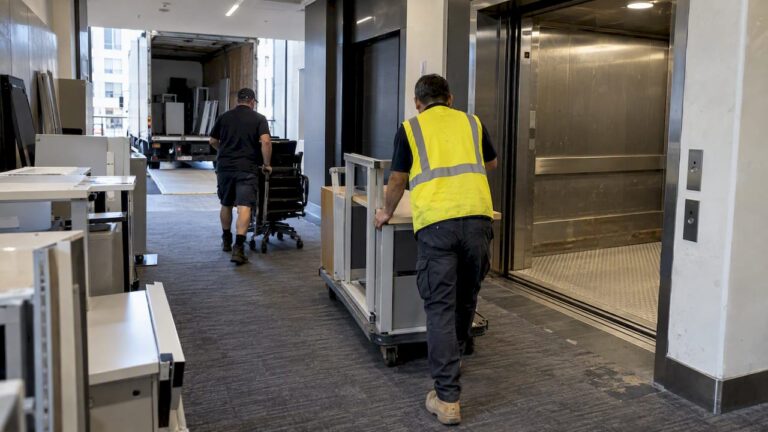
Access is the biggest swing factor in labour cost. Units on an upper floor with narrow corridors or a single small lift take substantially longer to dismantle and carry out than a ground-floor warehouse with a loading dock, and may need specialised trolleys or hoists.
A few things worth weighing before you book:
- Per-truckload pricing suits small, straightforward jobs; itemised project quotes suit larger strip-outs with mixed waste streams.
- Commercial strip-outs typically need a lead time of one to three weeks once a survey and WMP are approved, longer if asbestos remediation is required.
- On the day, expect the crew to protect floors and walls, isolate services first, then dismantle and load systematically rather than smashing units apart for speed.
- Built-in elements like data cabling or fixed shelving frames often need coordinated service disconnection before removal can start, which commercial strip-out checklists flag as a common oversight in scheduling.
How do you hit resource recovery and recycling targets?
The Better Buildings Partnership sets a practical minimum of 60% resource recovery for office strip-outs, and building that figure into your contract as a measurable KPI turns a vague sustainability goal into something for which the contractor is actually accountable.
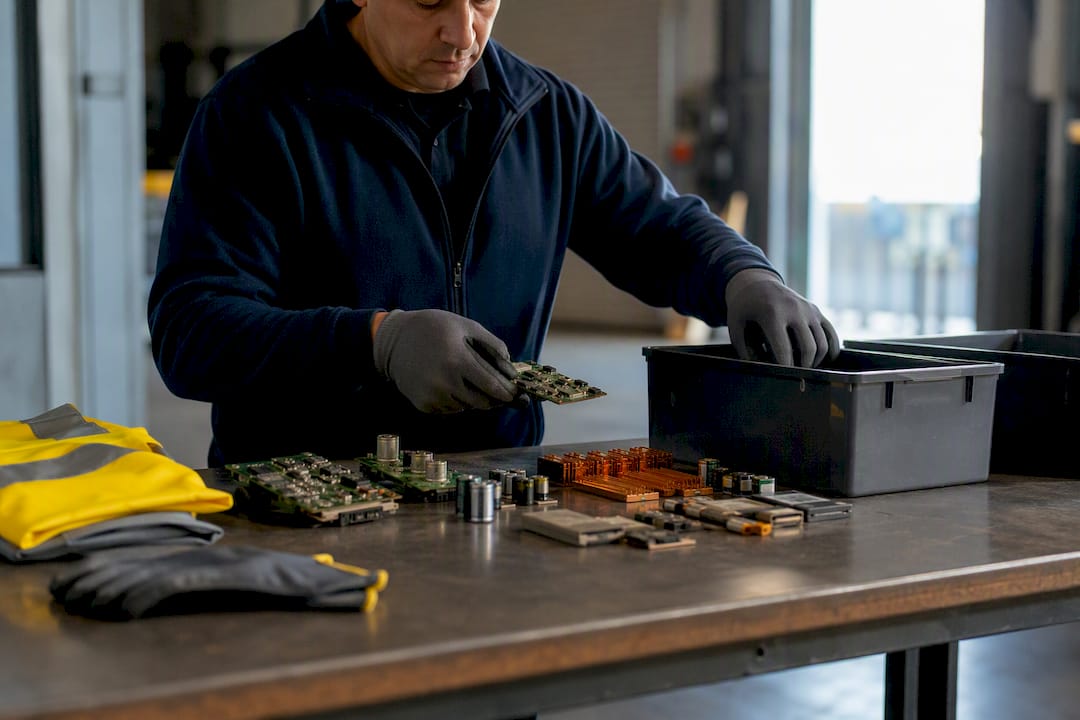
Compactus units break down into distinct material streams that should be segregated on site rather than dumped together:
- Steel framing and runners, which have straightforward scrap value.
- Timber shelving components, suited to salvage or mulching depending on condition.
- Plastics and laminate panels, which need a dedicated recycling stream.
- Any attached electronics or data equipment, which count as e-waste and require specialist processing.
Ask your contractor for receipts from the specific recycling facility, salvage yard, or e-waste processor handling each stream, and file them alongside your WMP if the building is chasing Green Star credits or internal sustainability reporting.
How do you verify a contractor before signing?
Verification is where a lot of property managers cut corners, usually because it feels like extra admin on top of an already busy strip-out schedule. It’s the single step most likely to save you from a compliance headache six months later.
Request these documents up front, before any quote is finalised:
- Current public liability insurance and workers’ compensation cover.
- ABN/ACN and a completed WMP for the specific job.
- A sample weighbridge docket from a comparable recent job.
- The receival facility’s EPL or development consent details.
Operationally, ask whether the contractor uses transport monitoring such as GPS or WasteLocate tracking, and how subcontractors are managed if the job scales up. Put the payment terms in writing too: final payment released only on proof of lawful disposal, a contingency clause for unexpected contamination, and an itemised schedule of rates rather than a single flat figure.
Pro Tip: During the interview stage, ask directly how they’ve handled e-waste or hazardous components on a past job. A vague answer here is often the clearest red flag you’ll get before signing anything.
If you’re managing a broader storage relocation project rather than a straight strip-out, understanding warehouse shelving planning helps you scope what stays, what’s repurposed, and what genuinely needs removal.
What should happen on site, and what records do you keep?
A properly run job leaves the site clean and leaves you with a paper trail, not just a verbal assurance that “it’s all sorted.”
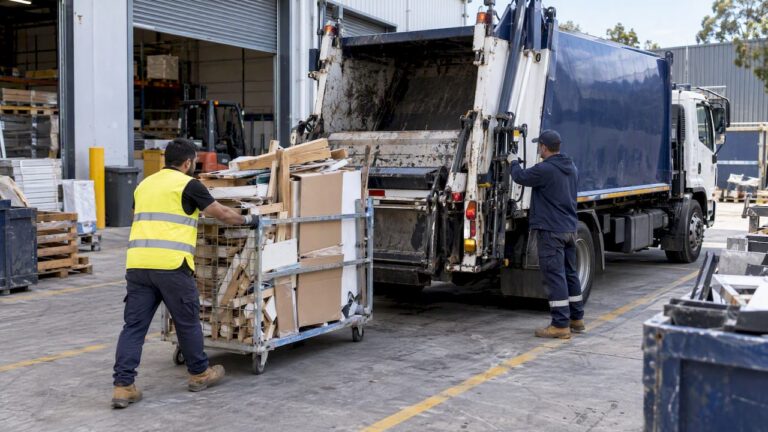
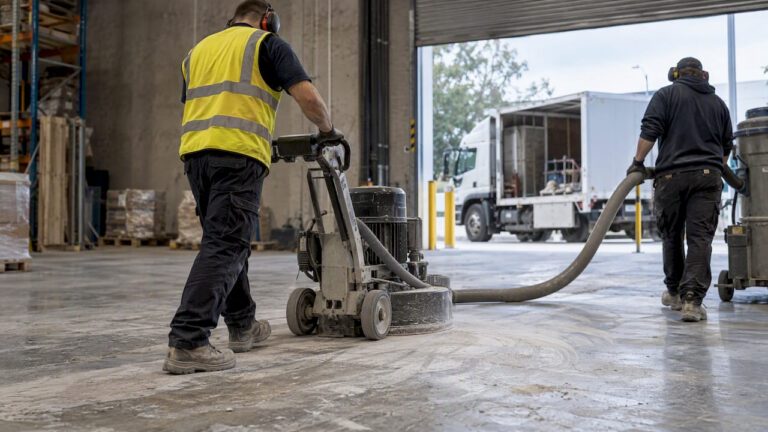
- On site, expect dust control, protective coverings on floors and doorways, and a safe, sequenced loading process rather than units being dragged or dropped.
- At handover, the contractor should supply the final WMP or waste report, weighbridge receipts, receival facility invoices with EPL details, and photos documenting the completed clear-out.
- Store this evidence with your building’s compliance files. It’s what you’ll need for an audit, a strata insurance claim, or simply closing out the contract cleanly.
- Treat a contractor who can’t produce dockets, delays handover paperwork, or gives vague answers about the receival site as a reason to withhold final payment until it’s resolved.
Get a compliant compactus removal quote from Sydney City Rubbish
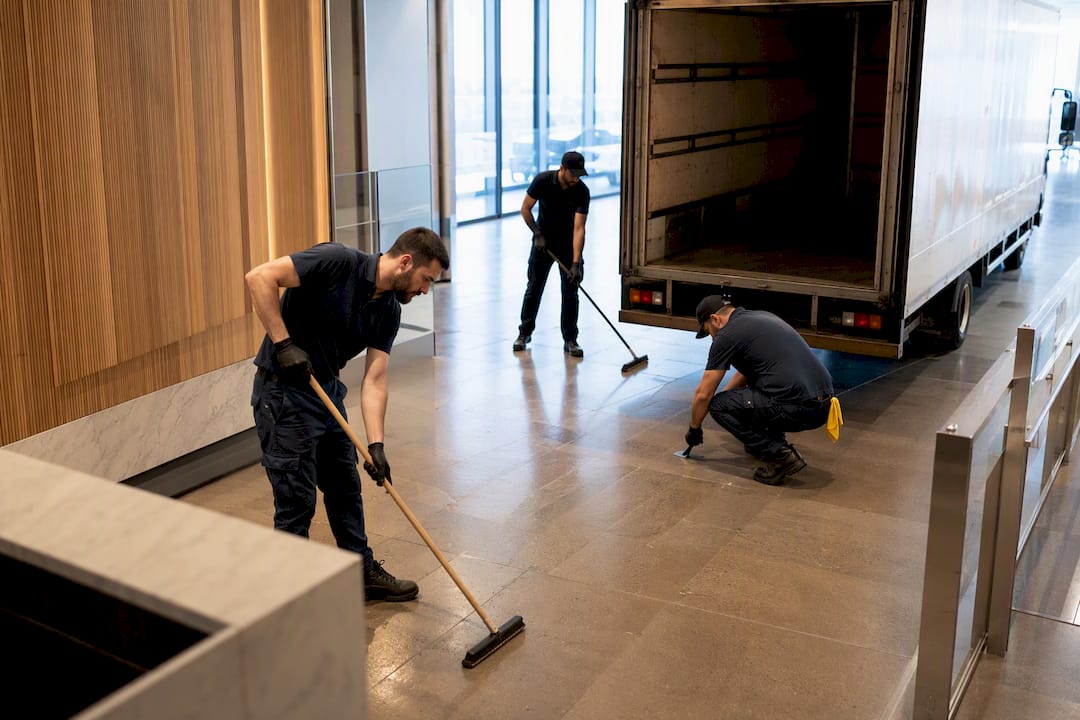
Some contractors handle the parts of compactus removal that create the most risk for property and office managers: dismantling, transport, and lawful disposal, backed by paperwork rather than promises. Their commercial rubbish removal and strip-out services cover the full clear-out, and their e-waste disposal handling means any attached electronics or data equipment from compactus units gets processed properly rather than dumped as general waste.
Clients can also opt into carbon-neutral disposal through some contractors’ partnerships, and some teams back every job with a punctuality and full-cleanup guarantee, so nothing is left behind on site. A typical engagement may run through a site inspection, a written quote itemising labour, disposal fees and any permit costs, a WMP for the job, and a post-work disposal report once the trucks leave.
If you’re planning a strip-out or clear-out involving compactus units, request a site inspection and written quote or start with the commercial rubbish removal page to see what’s involved.
Official guidance and toolkits worth attaching to your tender
A handful of official sources cover most of what you need to brief a contractor properly and check their compliance:
- The BBP Stripout Waste Guidelines provide templates and contract clause suggestions for hitting the 60% resource recovery target.
- The EPA NSW construction and demolition toolkit sets out WMP content, payment-linked evidence requirements, and transport monitoring practice.
- Asbestos NSW’s commercial site guidance explains when a pre-works asbestos assessment is mandatory.
- NSW waste regulations outline the licensing and offence provisions that sit behind every disposal receipt you collect.
Sources
- BBP Stripout Waste Guidelines | Better Buildings Partnership
- Safety on commercial sites | Asbestos NSW
- Construction and demolition waste: A management toolkit | EPA NSW
- Construction and demolition waste | EPA