7 Step Circular Office Playbook for Australian Managers
A circular office keeps materials in use, reduces fitout and disposal costs, and starts with a simple asset audit and reuse plan. Australian policy is now built around this approach: the Environmentally Sustainable Procurement policy and benchmarking tools like NABERS Waste already reward offices that choose reuse over replacement.
TL;DR:
- From July 1, 2025, Commonwealth agencies must meet circularity requirements for high impact furniture, ICT, and textile procurements worth $1 million or more.
- Refurbishing furniture can cut embodied emissions by up to 80% versus new manufacturing; prioritize internal repositories, donation, supplier takeback, repair, and certified recycling.
- NABERS Waste tracks tonnes by stream, landfill diversion, and recycling contamination, with accredited assessors verifying weight based reporting for benchmarking and Green Star submissions.
- Since 2023, 44 NSW agencies have saved about $1.3 million and diverted roughly 100 tonnes from landfill through an internal furniture and ICT marketplace.
- Require fitout contractors to document a disassembly plan before work begins, or reusable furniture may become mixed waste during removal.
Table of Contents
- What circular economy means for office environments
- Policy, procurement and frameworks shaping Australian offices
- Design and fitout strategies that keep materials in use
- Reuse, refurbishment and asset-reuse tactics for office managers
- Measuring performance: waste reporting and benchmarking
- Practical 7-step checklist office managers can implement this quarter
- Short evidence and Australian case studies that validate the approach
- How we support circular outcomes for Sydney offices
- FAQ
- Sources
What circular economy means for office environments
In practical terms, a circular office avoids unnecessary purchases, reuses what it already owns, refurbishes before replacing, and recycles only what genuinely cannot be reused. Most of the environmental impact of a fitout is locked in at the design stage, which is why decisions about partitions, joinery and furniture matter more than end-of-life disposal choices made years later. The Sustainable Procurement Guide notes that focusing on adaptability and disassembly during design reduces long-term waste and embodied emissions.
For office managers, this plays out in everyday decisions:
- Choosing modular partitions that can be reconfigured rather than demolished during a refit.
- Sourcing remanufactured desks and chairs instead of new stock.
- Managing ICT assets through a full lifecycle, from procurement to refurbishment to responsible recycling.
These choices do not require a sustainability background. They require a procurement process that asks “can this be reused?” before it asks “what should we buy?”
Policy, procurement and frameworks shaping Australian offices
Several Australian frameworks now push offices toward circular practices rather than leaving it optional. From 1 July 2025, Commonwealth agencies must meet circularity requirements for high-impact procurements of $1 million or more in furniture, ICT and textiles under the Environmentally Sustainable Procurement policy.
A commercial fitout generates a substantial amount of waste, according to Green Star Fitouts, which also sets out a six-area framework for circular design in commercial spaces. That single figure explains why design decisions carry so much weight.
State-level guidance reinforces the same direction:
- NSW offers circular design guidelines for the built environment, covering design for longevity, adaptability and disassembly.
- NABERS Waste provides an operational benchmarking tool that offices can use to verify progress against these standards.
- Green Star Fitouts credits reward projects that demonstrate circular material choices from the outset.
Together, these frameworks give office managers a ready-made business case: compliance, verification and cost savings all point the same way.
Design and fitout strategies that keep materials in use
Fitout decisions made today determine how much waste your office generates in five years. Designing for longevity, adaptability and disassembly means choosing components that can be unbolted and reused rather than components bonded or glued into a single, unrecoverable mass. Single-material components, where practical, are easier to recycle at end of life than composite products mixing timber, metal and plastic.
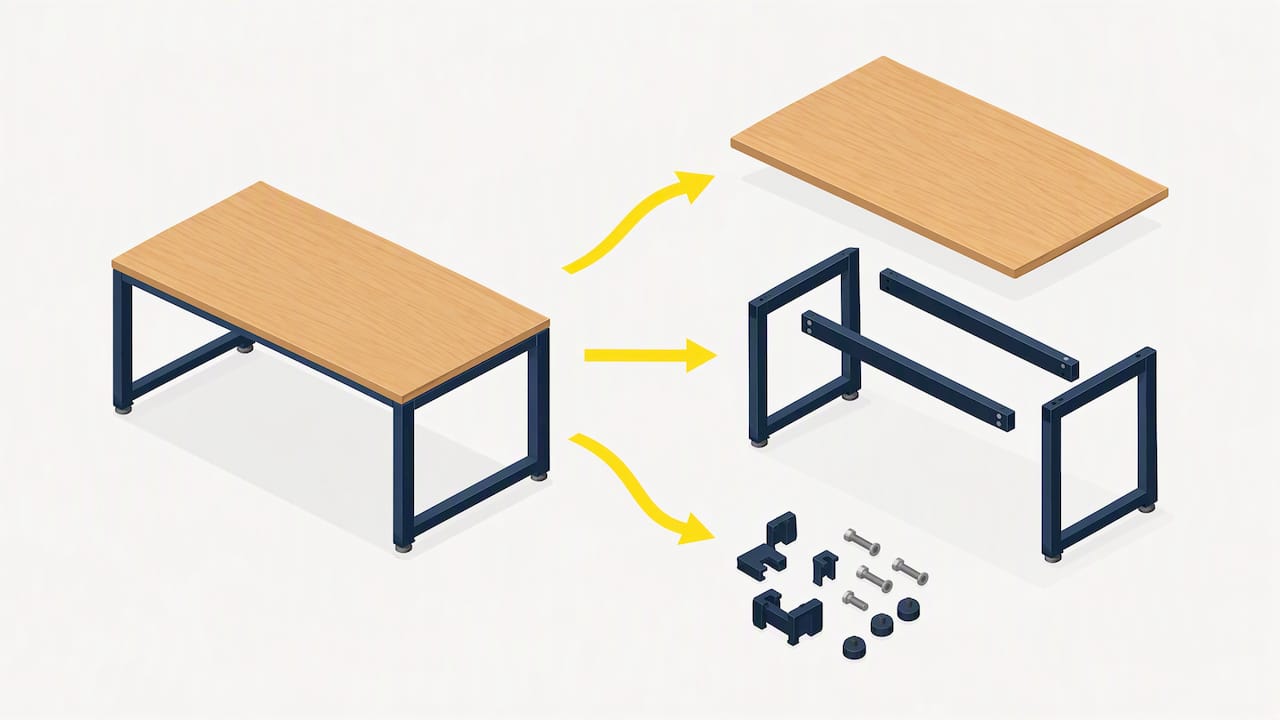
Green Star Fitouts sets Minimum Expectations that reward this kind of thinking, and meeting them generally means documenting how furniture, partitions and finishes can be disassembled or repurposed at the end of a lease.
Procurement teams have three practical levers:
- Buy refurbished furniture and fittings instead of new wherever specification allows.
- Require suppliers to offer takeback schemes for end-of-life products.
- Consider furniture-as-a-service for short-term fitouts, which shifts end-of-life responsibility to the supplier.
Pro Tip: Ask every fitout contractor for a disassembly plan before signing, not after the project starts.
Product-as-a-service arrangements can bundle refurbishment and logistics into a single contract, which simplifies circular outcomes for offices running time-limited projects such as a lease renewal or a temporary relocation.
Reuse, refurbishment and asset-reuse tactics for office managers
Office managers facing a downsize, move or refit have more reuse options than most realise, and the most common types of furniture waste from these projects are often still perfectly usable.
- Run an asset audit and tag every item of furniture, fitting and ICT equipment by condition and reuse potential.
- Set up an internal repository so surplus assets are listed and checked before any new purchase is approved.
- List remaining surplus on reuse marketplaces such as Govtree, the federal asset-exchange platform, where another agency or office may need exactly what you are retiring.
- Coordinate with donation channels or social enterprise partners for items that fall outside your own reuse loop.
- Decide between refurbishing, donating, renting replacements or arranging managed disassembly and recycling for anything beyond repair.
Refurbishing furniture can save up to 80% of embodied emissions compared with manufacturing new items, according to DCCEEW guidance on sustainable furniture practices, which also sets out the preferred order: repository first, donation second, supplier takeback third, repair or refurbishment fourth, and certified recycling or disassembly last.
Measuring performance: waste reporting and benchmarking
You cannot manage what you do not measure, and this is where most circular initiatives stall after the initial clean-out. NABERS Waste offers a weight-based reporting system and a platform to benchmark operational waste and recycling performance for offices, with ratings performed by accredited assessors.
NABERS Waste Platform supports weight-based reporting and verification, turning raw contractor collection data into KPIs that finance and sustainability teams can act on, according to NABERS.
Three data points matter most:
- Total tonnes collected by waste stream, reported by your facilities or waste contractor.
- Diversion rate, meaning the proportion of waste that avoids landfill.
- Contamination levels in recycling streams, which affect whether material is genuinely recycled or downgraded.
This data feeds directly into Green Star credit applications and internal sustainability reporting, giving your circular initiatives a measurable, defensible trail rather than anecdotal progress.
Practical 7-step checklist office managers can implement this quarter
A circular program does not need a full year to show results. Most offices can move from audit to measurable action within a single quarter.
- Run an asset audit and tag reusable furniture, fittings and ICT equipment.
- Set procurement targets that favour reused or refurbished goods over new purchases.
- Engage refurbishment and takeback partners, and list surplus assets on Govtree or local donation channels.
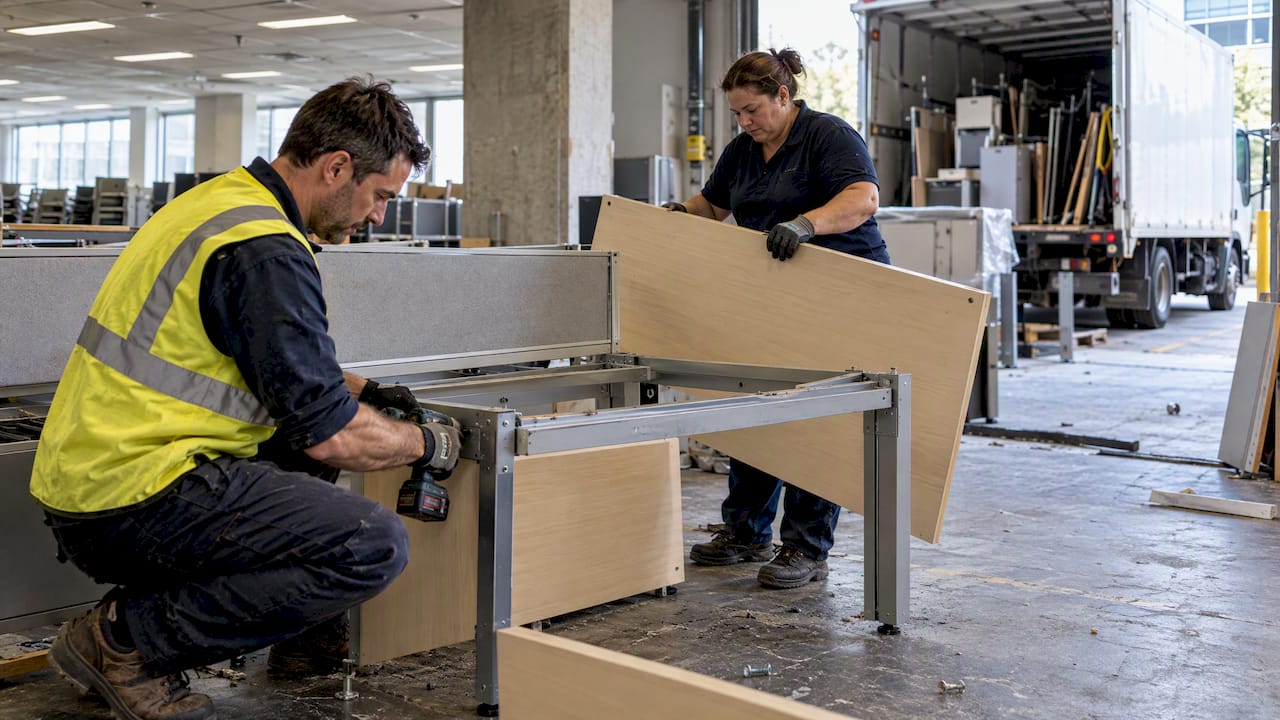
- Build takeback or disassembly requirements directly into fitout contracts.
- Establish a baseline using NABERS Waste or internal weight-based reporting.
- Report results to stakeholders and adjust targets based on what the data shows.
- Review contamination rates each quarter to keep recycling streams genuinely recoverable.
Pro Tip: Keep a simple chain-of-custody record for anything marked “recycled content”. Without it, you cannot prove the claim in a Green Star submission or an internal audit.
The most common pitfall is skipping disassembly planning altogether, which turns otherwise recoverable furniture into mixed waste the moment it hits a general skip.
Short evidence and Australian case studies that validate the approach
The business case for circular practices in offices is not theoretical. Since 2023, 44 NSW government agencies using an internal marketplace for surplus office furniture and ICT equipment have saved about $1.3 million and diverted roughly 100 tonnes from landfill, according to the NSW Government.
An average commercial fitout generates 368.6 tonnes of waste, a figure that frames why reuse-first decisions matter more than recycling at the end of a project, as reported by Green Star Fitouts.
A few patterns emerge consistently across these examples:
- Internal marketplaces outperform ad hoc donation because they capture reuse before assets leave the building.
- Refurbishment delivers emissions savings that recycling alone cannot match.
- Measurement, not intention, is what turns a one-off clean-out into an ongoing program.
How we support circular outcomes for Sydney offices
Once your audit, procurement rules and reuse channels are in place, you still need someone to manage the physical side: sorting what leaves your floor, separating recoverable materials and handling anything that genuinely cannot be reused. We coordinate commercial office clear-outs, working directly with building management to schedule access and minimise disruption to tenants during business hours.
- Managed furniture removal with sorting for donation or refurbishment rather than a single mixed load to landfill.
- E-waste handling for computers, monitors, printers and phone systems retired during an ICT refresh.
- A carbon-neutral disposal option for corporate clients who want their removal job aligned with their sustainability reporting.
We provide fast electronic quoting for office and commercial jobs, and we guarantee punctuality with compensation if we are late. If your office is planning a refit, downsize or clean-out this quarter, you can get a quote through our commercial waste removal Sydney service page and have the job scheduled around your building’s access rules.
FAQ
What is a circular economy in the context of an office?
A circular office avoids unnecessary purchases, reuses existing furniture and fittings, refurbishes before replacing, and recycles only what cannot be reused. The approach is backed by Australian frameworks including the Environmentally Sustainable Procurement policy and Green Star Fitouts.
How do I start implementing circular practices in my office?
Start with an asset audit to tag what you already own by condition and reuse potential, then set up an internal repository so staff check it before any new purchase. From there, list genuine surplus on marketplaces such as Govtree or local donation channels before arranging disposal for anything unusable.
What does NABERS Waste actually measure?
NABERS Waste uses a weight-based reporting system, verified by accredited assessors, to benchmark an office’s operational waste and recycling performance over time, according to NABERS. Tracking tonnes, diversion rate and contamination gives facilities teams measurable KPIs to report internally and toward Green Star credits.
Does buying refurbished furniture really make a measurable difference?
Refurbishing furniture can save up to 80% of embodied emissions compared with manufacturing new items, according to DCCEEW. NSW government agencies using reuse marketplaces have also reported direct cost savings of about $1.3 million since 2023, alongside roughly 100 tonnes diverted from landfill.
Who handles the physical removal and sorting during an office clean-out?
Commercial rubbish removal providers can manage the sorting, donation handling and e-waste separation that an office clean-out requires, rather than sending a single mixed load to landfill. We offer this as a managed service for Sydney offices, including a carbon-neutral disposal option for corporate clients.
Sources
- Environmentally sustainable procurement policy | DCCEEW
- Office reuse guidelines cut waste | NSW government
- Green Star Fitouts overview | GBCA
- NABERS Waste rules and support documentation | NABERS