Asbestos disposal regulations NSW: what property owners must know
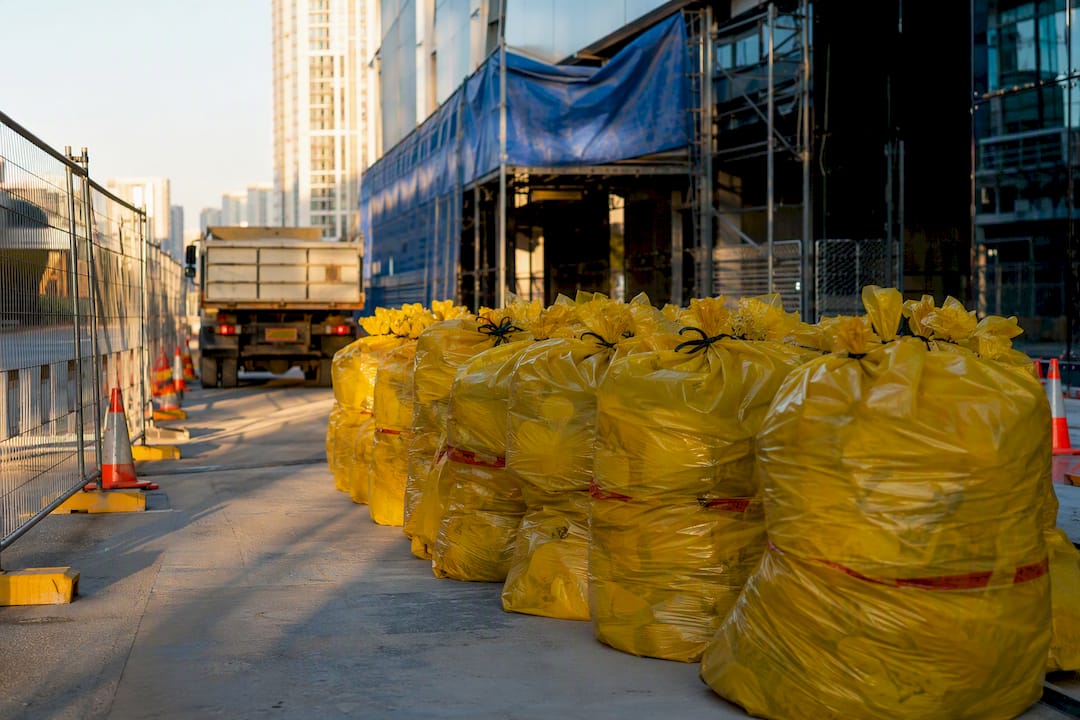
In NSW, any friable asbestos, or bonded asbestos removal exceeding 10 m², must be handled by a licensed removalist. Asbestos waste can only go to an EPA-licensed landfill that accepts it, and any single consignment of 100 kg or more, or 10 m² or more, must be tracked through the EPA’s Integrated Waste Tracking Solution (IWTS). Registering with IWTS isn’t instant either, so building that lead time into your project schedule matters.
Before you touch a single sheet of fibro or lag a pipe, confirm which category your job falls into:
- Any friable asbestos requires a Class A licensed removalist, regardless of quantity.
- Non-friable (bonded) asbestos over 10 m² requires at least a Class B licensed removalist.
- Loads of 100 kg or more, or 10 m² or more, must be tracked via IWTS, with registration taking 24 to 48 hours to process.
Key Takeaways
Lawful asbestos disposal in NSW requires licensed removal above set thresholds, delivery only to licensed landfills, and IWTS tracking for loads at or above 100 kg or 10 m².
| Point | Details |
|---|---|
| Know your licence trigger | Any friable asbestos or non-friable asbestos over 10 m² requires a licensed removalist. |
| Register IWTS early | Loads of 100 kg or 10 m² or more need IWTS registration, which can take 24 to 48 hours. |
| Confirm landfill acceptance first | Phone ahead, only licensed landfills accept asbestos, and cover depth rules apply under Reg 80. |
| Keep every disposal record | Retain landfill receipts, IWTS logs and clearance certificates as proof of lawful disposal. |
| Consider a managed service | Sydneycityrubbish coordinates compliant commercial waste removal across Sydney, including hazardous material streams. |
Table of Contents
- Asbestos disposal regulations NSW: the agencies and laws in charge
- How to dispose of asbestos in NSW: a step-by-step checklist
- Using the Integrated Waste Tracking Solution correctly
- Landfill acceptance, cover depths and safe unloading
- When you actually need a licensed asbestos removalist
- Recordkeeping and the cost of getting it wrong
- Applying for the right licence or approval
- Who carries the liability: owner or removalist?
- Residential jobs versus commercial and construction sites
- Discovering asbestos unexpectedly during works
- Key definitions worth knowing before you start
- A managed alternative for Sydney property and site managers
- Sources
Asbestos disposal regulations NSW: the agencies and laws in charge
Three regulatory threads run through every asbestos job in NSW, and getting confused about which one governs which duty is where most non-compliance starts. The Work Health and Safety Act and Regulation, enforced by SafeWork NSW, set the licence thresholds and the physical safety duties on site. This is where the 10 m² non-friable threshold and the friable-material licence trigger come from, along with the Code of Practice on how to safely remove asbestos, which spells out PPE, wet-removal methods, decontamination and site controls.
Once the waste leaves site, the Environment Protection Authority takes over under the Protection of the Environment Operations Act and the Protection of the Environment Operations (Waste) Regulation 2014. That’s the regulation that licenses landfills to accept asbestos and sets the tracking and cover rules under Reg 80.
Here’s the practical split you need to remember:
- SafeWork NSW governs who is allowed to remove asbestos and how it’s handled on site.
- The EPA governs where asbestos waste goes and how its movement is recorded.
- Reg 80 and the Code of Practice interlock: one tells you how to remove and package it safely, the other tells you what happens to it after it leaves your gate.
Satisfying only one regime isn’t good enough. A perfectly executed removal that ends up dumped at an unlicensed site is still a breach, and a compliant landfill delivery preceded by unlicensed removal work is equally exposed.
How to dispose of asbestos in NSW: a step-by-step checklist
Every compliant job follows roughly the same sequence, whether it’s a single garage sheet or a full commercial strip-out.
- Assess friability and area. Determine whether the material is friable and measure the affected area. This single step decides whether you need a Class A removalist, a Class B removalist, or whether a competent tradesperson can legally handle a small non-friable job themselves.
- Choose your removal pathway. Licensed non-friable jobs under 10 m² may sometimes be handled by tradespeople, though clearance certificates can still apply in certain circumstances.
- Prepare the site. Set up signage and barricades, use wet suppression methods to stop fibres becoming airborne, and fit correct respiratory protection and disposable coveralls before any material is disturbed.
- Package the waste. Double-wrap in heavy-duty plastic sheeting, label it clearly, and keep it sealed until it reaches the landfill.
- Call the landfill first. Confirm the site accepts asbestos, ask about booking requirements, and check what packaging or vehicle configuration they expect on arrival.
- Register with IWTS if the load qualifies. Anything at or above 100 kg or 10 m² needs a consignment created in advance.
Pro Tip: Treat your landfill booking and IWTS registration as the two items on your critical path, not paperwork you’ll get to later. Leaving them until the truck is loaded is the single most common reason asbestos jobs stall mid-project.
Using the Integrated Waste Tracking Solution correctly
The IWTS exists so the EPA can trace asbestos waste from the point it leaves a site to the point it’s buried under compliant cover at a licensed facility. It applies whenever a single load hits 100 kg or 10 m², and smaller loads sit outside the mandatory tracking requirement, though many contractors register anyway for their own records.
Responsibility for creating and verifying a consignment sits across three parties: the consignor (usually the contractor or waste producer), the transporter, and the receiving landfill. Each needs to confirm their leg of the movement in the system.
- Loads of 100 kg or more, or 10 m² or more, must be registered before transport.
- Registration and verification can take 24 to 48 hours, so same-day bookings are risky.
- If a load moves without being tracked, the safest fix is to contact the EPA and the receiving landfill immediately rather than let an undocumented delivery proceed.
Additional detail on reporting obligations sits in the EPA’s Asbestos and Waste Tyres Guidelines, which is worth bookmarking if you run recurring construction or strip-out work.
Landfill acceptance, cover depths and safe unloading
Arriving at the tip with a ute full of fibro sheeting and no phone call beforehand is a fast way to get turned away. Reg 80 places specific duties on both the person delivering the waste and the landfill operator receiving it.
- The person delivering asbestos must tell the landfill operator the load contains asbestos before unloading begins.
- Unloading must generate no visible dust; this is a legal requirement, not a best-practice suggestion.
- The regulation sets initial, end-of-day and final cover depths using virgin excavated natural material, unless the EPA has approved an alternative cover for that specific site.
- Cover requirements are stricter for friable material than for bonded asbestos, reflecting the higher fibre release risk.
Phone the facility before you drive out. Many licensed landfills run bookings for asbestos loads and expect specific wrapping or vehicle arrangements on arrival, and turning up unannounced can mean a wasted trip with a loaded vehicle you now need to store safely overnight. Keep the landfill receipt. It’s your primary evidence that the material was disposed of lawfully, and you’ll want it on file well after the project wraps up.
When you actually need a licensed asbestos removalist
The licence categories aren’t arbitrary red tape. Class A licensed removalists are trained and equipped for friable asbestos, which behaves unpredictably and poses the highest airborne fibre risk. Any amount of friable material triggers this requirement, no matter how small the job looks. Class B removalists cover non-friable, bonded material once it exceeds 10 m².
Beyond the legal trigger point, there’s a practical case for hiring licensed operators even on borderline jobs:
- They prepare an asbestos removal control plan and handle regulator notifications where required.
- They can issue clearance certificates confirming the site is safe for reoccupation.
- They typically manage IWTS registration and landfill liaison as part of the job, removing that admin burden from you.
Pro Tip: If you’re within a few square metres of the 10 m² threshold, round up rather than down. The cost difference between DIY and licensed removal is small next to the liability exposure if you’ve underestimated the area.
Recordkeeping and the cost of getting it wrong
Every compliant asbestos job leaves a paper trail, and that trail is what protects you if a regulator, insurer, or future buyer ever asks questions. Keep landfill disposal receipts, IWTS consignment records, and any clearance certificates issued by your removalist together in one file, ideally digital and backed up.
- Landfill receipts prove the waste reached a licensed site, not a random skip bin or vacant lot.
- IWTS consignment logs show the movement was tracked end to end.
- Clearance certificates matter for development approvals and for reassuring future occupants or buyers.
Non-compliance carries real teeth. EPA guidance notes penalties of up to $7,500 for individuals and $15,000 for companies for asbestos disposal breaches, on top of clean-up notices and potential court action for serious cases. If you’re relying on a contractor, ask for written disposal receipts and IWTS confirmation before you sign off the job as finished.
Applying for the right licence or approval
Most property owners never apply for an asbestos removal licence themselves. It’s the removalist who holds the Class A or Class B licence issued by SafeWork NSW, renewed periodically and tied to demonstrated training, equipment and safe work procedures. Your job as the property owner or principal contractor is to verify that licence is current before work starts, not to obtain one.
Where you do have a direct application step is IWTS registration, which any consignor, transporter or receiver can set up through the EPA’s online portal. Register the consignment details, including estimated weight or area, source address and destination landfill, ahead of the planned transport date. Given the 24 to 48 hour processing window, leaving this until the morning of removal is a common cause of delay.
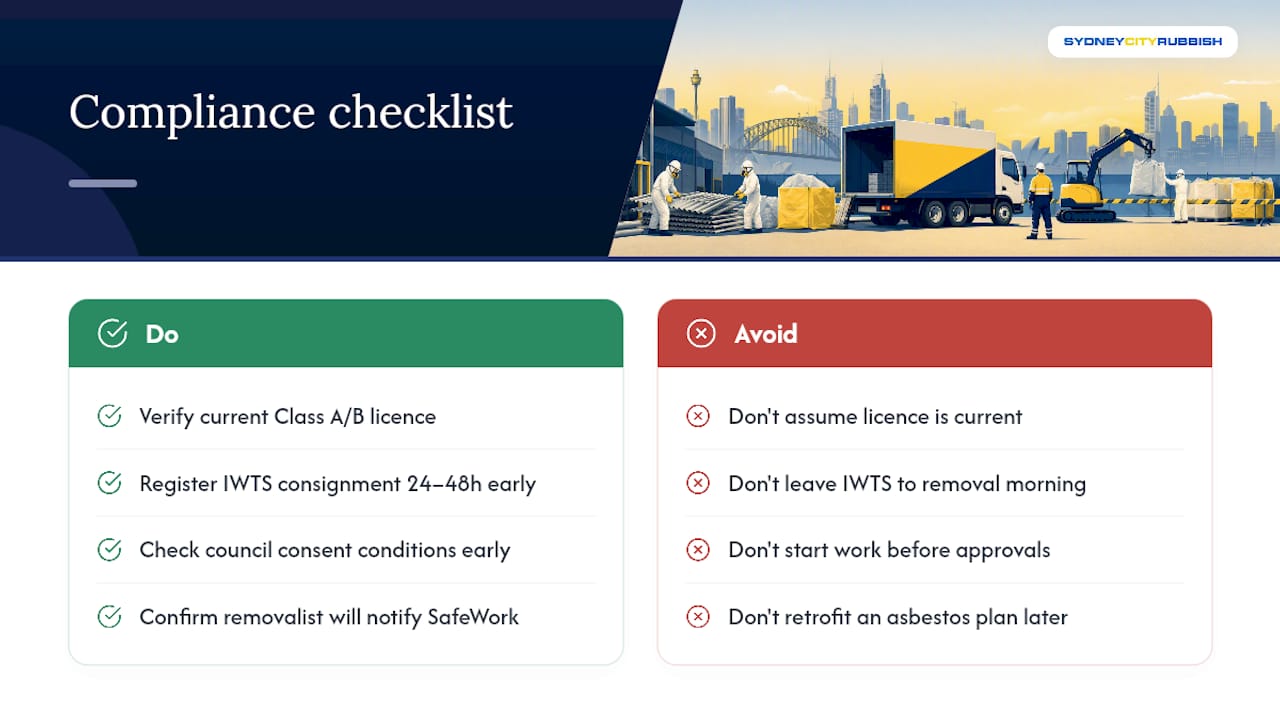
For larger commercial projects, local council development approval conditions sometimes require an asbestos management plan or removal notification as a precursor to demolition consent. Check your consent conditions early, because retrofitting an asbestos plan after work has started can halt a job entirely. If your project involves a licensed removalist, they’ll typically handle the SafeWork notification of removal work themselves, particularly for larger friable jobs, but it’s worth confirming this explicitly in your contract rather than assuming it’s covered.
None of these approval pathways substitute for the others. A current removalist licence, an active IWTS consignment, and any required council conditions all need to be satisfied in parallel, not treated as alternatives.
Who carries the liability: owner or removalist?
Hiring a licensed removalist doesn’t erase your responsibility as the property owner. Under NSW work health and safety law, you retain duties as the person conducting a business or undertaking, or as the person with management or control of the workplace, even once a contractor is engaged. That means confirming the removalist actually holds the licence class the job requires, and that they’re following the notification and control-plan obligations set out in the Code of Practice.
The removalist carries the operational liability for how the work is physically carried out: safe removal technique, correct PPE, dust suppression, and lawful packaging. They’re also generally the party who registers the IWTS consignment and interacts directly with the landfill, though this should be confirmed in writing rather than assumed.
Where things get murky is unloading at the landfill. Reg 80 places duties on both the person delivering the waste and the landfill operator to prevent dust and ensure proper notification, which means liability for a poor unloading process can be shared between the transporter and the receiving site. If you’ve engaged a removalist who subcontracts transport, ask who specifically holds that duty on delivery day. Vague answers here are a warning sign, not a technicality you can skip past.
Residential jobs versus commercial and construction sites
The core legal thresholds, the 10 m² non-friable trigger, the friable licence requirement, and the IWTS reporting levels, apply identically whether the asbestos is in a suburban bathroom or a commercial fitout. What changes is scale, complexity and who’s accountable.
A homeowner replacing a small section of eaves might legally handle a tiny non-friable job themselves, provided it stays well under 10 m² and involves no friable material, though many choose a licensed tradesperson anyway for peace of mind. Commercial and construction sites rarely get that latitude in practice, because strip-outs, demolitions and refurbishments routinely uncover far larger quantities, and often mixed friable and non-friable material in the same job.
Commercial projects also tend to trigger IWTS thresholds automatically simply due to volume, whereas a small residential repair might sit comfortably under the 100 kg or 10 m² mark. That doesn’t mean residential jobs are exempt from scrutiny. It means the compliance burden, control plans, notifications, tracked consignments, scales up with the size and commercial context of the job rather than the property type itself. Strata buildings and multi-tenant commercial premises add another layer again, since common property asbestos removal usually needs sign off from the strata committee or building owner before work begins, on top of the standard regulatory requirements.
Discovering asbestos unexpectedly during works
Finding suspected asbestos mid-renovation, behind a wall sheet, under old vinyl flooring, in ceiling insulation, changes everything about how the job proceeds from that moment. Work must stop immediately in the affected area. Don’t drill, cut, sand or disturb the material further, and don’t sweep or vacuum any dust or debris that’s already settled.
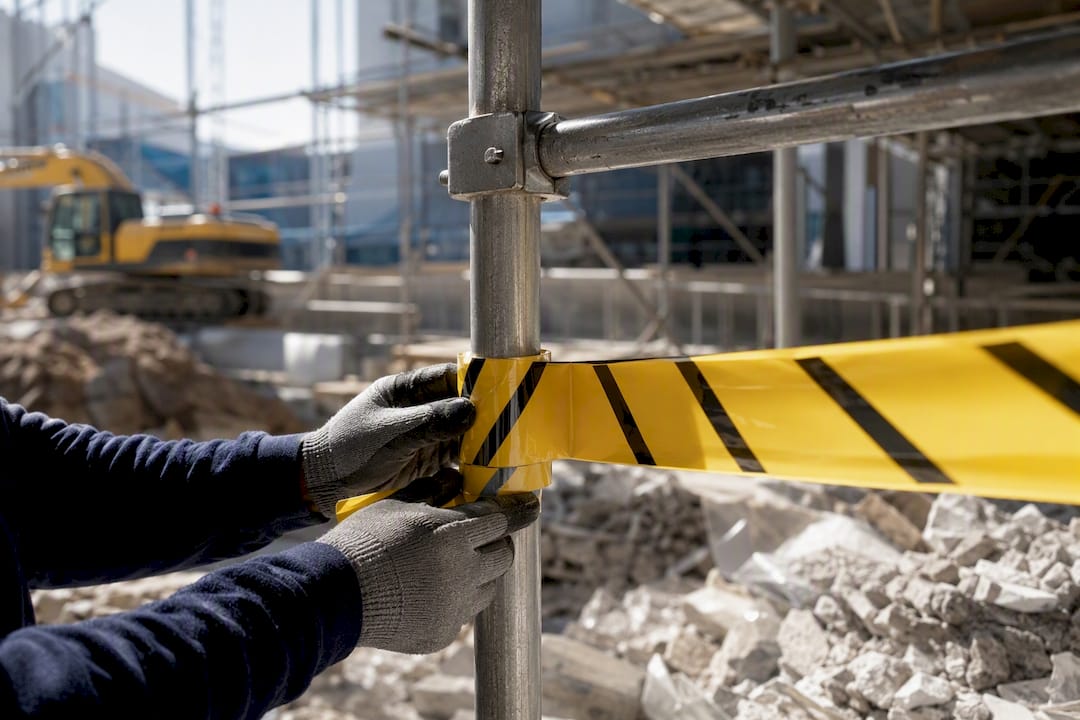
Isolate the area if you can, close doors, restrict access, and avoid running fans or air conditioning that could spread fibres further through the building. If people were working in the space, get them out and avoid re-entry until the material has been assessed.
The next step is getting the material tested or assessed by a competent person, often the same licensed removalist you’d engage for the actual removal work. If the assessment confirms asbestos, you’re back to the same decision tree covered earlier: friable material or non-friable over 10 m² needs a licensed removalist, and any waste generated still needs to go to a licensed landfill with IWTS tracking if it meets the threshold. Document the discovery, the date, location and photos if safe to take them, since this record can matter for insurance, contractor liability discussions and any council or SafeWork enquiries that follow.
Key definitions worth knowing before you start
A handful of terms recur throughout NSW asbestos law, and misunderstanding them is where a lot of well-intentioned property owners trip up. Friable asbestos refers to material that’s crumbly or can be reduced to powder by hand pressure, meaning fibres release into the air easily. Non-friable (bonded) asbestos, like most fibro sheeting, holds fibres within a rigid matrix and only becomes hazardous when cut, drilled, broken or otherwise disturbed.
Class A licence covers removal of any quantity of friable asbestos, along with associated non-friable work. Class B licence covers non-friable asbestos removal exceeding 10 m², the threshold below which some non-friable work may legally sit outside licensing requirements.
Under the Protection of the Environment Operations Act, asbestos waste is classified as a special waste, which is why it can’t go into general skip bins or standard construction and demolition waste streams. It must go to a facility specifically licensed to accept it. VENM, virgin excavated natural material, is the standard cover material required under Reg 80 unless a landfill has secured EPA approval for an alternative. Understanding these categories upfront saves confusion later when a removalist or landfill operator uses them in conversation, and it helps you ask the right questions rather than nodding along.
A managed alternative for Sydney property and site managers
Chasing landfill bookings, IWTS registrations and licensed removalist quotes on top of running a construction site or managing a commercial fitout eats time you probably don’t have. Sydneycityrubbish handles commercial rubbish removal across Sydney CBD, Parramatta, Ryde and the greater metropolitan area, and can coordinate compliant disposal pathways for hazardous materials as part of a broader waste removal or strip-out job, so you’re not juggling separate contractors for general debris and asbestos-related waste.
The business runs carbon-neutral operations in partnership with Carbon Neutral, alongside a firm focus on punctuality and leaving sites completely clear at job’s end. If you’re weighing up a quote, have your estimated affected area in square metres, whether the material is confirmed friable or non-friable, and site access details ready. That’s what lets Sydneycityrubbish scope the job accurately and give you a realistic timeline against landfill booking and IWTS lead times. Get in touch through the Sydney City Rubbish website to request a quote for your next commercial waste or asbestos-related removal job.
Sources
- Tracking waste tyres and asbestos waste | EPA
- PROTECTION OF THE ENVIRONMENT OPERATIONS (WASTE) REGULATION 2014 – REG 80 Disposal of asbestos waste
- How to safely remove asbestos — SafeWork NSW (Code of Practice)