Office Waste Audit Checklist for Sydney Businesses
By the Sydney City Rubbish team, October 2026
An office waste audit is a structured look at what your workplace throws away, where it comes from and what it costs to move it. This checklist takes you from planning through to sorting, recording and acting on the results, using Australian guidance wherever it exists. It suits office managers, property managers and strata managers who need a baseline before changing bins, contracts or habits.
TL;DR
- A waste audit gives you a baseline: how much goes to landfill, what it contains, which areas produce it and where recycling is going wrong.
- Plan first (records, bins, sample period, safety), then sort one bin at a time and record weights, materials, contamination and costs.
- Use the results to set up clear bin signage, name a waste coordinator and review suppliers and contracts.
- Audits explain what your waste contains; routine bin-service records show the trend. You need both.
- Bulky items, e-waste and fit-out debris found during the audit are best removed by a commercial contractor, not left in the bin room.
Table of Contents
- What an office waste audit tells you
- Before the audit: planning checklist
- Safety checklist
- The checklist for the audit day
- What to record: the data sheet
- Example: reading a one-day sample
- Repeating the audit and keeping the records
- Turning the results into action
- When the audit finds more than the bins can handle
- FAQ
- Sources
What an office waste audit tells you
The business.gov.au guidance on managing business waste describes an audit as the way to establish a baseline and identify areas for improvement. In practice it shows how much material goes to landfill, what that waste is made of, which recycling types you collect, which parts of the business generate the most, and where communication or education is letting people down.
That last point matters more than most managers expect. A floor that puts coffee cups and food scraps in the paper bin will not be fixed by a bigger bin. It will be fixed by a clearer label and a short conversation, and only an audit shows you which floor it is.
The NSW EPA better practice guidelines make a useful distinction. Routine monitoring, such as bin-service records, gives you trend data. A composition audit collects samples from all waste streams over a set period, separates the components and weighs them, which tells you what is actually inside the bins. The two are complementary, and neither replaces the other.
Before the audit: planning checklist
Good audits are won in preparation. Work through these items before anyone touches a bag.
Gather the paperwork
The Australian Business Waste Reduction Plan recommends reviewing your recycling records and contracts, purchasing and inventory records, maintenance and operating logs, and equipment-service contracts and invoices before the physical assessment. For an office, that means:
your general waste and recycling collection invoices, the bin sizes and collection frequencies on each contract, stationery and consumables purchasing data, and any e-waste or confidential paper shredding arrangements. These documents tell you what you pay for and what you expect to see in the bins, so the audit can test the gap between the two.
If you manage a multi-tenant building, the contract may sit with the building owner or strata committee rather than with each tenant. Confirm who holds it early. Our guide for office building managers covers how shared waste areas are usually managed.
Choose the bins and the sample period
Select which bins you will audit: general waste, paper and cardboard recycling, commingled recycling, organics or kitchen waste, and any e-waste or toner collection points. Sustainability Victoria’s waste assessment fact sheet advises choosing the bins and the sample period at the start, consulting cleaning staff and contractors, and picking a site that is safe and easy to clean.
The sample should represent normal waste patterns. The Business Waste Reduction Plan notes that the assessment can be carried out later in the day, once the bins have filled, and that staff need not be told the exact time, because behaviour may change if people know they are being watched. You should still tell cleaners and security so nobody is alarmed to find bags being opened.
Confirm the building logistics
In a Sydney CBD tower, the practical constraints are often access rather than waste. Check where you can sort without blocking a loading dock or fire path, whether a goods lift can be booked, and whether the building manager needs to approve the activity. A basement bin room with a hose point and a floor drain is ideal. A carpeted tenancy floor is not.
Appoint the audit team
Use a small team: a lead, two or three sorters, and one person who records and photographs but does not handle waste. The Sustainability Victoria fact sheet specifically says the note-taker or photographer should stay out of the waste itself. A facilities representative and, if you have one, your health and safety officer should be briefed before the day.
Safety checklist
Waste audits involve unknown contents, so safety planning is not optional. Australia’s national training unit CPPWMT4009 Conduct waste audits requires the audit plan to review workplace policies, legislation and regulations, assess hazards and risks, obtain approvals and select appropriate personal protective equipment.
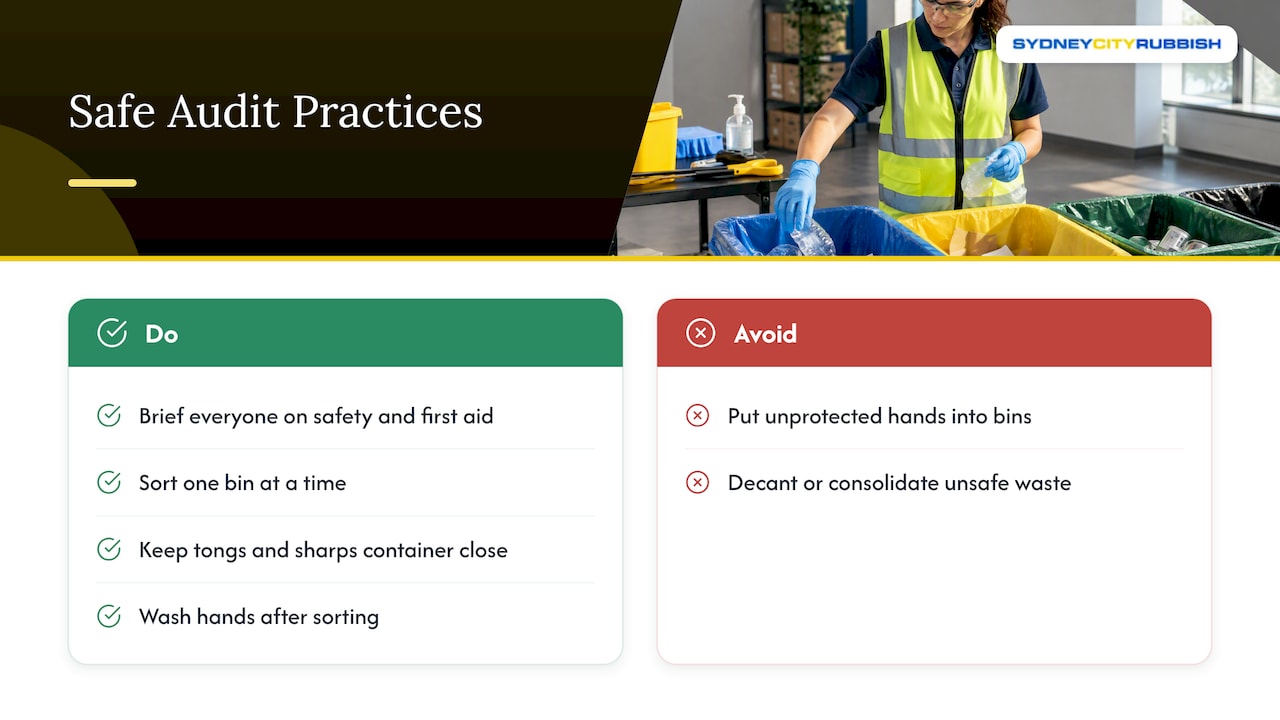
For equipment, Sustainability Victoria lists safety glasses, protective clothing, water-resistant footwear, heavy-duty gloves, a first-aid kit, phone access, a sharps container, tongs, a groundsheet and cleaning equipment. The Business Waste Reduction Plan adds assessment forms, clipboards, pens, a calculator and a camera, and tells assessors never to put unprotected hands into bins and to wash their hands afterwards.
Brief everyone on workplace health and safety and first aid before sorting starts, and audit one bin at a time so contents do not mix. Office bins can hold broken glass, used syringes, batteries, toner and food waste, so keep the tongs and sharps container within reach. If a participant has an open wound, a latex allergy or a back injury, they should take the recording role instead.
If the audit turns up anything you cannot safely handle, such as chemicals, asbestos-suspect building materials from a fit-out, or damaged lithium batteries, stop and arrange specialist removal. Do not decant or consolidate it.
The checklist for the audit day
The order below follows the method in the Sustainability Victoria fact sheet, the WRAP office guide from the United Kingdom, and the CPPWMT4009 description of setting up the area, isolating, sorting, measuring, weighing and recording.
1. Set up the sorting area
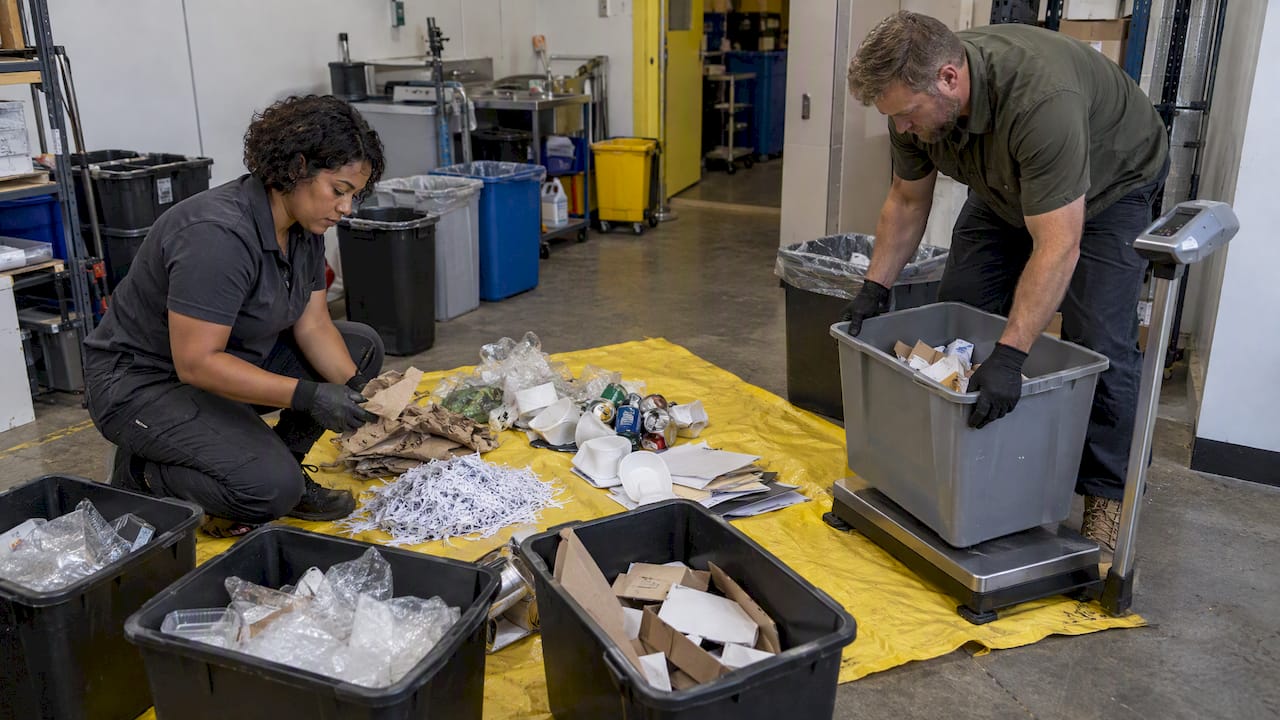
Lay a groundsheet or tarp, place labelled containers for each material category, and set up the weighing scales and the recording station on clean ground away from the sorting zone. Mark the area so colleagues do not walk through it.
2. Isolate the bins and take a sample
Collect the waste from each source: general waste, recycling, kitchen and breakout-room waste, and litter bins. Label each bag with its source, such as the floor, department or kitchen. Where bins are too numerous to sort in full, sample a consistent proportion from each area and note the proportion.
3. Weigh the gross material
Weigh each full container, then deduct the weight of the empty container to get the net weight. WRAP recommends this approach because container weight can otherwise distort the figures significantly, especially with wheelie bins.
4. Sort into categories
Empty one bin at a time onto the groundsheet and sort into your categories. Where weighing every item is impractical, the Business Waste Reduction Plan suggests estimating by volume the proportion of the main material types in the general waste, recycling and organics bins.
5. Weigh and record each category
Weigh each sorted category and enter it on the data sheet straight away. Photograph each bin before and after sorting, because pictures of a contaminated recycling bin are the most persuasive evidence you can show a leadership team.
6. Clean up and debrief
Bag the sorted material for its correct disposal, clean the area, and wash hands and equipment. Hold a five-minute debrief while observations are fresh, because things people noticed (a bin that was always full of takeaway containers, say) rarely make it onto a data sheet.
What to record: the data sheet
The NSW EPA guidelines set out the information worth capturing for each waste stream. Adapted for an office, a data sheet should hold the following.
| Field | What to enter | Why it matters |
|---|---|---|
| Source or department | Floor, kitchen, print room, reception | Shows which areas produce the most waste |
| Date and sample period | Day of the week and the hours covered | Allows fair comparison between audits |
| Bin type and capacity | General, paper, commingled, organics; litres | Reveals over- or under-sized bins |
| Gross and net weight | Kilograms, with container weight deducted | Gives the true quantity of material |
| Material category | Paper, cardboard, plastics, cans and glass, food, e-waste, other | Identifies what is recyclable but landfilled |
| Disposal and recycling quantities | Landfill, recycling and organics in kg | Gives your recovery rate |
| Contamination | Items in the wrong bin | Shows where signage or training is failing |
| Costs | Disposal and recycling cost per service | Links the waste to the budget |
| Comments | How, why, when and where it was generated | Explains the numbers |
The NSW EPA also recommends documenting where, why, when and how each stream is generated and managed. Singapore’s National Environment Agency takes the same approach in its 3R guidebook for offices, recording waste type, origin, kilograms disposed and recycled per month, and the cost of each. It is an international guide, but its table layout works well as a template for an Australian office.
Waste streams to include
An office audit should cover general waste, paper and cardboard, packaging and plastics, cans and glass, organics or kitchen waste, and e-waste, plus anything specific to your business: confidential documents, toner cartridges, old furniture or fit-out offcuts. Our guide to setting up an office recycling program explains how those streams are normally separated in Australian workplaces.
Bulky items and furniture
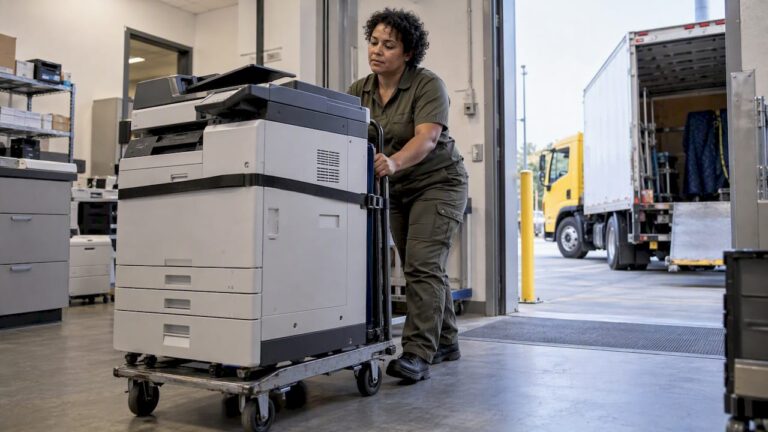
Most audits focus on bins, yet the largest quantities in many offices sit outside them: obsolete monitors, broken chairs, surplus desks and filing cabinets in a store room. Record these separately with a rough count and condition. If much of it is still usable, consider reuse first, and if you are consolidating floors or moving, a guide to moving office furniture efficiently can help you plan what goes and what stays. What cannot be reused needs a licensed removal, and our furniture and joinery removal service handles that on commercial sites across Sydney.
Example: reading a one-day sample
Here is an illustration, with made-up numbers, of how the maths works. Suppose a floor of 40 staff produces a general waste sample with a gross weight of 18 kg in a container weighing 2 kg. The net weight is 16 kg. Sorting shows 5 kg of paper and cardboard, 3 kg of food scraps, 2 kg of recyclable plastics, cans and glass, and 6 kg of true general waste.
In that example, 10 of the 16 kg in the general waste bin could have gone somewhere else. That is a finding you can act on. The bins are probably in the wrong places, or the labels are unclear, or there is no organics service. The numbers above are for illustration only and do not describe any real office.
Repeating the audit and keeping the records
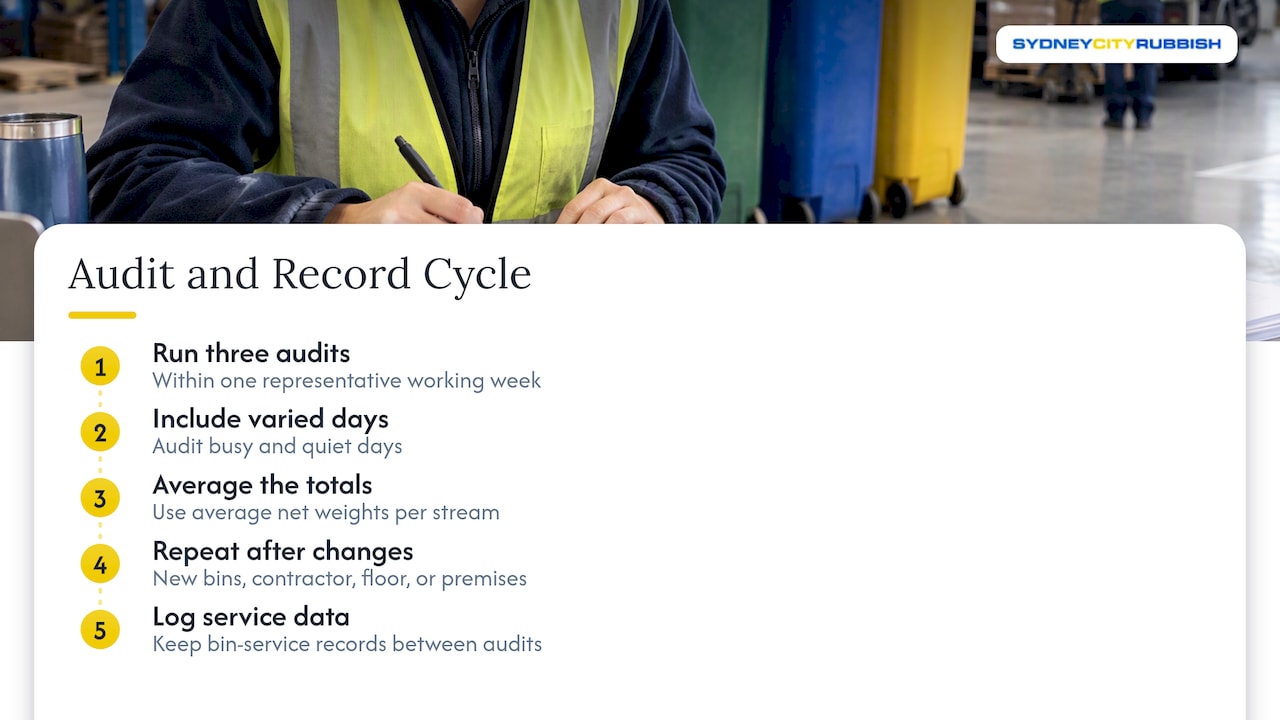
Australian guidance does not set a single interval. The NSW EPA says composition audits need not be very frequent but should be regular enough to establish typical composition, while routine bin monitoring should be continuous. WRAP suggests repeating the audit twice more within one representative week, including busy and quiet days, then averaging the totals and using the average net weights per stream to calculate annual waste and recycling totals.
For most offices, a sensible pattern is a three-run audit in a normal working week, followed by a repeat after any major change: a new bin system, a floor consolidation, a change of contractor or a move of premises. Between audits, keep logging bin-service data.
Keep these records together:
the audit plan, completed data sheets and raw measurements, photographs and other evidence, bin-service logs and contracts, purchasing and inventory records, calculations and reports, the actions and targets you set, and the results of later monitoring. The NSW EPA guidelines say audit data combined with regular monitoring and recording reveals trends over time, so building management can respond and maintain performance. Without the earlier records you cannot show whether anything improved.
Turning the results into action
An audit is only worth the effort if it changes something. business.gov.au recommends using the baseline to reduce, reuse and recycle, appointing a waste coordinator, providing separate bins with clear signage and images, reviewing products and suppliers, and checking which waste rules apply to you.
A workable sequence looks like this.
Fix the easy contamination first
If the audit shows food in paper recycling, move bins, add picture-based signs and brief staff. Picture labels work better than text in multilingual workplaces. Our article on tips for recycling office waste covers practical ways to do this.
Right-size the bin service
Compare your measured volumes with your contract. If general waste bins are collected weekly but are half full, you may be paying for capacity you do not use. If recycling overflows, you may need more capacity there. For shared buildings, four-wheeled bins are often the practical choice for larger volumes.
Reduce at the source
Purchasing records matter here. Excess packaging, single-use catering items and unused stationery all show up in the audit and in the invoices. Our guides to reducing your office waste and reusing your office waste go through the options.
Write it into a plan
The environmental audit guidance from business.gov.au notes that an audit can identify ways to reduce impact, prioritise activities, demonstrate accountability and give you a benchmark for measuring progress. Turn that into a short document with owners, targets and review dates. We explain how in building your office waste management plan, and in the lifecycle of your office waste we follow materials from the bin to their final destination.
When the audit finds more than the bins can handle
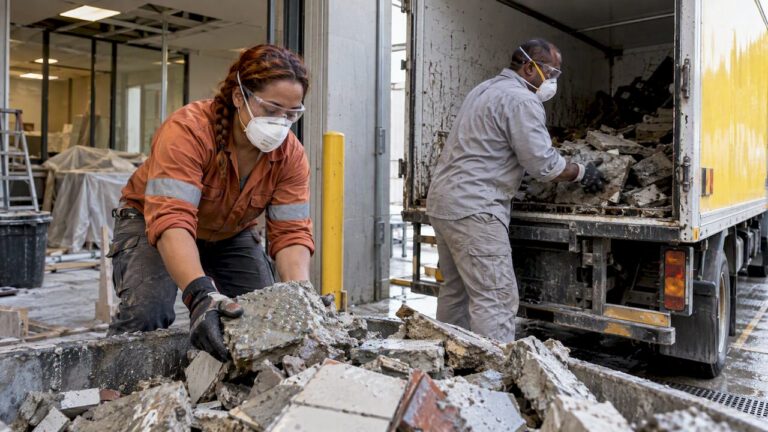
Sometimes the audit exposes a larger problem: a store room full of old workstations, e-waste stacked for years, or a tenancy that is about to be handed back. That is where a commercial contractor saves time and risk.
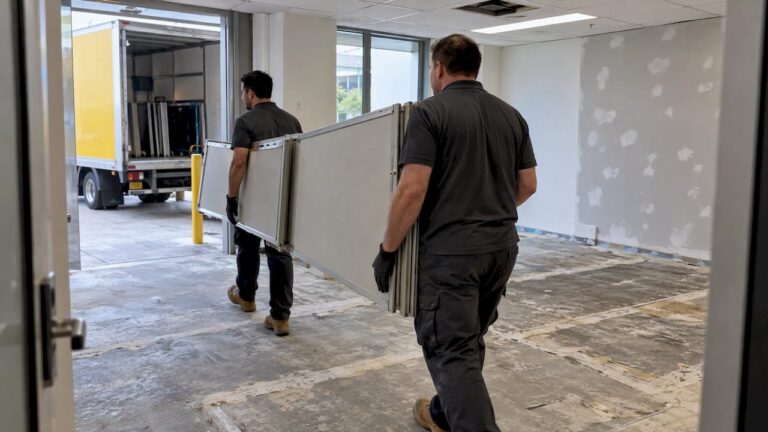
Sydney City Rubbish removes office furniture, electronics, general bulk rubbish and fit-out debris from offices, retail sites, construction sites and strata buildings across Sydney, and we coordinate directly with building management for access. Our carbon-neutral disposal is an opt-in for corporate clients, and we use registered recycling partners for responsible disposal. For end-of-lease work we also handle strip-outs and makegood. See our commercial waste removal service, or get a free quote now with your audit findings in hand.
FAQ
What is the purpose of a waste audit?
A waste audit establishes a baseline of what your workplace discards, so you can identify areas for improvement and decide what to do about them. It shows the quantities going to landfill, the composition of that waste, the recycling types you collect and the parts of the business generating the most.
What does an office waste audit checklist look like?
It has four parts: planning (records, bins, sample period, team, approvals), safety (risk assessment, protective equipment, first aid), sorting and weighing (one bin at a time, gross and net weights, categories), and recording and follow-up (data sheet, photographs, actions and monitoring). The sections above set each of these out in order.
How often should an office repeat a waste audit?
Australian guidance does not fix an interval. The NSW EPA says audits should be regular enough to establish typical composition, with routine bin monitoring running continuously. In practice, repeat after any significant change to your bins, contractor, headcount or premises.
Can we run the audit ourselves?
Yes, if you plan the safety side properly and have a small trained team. Use protective equipment, tongs and a sharps container, and stop if you meet hazardous material. For bulky furniture, e-waste or fit-out debris, bring in a commercial removal contractor.
Sources
- Manage business waste, business.gov.au
- Manage your environmental impact, business.gov.au
- Better Practice Guidelines for Waste Management, NSW EPA
- Waste assessment fact sheet, Sustainability Victoria
- CPPWMT4009 Conduct waste audits, training.gov.au
- Business Waste Reduction Plan
- How to conduct a waste audit in the office sector, WRAP
- 3R Guidebook for Offices, National Environment Agency Singapore