50L, $1,000 Fines: Illegal Dumping Penalties NSW for Owners & Managers
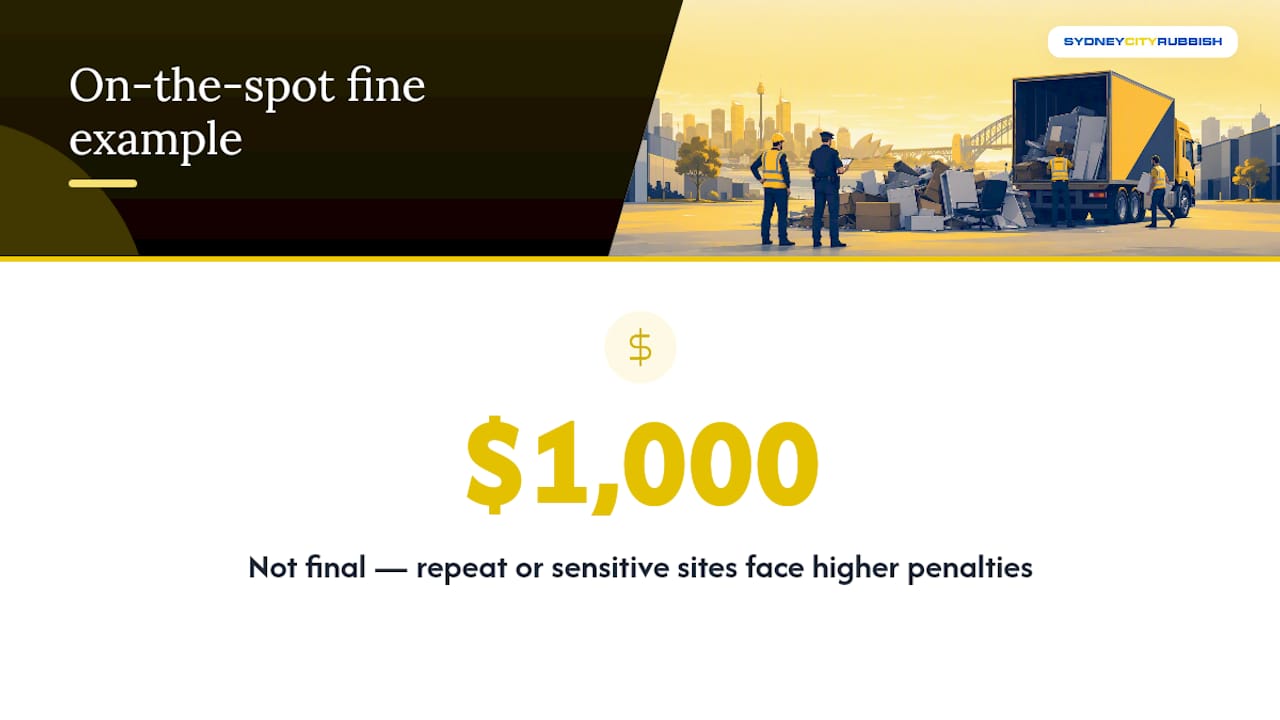
Illegal dumping is a criminal offence in New South Wales under the Protection of the Environment Operations Act 1997, with a legal threshold set at 50 litres or 50 kilograms of waste. Since the 2024 reforms, on-the-spot fines for individuals start around $1,000 and climb sharply in sensitive places, while court-imposed maximum penalties can run into the hundreds of thousands of dollars for larger-scale or wilful offences. Property owners can now be held liable even when a contractor did the dumping.
TL;DR:
- Fines for illegal dumping start at around $1,000 for individuals and can reach hundreds of thousands of dollars for large or repeated offences.
- The 50 liter or 50 kilogram threshold determines whether waste is considered littering or illegal dumping, with most everyday bulky items crossing this line.
- Sensitive locations like schools and beaches incur higher fines, especially when hazardous materials such as asbestos or industrial waste are involved.
- Owner liability extends to waste dumped by contractors, making choosing licensed and accountable removal services essential.
- Reporting illegal dumping through the EPA’s RID Online portal and maintaining proper disposal receipts reduces liability risks and supports lawful waste management.
Table of Contents
- Illegal dumping penalties NSW: on-the-spot fines and court maximums
- What counts as illegal dumping in NSW: thresholds and everyday examples
- Sensitive places and hazardous materials: where penalties rise sharply
- Who enforces illegal dumping in NSW and how to report it
- Owner onus and hiring removal contractors: a practical checklist
- If you receive a fine or clean-up notice: a short action plan
- Compliant rubbish removal that keeps owner onus off your desk
- Sources
Illegal dumping penalties NSW: on-the-spot fines and court maximums
The Environment Protection Legislation Amendment (Stronger Regulation and Penalties) Act 2024 rewrote the penalty structure for illegal dumping across NSW, creating a dedicated small-scale offence and lifting fines for repeat and sensitive-site offenders. The table below reflects the current on-the-spot and maximum court penalties under the POEO Act as summarised in EPA guidance.
Larger-scale dumping and land pollution offences generally bypass on-the-spot notices altogether. They go straight to court, where penalties are assessed against the volume dumped, the harm caused and whether the offender knew, or should have known, the consequences. The EPA’s working-together summary sets out the full Section 144AE penalty schedule for councils and other land managers now empowered to issue notices.
These figures aren’t static. The 2024 amendments specifically targeted repeat, low-level dumping that had previously slipped through because fines were too small to deter anyone. If you’re a business owner reading this table wondering whether a $1,000 fine is worth the risk of ignoring proper disposal, the answer sits in the next tier up: sensitive places and larger loads change the maths fast.
What counts as illegal dumping in NSW: thresholds and everyday examples
The 50 litre or 50 kilogram threshold is the dividing line the law uses to separate minor littering from illegal dumping. Anything at or under that volume is generally treated as littering, with its own (smaller) fines. Cross it, and you’re in illegal dumping territory, with the higher penalties outlined above.
In practice, this threshold catches more everyday behaviour than most people expect:
- Leaving bulky goods on the kerb outside your council’s scheduled clean-up window
- Dumping construction or renovation debris on vacant land, a laneway, or a neighbour’s verge
- Placing household rubbish or trade waste into a commercial or shopping centre bin you’re not authorised to use
- Abandoning old furniture, mattresses or appliances at a park, reserve or bushland car park
Timing catches people out more than intent does. Many councils, including Hornsby Shire Council, only permit bulky items on the verge within a narrow window before a scheduled pickup. Put your old couch out three days early and you’re technically dumping, not just being impatient.
Sensitive places and hazardous materials: where penalties rise sharply
Sensitive places attract meaningfully higher fines because the risk to public health and the environment is higher. The EPA’s definition covers schools, hospitals, childcare centres, national parks, waterways and beaches, places where dumped waste can contaminate soil, harm wildlife, or expose children and vulnerable people directly.
Certain types of waste push penalties higher again, regardless of location:
- Asbestos, even small quantities, is treated as hazardous waste requiring licensed handling
- Large quantities of tyres attract specific land pollution provisions
- Chemical drums, batteries and other industrial waste can trigger criminal land pollution charges rather than a civil fine
Pro Tip: If you’re unsure whether a material counts as hazardous, assume it does until a licensed carrier confirms otherwise. The cost of checking is nothing next to the cost of a land pollution prosecution.
Wilful or negligent disposal that causes actual environmental harm shifts from an infringement matter into criminal territory, with maximum penalties that can include imprisonment for individuals under the POEO Act’s land pollution provisions.
Who enforces illegal dumping in NSW and how to report it
Several agencies can issue penalty notices for illegal dumping, and the right one to contact depends on where the incident happened:
- NSW EPA officers handle larger-scale dumping, hazardous waste and matters crossing council boundaries.
- Authorised council officers issue most on-the-spot fines for local, small-scale dumping under the 2024 reforms.
- NSW Police get involved where dumping overlaps with other offences, such as illegal access to private land.
- National Parks and Wildlife Service officers enforce dumping in national parks and reserves.
For most incidents, the RID Online portal is the fastest route. Before reporting, gather what you can: clear photos of the waste and surrounding area, the date and time, and a vehicle registration if one was involved. That evidence is often what turns a report into an actual penalty notice.
Owner onus and hiring removal contractors: a practical checklist
Owner onus means the person or business that generated the waste can be held liable even if a contractor dumped it unlawfully, so choosing who removes your rubbish is a legal decision, not just a logistics one.
Before you hand waste to any contractor, run through this checklist:
- Confirm the contractor’s ABN and ask how long they’ve operated in Sydney
- Get a written quote that specifies where the waste will be disposed of, not just what it costs
- Request a weighbridge or tip receipt as proof of lawful disposal
- Avoid cash-only arrangements with no paper trail
- Get written confirmation of the disposal site and the date material was dropped off
Pro Tip: Keep every disposal receipt and photo for at least two years. If a fine ever lands on your desk for waste you thought was gone, that paperwork is the difference between a quick dismissal and a drawn-out dispute.
For asbestos or other hazardous materials, the stakes are higher again. Sydney City Rubbish’s guidance on asbestos disposal regulations in NSW and on hazardous waste disposal requirements covers the licensing and chain-of-custody steps that keep a manageable fine from escalating into a criminal land pollution matter.
If you receive a fine or clean-up notice: a short action plan
Getting a penalty notice or clean-up order isn’t the end of the road, but the clock starts the moment it arrives.
- Read the notice carefully and note every deadline; contact the issuing agency straight away if anything is unclear.
- Arrange lawful removal of the material promptly, and keep every receipt as proof of compliance.
- If you believe the notice was issued in error, or you have valid grounds, look into a formal review before the deadline passes.
- Get legal advice quickly if you’re facing a large fine, a criminal charge, or a land pollution claim tied to hazardous materials, these matters move fast once they reach court.
Repeated offences change how agencies respond. A first small-scale notice is usually handled as a fine. A pattern of dumping, or a single large or hazardous incident, is far more likely to end up prosecuted rather than fined.
Compliant rubbish removal that keeps owner onus off your desk
Sydney City Rubbish is the alternative to gambling on a contractor’s word for property managers and business owners who can’t afford an owner onus surprise. Every job comes with a written disposal record and, where relevant, a weighbridge receipt, so you’ve got the paper trail this article just walked you through, without having to chase it yourself. That matters most on construction sites and asbestos jobs, where Sydney City Rubbish follows licensed hazardous-waste handling procedures rather than leaving chain-of-custody to chance.
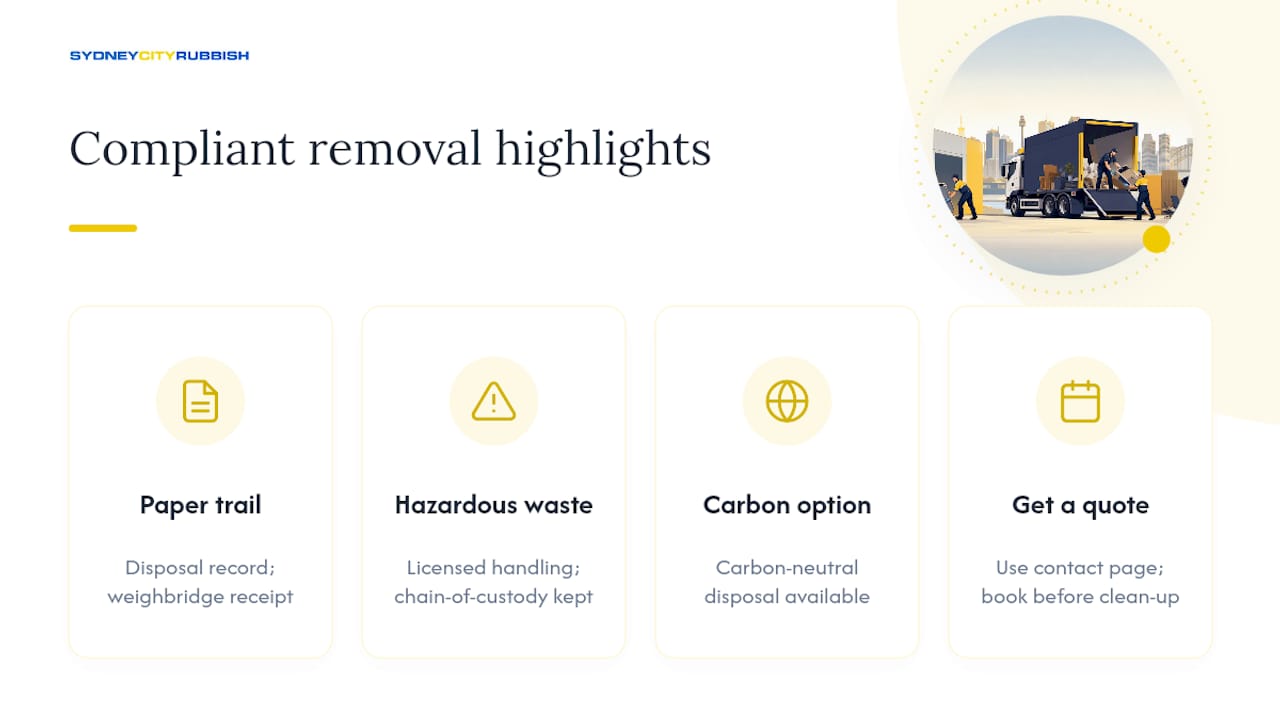
Commercial clients also get the option to run their construction waste removal as carbon-neutral disposal through Sydney City Rubbish’s partnership with Carbon Neutral, at no extra complexity on your end. If you’re managing a strata building, an office fit-out, or a site full of mixed debris and want it gone lawfully and on record, get a quote through the Sydney City Rubbish contact page and have it sorted before the next scheduled clean-up window rolls around.
Sources
- Biggest boost to environmental regulation in three decades | EPA
- Protection of the Environment Operations Act 1997 (current in-force text) | NSW legislation
- Report it (RID Online) | NSW EPA