Contractors: Keep Silica Under 0.05 mg/m3 During Concrete Grinding
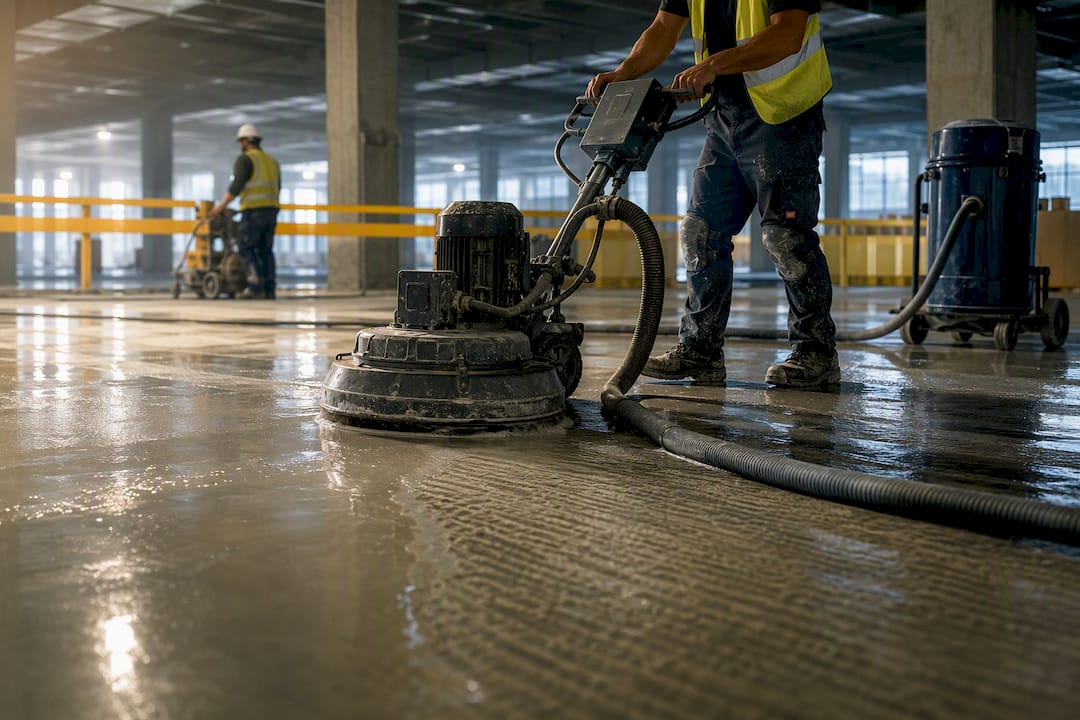
Engineering controls come first, always. Wet suppression and on-tool extraction rated M-class or H-class must capture silica dust before it becomes airborne, not after. Respiratory protective equipment (RPE) backs these controls up; it never replaces them. Every setup must keep exposure below Safe Work Australia’s exposure standard of 0.05 mg/m3 over an eight-hour shift, verified by air monitoring, following the hierarchy of controls in the model Code of Practice.
TL;DR:
- Use wet suppression and on-tool extraction rated M-class or H-class to capture silica dust at the source before it becomes airborne.
- Confirm proper setup by conducting a risk assessment, checking extraction equipment, and briefing workers on RPE requirements before every job.
- Ensure slurry is cleaned immediately using appropriate wet methods, and dispose of contaminated waste properly to prevent dust re-aerosolization.
- Select H-class extraction units for prolonged or heavy silica tasks, verifying seal fit, airflow, and filter condition to maintain effective dust capture.
- Maintain detailed documentation, including SWMS, inspection logs, air-monitoring reports, and regular equipment checks to demonstrate compliance.
Table of Contents
- Quick on-site checklist before you grind
- How to use wet methods correctly for grinding and polishing
- Choosing and using on-tool extraction (M-class vs H-class)
- Respiratory protection, air monitoring and verification
- Slurry, cleanup and disposal: stop dust re-release and meet waste rules
- Compliance and documentation: SWMS, controls table and proving due diligence
- Pre-start and maintenance checklist for extractors and water systems
- How Sydney City Rubbish helps with slurry and contaminated-waste removal
- Sources
Quick on-site checklist before you grind
Getting dust control concrete grinding right starts before the tool is switched on. Skip the setup phase and you’re chasing dust around the site instead of stopping it at the source.
Run through this sequence before every job:
- Complete a risk assessment and Safe Work Method Statement (SWMS) specific to silica-generating tasks, not a generic template.
- Choose your primary control, wet suppression or on-tool extraction, based on the surface, location and access to water.
- Set up containment and bunding to stop dust and slurry migrating beyond the work zone.
- Confirm the extractor’s class rating, check shroud fit against the tool, and verify water feed pressure.
- Brief the crew on their RPE requirements for the day.
- Assign cleanup duties and schedule filter changes before the job starts, not after the first alarm.
A crew that runs this checklist every morning rarely finds itself improvising a fix mid-shift.
How to use wet methods correctly for grinding and polishing
Wet suppression suits most floor grinding and polishing work, particularly indoors where extraction alone struggles to capture fine dust bouncing off hard surfaces. It’s less suitable on elevated work, near live electrics, or where water runoff would breach containment into a public area.
Getting it right means more than pointing a hose at the wheel:
- Set up a continuous water feed, not an intermittent trickle. Trade guidance from Tyrolit recommends checking lines for kinks and running the feed for 30 seconds before the tool touches concrete.
- Check pressure at the shroud, not just at the tap. Low pressure at the point of contact defeats the whole setup.
- Bund the work area and collect slurry as it’s generated rather than letting it spread.
- Manage electrical leads and power tools to keep them clear of wet surfaces and pooled water.
- Keep walkways clear of slurry to prevent slips, and mop up standing water during breaks, not just at the end of the shift.
Pro Tip: Place a clean white cloth near the shroud inlet before you start. If it stays clean after a minute of grinding, your water feed is doing its job. If it picks up dry dust, stop and fix the feed before continuing.
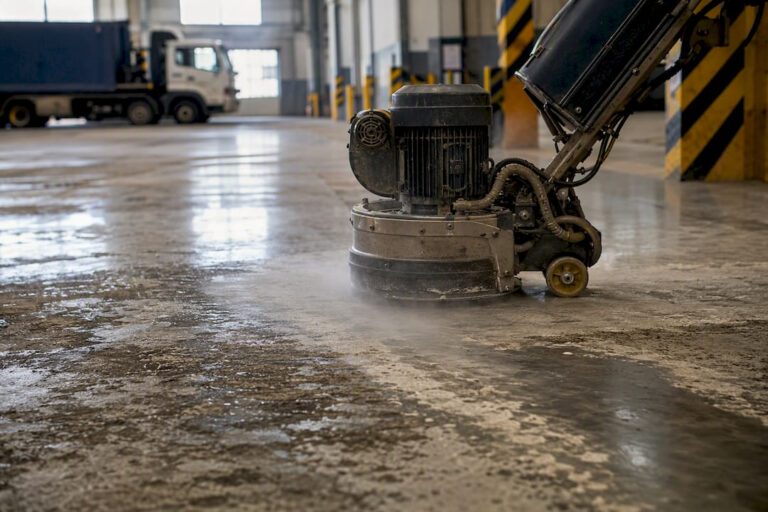
Wet methods trade one hazard for another. WorkSafe QLD’s Code of Practice is explicit that slurry must be cleaned up before it dries, because dried slurry re-aerosolises just like dry-cut dust.
Choosing and using on-tool extraction (M-class vs H-class)
H-class units filter to 0.005% penetration and are the safer choice for prolonged or heavy silica exposure tasks. Both need to move enough air to actually capture dust at the wheel, not just nearby.
Use these criteria when selecting and running extraction equipment:
- Match airflow to wheel diameter. WorkSafe QLD guidance on handheld grinders points to roughly 700 litres per minute for every 25mm of blade or wheel diameter as a practical benchmark.
- Fit a cyclonic pre-separator ahead of the main filter on larger jobs; it extends filter life significantly by catching coarse material first.
- Check shroud fit against the specific tool model. A shroud that doesn’t seal against the surface leaks dust regardless of the extractor’s rating.
- Route hoses to avoid kinks and pinch points that choke airflow mid-shift.
- Watch for the two most common failure modes: blocked filters and loose seals. Both quietly kill suction while the tool keeps running.
- Verify airflow at the start of each shift and again after any filter change.
An extractor rated H-class on paper delivers nothing if the shroud doesn’t seat properly or the filter clogged an hour ago.
Respiratory protection, air monitoring and verification
RPE is a secondary control. It’s what you rely on when engineering controls can’t reliably keep exposure under the 0.05 mg/m3 eight-hour time-weighted average, not a substitute for wet suppression or extraction.
Getting RPE right on a grinding job means:
- Fit-testing every worker to their specific mask model. An untested seal can leak dust regardless of the filter’s rating.
- Choosing P2 for lower-exposure tasks and P3 or a powered air-purifying respirator (PAPR) for prolonged, high-dust work like dry cutting or confined-space grinding.
- Running air monitoring when a task is classified high risk, or whenever you can’t demonstrate through other evidence that controls are keeping exposure below the standard.
- Keeping health monitoring and exposure records for any worker regularly exposed to respirable crystalline silica, as required under the national guide for working with silica.
The 0.05 mg/m3 figure isn’t a target to approach; it’s the ceiling PCBUs must stay under, and the law requires exposure to be as low as reasonably practicable below it, not just under the line.
Slurry, cleanup and disposal: stop dust re-release and meet waste rules
Wet slurry sitting on a slab for hours isn’t a housekeeping issue, it’s a re-exposure risk waiting to happen; understanding proper slurry management is crucial as explained in Glass Sand Uses. Once it dries, ordinary foot traffic and airflow lift the silica back into the air.
Handle it this way:
- Clean up immediately with a wet shovel or an M/H-class rated vacuum built for wet pickup. Never use compressed air or dry sweeping on grinding residue.
- Bag contaminated filters and used PPE before they’re moved, so dust doesn’t escape during transport around site.
- Skip bags designed for wet waste materials can keep slurry contained until it’s collected.
- Call in a professional removal service once slurry volumes exceed what your crew can safely bag and shift, particularly on multi-day polishing jobs.
- Set a fixed housekeeping schedule and filter-change SOP rather than reacting to visible dust buildup. SafeWork NSW’s Code of Practice treats consistent housekeeping as a core control, not an afterthought.
Compliance and documentation: SWMS, controls table and proving due diligence
Regulators don’t just want dust controlled, they want it documented. The model Code of Practice’s controls table sets out which controls apply to which tasks, and it’s the reference point inspectors expect you to be working from.
Your paperwork should show:
- A SWMS that names the specific task, the silica risk, and the exact controls in use, not a generic dust clause.
- How you determined whether the task is high risk, and what monitoring or health surveillance followed from that classification.
- Inspection logs recording shroud checks, filter changes and water pressure tests.
- Air-monitoring reports kept alongside the SWMS, ready to produce on request.
During an inspection, the crews that fare best are the ones who can hand over records immediately rather than reconstructing them from memory.
Pre-start and maintenance checklist for extractors and water systems
Equipment that worked yesterday can fail silently today. A five-minute pre-start catches most problems before they cost you exposure or compliance.
- Test water flow at the shroud, not just at the source.
- Inspect shroud seals and hose integrity for cracks or gaps.
- Check filter condition and confirm visible suction at the nozzle.
- Note any suction loss, a common sign the filter needs changing before the next task.
- Handle contaminated filters as hazardous waste, bagged and sealed, never shaken out.
- Log the check against the worker’s name so responsibility is clear.
Pro Tip: A sudden drop in suction almost always means a loaded filter, not a broken motor. Check the filter first; it saves a callout and a lost afternoon.
How Sydney City Rubbish helps with slurry and contaminated-waste removal
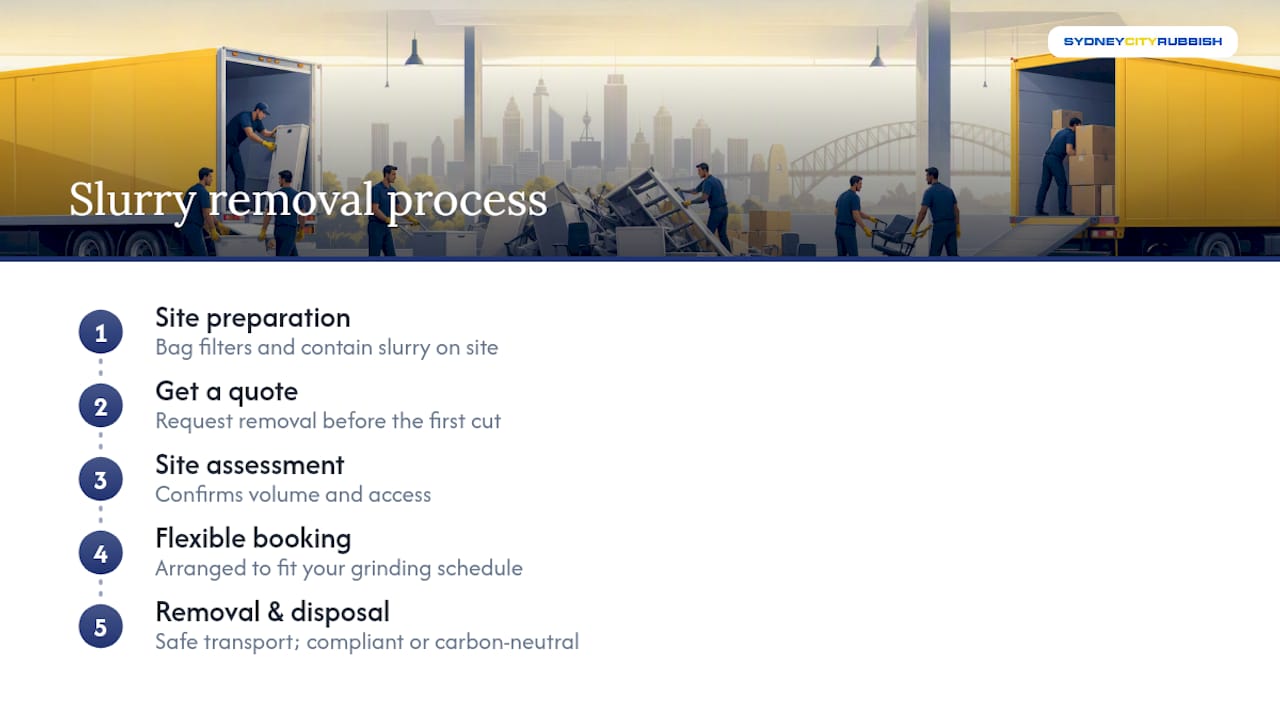
Sydneycityrubbish is the alternative to juggling slurry disposal yourself between grinding shifts. Once your crew has bagged contaminated filters and contained slurry on site, the job isn’t finished until it’s off the property and disposed of correctly, and that’s where most schedules slip. Sydneycityrubbish handles wet waste and slurry removal, safe transport and compliant disposal for construction and commercial sites across Sydney, with a carbon-neutral disposal option for clients who want it documented. Booking works around your grinding schedule: a site assessment confirms volume and access, then removal is arranged to suit your project timeline rather than a fixed weekly slot. That turnaround matters on multi-day polishing jobs where slurry can’t sit around waiting for a bin day. If your next concrete grinding job is going to generate more slurry than your crew wants to manage, get a quote for rubbish removal in Sydney and have disposal sorted before the first cut.
Sources
Keep the model Code of Practice for control selection, the Safe Work Australia exposure standard for the 0.05 mg/m3 limit, and your relevant state WorkSafe code for local requirements. File all three alongside your SWMS and air-monitoring reports.
- Safe Work Australia — silica (exposure standard)
- Managing respirable crystalline silica dust exposure in construction and manufacturing of construction elements Code of Practice 2022 | WorkSafe QLD
- Working safely when cutting, drilling and grinding concrete and masonry products – Code of practice | SafeWork NSW
- Grinding Concrete Safely: Practical safety and dust-control tips — Tyrolit Australia