A commercial tenancy often needs to be returned to the landlord exactly as it was found, also known as original or base condition.
Throughout an office tenancy, most businesses install new workstations, customise layouts, upgrade technology and modify spaces to suit their needs. When the time comes to relocate or refurbish, these components must be removed. This process is known as an office strip out, and it is a critical final step in the lifecycle of any workspace.
At Sydney City Rubbish, we support companies through their end-of-lease process by delivering fast, safe and efficient removal services that minimise disruption for their business and other tenants. Understanding what actually gets removed during an office strip out helps tenants plan ahead and avoid costly delays or lease breaches.
Get a quote for your office strip out in Sydney.
What is an office strip out and why does it matter?
An office strip out involves removing all non base building elements from a workplace. This covers anything added to the space by the tenant, from workstations through to flooring and internal walls. A strip out restores the space to a bare, clean condition that aligns with the requirements of a make good clause.
Businesses undertake office stripouts for several reasons, including end of lease, relocation, major fitout upgrades or changes in team size. In high density commercial areas like the CBD, building managers expect strict compliance with access times, safety protocols and waste handling rules. Using a professional provider ensures that every stage of the strip out is managed correctly and efficiently.
At Sydney City Rubbish, our team regularly completes commercial strip outs of all scales, and we understand the importance of handing back a tenancy that meets landlord expectations and avoids further liability for the tenant.
The difference between an office strip out and an office defit
The terms office strip out and office defit are often used interchangeably. In most cases, an office defit focuses on removing a tenant’s fixtures, fittings and cosmetic additions, while a strip out tends to be more comprehensive. A strip out can involve larger elements such as internal walls, kitchens, subfloor materials and old services.
Both processes must comply with lease obligations and any building specific requirements. A professional approach to demolition and strip out work ensures that all materials are removed safely and that the space is returned to its required condition. For complex tenancies with multiple built in elements, a commercial defit is often the first step before deeper strip out demolition work begins.
Key components removed during an office strip out
Although every project is different, most office strip outs follow a similar pattern. The goal is to remove all tenant installed items while preserving the integrity of the base building structure and services. Below is a breakdown of what is commonly included.
Workstations, furniture and loose items
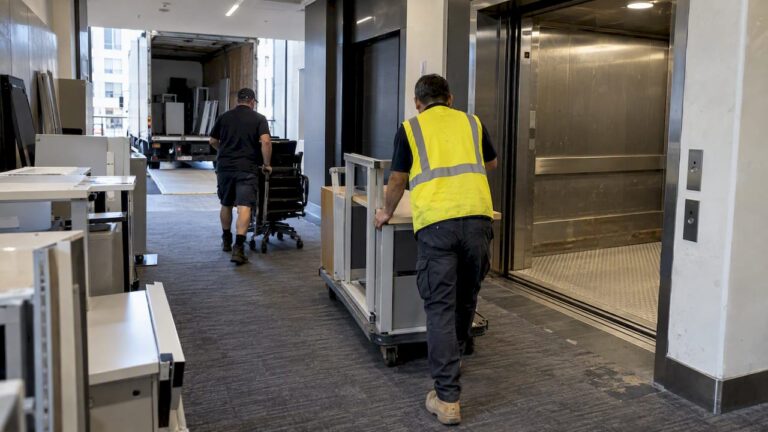
The process often begins with the removal of workstations, chairs, tables, storage units, personal items and loose office equipment. These items must be sorted carefully so reusable materials can be repurposed or recycled. Sydney City Rubbish manages the full removal process, including the disassembly of modular workstations and the secure disposal of unwanted furniture.
Flooring and floor coverings
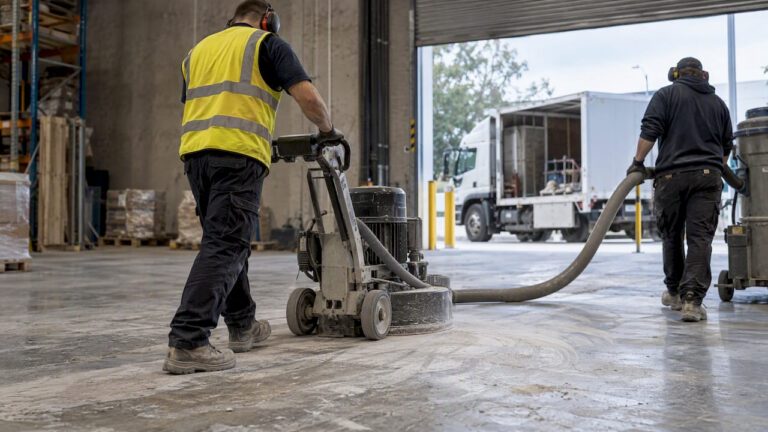
Most offices in Sydney are fitted with carpet tiles, broadloom carpet or vinyl flooring. During an office strip out, these materials are removed along with adhesives and any underlying damaged subfloor components. Carpet tiles can often be recycled if they are in adequate condition. Vinyl and older adhesives require specialised handling to ensure safe removal and disposal.
Fixtures, fittings and joinery
Many tenancies include custom joinery such as cabinetry, built in desks, storage walls, reception counters and kitchen units. These items cannot remain after a tenant vacates. Controlled strip out demolition methods are used to detach joinery without damaging surrounding structural elements. This is especially important in multi tenant buildings where load bearing walls and shared utility lines must remain untouched.
Ceilings and lighting
Ceiling tiles, suspended grid systems, lights and redundant electrical fittings are typically removed during a strip out. Decommissioning old lighting requires strict safety procedures because the work involves electrical disconnection and careful handling of fixtures that may contain hazardous components. Sydney City Rubbish coordinates with licensed trades to ensure compliance with building and electrical standards.
Walls and partitions
Many offices include plasterboard walls, glazed partitions or temporary room dividers that must be removed during a commercial strip out. This stage demands precision because noisy work must often be scheduled outside peak building hours. Partitions are dismantled in a controlled manner to protect shared hallways, lifts and neighbouring tenancies.
Electrical, data and communications
Modern offices contain extensive cabling for data, communications and power. Redundant wiring, power points, cabling trays, data racks and AV equipment often need to be removed. All work involving cabling and power disconnection must be completed by licensed professionals. Careful documentation is essential to ensure that only tenant installed services are removed during the commercial strip out demolition process.
Plumbing, kitchens and wet areas
Many workplaces include kitchenettes, sinks, dishwashers and filtered water systems. During an office strip out, these fittings are removed along with associated plumbing connections. Safe decommissioning is important to avoid leaks and water damage. Wet areas are then cleaned and prepared for handover or redevelopment.
Signage, branding and surface finishes
Branding elements such as decals, window film, wall graphics, reception signage and mounted displays must be removed before a tenant vacates. Even simple items like adhesive hooks, whiteboards and pinboards need to be taken off walls. Surface repairs may be required to ensure the walls are left in a clean, presentable condition.
What stays during a strip out?
A common point of confusion during an office strip out is what must remain in place. Base building services and structural elements are not removed. These include fire systems, air conditioning infrastructure, essential plumbing, structural walls, core electrical supply, lifts and shared amenities.
Tenants often assume that certain items are optional to remove, but landlords hold strict expectations. Clarifying responsibilities early prevents disputes and ensures a smooth end of lease process. Professional strip out teams understand these requirements and can guide tenants on what stays and what goes.
How long does a commercial strip out take?
Timeframes vary depending on the size of the tenancy, access restrictions, materials used in the fitout and the amount of waste to be removed. Smaller suites may take a few days, while large multi floor offices can require several weeks. Buildings in the CBD often limit noisy work to specific hours, and this can influence scheduling.
Waste management and recycling during a strip out
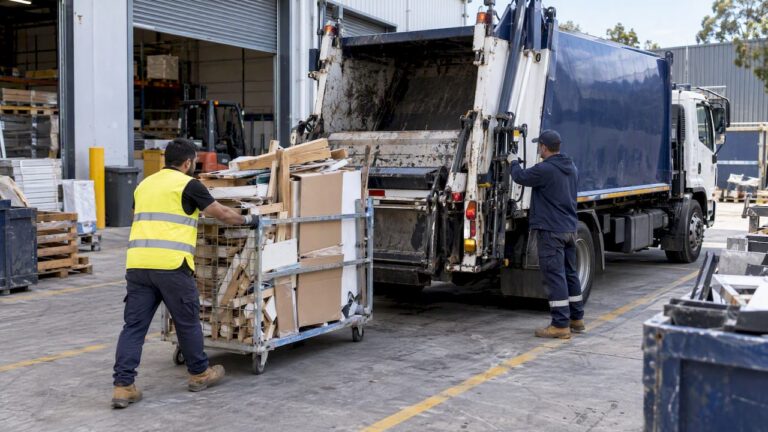
An essential part of the strip out process is waste handling. Materials must be separated, sorted and transported to appropriate recycling or disposal facilities. Items like metal, timber, cardboard, carpet tiles and electrical components often have recycling pathways. Responsible waste management reduces environmental impact and ensures compliance with Sydney waste regulations.
We specialise in waste removal and disposal, always prioritising sustainable outcomes at every turn. Our team is incredibly well-versed in dealing with all kinds of construction and demolition waste for projects of all shapes and sizes. When we handle your strip out, you can rest easy knowing your waste will be dealt with efficiently and sustainably.
Safety considerations during demolition and strip out work
Safety is central to every demolition and strip out project. Work must comply with strict WHS standards, particularly in high rise buildings where the movement of materials through lifts and shared areas must be controlled. Protective equipment, air quality management, traffic control and safe handling of heavy items all ensure a secure working environment.
At Sydney City Rubbish, our strip out and demolition team always follows clear safety procedures to protect clients, building occupants and workers. Health and safety on-site are taken very seriously at every stage of your project, and regular hazard and risk inspections are absolutely non-negotiables.
Why professional strip out demolition matters
Attempting to manage a strip out internally can lead to significant risk. Incorrect removal of materials may damage the building, breach the lease or create safety hazards. Professional providers deliver efficiency, compliance and insurance coverage. Skilled teams remove fixtures quickly and safely, which helps tenants meet strict handover deadlines.
A specialist approach to commercial strip out demolition ensures the job is completed to a high standard and prepares the tenancy for its next stage of use.
Book a commercial strip out with Sydney City Rubbish
If you are preparing to relocate, renovate or complete an office strip out, the team at Sydney City Rubbish provides fast, compliant and cost effective solutions across the Sydney CBD. Our experienced in-house trades and strip out experts manage everything from full commercial strip outs to comprehensive office defit services.