Concrete cutting safety: controls every crew must apply
Silica dust control and the hierarchy of controls sit at the centre of concrete cutting safety, and both start before the saw is switched on. Wet cutting or on-tool extraction must be your first line of defence against airborne dust, not respiratory protective equipment (RPE). PPE is the backstop, never the plan. Any high-risk cutting task, including work near live services or at height, requires a documented safe work method statement (SWMS). The regulated exposure limit for respirable crystalline silica is 0.05 mg/m3 as an eight-hour time-weighted average, and every engineering control on site should be judged against that figure.
Before any blade touches concrete:
- Scan the cutting line for embedded services with a locator or GPR
- Confirm water feed or extraction is connected and running continuously
- Fit RPE rated for the task until air monitoring proves otherwise
- Check the SWMS covers this specific cut, not just the job generally
The 0.05 mg/m3 standard: this is the maximum average concentration of respirable crystalline silica permitted in the air over an eight-hour shift. It is not a target to approach. It is the ceiling your controls must keep you well under.
Key Takeaways
Concrete cutting safety works because wet cutting or on-tool extraction control silica dust at the source, a SWMS documents every high-risk cut, and PPE only backstops what engineering controls can’t fully manage.
| Point | Details |
|---|---|
| Exposure limit is fixed | The silica standard is 0.05 mg/m3 as an eight-hour TWA, and it drives every dust-control decision. |
| Hierarchy of controls comes first | Substitute or engineer out the risk before relying on PPE as the last line of defence. |
| SWMS is mandatory for high-risk cuts | Document hazards, controls and equipment checks before work starts, not after. |
| Vacuum class matters | Match M-class or H-class HEPA vacuums to the actual silica risk, not the cheapest option available. |
| Slurry needs active management | Contain and remove wet slurry immediately; dried slurry becomes a secondary dust hazard. |
Table of Contents
- What hazards make concrete cutting safety non-negotiable?
- How do you plan a concrete cutting job safely?
- Which dust-control methods actually work?
- What safe techniques apply to each type of cutting equipment?
- Which PPE and RPE do concrete cutters need?
- How should slurry be managed on site?
- What pre-start checks prevent equipment failure?
- What training and site controls reduce risk?
- Concrete cutting safety checklist for crews
- Sources
What hazards make concrete cutting safety non-negotiable?
Respirable crystalline silica dust is created the moment a blade shears through concrete, releasing particles small enough to lodge deep in lung tissue. Repeated exposure over years drives silicosis, chronic obstructive pulmonary disease and an elevated lung cancer risk, and the damage is irreversible once it sets in. That’s why the exposure standard exists in the first place, and why dust suppression isn’t optional paperwork.
Mechanical hazards run alongside the dust risk. A jammed or twisted blade can kick the saw back towards the operator with enough force to cause serious lacerations, and a fractured blade throws fragments at speed. Cutting into a slab without checking what’s beneath it risks striking electrical conduit, gas lines or water mains, and cutting structural elements without support can trigger sudden, uncontrolled cracking.
- Silica dust: long-term respiratory disease from repeated inhalation
- Kickback and blade fracture: struck-by injuries from sudden tool movement
- Slurry: a secondary dust hazard once it dries
- Services and structure: electrocution, flooding or collapse risk
Industry guidance from WorkSafe Victoria’s concrete cutting standard lists these hazards specifically because each one demands a distinct control, not a generic “be careful” instruction. That’s the reasoning behind mandatory SWMS and the hierarchy of controls.
How do you plan a concrete cutting job safely?
A SWMS is legally required whenever the task counts as high-risk construction work, which includes cutting near live services, at height, or in confined spaces. SafeWork NSW requires the document to record the specific hazards for that task and the control measures used to manage them, signed off before work starts, not retrofitted afterwards.
Run planning in this order:
- Pull services drawings and confirm them with a GPR scan or cable locator on site
- Apply the hierarchy of controls: can the cut be eliminated or the method substituted before you reach for PPE?
- Set exclusion zones and traffic control around the cutting area
- Confirm permits for hot works, confined space entry or working at height where relevant
- Record equipment inspection results directly in the SWMS, not in a separate file nobody checks
Substitution might mean using a smaller core drill instead of a hand-held saw near a wall cavity. Engineering controls mean fitting extraction before the job starts, not carrying a vacuum “just in case”. Administrative controls cover signage, exclusion zones and rotating operators to limit exposure time. PPE comes last, after every other option has been exhausted.
Which dust-control methods actually work?
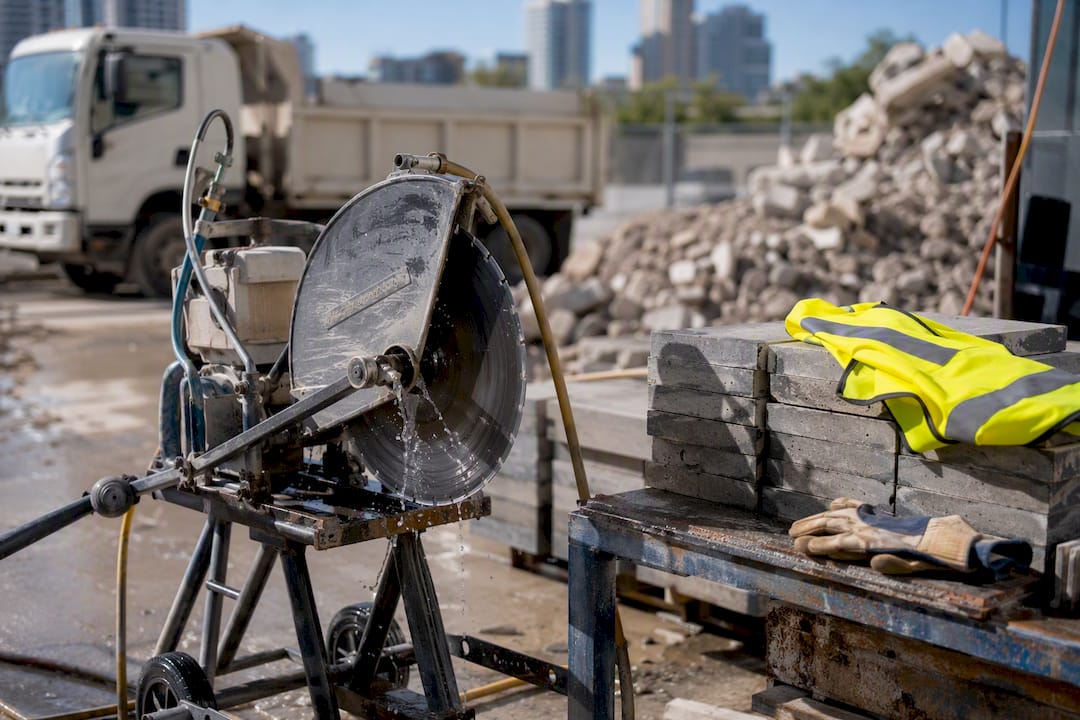
Wet cutting is the industry default for good reason: continuous water feed suppresses dust at the point of cut, keeping airborne silica concentrations well under the 0.05 mg/m3 TWA when set up correctly. But water alone doesn’t guarantee compliance. Safe Work Australia’s national silica guide states plainly that wet methods should be combined with local exhaust ventilation (LEV) because mist and airflow conditions can still carry contaminated particles.
On-tool extraction pairs a shroud around the blade with a vacuum line, capturing dust before it becomes airborne. The extraction only works if suction matches the tool’s airflow specification, so check the vacuum rating against the saw manufacturer’s figures rather than assuming any commercial unit will do.
Vacuum class matters more than most crews realise. M-class units filter to a coarser standard than H-class, and only H-class with HEPA filtration is rated for the highest-hazard dust. Match the class to the task, not the cheapest unit in the shed.
- Wet cutting: continuous water feed, never intermittent
- On-tool extraction: shroud plus vacuum matched to tool airflow
- M-class vacuums: suitable for lower-risk general dust
- H-class with HEPA: required where silica exposure risk is higher
Dry cutting is only acceptable when paired with a certified dust-extraction system rated for silica and full RPE. Anything less is a breach waiting to be found during an audit.
Pro Tip: Run your vacuum’s suction test at the start of every shift, not just when you notice reduced performance. A partially blocked filter can drop capture efficiency well before it becomes obvious on the cut face.
What safe techniques apply to each type of cutting equipment?
Different tools carry different failure modes, and a checklist written for a hand-held saw won’t cover a wall saw’s hydraulic risks.
- Hand-held cut-off saws: keep both hands on the tool at all times, start the cut at low RPM before engaging fully, and never cut overhead. CPWR’s guidance on cut-off saws recommends testing a new blade for 30 seconds with the guard fitted before production cutting, to catch warping or poor mounting early.
- Walk-behind slab saws: match blade diameter to cut depth precisely, since an oversized blade increases kickback risk on shallow cuts. Contain slurry with a collection tray and confirm the slab is supported so it doesn’t shift mid-cut.
- Wall and wire saws: anchor the rig securely before starting, maintain a clear exclusion zone behind the cut line, and manage hydraulic hoses so they can’t snag or kink under pressure.
- Core drilling: mount the rig to a fixed base rather than hand-holding, run continuous irrigation to the bit, and seal or mark every penetration immediately once drilling is complete.
Which PPE and RPE do concrete cutters need?
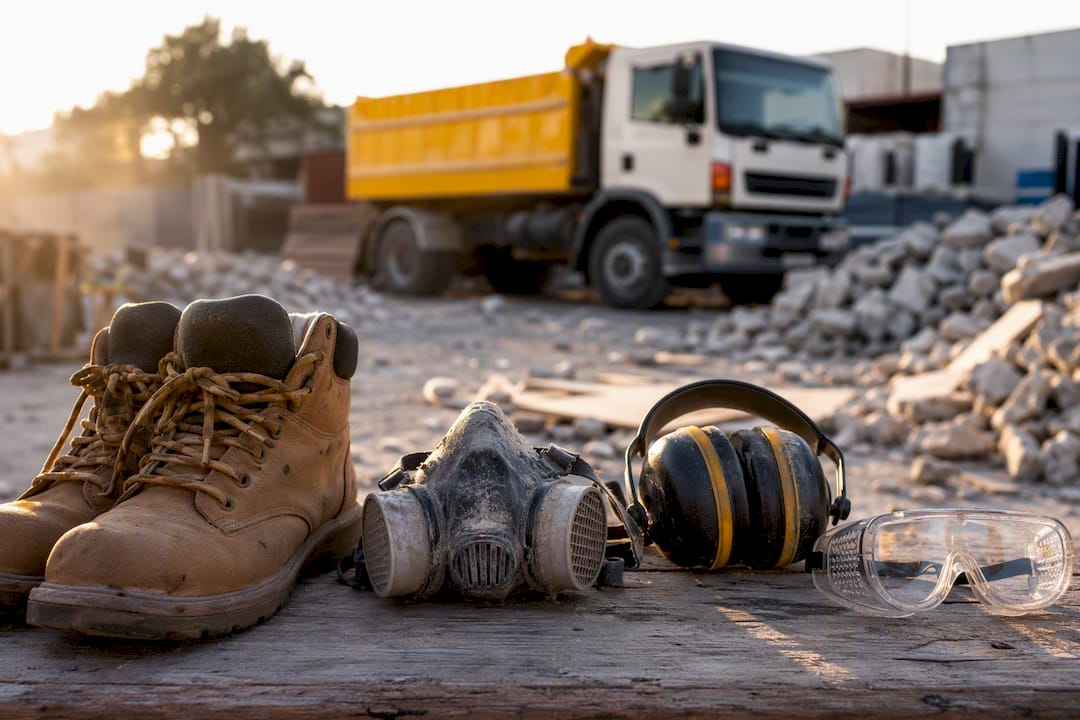
RPE selection depends on the residual risk after engineering controls are in place, not a blanket rule for every job. P2-rated respirators are the common baseline for silica work, with powered air-purifying respirators (PAPRs) stepping in where exposure risk is higher or fit testing is difficult. Safe Work Australia references AS/NZS 1715 and AS/NZS 1716 for selecting and fit-testing respirators, and an APF of 10 is the expected minimum for residual exposure once other controls are running.
Beyond RPE, wet cutting demands eye and face protection against spray, waterproof non-slip footwear, hearing protection for extended saw use, and cut-resistant gloves.
- P2 respirator or PAPR, fit-tested to AS/NZS 1715
- Eye and face protection against water and slurry spray
- Waterproof, non-slip footwear
- Hearing protection and cut-resistant gloves
Pro Tip: Document RPE fit-test dates directly in the SWMS. An expired fit-test certificate is one of the most common findings in site audits, and it’s entirely avoidable with a simple calendar reminder.
PPE supplements engineering controls. It never replaces them, and a SWMS that lists RPE as the sole control for silica exposure won’t pass scrutiny.
How should slurry be managed on site?
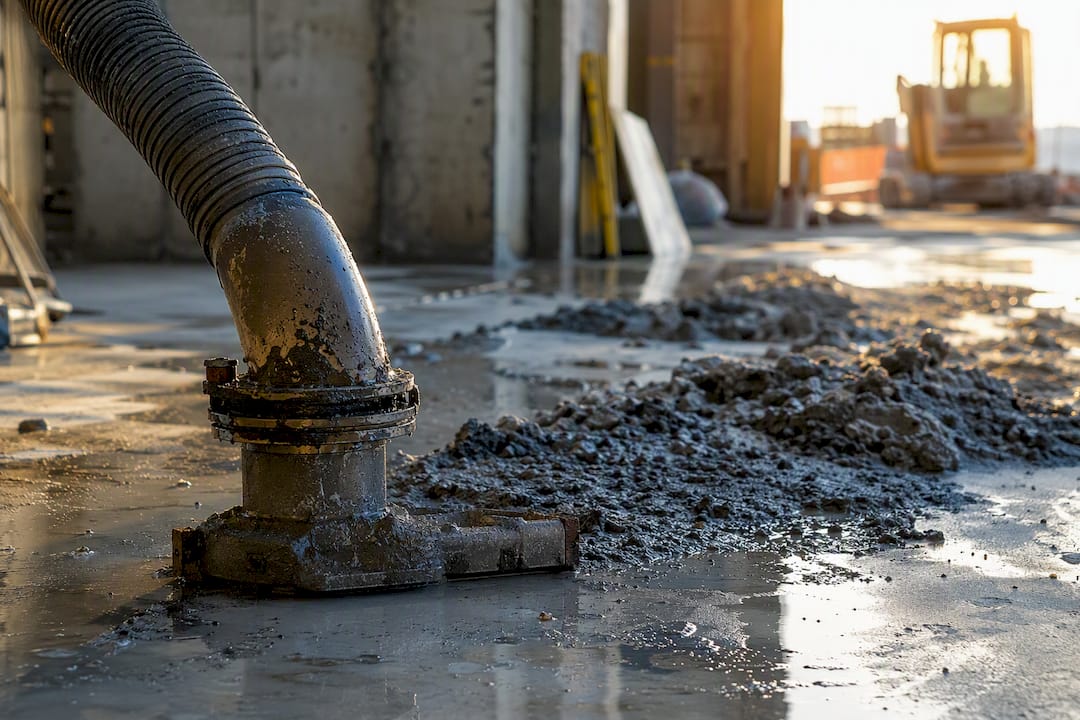
Slurry carries the silica cut out of the concrete, and it’s highly alkaline on top of that. Left to dry, it turns back into airborne dust, undoing everything the wet cutting achieved in the first place.
- Trap slurry at the point of generation with settling tanks or filter bags
- Use wet-vac extraction to lift slurry before it spreads or dries
- Check local authority rules before discharging water to sewer, as many jurisdictions prohibit it without treatment
- Transport solid waste through licensed disposal routes, not general skip bins
A reliable rubbish and construction waste removal service makes this last step simpler on active sites, particularly where slurry and debris need to move off-site the same day.
What pre-start checks prevent equipment failure?
A defect caught at pre-start costs minutes. The same defect caught mid-cut can cost far more.
- Inspect the blade for cracks, warping or incorrect mounting before fitting the guard
- Confirm the guard sits correctly and matches the blade’s rated RPM
- Check water supply pressure, hose condition and vacuum suction and filter condition
- Verify RCD or GFCI protection on all electrical equipment, and confirm ventilation for petrol-engine saws
- Log every defect found, and remove faulty equipment from service until corrected
What training and site controls reduce risk?
Operators need training in tool-specific technique, hazard recognition, slurry handling and RPE fit and maintenance, not a single generic induction covering every trade on site.
- Toolbox talks before each new task, with refreshers at set intervals
- Observed practical assessments, not just sign-off sheets
- Exclusion zones, permit-to-work systems and emergency rescue plans for confined space or height work
- Training logs, fit-test certificates and SWMS sign-off kept together, not scattered across different files
Concrete cutting safety checklist for crews
Run this sequence on every job, regardless of tool type.
- Confirm the SWMS matches the actual task and site conditions
- Scan for services and mark exclusion zones
- Check equipment: blade, guard, water feed, vacuum, RCD
- Fit RPE and confirm fit-test currency
- Start water feed or extraction before the first cut
- Monitor continuously through the cut, not just at the start
- Enforce exclusion zones throughout the work
- Contain and remove slurry immediately after cutting
- Inspect the cut structure for movement or unexpected cracking
- Report any incident, near miss or equipment fault before leaving site
Get a free quote now for construction site waste and slurry removal that keeps your crew focused on the cut, not the cleanup. Sydneycityrubbish handles construction debris and concrete grinding support across commercial and construction sites, with carbon-neutral disposal available for clients who want it built into their project.
Sources
- Preventing exposure to crystalline silica dust (WorkSafe Victoria)
- Prepare a safe work method statement (SafeWork NSW)
- National guide for working with silica and silica-containing products (Safe Work Australia)
- Safe concrete cutting and drilling industry standard (WorkSafe Victoria)