Builders Waste Removal Cost in Sydney: What to Budget For
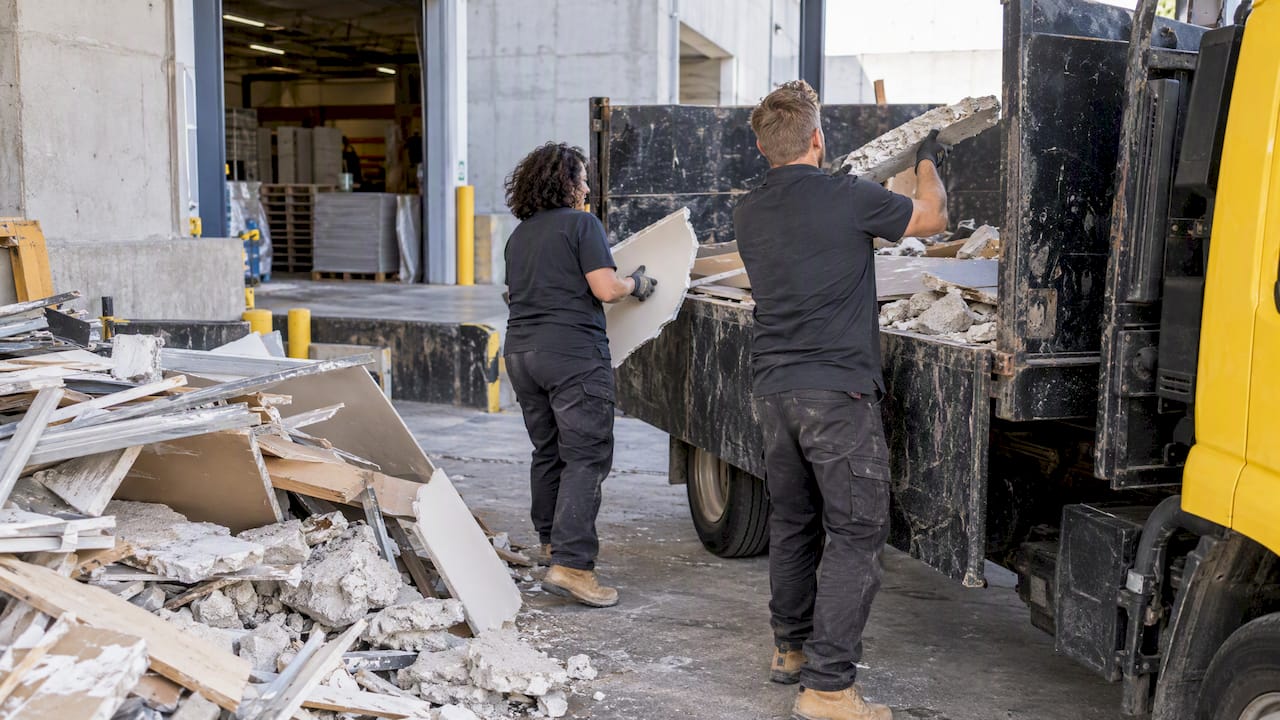
Builders waste removal is priced on two things: what it costs to load and haul the material, and what the receiving facility charges to accept it. The second part is public. NSW council and depot rates for mixed building waste currently sit between roughly $485 and $560 per tonne, and clean, separated concrete or bricks cost a fraction of that. The haulage and labour part is quoted per truckload or per project, so the final figure depends on volume, access and how well the material is sorted.
This guide sets out the published disposal rates, explains how a removal quote is built, and shows where a builder, site manager or strata manager can keep the total down. Last updated November 2026.
TL;DR
- Mixed building and demolition waste costs about $485 to $560 per tonne to dispose of at the NSW council facilities checked for this guide, before any removal or labour charges.
- Separated concrete and bricks are far cheaper to dispose of, at about $222 per tonne at one NSW council depot, so sorting on site pays for itself.
- Removal quotes are normally per truckload or per project, and they cover loading, transport, disposal and cleanup. Access, stairs, hazardous items and timing change the price.
- Builders and contractors in NSW must take construction waste to a lawful disposal site, so the cheapest quote is not the cheapest job if the waste ends up in the wrong place.
Table of Contents
- What the cost of builders waste removal is made of
- What councils and depots charge to take builders waste
- A worked example: why sorting changes the bill
- Which types of builders waste cost more
- How removal companies calculate a quote
- The factors that move the price most
- Ways to bring the cost down
- Removal service or skip bin: which costs less?
- Lawful disposal is part of the price
- What a good builders waste quote should include
- Get a figure for your site
- FAQ
- Sources
What the cost of builders waste removal is made of
A removal invoice looks like one number, but it is built from four parts. Understanding each one makes quotes easier to compare and shows you where you have some control.
The first part is labour and loading. Someone has to carry, break down and load the material, and on a commercial fit-out that often means working through lifts, loading docks and after-hours access windows. A pile of plasterboard offcuts in a ground-floor garage costs far less to load than the same volume on level 14 of a CBD tower.
The second part is the truck and driver. A larger truck moves more material per trip, but only if it can reach the site. Tight loading zones, height limits and council parking restrictions can mean smaller vehicles and more trips.
The third part is disposal. Facilities charge by weight, by volume or by load type, and the rate depends heavily on what is in the load. This is the part with published prices, which the next section covers.
The fourth part is everything around the job: permits or building management requirements, insurance certificates, site induction, and the cleanup afterwards. These are rarely large, but they are the items most often missing from a cheap quote and added later.
What councils and depots charge to take builders waste
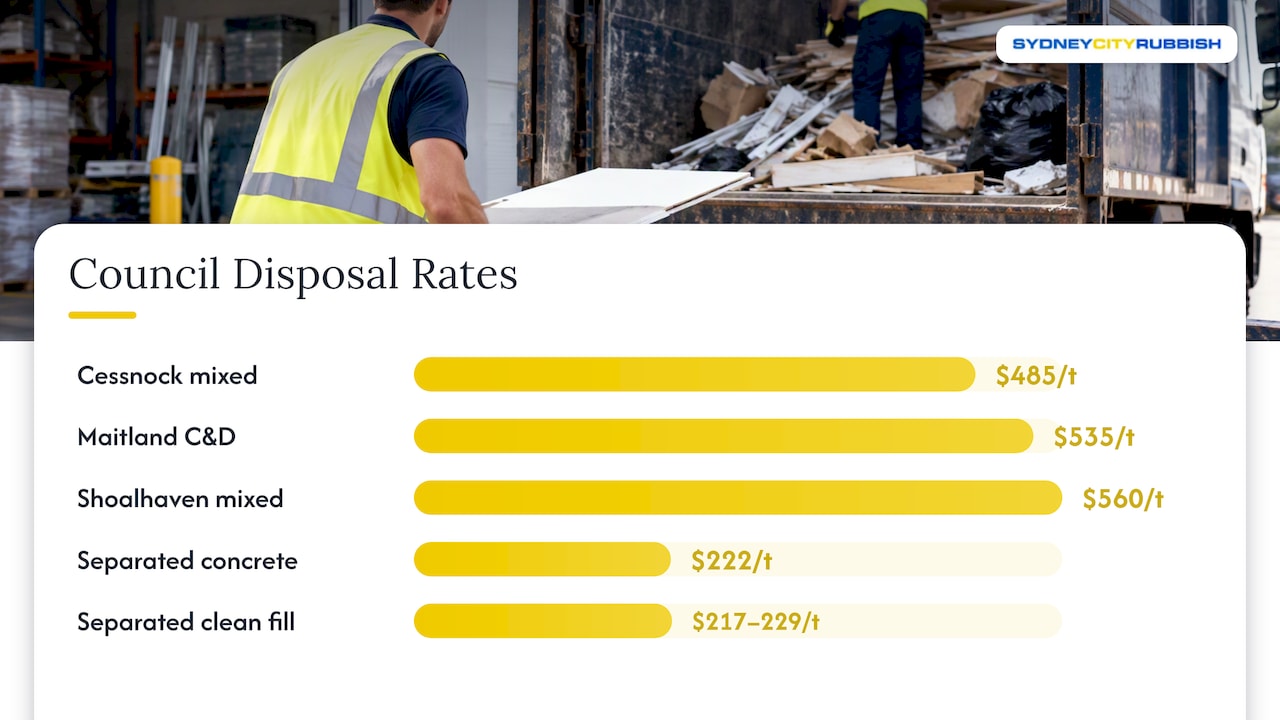
Disposal fees are the most transparent number in the whole equation, because NSW councils publish them. The rates below are the 2025/26 figures from three councils and show the typical range. Sydney metropolitan facilities and private transfer stations set their own rates, so treat these as a benchmark rather than a Sydney price list.
| Facility and material | Published rate | Notes |
|---|---|---|
| Cessnock City Council, mixed waste | $485 per tonne | Minimum charge $16. Includes the $174.20 per tonne NSW Waste Levy |
| Cessnock City Council, commercial concrete and bricks | $505 per tonne | Minimum charge $6 |
| Maitland City Council, demolition and construction waste | $53.50 per 100 kg | Equal to $535 per tonne, including the NSW EPA levy and GST |
| Shoalhaven City Council, commercial or building mixed waste | $560 per tonne | $10 minimum disposal fee, except asbestos |
| Shoalhaven City Council, separated bricks or concrete | $222 per tonne | Source-separated loads only |
| Shoalhaven City Council, separated clean fill | $217 to $229 per tonne | Source-separated loads only |
Another council’s 2025-26 fee register shows how small loads are handled: $74.00 for construction and demolition waste up to 1 m³, and $148.00 for volumes above 1 m³ that weigh less than 500 kg. Small flat fees like these suit a ute load of offcuts, not a skip-sized clearout.
Three patterns stand out. Mixed building waste sits in a tight band of about $485 to $560 per tonne. Separated hard material, such as clean concrete and bricks, can cost less than half of that where a council offers a separate rate. And a large part of the mixed rate is statutory: the Cessnock figure alone includes a $174.20 per tonne state levy, which no removal company can discount.
A worked example: why sorting changes the bill
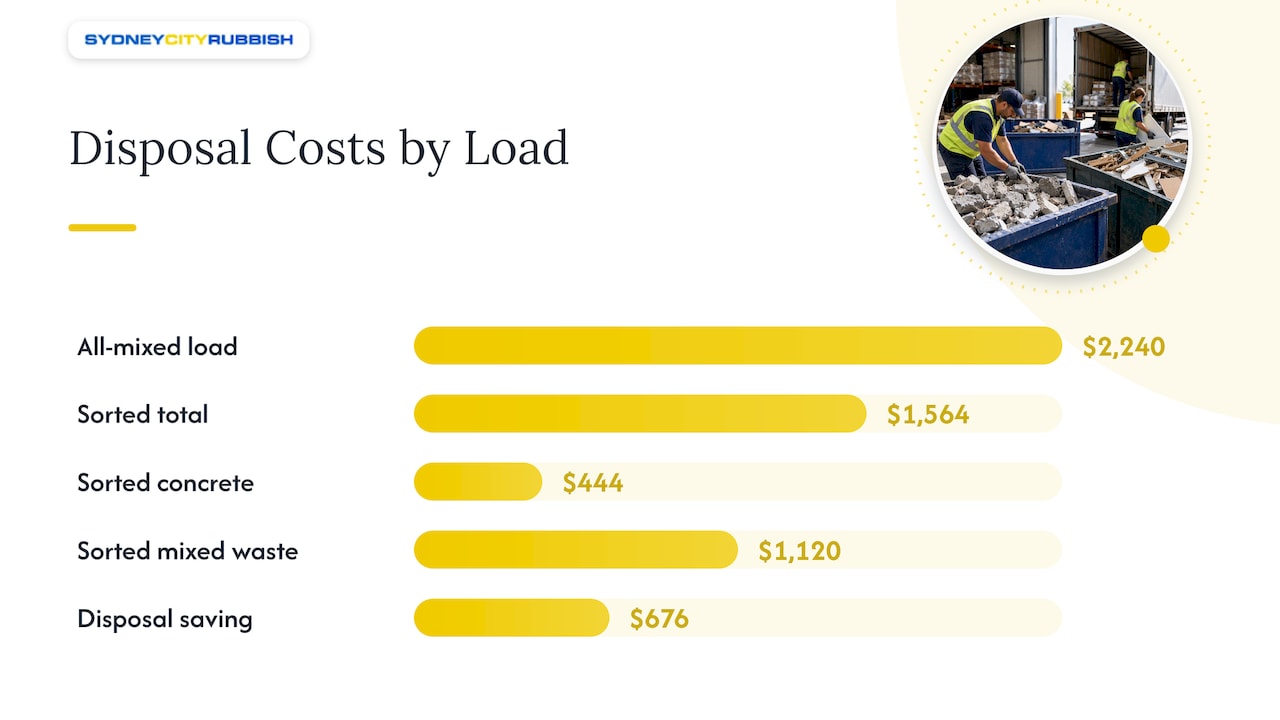
Take a small retail strip-out that produces four tonnes of material, made up of two tonnes of broken concrete screed and two tonnes of mixed ceiling tiles, timber, plasterboard and fittings. The comparison below uses the Shoalhaven rates above purely as an illustration of the gap, since disposal rates differ by facility.
If everything is thrown into one mixed load, all four tonnes are charged at the mixed rate of $560 per tonne, which is $2,240 in disposal fees. If the concrete is kept separate and accepted at the separated rate of $222 per tonne, the concrete costs $444 and the remaining two tonnes of mixed waste cost $1,120, a total of $1,564. That is a difference of $676 on disposal alone, before any labour is counted.
The saving only appears if the sorted load is actually accepted as clean. Concrete contaminated with timber, rebar offcuts or general rubbish is typically treated as mixed waste at the gate. The sorting has to happen at the source, with separate bins or separate truck loads, rather than at the end of the job.
Which types of builders waste cost more
Not all material is equal. Weight matters, but so does what the material is and how recoverable it is.
Mixed construction and demolition waste is the expensive default. A Senate committee report on waste and recycling notes that mixed commercial and industrial waste with low recyclability costs significantly more to dispose of than municipal waste, which is one reason a skip full of everything is the costliest way to clear a site.
Heavy inert material, such as concrete, bricks, pavers and soil, is dense. A cubic metre of it weighs far more than a cubic metre of ceiling tiles, so truck capacity is reached quickly and weight-based tip fees climb. It is also the material most likely to earn a lower rate when it arrives separated.
Light but bulky material, such as insulation, carpet tiles, partition framing and office joinery, fills a truck by volume before it reaches the weight limit. Here, labour and truck trips drive the price more than the tip fee.
Regulated and hazardous material, including asbestos-containing material, treated timber, electrical waste and some paints and chemicals, needs specific handling and licensed disposal. Shoalhaven’s fee list, for example, treats asbestos separately from its general minimum fee. If you suspect asbestos in a pre-1990 building, stop work and have it assessed before anyone starts demolishing, because the cost and the legal obligations change completely.
How removal companies calculate a quote
Commercial waste removal in Sydney is usually priced in one of three ways, and it helps to know which one you are being offered.
A per-truckload price covers a truck of an agreed size, including loading, transport and disposal. It suits jobs where the volume is predictable and the material is mixed. The question to ask is what size the truck is and what happens if the load is larger than expected.
A per-project price sets a fixed fee for the whole job, such as a full office makegood or a shop strip-out. It works best when the scope is clear and the site has been inspected, because the quote reflects the real access conditions and material types.
A volume or weight-based price charges per cubic metre or per tonne, with a minimum call-out. It is the most transparent for large or uncertain jobs, since you pay for what is actually removed, but it needs weighbridge dockets or a clear estimating method so both sides can check the figure.
Most providers apply a minimum charge, because a truck, driver and disposal run cost money before a single item is lifted. A small job is therefore proportionally more expensive than a large one. Where you have several small clearouts over a project, such as one per floor, combining them into fewer visits usually brings the per-item cost down.
Sydney City Rubbish quotes per truckload or per project, and we offer fast electronic quoting so you can have a figure before the booking window closes. We do not publish a standard price list, because the cost depends on the factors above, and we would rather quote against your actual site than guess.
The factors that move the price most
The same volume of waste can be quoted very differently from one site to the next. These are the factors that account for most of the difference.
Access and floor level. A site with a loading dock and a goods lift is quick to clear. A walk-up with no lift, or a site where the truck must park a long carry away, adds labour hours. In the CBD, booking the loading zone and complying with building management rules also take time.
Timing. After-hours or weekend work is often required in occupied buildings, and it generally costs more than business hours. Early planning lets you choose a lower-cost window where the building allows it.
Material mix and sorting. As the example above shows, how the material is separated can change disposal costs by hundreds of dollars per job. Recyclable metals, clean timber and concrete can be diverted from landfill. Cessnock City Council itself says that diverting material from landfill is the most effective way to cut disposal costs.
Dismantling work. If items need to be unbolted, cut up or stripped before removal, such as built-in joinery, ceilings, partitions or floor finishes, the labour is part of the job. Where it is scoped together with the removal, the project is usually more efficient than hiring two crews.
Hazardous or regulated items. Anything that needs licensed handling carries a separate cost and paperwork. It should always be itemised in the quote, not buried in a lump sum.
Carbon-neutral disposal. Some commercial clients need reporting for their sustainability targets. Our carbon-neutral waste management is an opt-in for corporate clients, so you can add it to a job where your organisation requires it.
Ways to bring the cost down
The most reliable saving is separating materials at the source. Set up distinct streams for clean concrete and bricks, metals, timber and general waste before demolition begins, and brief every trade on which bin takes what. A separated load can be accepted at a lower rate and, for metals and some timber, may be recoverable.
The second saving is scheduling. Remove waste regularly as work progresses rather than letting it build into a single huge clearout that blocks access and slows other trades. Multiple smaller collections can still be coordinated into fewer visits when the building allows it.
The third is planning waste from the start of a project. Sustainable building frameworks encourage this: the way sustainable building projects are assessed in the UK rewards sorting and recycling, and the same planning habits reduce what a Sydney site sends to landfill. For a Sydney-specific view of how that planning translates to a waste plan, see our guide to construction waste management planning.
The fourth is asking what happens to the material afterwards. We use registered recycling partners for responsible disposal, and a provider that can tell you where each material stream goes is easier to trust and easier to audit.
Removal service or skip bin: which costs less?
A skip bin looks cheaper because the hire price is visible and simple. For a small, tidy job with a place to park the bin, it can be. But skip hire charges for the bin, the delivery and the weight, and you supply the labour to fill it. On a commercial site, that labour is your crew’s time, which is usually the most expensive input on the job.
Bin placement is the other issue. In a CBD or a strata building there is often nowhere to put a skip, and a street placement may require a council permit. A removal service brings the truck and the labour to your loading dock, loads directly and leaves. For fit-outs, makegood and strip-outs in occupied buildings, that usually wins on total cost once your own labour and delays are counted.
A fair comparison puts the same items on both sides: bin hire, delivery, weight charges, permits, labour hours to load, and the cost of a second bin if the first overflows. For a heavy, single-material job such as clean soil or concrete with room for a bin, a skip can still be the practical choice. For mixed commercial waste with access constraints, a full-service removal is generally the lower-risk option.
Lawful disposal is part of the price
In NSW, builders and contractors are required to take construction waste to a lawful disposal site, and the NSW government’s guidance on managing building waste warns that failing to do so can lead to fines and prosecution. A very low quote should prompt questions about where the load is going, because a fee below the facility’s own gate rate has to come from somewhere.
Before you accept a quote, ask whether the provider will give you disposal receipts or weighbridge dockets, and which facilities it uses. For more on the obligations on a Sydney job, see our guide to demolition waste handling in NSW and the breakdown of construction waste recycling rates.
What a good builders waste quote should include
A quote that holds up on site states its assumptions. When you request or compare quotes, look for these points in the document itself.
The scope should say which materials are included and which are excluded, with any hazardous items named. The volume or truck size should be stated, along with what happens if the actual quantity is higher. Loading and labour should be shown as included, not assumed. Disposal fees should be covered, including the levy, with proof of lawful disposal available. Site conditions such as access times, lift bookings and loading zones should be listed, so there are no surprises on the day. Cleanup should be included, so the area is left broom clean. And the terms should set out the minimum charge, cancellation and any waiting time.
We guarantee punctuality with compensation if we are late, and we coordinate directly with building management so access is arranged before the truck arrives. Ask any provider you are considering to put their timing commitments in writing too, because delays on a commercial site are costly for every trade that follows.
Get a figure for your site
If you manage a construction site, an office fit-out, a retail strip-out or a strata property in Sydney, we can quote against your actual scope. Sydney City Rubbish handles construction waste disposal alongside strip-outs, makegood, demolition and truck and driver hire, so the clearing and the removal can be run as one job. For a closer look at how we price builders’ jobs in Sydney, see our builders rubbish removal page, or go straight to a quote. Get a free quote now.
FAQ
How much does builders waste removal cost in Sydney?
There is no single price, because the total combines labour, truck time and disposal. The disposal component alone runs at about $485 to $560 per tonne for mixed building waste at the NSW council facilities we checked, with separated concrete and bricks much lower. Removal is usually quoted per truckload or per project, so a site inspection or photos give the most accurate figure.
Is it cheaper to separate concrete and bricks from other waste?
Yes, where the facility has a separate rate for clean material. Shoalhaven City Council, for example, lists separated bricks and concrete at $222 per tonne against $560 per tonne for mixed building waste. The material has to arrive uncontaminated, so separation needs to happen on site.
Why is there a minimum charge?
Every job involves a truck, a driver and a disposal run regardless of size, and facilities apply their own minimum fees as well. Councils list small minimums, for instance $6 to $16 at Cessnock and $10 at Shoalhaven. Removal companies set their own minimum to cover the call-out. Combining small clearouts into one visit makes the minimum go further.
Is a skip bin cheaper than a waste removal service?
Sometimes, for a small, single-material job with room to place the bin. Once you add delivery, weight charges, permits and your own crew’s loading time, a full-service removal is often the lower total cost on commercial and strata sites. Compare both on the same list of costs.
Do I have to take builders waste to a licensed facility?
Yes. In NSW, builders and contractors must transport construction waste to a lawful disposal site, and failing to do so risks fines and prosecution. Ask your provider for disposal receipts so you have a record for your own compliance.
Sources
- Using Maitland Waste Facility, Maitland City Council
- Depot disposal costs, Shoalhaven City Council
- Waste Management Fees and Charges 2025-26
- Chapter 4, Waste and Recycling inquiry, Parliament of Australia
- Know your responsibilities: managing waste from building, NSW Environment
- The Benefits of BREEAM for Sustainable Building Projects