Office Make Good Checklist for Sydney Tenants
By the Sydney City Rubbish team. Updated 20 October 2026.
An office make good is the set of works your lease requires you to complete before handing the premises back, and the safest way to run one is in a fixed order: read the clause, start early, agree the scope with your landlord in writing, strip out and dispose of waste lawfully, clean, then chase the bond. This checklist follows that order. It is written for Sydney tenants, property managers and strata managers who need the space empty, compliant and accepted on the exit date.
TL;DR
- Start planning 6 to 12 months before lease expiry, and have a quantity surveyor scope the works.
- Make good is a legal reinstatement obligation set by your lease, not a clean. Your lease defines the end condition, so read that clause first.
- Get a joint inspection and any agreed variations in writing before work starts.
- Under NSW law you can be liable for how your waste is disposed of, so keep weighbridge dockets and tracking records.
- Check the asbestos register before any de-fit work in a building built before 2004, and chase your bond or guarantee after exit.
Table of Contents
- What make good actually requires
- Twelve months out: read, measure and plan
- Agree the scope in writing
- The physical works checklist
- Check for asbestos before anything is disturbed
- Waste and compliance: your liability does not stop at the truck
- Cleaning and final reinstatement
- Handover and the close-out phase
- A note on warehouses and industrial premises
- How Sydney City Rubbish supports your make good
- FAQ
- Sources
What make good actually requires
Most tenants treat make good as a final clean. It is better understood as a contractual duty to return the premises to a specific condition. RICS defines make good as the contractual requirement for tenants to return leased premises to a set condition at the end of a lease. Depending on your lease, that can mean removing the fit-out, repairing damage, or restoring a bare shell or the original floor plan.
The lease decides. The Victorian Small Business Commission gives typical examples of what a make good clause may require, such as removing the fit-out and repairing damage. That guidance is written for Victorian retail tenants, so treat it as a general illustration. The NSW Government’s retail lease guidance notes that the lease should say what make good means but may not always be clear. Its own example is whether internal partition walls have to come out. Office and warehouse leases are commercial rather than retail, so the protections differ. The principle is the same: the wording of your clause is the standard you are measured against.
Twelve months out: read, measure and plan
The most useful work happens long before any contractor arrives. RICS’s Australian guide recommends planning make good 6 to 12 months before expiry. That window leaves time for joint inspections, scoping and negotiation, rather than a rushed settlement in the last fortnight.
Establish the starting condition
The same RICS guide opens its top ten checklist with the condition of the premises at lease commencement. Look for a schedule of condition prepared when you moved in, and any layout plans from your original fit-out. If you have neither, search your move-in correspondence and photos now. Disputes usually come down to a mismatch between what the tenant and the landlord think “original condition” means, and a dated record is your best evidence.
Read the make good clause line by line
Write down, in plain words, exactly what the lease obliges you to do. Note whether the landlord can elect between reinstatement and a cash payment in lieu, whether works must be done by approved contractors, and what notice periods apply. Also list every alteration made during the term, including those done by previous tenants if you took over the lease, and check whether each had written consent. Unapproved alterations are a common source of surprise claims.
Engage a quantity surveyor
A quantity surveyor can cost the reinstatement works independently, which gives you a figure to test against the landlord’s demand. RICS’s guidance is that this engagement belongs 6 to 12 months before expiry, when you still have room to negotiate. Inflated restoration demands are far easier to challenge with a costed scope in hand.
Agree the scope in writing
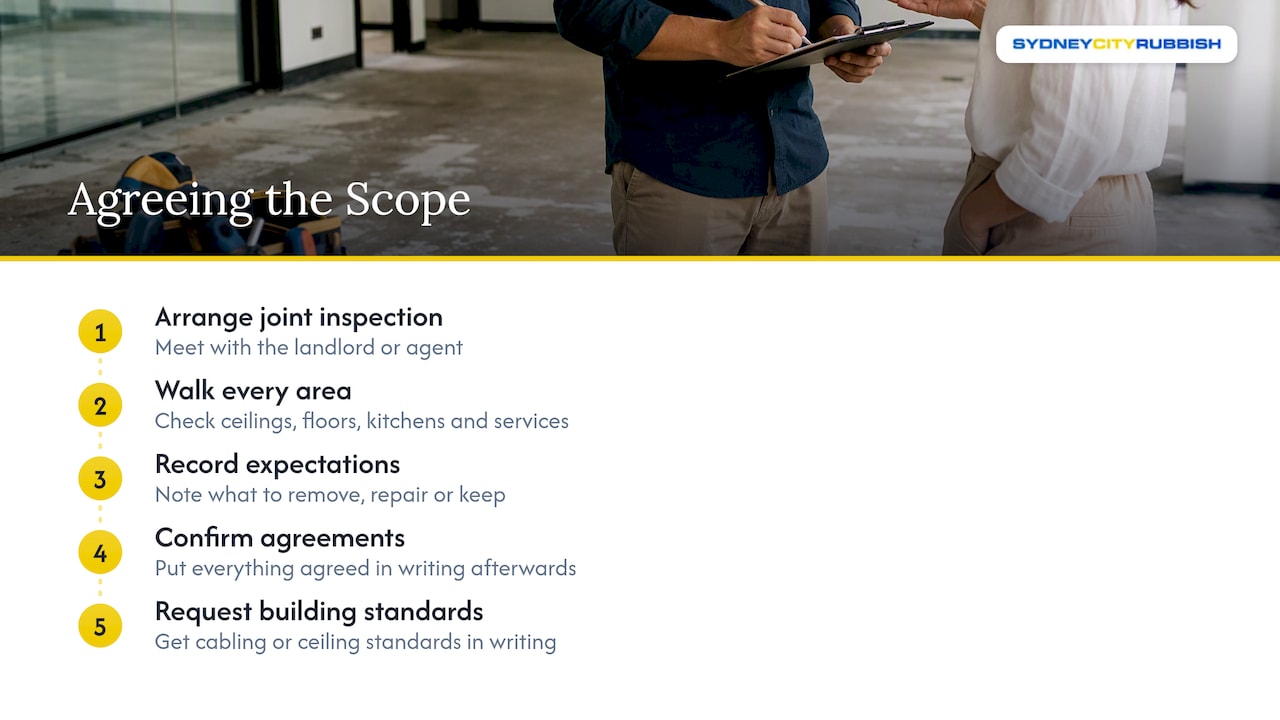
Once you know what the lease says and what the building looks like, arrange a joint inspection with the landlord or their agent. Walk every area: ceilings, partitions, floors, kitchens, server rooms, signage, cabling and the building services. Record what the landlord expects to be removed or repaired and what they are content to keep.
Anything agreed on the day needs to be confirmed in writing afterwards. A verbal “that wall can stay” is worth very little six weeks later when a different property manager reviews the file. Experts on lease exits consistently point to written records of agreed repairs and reinstatement as the best protection against bond disputes.
If the building has a base-build cabling or ceiling standard, ask for it in writing. Ceiling tiles, light fittings and carpet are the items most often argued over, because “fair wear and tear” is read differently by each party.
The physical works checklist
With the scope agreed, the physical work usually runs in this sequence. Sequence matters because each trade needs access to what the previous one uncovers.
Clear furniture, loose items and equipment
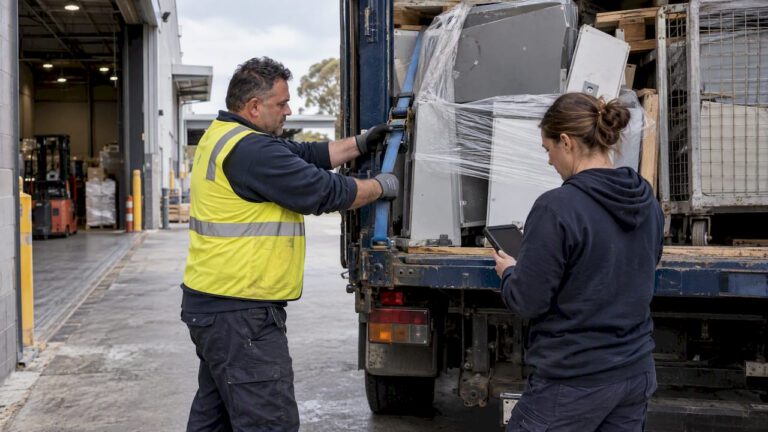
Start with what is not fixed. Desks, chairs, storage, whiteboards, kitchen appliances and IT equipment all need a destination. Decide early what is moving to your next premises, what can be resold or donated, and what must go to disposal. Items you are keeping need careful handling, and a commercial office relocation and furniture moving service can coordinate packing and transport while the make good contractor works on the fixed items. Everything else should be itemised so nothing is left behind, since abandoned items can be charged back to you.
RICS also notes that reuse is increasingly important for premium buildings and sustainability ratings. Finding reuse pathways for furniture and joinery, rather than sending everything to landfill, is worth building into the plan. Our office clean out and junk removal service handles the leftover items, and our end of lease recycling service sends materials to registered recycling partners wherever possible.
Remove joinery, partitions and fixed fit-out
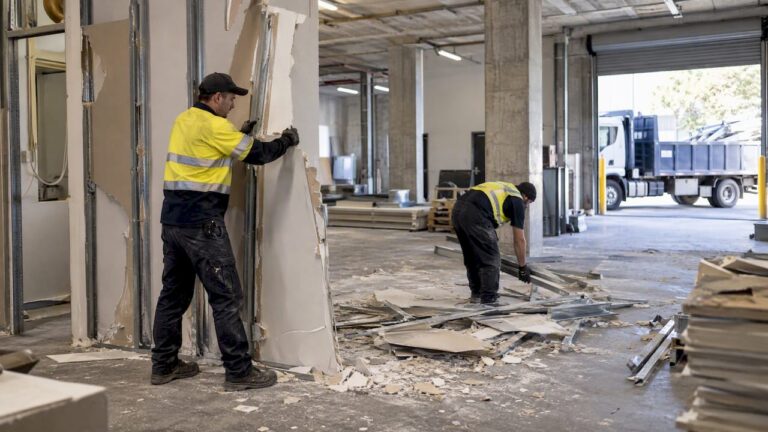
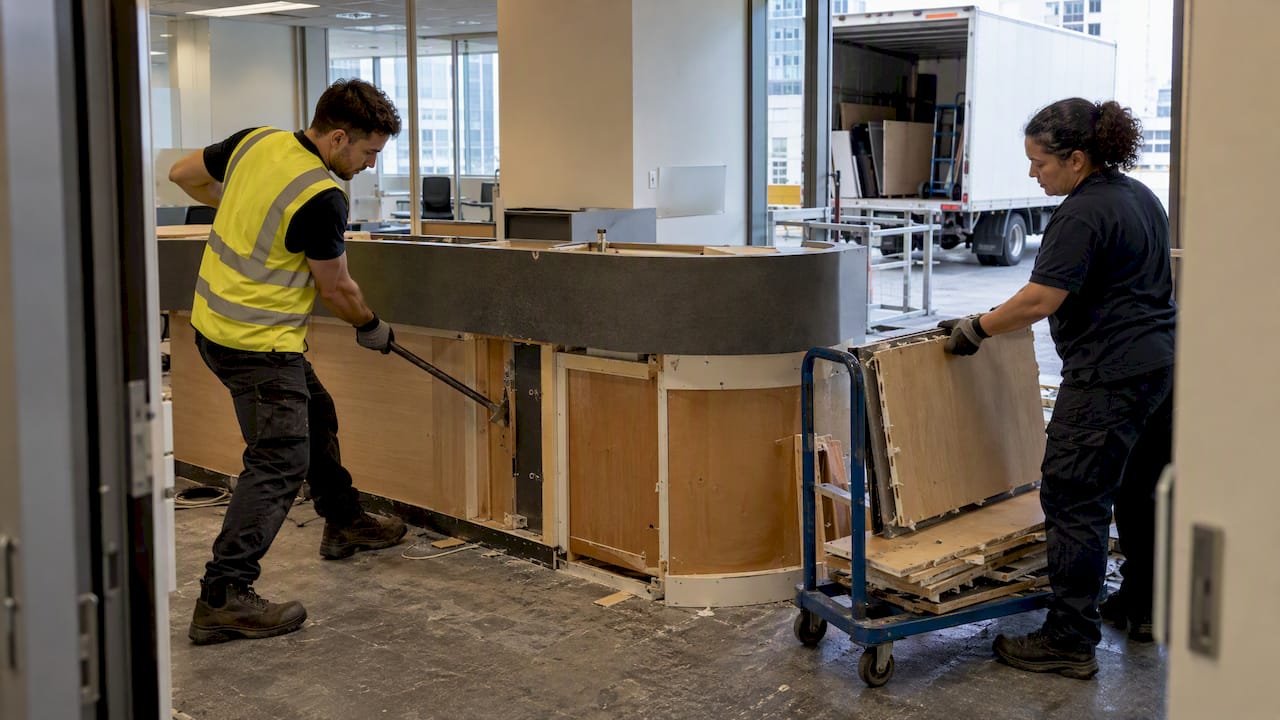
This is the core of most office make goods: built-in joinery, reception desks, glazed partitions, plasterboard walls, doors, and any ceilings or lighting that the landlord has not agreed to keep. Removal produces dense, mixed waste such as plasterboard, timber, glass, metal framing and cabling. Plan the volume and truck access before the work begins. Our building strip out and makegood services cover ceilings, walls, doors, furniture and joinery removal, and we coordinate directly with building management for lift bookings, loading dock times and after-hours access.
Deal with floors
Floor finishes are a frequent flashpoint. If your lease requires the original slab or a neutral finish, carpet tiles, adhesive, vinyl or raised flooring may need to be removed, and in some cases the slab needs grinding. Confirm with the landlord whether they expect a bare slab, a patched slab or a fresh floor covering. Floor finish removal and concrete grinding are part of our scope, so they can be sequenced with the strip-out rather than booked separately.
Services, cabling and signage
Remove redundant data and power cabling to the standard in your lease, cap off services where required, and take down signage including building directory and door signs. Repair holes and fixings left behind. Make good of signage on external facades often needs separate landlord approval, so check it early.
Demolition and structural items
If your fit-out included added structure, such as mezzanines, additional stairs or openings cut through slabs, reinstatement may involve demolition, concrete cutting or core-hole infill. These items need engineering and building approvals and should be flagged to your surveyor at the scoping stage. See our page on commercial demolition in Sydney for how that work is approached.
Check for asbestos before anything is disturbed
This step cannot be skipped in older buildings. NSW’s asbestos authority states that workplaces built before 2004 must keep an asbestos register, or where asbestos is likely to be present. The register records where asbestos is, or is assumed to be, and what type it is. Partitions, ceilings and flooring in older offices are typical locations.
Before de-fit begins, ask the building owner or manager for the register and management plan, and give a copy to every contractor. If your works will disturb a suspect material that the register does not cover, stop and arrange testing by a qualified person. The right professional here is a licensed assessor, and any removal must be done by a licensed asbestos removalist. Starting demolition first and checking later is the pitfall that creates the most serious regulatory and health exposure.
Waste and compliance: your liability does not stop at the truck
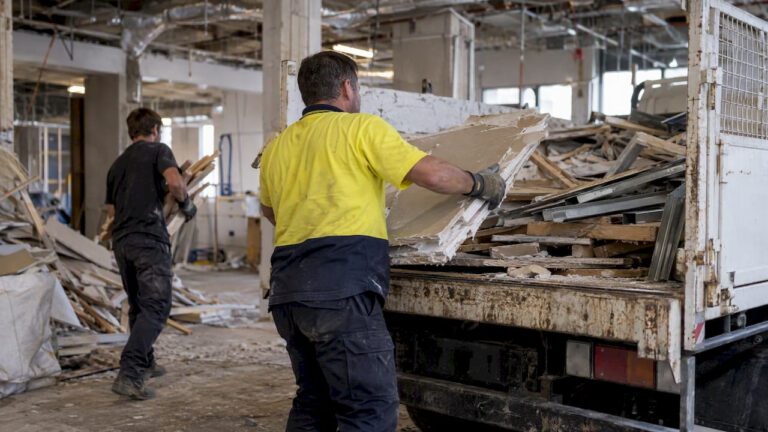
Make good generates a lot of waste, and in NSW the tenant who produces it keeps responsibility for it. The NSW EPA’s construction and demolition toolkit explains that waste owners and transporters can both be held liable for unlawful disposal. Under the Protection of the Environment Operations Act 1997, the maximum penalty for a corporation is $1,000,000 for unlawful waste disposal.
The practical protection is documentation. The EPA recommends tying final payments to contractors to evidence of lawful disposal, such as weighbridge receipts and waste tracking dockets. Before you hire anyone, ask how waste will be classified, which facilities it will go to, and what paperwork you will receive. Our construction waste management guidance explains how a waste plan supports this.
If your building is in the City of Sydney area, note that business council rates do not cover waste and recycling, so you arrange your own commercial waste service. Items such as electronics, batteries, fluorescent tubes, paints and chemicals need separate handling and should be identified in your waste plan rather than mixed into general skips.
Cleaning and final reinstatement
Only after the strip-out is finished does the clean make sense. The sequence is: remove, repair and patch, then clean. Landlords commonly expect repairs to walls and ceilings, removal of adhesive and marks, clean windows and bathrooms, and a space free of any debris. Our end of lease office cleaning and rubbish removal service finishes with a meticulous cleanup so that no waste is left behind.
Before the keys go back, carry out your own inspection against the written scope. Photograph every room with the date visible, including ceilings, risers and storerooms. Then invite the landlord or agent for the final inspection and ask them to sign off, or list defects, in writing.
Handover and the close-out phase
The lease is not finished when the keys are returned. Practitioners advising on commercial lease exits point out that the administrative close-out is often overlooked. The lease exit checklist from Quillio covers finalising outgoings, electricity, water and rates to the exit date, and chasing the release of credit references. Their advice is to pursue bond or bank guarantee release within 30 days of exit. Confirm that guidance against your lease’s own timeframes, which prevail.
Also cancel utility contracts, redirect mail, update your address with banks and the ATO, return keys, access cards and car park passes, and remove your name from the building directory. Keep your records, including dockets, photos, written agreements and the landlord’s sign-off, for at least as long as any claim period in your lease.
A note on warehouses and industrial premises
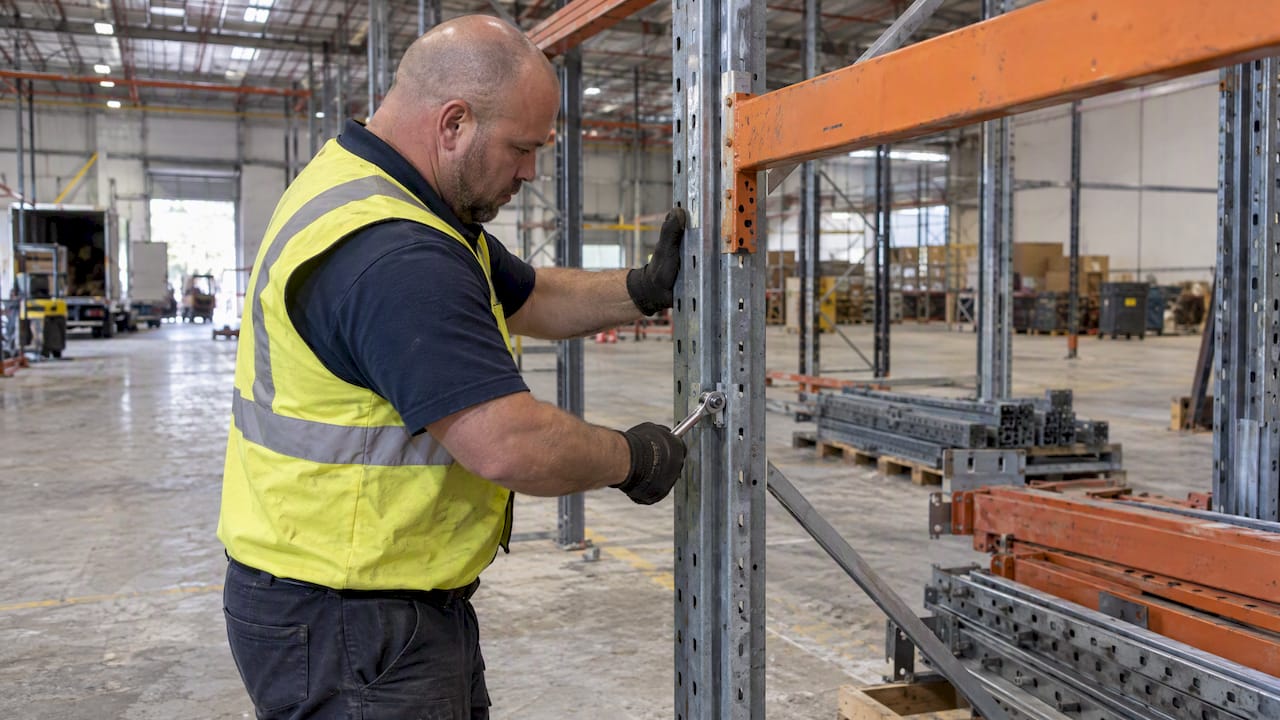
Warehouse make good follows the same logic but with different items. Expect racking removal, mezzanine dismantling, line marking, slab repairs, removal of oil staining, and sometimes reinstating roller doors or offices within the unit. Floor condition is typically scrutinised closely, so slab grinding and patching are common. Dust, concrete and heavy steel make truck access and waste classification more important. The checklist above applies unchanged: read the clause, scope early, document, dispose lawfully.
How Sydney City Rubbish supports your make good
We handle the removal and disposal side of end-of-lease projects for offices, warehouses and retail premises across Sydney: furniture and joinery removal, strip-out, makegood and de-fit, floor finish removal, concrete grinding and cutting, plus truck and driver hire. We coordinate directly with building management, offer fast electronic quoting, guarantee punctuality with compensation if we are late, and use registered recycling partners. Corporate clients can also opt in to carbon-neutral waste disposal. If you want a full run-through of your exit, read our end-of-lease checklist for Sydney businesses. When you have a scope, get a free quote for commercial rubbish removal and we will confirm access, timing and disposal paperwork up front.
FAQ
How long before lease expiry should I start make good?
Plan 6 to 12 months ahead. RICS’s Australian guidance recommends that window so you have time for joint inspections, costed scoping and negotiation. Leases can also set earlier notice dates, so check your clause first.
Is make good the same as end of lease cleaning?
No. Cleaning is one final step, while make good is the contractual duty to restore the premises to the condition your lease specifies. That may include removing the fit-out, repairing damage and, in some leases, returning the space to a bare shell.
Who is responsible for waste from a make good?
You are, as the waste owner, alongside the transporter. The NSW EPA’s toolkit says both can be liable for unlawful disposal, so keep weighbridge dockets and waste tracking records and link final payment to them.
Do I need an asbestos check before stripping out an office?
In a workplace built before 2004, you should obtain the asbestos register and management plan before any de-fit work. If materials that may contain asbestos will be disturbed, a qualified assessor should test them first, and a licensed removalist must handle any asbestos found.
Sources
- RICS, Make good Australia, 3rd edition
- RICS, new edition of the Make Good guide
- Victorian Small Business Commission, preparing for end of lease
- NSW Government, retail leases
- Asbestos NSW, safety on commercial sites
- NSW EPA, construction and demolition waste toolkit
- City of Sydney, businesses and waste services
- Quillio, commercial lease exit review