NABERS Waste Ratings for Sydney Managers: 12 Months, Better Recovery
Yes, you can improve a NABERS Waste rating, and the fastest first step is to register on the NABERS Waste platform and begin collecting 12 months of consistent waste data, or appoint an accredited assessor to do this for you. From there, two things move the needle together: the accuracy of your data and the quality of your actual waste recovery.
TL;DR:
- Choose a base building benchmark when owners control the waste contract; select whole building only when tenant waste can be measured reliably.
- A tonne of cardboard sent to high value recycling can score better than the same tonnage sent to energy recovery, so prioritize valuable routes.
- Assessors reject unsupported weight estimates, so retain original receipts by month and stream, reconcile contractor invoices monthly, and track each load to its final destination.
- Pilot organics for three to six months, but confirm the contractor issues separate dockets first; undocumented streams cannot count separately.
- Typical 4.5 star buildings separate about five waste streams, while case study buildings with six stars have tracked as many as 11.
Table of Contents
- What NABERS Waste measures and why it matters for your building
- How the rating is calculated: required data, timing and common data pitfalls
- Step-by-step: register, collect the right data and book a rating or verification
- Practical actions that raise a NABERS Waste rating: operations, tenant engagement and procurement
- Using the NABERS Waste Platform and preparing for assessor checks
- How Sydney City Rubbish can support your NABERS Waste improvement plan
- FAQ
- Sources
What NABERS Waste measures and why it matters for your building
A NABERS Waste rating looks at how a building generates, separates and diverts its waste, and it scores supply chain practices alongside raw diversion figures. The outcome is expressed on a familiar 1 to 6 star scale, benchmarked against similar buildings so a property manager can see exactly where their site sits against its peers, according to NABERS.
Managers choose between two benchmark types when registering. A base building rating covers waste the owner directly contracts and controls, while a whole building rating captures measurable tenant waste as well, which suits sites with strong tenant cooperation and existing measurement systems already in place.
Star outcomes tend to track with how many waste streams a building separates:
- A typical 4.5 star building separates around five distinct streams, while six star performers often track considerably more, with case study buildings reporting as many as 11 separate streams.
- Higher ratings also depend on a stronger Material Recovery Score, which rewards genuinely higher-value recovery rather than simply moving more tonnes through any available channel.
- A completed rating can support Green Star Performance credits, since the Green Building Council of Australia maps waste-to-landfill reduction bands to specific star outcomes for both base and whole building benchmarks.
Beyond the certificate itself, better separation and contracting usually mean lower disposal costs, since recyclable and organic streams are often priced more favourably than general waste to landfill.
How the rating is calculated: required data, timing and common data pitfalls
NABERS bases a Waste rating on 12 months of verified operational data, not a snapshot. That data has to map cleanly to defined waste streams and be backed by evidence: weighbridge receipts, recycling dockets, and contractor reports that can be reconciled month by month against what actually left the site, as set out in the NABERS Waste Rules and support documentation.
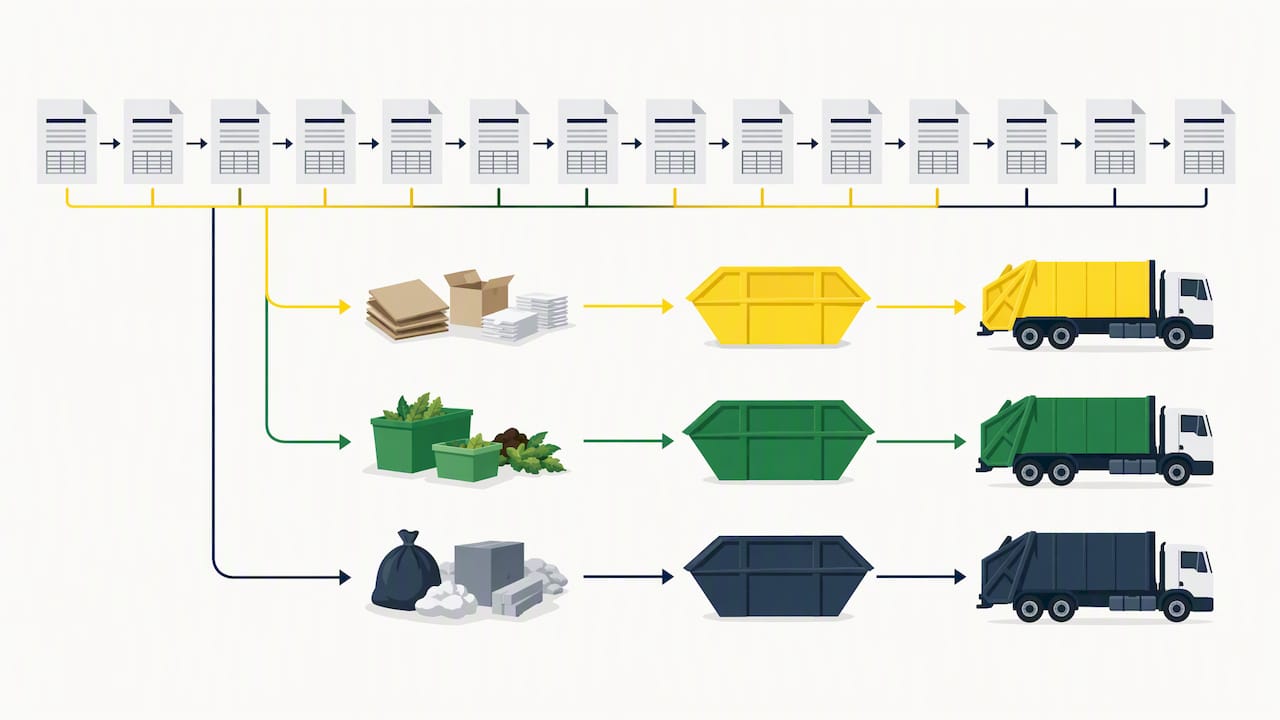
A figure that often surprises managers new to the system is the Material Recovery Score. Not all diversion counts equally: a tonne of cardboard sent to high-value recycling scores differently to the same tonne sent to low-value energy recovery, even though both are technically “diverted from landfill.” According to NABERS, improving how a stream is recovered, rather than simply increasing the tonnes moved, is often what produces the star uplift managers are chasing.
Commercial and industrial waste makes up around 43% of Australia’s core waste generation, which is part of why benchmarking at the building level carries real weight in national waste policy.
Four data pitfalls derail more ratings than any single operational failure:
- Inconsistent stream definitions between months, which make trend data unusable when an assessor tries to reconcile it.
- Estimated weights submitted without supporting dockets, which NABERS Waste Rules do not accept as verified data.
- Missing or incomplete receipts from contractors who change providers mid-year without a handover of records.
- Poor contractor record-keeping generally, where volumes are reported verbally rather than through weighbridge or recycling dockets.
An accredited assessor checks every submitted figure against the Data and Measurement Standard, and unverified entries are simply disallowed rather than estimated on a building’s behalf. That makes clean, contemporaneous records more valuable than any single operational change you might make in isolation.
Step-by-step: register, collect the right data and book a rating or verification
Most buildings can move from a standing start to a lodged rating within a year if the data collection habit starts early and stays consistent.
- Register on the NABERS Waste platform and download the Waste Platform Data Template v4.0, or contact NABERS directly for guidance on which benchmark type suits your building.
- Set monthly collection routines with every contractor, nominating the waste streams you intend to track and confirming that weighbridge and recycling dockets will be captured and stored as they’re generated, not reconstructed later.
- Decide on base building or whole building benchmarking early, then engage a NABERS-accredited assessor once you have close to 12 months of quality data, or sooner if you want guidance shaping your data collection before the clock starts.
- Prepare for the assessor’s site visit by having documentation organised, waste storage areas tidy and accessible, and tenant managers briefed on what cooperation looks like during the verification period.
A simple internal timeline helps keep the project moving: register in month zero, run data collection and any operational trials through months one to twelve, bring in your assessor around month ten to review progress, then move to verification and lodgement once the full 12 month dataset is complete.
Pro Tip: Start your weighbridge and docket filing system on day one, even before you’ve decided on a benchmark type. Missing records in month two can’t be recovered in month eleven.
Practical actions that raise a NABERS Waste rating: operations, tenant engagement and procurement
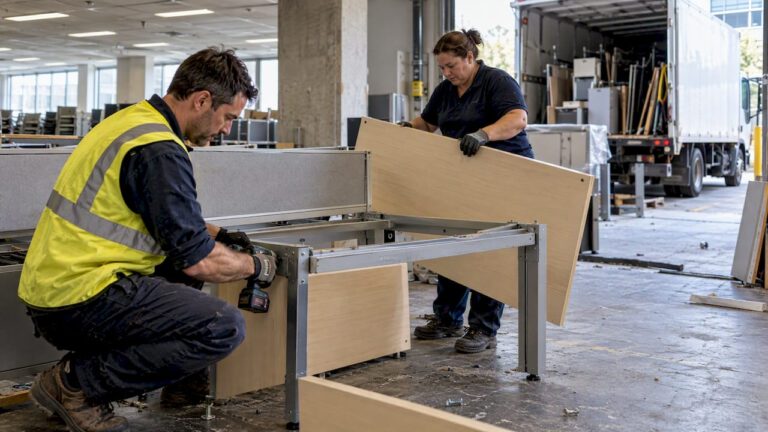
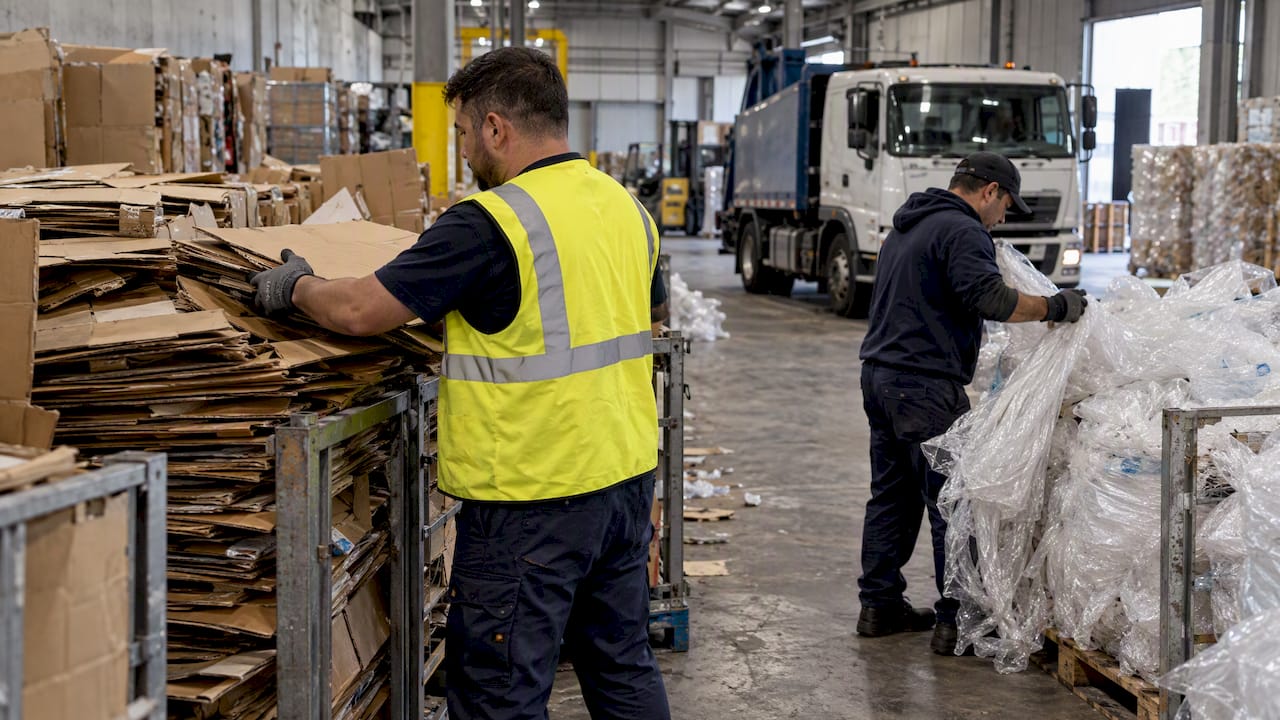
Data quality gets you a defensible rating, but the operational changes underneath it are what actually move the stars. Expanding source separation is usually the single biggest lever: adding organics collection, secure paper destruction streams, soft plastics, and construction-specific streams where your site generates them all contribute additional, trackable diversion. Each new genuine stream gives the Material Recovery Score more high-value material to work with, rather than funnelling everything into a single mixed recycling bin that gets partially rejected at the recovery facility.
Contamination is the quiet rating killer. A bin mix that’s confusing to tenants, combined with poor signage, pushes recyclable material back into general waste at the sorting facility, which shows up in your data as lower recovery than what was actually collected. Clear, consistent signage and short tenant training sessions, repeated whenever there’s staff turnover, tend to produce a measurable drop in contamination within a few months.
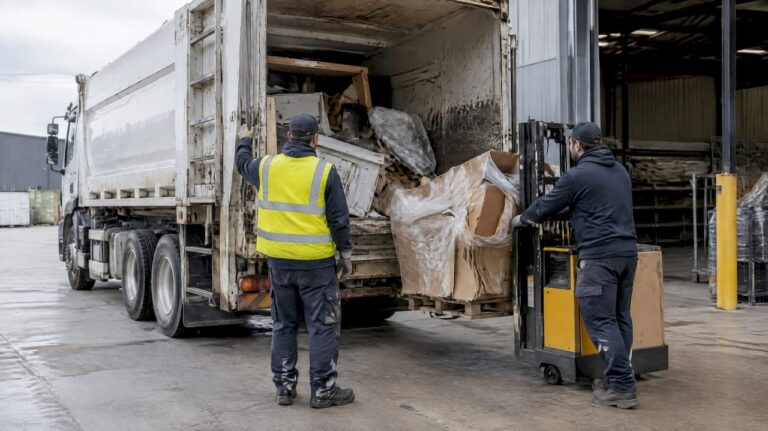
Contract terms matter just as much as what happens on the ground. Collection frequency needs to balance cost against contamination risk and fill rates: a bin collected too infrequently invites overflow and cross-contamination, while one collected too often simply adds cost without improving data quality. Whatever frequency you land on, insist contractually that your provider supplies documented dockets and weighbridge receipts for every collection, since this paperwork is what an assessor will ultimately want to see.
A few practical moves worth testing before committing to a full rollout:
- Run a pilot on a single new stream, such as organics, for three to six months before expanding it building wide, tracking diversion results through the NABERS platform dashboard as you go.
- Review onsite equipment options like compactors and balers, which can improve the condition and marketability of recyclable material, against the cost and footprint trade-offs of installing them.
- Reassess vendor contracts annually rather than letting them roll over, since switching to a provider with better reporting discipline can resolve a data quality problem that no amount of internal effort will fix.
Our guide on waste separation in construction and demolition goes deeper on stream-specific separation if your building includes an active fitout or construction component, and our piece on sustainable waste management for construction rubbish covers procurement considerations in more detail.
Pro Tip: Before adding a new waste stream, confirm your contractor can actually provide separate dockets for it. A stream without its own paperwork trail won’t register as a distinct stream in your NABERS data.
Using the NABERS Waste Platform and preparing for assessor checks
The platform dashboard is where your monthly data becomes visible as a trend, showing recycling rates, individual stream volumes and your running Material Recovery Score. Reviewing it monthly rather than annually means problems, like a contractor missing a docket or a stream suddenly showing a contamination spike, get caught while they’re still fixable rather than discovered during assessor review.
When an assessor examines your building, they’re checking for a specific evidence trail: weighbridge and recycling dockets for every reported tonne, documented contractual arrangements with your haulers, and recycler receival records that confirm where material actually ended up. According to the NABERS Waste Rules, retaining original tickets and reconciling them monthly against contractor reports is the single most effective way to reduce back-and-forth queries during verification.
Good record-keeping doesn’t need to be complicated:
- Keep original dockets, digital or physical, filed by month and stream rather than mixed together.
- Maintain a simple reconciliation spreadsheet that matches contractor invoices against docket totals each month.
- Produce a clear audit trail per stream so an assessor can follow any single tonne from collection through to its final recovery or disposal point.
If you’re not ready to commit to a full verification or rating, NABERS does offer a platform subscription on its own, which lets a building use the dashboards and data template purely as an internal management tool while building up the history needed for a future formal rating.
How Sydney City Rubbish can support your NABERS Waste improvement plan
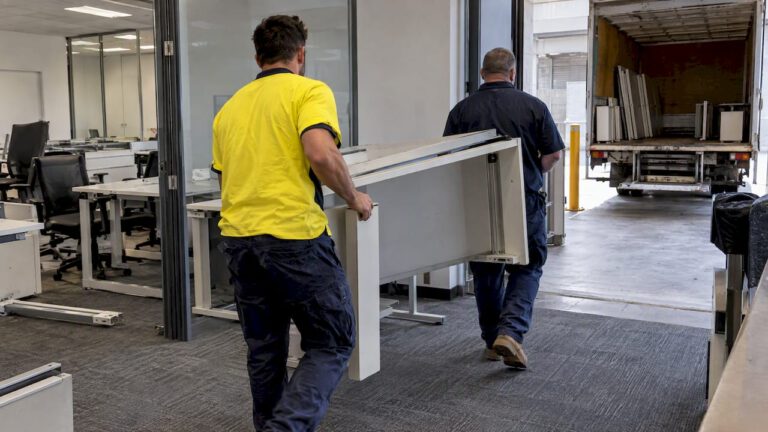
Preparing a building for NABERS Waste improvement comes down to consistent execution: scheduled collections, properly separated streams, and paperwork an assessor can actually verify. Our commercial waste removal and scheduled waste removal services are built around exactly this kind of recurring arrangement, with documented collections that generate the dockets and receipts your rating depends on.
For sites running a fitout, strip-out or construction phase alongside their day-to-day operations, our construction waste disposal service handles separated streams on top of general bulk rubbish removal, and clients can opt into carbon-neutral disposal through our partnership with Carbon Neutral. If your project involves coordinating furniture or fitout decommissioning ahead of a strip-out, our partners at Casey’s Movers handle the salvage and relocation side of that process.
Every job we complete comes with the documentation to back it, so your records stay audit-ready without extra admin on your end. Get in touch for a quote on scheduled or project-based collections suited to your building’s NABERS Waste timeline.
FAQ
Is a NABERS Waste rating mandatory for commercial buildings?
A NABERS Waste rating isn’t universally mandatory, though some government and large commercial leases require one as a condition of tenancy or procurement. Building owners pursuing Green Star Performance credits often need one, since GBCA links waste-to-landfill reduction directly to that credit pathway.
How long does a NABERS Waste rating last?
A NABERS Waste rating is based on 12 months of operational data and is typically renewed annually to reflect current performance. Buildings that want to track progress between formal ratings can use the NABERS Waste platform subscription on its own as an ongoing management tool.
What does a 6 star NABERS Waste rating signify?
A 6 star rating signals performance well above the benchmark peer group, typically supported by a wide range of separated waste streams and strong, well-documented recovery outcomes. Case study buildings reaching this level have reported tracking as many as 11 distinct waste streams rather than relying on a small number of broad categories.
What is Australia’s national recycling or recovery rate, and how does it relate to my building’s rating?
Australia’s overall resource recovery rate was 67% in 2024–25, according to national reporting from DCCEEW, giving building managers a national benchmark to compare their own site’s performance against. A building tracking below that figure usually has room to improve through additional separated streams or better contamination control before its next NABERS assessment.
Who manages waste collection and disposal for commercial buildings in Sydney?
Commercial buildings in Sydney typically contract waste removal to a dedicated provider rather than relying on standard municipal services, since commercial volumes and stream requirements differ from household collections. We provide commercial and construction waste removal, including scheduled collections with documented dockets suited to NABERS Waste data requirements.
Sources
- NABERS Waste | NABERS
- National waste and resource recovery report 2026 | DCCEEW
- 64 billion in building materials at risk of going to waste | GBCA