Sustainable Office Decommissioning: 4 Decisions for Sydney FMs
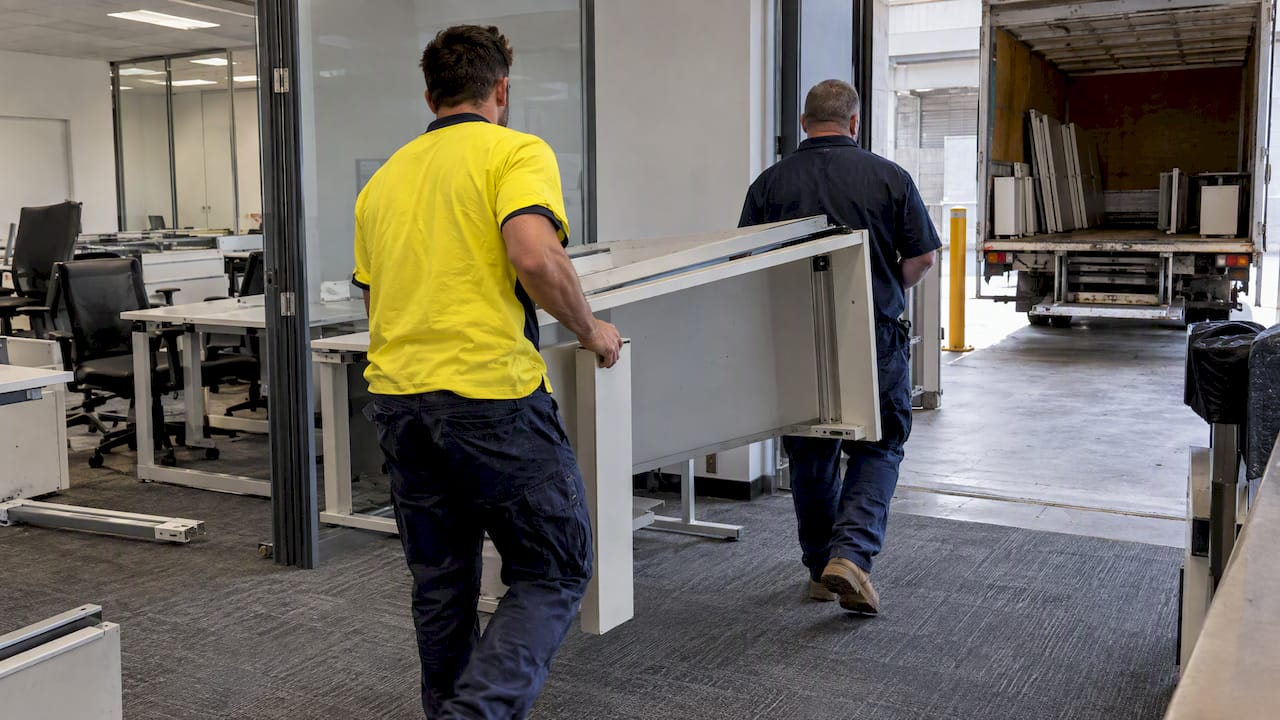
Sustainable office decommissioning is the process of removing and handing over office assets so waste is minimised, reusable items are redeployed or sold, IT equipment is securely wiped, and the space is left ready for handover. Success means measurable diversion from landfill, documented value recovery, and a clean compliance trail, with frameworks from the Green Star Fitouts programme, reuse platforms like Govtree, and experienced local removal partners all playing a part in getting there.
TL;DR:
- Appoint one project lead, confirm access windows early, and book the IT disposal vendor before removal, since data security approval often takes longest.
- Check internal transfer options first, then donate, resell, or use manufacturer takeback; refurbish items needing minor work before recycling, and reserve landfill for unusable materials.
- Set a 60% resource recovery target in the contract and make final payment depend on weighbridge dockets, recycler receipts, and transfer records.
- Planning and inventory often run in parallel for one to two weeks; removal can take days or several weeks, depending on floor size and access.
- Budget a 5% contingency for hazardous materials or specialist disassembly; floor count, volume, lift access, and after hours restrictions also drive removal costs.
Table of Contents
- Planning and coordination: what to settle before anyone touches a desk
- Building the asset register: auditing and triage
- Where assets go: reuse, donation and resale pathways
- Deconstruction versus demolition: protecting material value
- Compliance, reporting and ESG alignment
- How long it takes and what drives the cost
- Choosing and contracting a de-fit or removal supplier
- What we bring to a sustainable office decommission
- Book a sustainable office decommission with Sydney City Rubbish
- FAQ
- Sources
Planning and coordination: what to settle before anyone touches a desk
A decommission runs on decisions made weeks before the first truck arrives. Getting the sequence right protects your timeline, your budget and your diversion numbers.
- Appoint a single project lead and map every stakeholder, including building management, IT, finance, the outgoing lease holder and any charity or resale partner.
- Set a written diversion target, a budget ceiling and a realistic timeline before quoting the job out.
- Coordinate building access, lift bookings and after-hours or weekend restrictions with the landlord early, since these windows often dictate the whole schedule.
- Schedule IT decommissioning separately, with a documented chain of custody for every data-bearing device from desk to destruction or resale.
Pro Tip: Lock in your IT asset disposal vendor before the removal date is confirmed; data security sign-off is usually the slowest approval in the whole process.
Building the asset register: auditing and triage
An accurate register turns a chaotic strip-out into a manageable list of decisions. Every item needs a clear next step before the removal crew arrives, not after.
- Record asset type, condition, serial number, photographs and an estimated resale or scrap value for each item.
- Sort items into simple condition tiers: redeploy as-is, needs minor repair, salvage for parts, or recycle only.
- For large floors, triage in batches by zone rather than item by item, which keeps the audit moving against a tight access window.
- Check reuse marketplaces such as Govtree and any internal repository before listing items externally, since an on-site transfer is usually the fastest and cheapest outcome.
Our own guide to common types of office furniture waste is a useful reference when building out condition categories for desks, seating and storage units.
Where assets go: reuse, donation and resale pathways
Waste hierarchies exist for a reason: the further down the list you go, the less value you recover. Government guidance on office furniture sets out a clear order of preference, and it’s worth following in sequence rather than defaulting straight to removal.
- Redeploy on-site or across other company locations first, since this avoids transport and resale friction entirely.
- Donate functional furniture and equipment to charities or community groups, with condition checks and basic cleaning done beforehand.
- Resell through commercial channels when items have clear market value but no internal home.
- Use manufacturer takeback schemes where available, particularly for systems furniture and carpet tile.
- Refurbish items that need minor work rather than writing them off.
- Recycle material streams that cannot be reused, and treat landfill as the last resort only.
Government case studies cite significant savings in retained product value when offices divert furniture through a scheme like Govtree instead of sending it to landfill, alongside a reduction in embodied carbon. Our donation options guide and our reuse and recycling advice both set out practical next steps for teams working through this list.
Deconstruction versus demolition: protecting material value
Deconstruction means taking a fitout apart deliberately, in a sequence that keeps materials intact and sorted. Demolition, by contrast, tends to mix everything together and send a high share of it to landfill by default. BVN’s de-fit guidelines provide a de-fit kit with checklists and flow charts built specifically to plan this kind of staged removal.
- Look for screw and bolt joints rather than adhesives or welds, since these signal a fitout was designed to come apart cleanly.
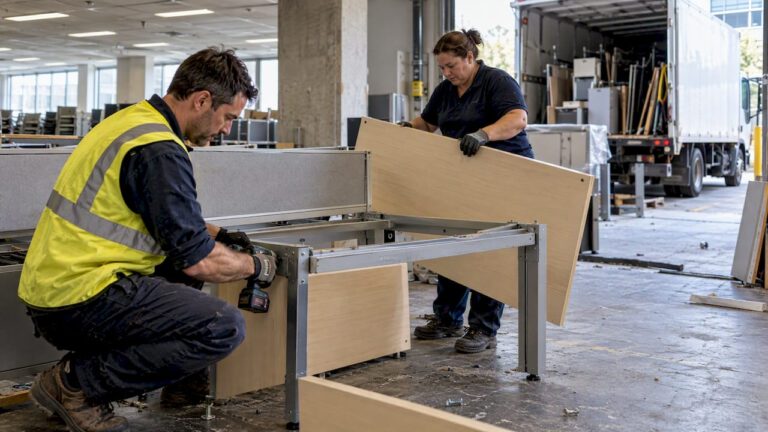
- Separate streams on-site as they’re removed: timber, metal, plasterboard, carpet tile and glass each need their own bin or pallet.
- Sequence trades so ceiling and services removal happens before wall and floor work, reducing cross-contamination between material types.
- Match each recovered stream to a recycler or processor that actually takes it, confirmed before the job starts rather than after.
Pro Tip: Ask your de-fit contractor for their deconstruction sequence in writing before the job starts; a vague answer usually means demolition with extra steps.
Compliance, reporting and ESG alignment
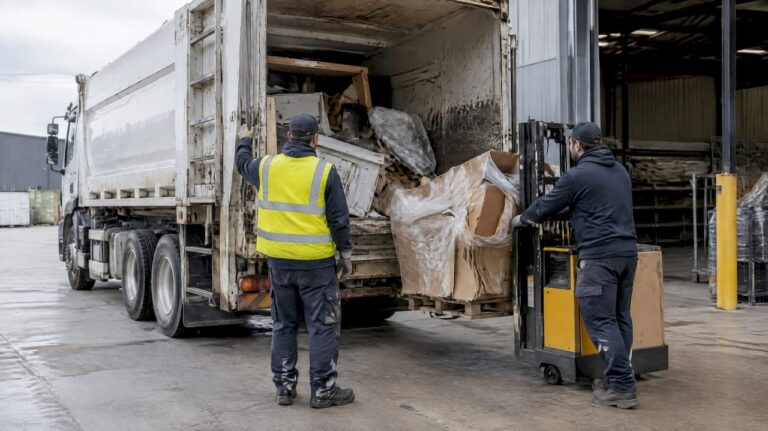
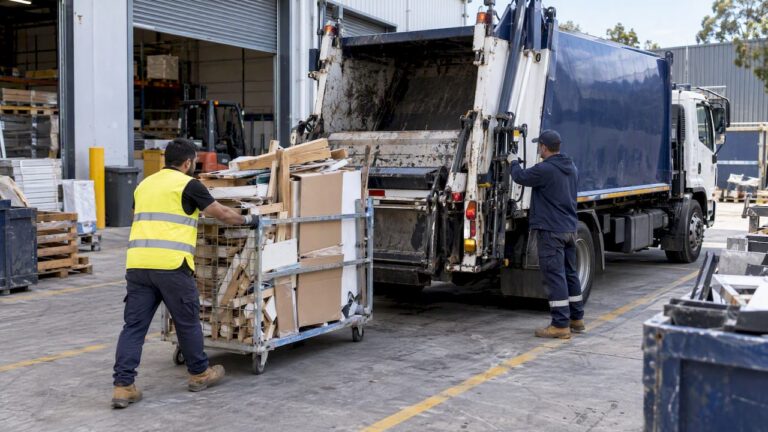
Diversion claims only hold up with paperwork behind them. Keep weighbridge dockets, recycler receipts, transfer records and dated photographs for every load that leaves the site, and match them against your original targets at project close.
- Green Star Fitouts sets minimum expectations and credits for circular design and resource recovery in certified projects.
- The Better Buildings Partnership stripout guidelines recommend a best-practice resource recovery target of a majority for strip-outs, backed by contract templates and a facility directory.
- Fitout decisions increasingly feed into Scope 3 and embodied carbon reporting, since life-cycle research on Australian office fitouts finds fitouts can account for a significant portion of a building’s life-cycle carbon, with retain-and-reuse strategies delivering the largest cuts.
How long it takes and what drives the cost
A typical decommission moves through four phases: planning and stakeholder sign-off, inventory and triage, physical removal, and final handover with cleaning and make good. Planning and inventory often run in parallel over one to two weeks, while removal itself can take anywhere from a few days to several weeks depending on floor size.
- Volume and floor count are the biggest cost drivers, followed by access restrictions such as single-lift buildings or strict after-hours rules.
- Hazardous materials, including some older ceiling tiles, adhesives and electrical components, add specialist handling time and cost.
- Items requiring careful disassembly for reuse take longer to remove than items destined straight for a skip.
- Reuse and donation can offset part of the cost by reducing landfill tipping fees and, in some government cases, generating resale income that partly funds the project.
Choosing and contracting a de-fit or removal supplier
The contract is where sustainability intentions either get locked in or quietly dropped. Build the following into your scope of works rather than leaving them as verbal assurances.
- Require a documented diversion target, ideally benchmarked against the Better Buildings Partnership’s 60% figure, with evidence submission as a contract condition.
- Include data-wipe obligations and chain-of-custody documentation for every IT asset as a non-negotiable line item.
- Set payment milestones that trigger on proof of disposal and diversion, not just on physical removal from site.
- Ask prospective suppliers directly about their deconstruction experience, their recycler network and whether they have existing charity or salvage partners.
Pro Tip: Build a 5% contingency into the removal budget for items that turn out to need specialist disassembly or hazardous handling once the crew is on-site.
Our guide to disposing of office junk sets out the kind of evidence trail worth asking for when you’re comparing quotes.
What we bring to a sustainable office decommission
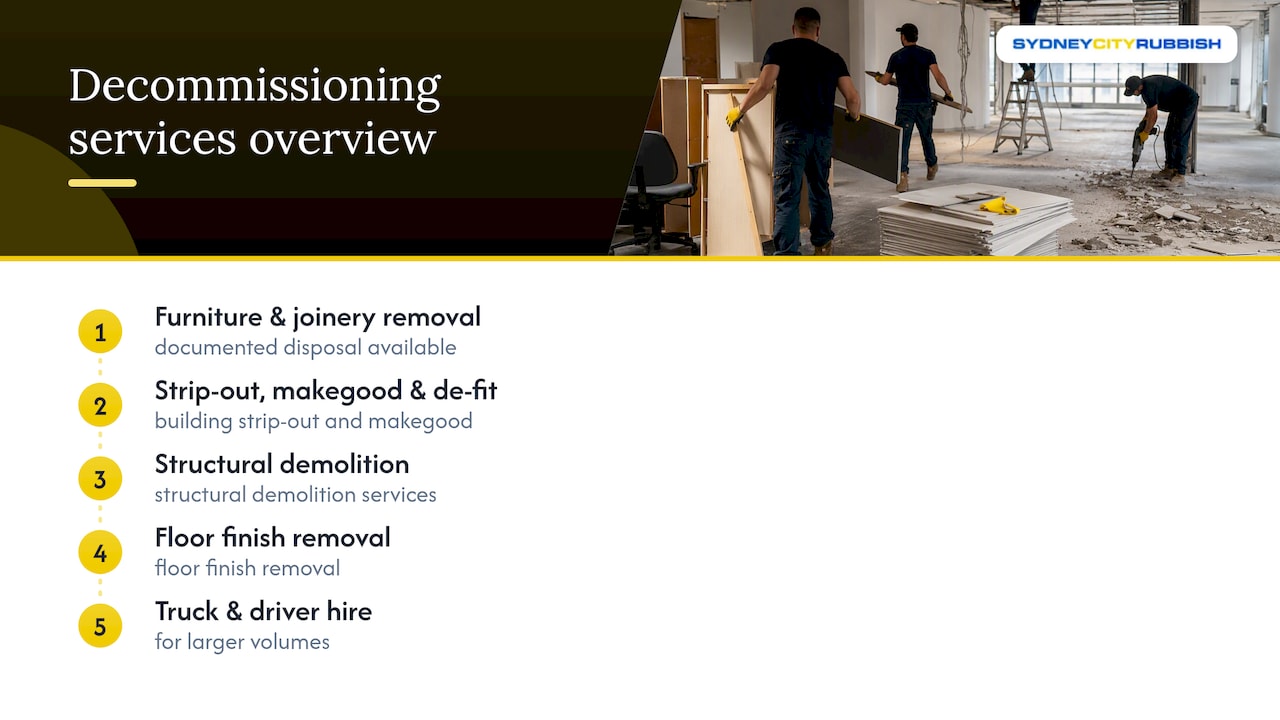
We handle the practical end of this playbook directly: furniture and joinery removal, building strip-out, makegood and de-fit, structural demolition, and floor finish removal, alongside truck and driver hire for larger volumes. Clients can opt in to carbon-neutral disposal, and we provide fast electronic quoting with a punctuality guarantee backed by compensation if we’re late. That combination of documented disposal, flexible scheduling and sustainability opt-ins maps directly onto the procurement criteria set out above, from diversion evidence through to access coordination.
Book a sustainable office decommission with Sydney City Rubbish
We take on the physical side of decommissioning so your team isn’t managing trucks, tip runs and disposal paperwork on top of everything else. From commercial waste removal through to full building strip-out and de-fit, we coordinate directly with building management, work around your access windows, and hand back documented disposal records at the end of the job.
- Carbon-neutral disposal is available as an opt-in on eligible jobs.
- Electronic quotes are turned around quickly so you can lock in a timeline.
- Punctuality is guaranteed, with compensation if there’s a delay.
If you’re planning a decommission and want a provider who can quote fast and document outcomes properly, get in touch through our commercial rubbish removal page to start the conversation.
FAQ
What does sustainable office decommissioning actually involve?
It involves auditing every asset in the space, redeploying or donating what still has value, recycling what can’t be reused, securely wiping or destroying IT equipment, and leaving the space ready for handover. The goal is maximum diversion from landfill with a documented paper trail to prove it.
What’s a reasonable diversion target for an office strip-out?
The Better Buildings Partnership recommends a best-practice minimum of 60% resource recovery for strip-out projects, backed by contract templates and a recycling facility directory. Setting this as a contract KPI, with evidence required before final payment, keeps the target enforceable.
How is deconstruction different from demolition?
Deconstruction removes a fitout in a planned sequence that keeps materials sorted and intact for reuse or recycling, while demolition tends to mix materials together and send more to landfill by default. BVN’s de-fit guidelines provide checklists specifically for planning a deconstruction-first approach.
What should we do with usable furniture we no longer need?
Follow the reuse hierarchy: redeploy on-site first, then donate, then resell, then explore manufacturer takeback schemes before anything goes to recycling. Government guidance cites cases where diverting furniture through a scheme like Govtree retained an estimated $300,000 in product value while cutting embodied carbon, so it’s worth checking these options before booking a removal.
How do we verify a supplier actually met the diversion target they promised?
Request weighbridge dockets, recycler and donation receipts, and transfer records for every load removed from site, matched against the target set in the contract. Building this evidence requirement into the scope of works before the job starts, rather than asking for it afterwards, is what makes the target enforceable.
Sources
- Green Star Fitouts for building owners (GBCA)
- De-fit guidelines for commercial fitouts (BVN)
- Sustainability ideas for furniture (DCCEEW)
- Stripout waste guidelines (Better Buildings Partnership)
- Life cycle assessment of office fitouts: a case study of Australia (2026)