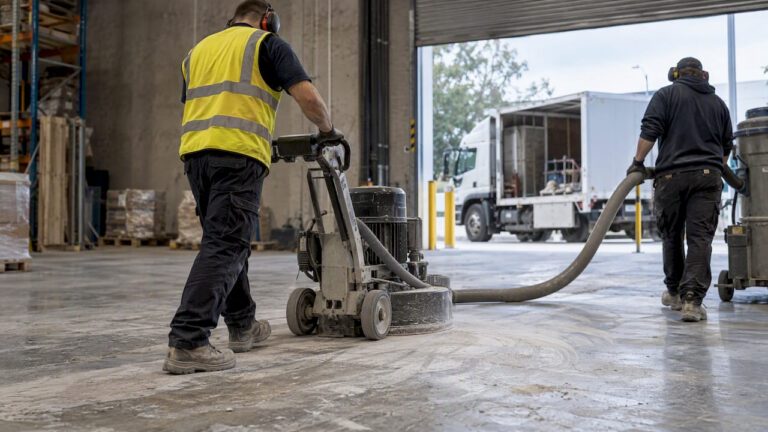
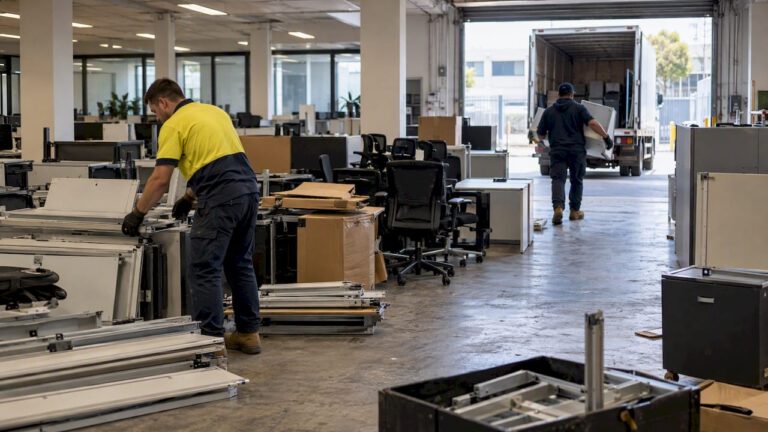
Construction waste removal cost: a 2026 price guide
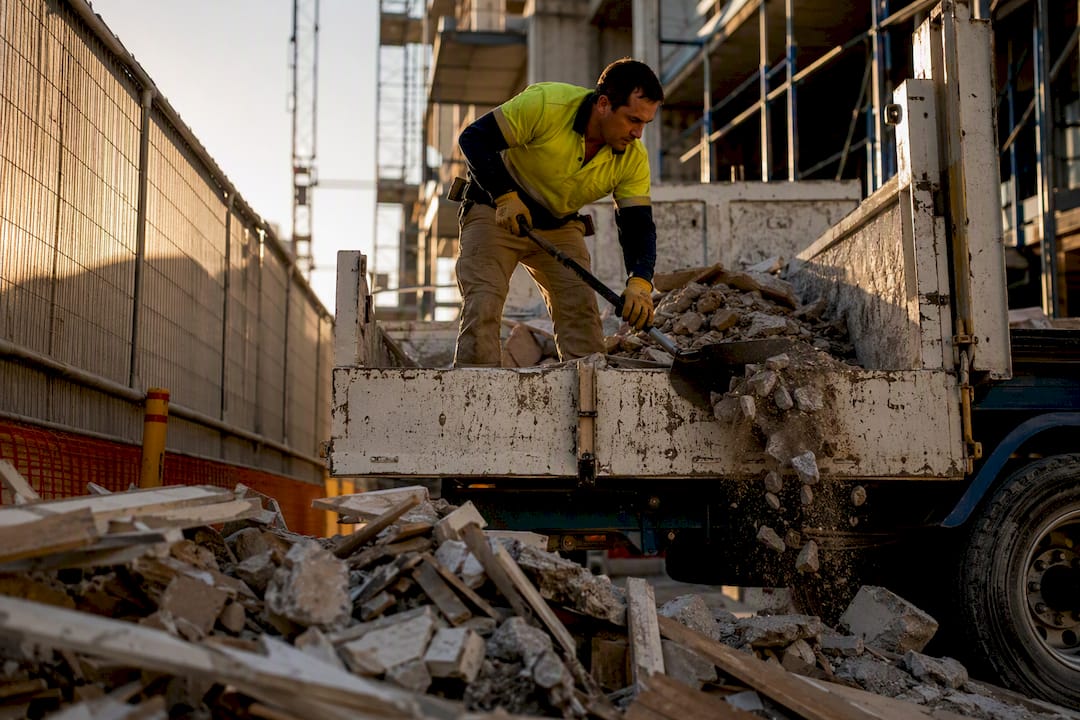
Construction waste removal cost varies widely, from a few hundred dollars for a small skip on a bathroom strip-out to several thousand dollars for a full-house demolition load. The gap between those two figures comes down to three things: how much material you’re moving, what it weighs, and whether it’s separated or mixed. A single ute load of clean timber might cost $150 to dispose of. The same volume of mixed demolition rubble, contaminated with plasterboard dust and metal offcuts, can cost three times that once the landfill levy applies.
Here’s the fast version of the maths that matters:
- Small renovation clean-up (1–2 m³): $250–$450, often billed as a flat call-out fee.
- Bathroom or kitchen strip-out (4–6 m³): $500–$1,200 depending on tile and masonry content.
- Skip bin hire (4–9 m³): $300–$700 for general waste; construction-grade bins run 20–50% higher because of weight, per Azara Recycling’s pricing data.
- Full truckload of mixed demolition waste: $1,500–$8,000+, driven mostly by tonnage and levy exposure.
The single biggest lever on your final invoice is the state landfill levy, which is deliberately set high in metro areas to push waste toward recycling rather than landfill. The second-biggest lever is entirely in your control: separating clean concrete, timber, and metal from mixed rubble can shave hundreds of dollars off a mid-size job. Before you commit to anyone, get two or three quotes and ask each provider for their disposal dockets, weighbridge receipts, and Environment Protection Licence (EPL) details. That paperwork tells you whether you’re paying for legitimate disposal or just funding someone’s shortcut.
Key Takeaways
Construction waste removal cost depends primarily on weight, waste type, and landfill levy exposure, and separating clean material from mixed loads is the most reliable way to cut the bill.
| Point | Details |
|---|---|
| Pricing model matters | Confirm whether a quote is per m³, per tonne, or a flat rate before comparing providers. |
| Separation saves money | Clean concrete, timber, and metal can avoid levy-bearing mixed waste rates entirely. |
| Levies drive metro costs | Metro landfill levies, such as Victoria’s $169.79 per tonne, push mixed disposal costs higher than regional rates. |
| Documentation protects you | Always request weighbridge receipts, disposal dockets, and EPL confirmation before paying in full. |
| Sydneycityrubbish offers compliant removal | Provides truck-and-crew collection, direct facility payments, and carbon-neutral disposal options for Sydney construction sites. |
Table of Contents
- How much does construction waste removal cost? Understanding the pricing models
- Why does the price change by waste type?
- Skip bin or truck-and-man removal: which costs less?
- What actually drives the price on your quote?
- How do you estimate your own job cost?
- What legal requirements apply to construction waste disposal?
- How can you lower your construction waste removal bill?
- What should you ask before booking a provider?
- Get a compliant, punctual quote for your Sydney site
- Frequently asked questions
- Sources
How much does construction waste removal cost? Understanding the pricing models
Providers charge for construction waste removal in three different ways, and mixing them up is the fastest way to get an unpleasant surprise on your final bill. Understanding which model applies to your job lets you compare quotes properly instead of comparing apples to demolition rubble.
Per cubic metre (m³) pricing is common for bulky, lightweight loads like timber offcuts, packaging, and general site clean-up. It’s a volume-based charge, so a skip full of foam insulation costs roughly the same as a skip full of broken plasterboard, even though one weighs a fraction of the other. This model suits jobs where space, not weight, is the constraint.
Per tonne pricing takes over once weight becomes the dominant cost factor, which is almost always the case with concrete, brick, soil, and mixed demolition rubble. A single cubic metre of compacted concrete can weigh close to two tonnes, so a provider quoting by volume alone on a heavy load is either underpricing themselves or padding the rate to cover the risk. Facilities that receive this material typically weigh trucks in and out on a weighbridge, and that reading becomes the basis for your invoice.
Flat-rate or truckload pricing, sometimes called a minimum call-out fee, applies to smaller jobs where the provider needs to cover fuel, labour, and disposal regardless of how full the truck actually is. Most operators set a minimum charge somewhere between $150 and $350, even if your load is well under a quarter of the truck’s capacity.
Here’s how those models typically translate into dollar figures across Australian cities, based on skip-bin and tip-fee data currently available:
| Unit / service | Typical price range | Notes |
|---|---|---|
| General waste skip, 3–4 m³ | $300–$450 | Common for household clean-outs; not rated for heavy rubble |
| Construction-grade skip, 4–9 m³ | $250–$450 | 20–50% higher than general skips due to weight allowances. |
| Mixed C&D waste, per tonne | Median rates vary by facility, some charging per load rather than per tonne | See tip fee statistics for current facility comparisons |
| Truckload minimum call-out | $150–$350 | Applies even for partially filled trucks |
| Metro landfill levy component | Up to $169.79 per tonne in Victoria for 2025–26 | Varies significantly by state |
Local waste authorities publish their own fee schedules, and the differences between regions can be significant. Western Australian metro facilities, for instance, list specific per-m³ and per-tonne bands in their 2025–26 fees and charges schedule that don’t map neatly onto eastern-state rates. Never assume a quote from one city translates directly to another.
The practical takeaway: ask every provider which model they’re using before you compare quotes side by side. A per-tonne quote on a heavy concrete job will almost always beat a flat rate that’s been padded to cover the provider’s uncertainty about weight.
Why does the price change by waste type?
Not all rubble is priced equally, and the difference between your cheapest disposal stream and your most expensive can be substantial on the same site. Waste type affects price through three mechanisms: weight, sorting complexity, and recovery value at the receiving facility.
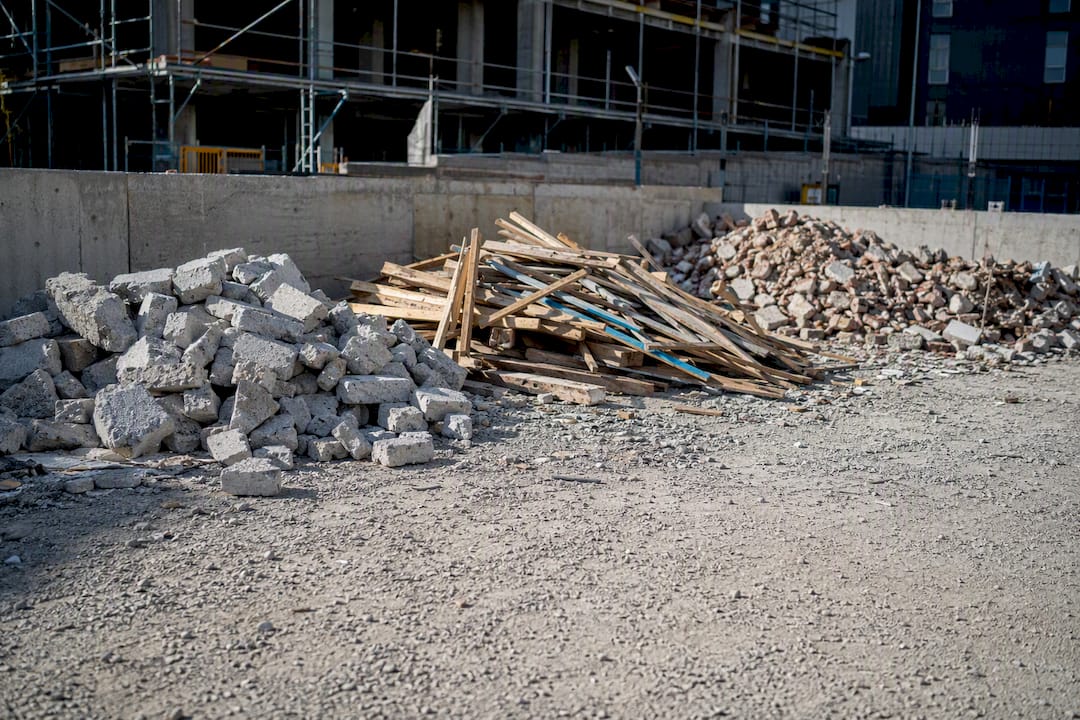
Clean concrete and brick, when kept free of contamination, is often the cheapest heavy material to dispose of because recyclers can crush and reuse it as road base or aggregate. Mixed with timber, plasterboard, or metal fixings, that same load loses its recycling value and gets billed as general demolition waste instead, often at a meaningfully higher rate.
Timber sits in the middle of the cost spectrum. Untreated timber can sometimes be diverted to mulching or biomass facilities at a reduced rate, while treated or painted timber usually can’t, and gets billed as standard mixed waste.
Plasterboard is one of the trickier streams. It needs to be kept separate from general C&D waste at many facilities because gypsum reacts poorly in landfill, generating hydrogen sulphide gas. Providers who handle plasterboard correctly often charge a premium for the separate handling, but it’s cheaper in the long run than paying a contamination penalty on a mixed load.
Mixed demolition loads attract the highest per-tonne charges of any stream. A skip filled with a combination of concrete, timber, insulation, and general rubbish can’t be recycled economically, so it goes straight to landfill, straight into the highest levy bracket. This is where separation pays off most obviously.
Soil and spoil from excavation work is usually the largest-volume waste stream on any construction site, and reuse should always be the first consideration before disposal. Project guidance for larger jobs recommends looking at on-site reuse and beneficial reuse orders before trucking excavated material offsite, because spoil disposal costs add up fast on anything beyond a small job.
Metals are the one stream that can actually earn you money rather than cost it. Scrap steel, copper wiring, and aluminium offcuts have resale value, and many removal providers will offset or waive collection fees for a clean metal load.
Hazardous materials, particularly asbestos, sit entirely outside standard pricing. Asbestos removal requires licensed handling, specific transport conditions, and disposal at facilities approved to receive it, and the premium reflects that regulatory burden rather than any arbitrary mark-up. Contaminated soil carries similar handling premiums. If your site has any pre-1990s building material, get it tested before you commit to a removal quote, because retrofitting asbestos handling into an existing job almost always costs more than planning for it upfront.
Skip bin or truck-and-man removal: which costs less?
The choice between hiring a skip bin and booking a truck-and-man rubbish removal service usually comes down to how your waste accumulates, not just how much of it there is.
Skip bins work well for staged renovations where trades need to deposit waste progressively over days or weeks. You pay a hire fee plus disposal, the bin sits on site (or on the street with a council permit) for an agreed period, and you get charged extra if you overfill it or exceed the weight allowance. This progressive-fill flexibility is why skip bins remain the default choice for renovation waste, even though they’re not always the cheapest option for pure weight.
Truck-and-man services suit one-off clean-outs, tight-access inner-city sites where a skip simply won’t fit, or jobs generating heavy spoil where weight-based pricing works in your favour. Labour is built into the price, so there’s no need to load the bin yourself, and there’s no permit application if the truck can access the site directly.
| Factor | Skip bin hire | Truck-and-man removal |
|---|---|---|
| Typical cost driver | Hire period + weight allowance | Labour + disposal, often weight-based |
| Best suited to | Staged renovations, progressive fill | One-off cleanouts, heavy spoil, tight access |
| Common surcharges | Overweight fees, overfill fees, extended hire | Excess labour time, difficult access charges |
| Council permit needed | Yes, if placed on-street | Usually no, if truck can access site |
| Labour required from client | Yes, loading is on you | No, crew loads the truck |
The trade-off that matters most for compliance: with a skip bin, you’re often relying on the hire company’s paperwork for proof of lawful disposal after collection. With a truck-and-man service, you can ask the crew directly for weighbridge receipts and disposal dockets on the day, which gives you a cleaner audit trail if a client or council ever asks for evidence.
What actually drives the price on your quote?
Two quotes for what looks like an identical job can differ by hundreds of dollars, and the reasons are rarely arbitrary. Four factors do most of the work.
Landfill levies are the biggest single variable. Because levies are designed to push waste away from landfill and toward recycling, metro rates run significantly higher than regional ones. Victoria’s metro levy for 2025–26 sits at $169.79 per tonne, while other states set their own rates entirely, so a job that’s affordable in a regional centre can cost noticeably more inside a capital city.
Access and labour costs climb fast once a job involves stairs, a building without a lift, or a site with restricted loading windows. A crew that has to carry rubble down four flights instead of wheeling it out a ground-floor door will take longer, and that time gets reflected in the quote. Traffic and parking permits for inner-city sites add another layer, particularly where a truck needs to occupy a metered space for an extended period.
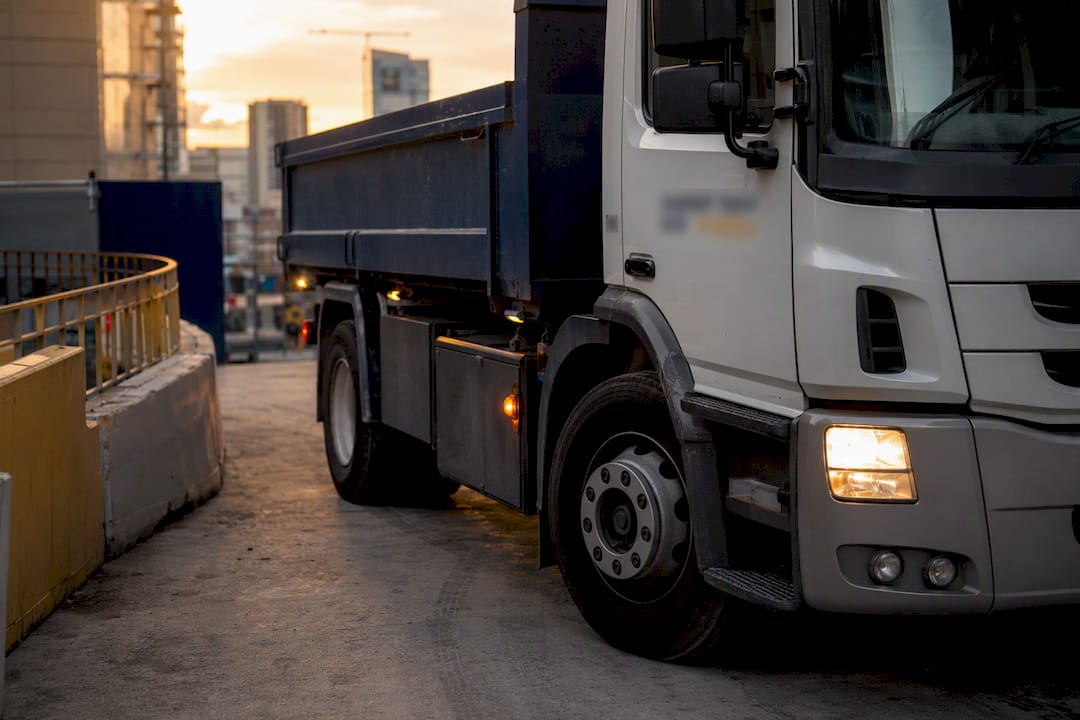
Transport distance to the nearest approved receival facility matters more than most people expect. A site fifteen minutes from a transfer station costs less to service than one an hour away, simply because the truck spends more time travelling than loading.
Load composition is where costs can blow out unexpectedly. A load that arrives at the facility contaminated with something the site isn’t licensed to accept, asbestos fragments in general rubble, for instance, gets rejected or hit with a contamination surcharge. Because levies are a predictable, recurring cost on every mixed tonne, the labour cost of sorting materials on site is very often lower than the levy you’d avoid by diverting them.
Pro Tip: Ask your provider whether they pay disposal costs directly to the receival facility on your behalf, rather than folding it into a single bundled fee. Direct payment creates a cleaner paper trail and makes it much easier to prove where your waste actually ended up.
How do you estimate your own job cost?
Working out a realistic budget before you call anyone starts with a rough volume estimate, then layers in weight, transport, and levy costs on top. Here’s a simple way to build that number yourself.
- Measure or estimate your volume in cubic metres. For a room strip-out, multiply the floor area by the average pile height once material is stacked. A gutted bathroom typically produces 4–6 m³ once tiles, fixtures, and cabinetry are accounted for.
- Apply a weight assumption for your dominant material. Timber and general waste sit around 150–300 kg per m³, while concrete and brick can weigh close to 1.5–2 tonnes per m³ once compacted. This step is where most DIY estimates go wrong, because volume and weight scale very differently across material types.
- Add the disposal rate for that material stream. Use the per-tonne or per-m³ figures relevant to your city, factoring in whether the load is clean (lower rate) or mixed (levy-bearing rate).
- Add transport and labour. A short trip to a nearby transfer station adds relatively little; a longer haul or a difficult-access job adds meaningfully more.
- Add the applicable landfill levy if the material can’t be diverted to recycling.
Scenario one, small renovation (1–2 m³): A kitchen cabinet replacement generating mostly timber and laminate offcuts might land at $250–$450 once you include a flat call-out fee and minimal levy exposure, since much of the material can be diverted.
Scenario two, bathroom strip-out (4–6 m³): Tiles, a bath, and cabinetry push this into $500–$1,200 territory, largely because tiles and sanitaryware are heavy and rarely recyclable through standard streams.
Scenario three, full demolition (multiple truckloads): A house demolition generating mixed concrete, timber, and roofing material can run from $3,000 to $8,000 or beyond, depending on truckload count, distance to facility, and how much of the concrete gets separated for crushing versus sent as mixed rubble.
A quick formula you can reuse for any job: estimated m³ × material rate + transport + levy + labour or access surcharge = expected cost. It won’t replace a proper quote, but it stops you walking into a negotiation with no idea what a fair number looks like.
What legal requirements apply to construction waste disposal?
Lawful disposal isn’t just a compliance checkbox, it’s the difference between a documented, defensible waste trail and a liability that lands back on you months later. Under New South Wales law, both the waste’s owner and the transporter can be found guilty of an offence if material ends up at a facility not licensed to receive it, and penalties and remedial orders for unlawful disposal are substantial. That liability doesn’t automatically transfer to whoever you hired; if your contractor cuts corners, you can still wear the consequences.
The NSW EPA’s construction and demolition waste management toolkit sets out exactly what a compliant waste management plan should produce as evidence. Before you sign off on any removal contract, ask for:
- Receival facility approval or EPL confirming the destination site is legally permitted to accept your specific waste type.
- Weighbridge tickets showing the weight of material received, tying your invoice to an actual, verifiable quantity.
- Disposal or recycling dockets naming the facility, the date, and the waste classification.
- Transport records documenting the chain of custody from your site to the receiving facility.
The toolkit also recommends a contracting practice worth adopting on any job of meaningful size: pay disposal costs directly to the receival facility rather than bundling everything into a single payment to your removalist. This isn’t about distrust so much as audit hygiene, it keeps your paper trail clean and removes the financial incentive for anyone in the chain to take a shortcut to an unlicensed site. Industry practitioners increasingly recommend this direct-payment structure specifically because it removes the temptation for illegal tip-runs while preserving evidence for regulators or future clients.
Linking payment milestones to verified disposal evidence, rather than just a completion date, is a simple contract clause that protects you if something goes wrong further down the supply chain.
How can you lower your construction waste removal bill?
Cost control on construction waste comes down to a handful of habits that pay for themselves quickly, particularly on jobs generating more than a couple of skip bins’ worth of material.
Separate clean streams from mixed waste. Clean concrete, brick, and metal can often be diverted from levy-bearing landfill entirely, and the labour cost of sorting on site is usually far smaller than the levy you’d otherwise pay on every mixed tonne.
Recover and sell metals. Scrap steel, copper, and aluminium have resale value, and a clean metal stream can offset or eliminate collection fees for that portion of the job.
Reuse spoil where possible. Excavated soil is often the single largest volume stream on a job, and reuse hierarchies for excavated material should be considered before trucking it offsite as waste.
Right-size your skip or truck booking. An oversized skip you never fill still costs the same hire fee as a correctly sized one, and an undersized skip means paying for a second collection.
Use licensed recyclers for recoverable materials like glass, sand, and aggregates, where downstream demand exists for the recovered product rather than treating everything as landfill-bound.
Pro Tip: If you’re managing a multi-trade site, build a simple waste forecast into your project plan before work starts, and allocate a specific budget line to separation infrastructure like labelled bins for each material stream. Practitioners regularly find the levy avoided per diverted tonne outweighs the labour cost of running a sorted site.
What should you ask before booking a provider?
A good quote answers questions before you have to ask them. A vague one leaves gaps that turn into surprise line items later.
Before booking, confirm:
- Which pricing model applies (per m³, per tonne, or flat rate), and whether that’s fixed or subject to change on the day.
- Whether disposal costs are included in the quoted figure or billed separately after collection.
- Which receival facility the load will go to, and whether that facility is licensed for your specific waste type.
- What the excess weight policy is, and at what threshold surcharges kick in.
- Whether access charges apply for stairs, restricted parking, or extended loading windows.
- What the hire period covers for skip bins, and what an extension costs.
Ask for documentation up front rather than after the job’s done: a copy of the receival facility’s EPL or planning approval, a sample weighbridge receipt from a recent job, and the contractor’s ABN or ACN details. A provider confident in their compliance will hand these over without hesitation.
Get at least two competitive quotes on any job above a single skip bin, and specifically ask each provider how levy costs are passed through and whether they offer any incentive for diverting recyclable material. The answers tell you as much about the provider’s operation as the price itself.
Get a compliant, punctual quote for your Sydney site
Chasing down weighbridge receipts after the fact, or discovering your removalist skipped the licensed facility altogether, is a headache no project manager needs. Sydneycityrubbish handles construction and demolition waste removal across Sydney with a crew that turns up on time, pays disposal costs directly to approved receival facilities where appropriate, and hands you the dockets and weighbridge receipts to prove it. Whether you’re running a commercial strip-out, a strata building makegood, or a full demolition, the service scales from a single truckload to ongoing site collections, and covers hazardous material handling for jobs that need it.
Clients who want their waste stream to go further can opt into Sydneycityrubbish’s carbon-neutral disposal partnership with Carbon Neutral, adding an environmental credential to the project file without adding complexity to the booking process. Request a quote through Sydneycityrubbish and get a price based on your actual load, your access conditions, and your site’s location, along with the documentation you’ll need to show a client or council that the job was done properly.
Frequently asked questions
What is the average cost of construction waste removal?
Costs typically range from $250–$450 for a small renovation load through to $3,000–$8,000 or more for a full demolition job, with the difference driven mostly by weight, waste type, and landfill levy exposure.
Is it cheaper to hire a skip bin or use a truck-and-man service?
It depends on your job. Skip bins suit staged renovations where waste builds up over time, while truck-and-man removal often works out cheaper for heavy spoil or tight-access sites where weight-based pricing and included labour balance out the cost.
Why do landfill levies affect construction waste disposal pricing so much?
Levies are set deliberately high in metro areas to discourage sending recoverable material to landfill. Victoria’s 2025–26 metro rate sits at $169.79 per tonne, and similar structures apply across other states, meaning mixed loads cost significantly more than separated, recyclable streams.
What documents should I ask for to prove lawful disposal?
Request a copy of the receival facility’s EPL or planning approval, a weighbridge receipt showing the weight received, and a disposal or recycling docket naming the facility and waste classification.
Does separating waste on site actually save money?
Yes, in most cases. Clean concrete, timber, and metal can often be diverted from levy-bearing disposal entirely, and the labour cost of separation is usually smaller than the levy avoided on the diverted tonnage.
Sources
- Invest in Victoria’s circular economy — mixed waste opportunities
- Tip fees in Australia: 2026 statistics — Rubbish Tip Near Me
- Fees and charges 2025–26 (WMRC WA)