Hit 87% diversion: 7 step sustainable office move for Australian offices
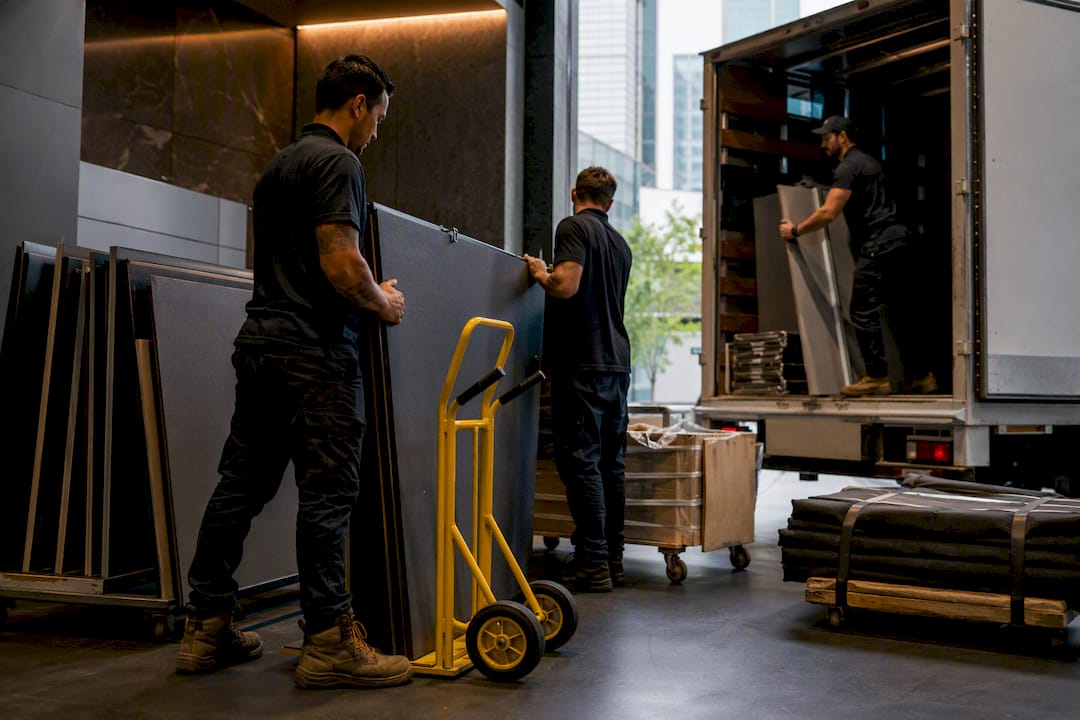
A sustainable office move is a relocation planned around circular economy principles: auditing every asset before you touch it, then routing furniture and equipment into reuse, resale, donation or certified recycling instead of a skip bin. Professional recovery partners now report figures near 87% diversion on well-planned commercial fit-out projects.
TL;DR:
- Achieving diversion rates near 87% requires early planning of asset audits, a detailed asset register, and designated reuse, resale, donation, and recycling partners.
- Conducting a comprehensive site audit with cross-departmental stakeholders ensures accurate condition recording and reduces landfill reliance during move planning.
- Prioritizing reusable packing materials and consolidating loads cuts waste, handling time, and shipment trips, lowering overall carbon emissions.
- Managing e-waste with signed asset transfer logs and certified recyclers prevents data breach risks and guarantees proper disposal.
- Asking partners for verified diversion rates, carbon-neutral disposal options, and certified e-waste recycling is essential for credible sustainability reporting.
Table of Contents
- Quick checklist: immediate actions to run a low-impact move
- Strategic planning and assessment: the site audit and asset register
- Inventory management: reuse, resale and donation pathways
- Packing materials and logistics planning: cutting waste before the truck arrives
- Managing furniture, fit-out items and e-waste responsibly
- Transport and emissions: how to cut moving-related carbon
- Cost, continuity and stakeholder management during the move
- Designing circular fit-outs and meeting disclosure requirements
- Practical execution: a 7-step checklist and what to ask partners
- Short wrap-up and next steps
- Sources
Quick checklist: immediate actions to run a low-impact move
Before you book a single truck, get four things locked in. These decisions in the first 30 to 90 days determine whether your move generates a genuine diversion result or just an efficient trip to landfill.
- Set a measurable diversion target and decide how you’ll report it, tying it to any existing ESG or Scope 3 commitments.
- Appoint a sustainability lead who owns disposition decisions and signs off on every removal.
- Book a site audit early and build an asset register before packing starts.
- Identify reuse, resale, donation and certified recycling partners before the move date, not during it.
Businesses that leave these decisions until moving week almost always default to whatever’s fastest, and fastest is rarely most sustainable. An early asset register lets teams make data-driven disposition choices instead of last-minute landfill calls.
Strategic planning and assessment: the site audit and asset register
The audit should involve facilities management, IT, procurement and your sustainability lead, walking every floor together rather than relying on a spreadsheet built from memory. Record condition, serial numbers, data risk on any device, warranty status and realistic reuse potential for each item.
- Walk the site with all four stakeholders and photograph every asset category.
- Log condition, age, and repair cost against replacement cost for furniture and equipment.
- Flag data-bearing devices separately and note chain-of-custody requirements.
- Set a diversion target, expressed as a percentage of total weight or item count kept out of landfill.
- Use the register to schedule removals in batches, matched to each item’s disposition pathway.
Pro Tip: Photograph every asset with a visible tag number before the audit team leaves each floor. It saves hours later when three different teams are trying to remember which desks were already promised to a charity.
Diversion targets tied to this register also feed directly into Scope 3 disclosure, as fit-out decisions carry real embodied carbon weight.
Inventory management: reuse, resale and donation pathways
Every item on the asset register needs a decision, and the decision should follow condition and cost, not convenience. Ergonomic compliance matters too. A chair that fails current standards shouldn’t go to a charity; it should go to refurbishment or recycling.
- Internal redeployment: move usable furniture to another site or department first, it’s the cheapest and fastest option.
- Charity donation: works well for good-condition desks, chairs and storage that a nonprofit can use immediately.
- Resale marketplaces: recover some capital on higher-value ergonomic chairs, boardroom tables and branded joinery.
- Refurbishment programmes: extend the life of items with wear but structural integrity, such as Living Edge’s Lifecycle and Relive offerings for commercial furniture.
Diversion rates up to 87% are achievable on commercial fit-out recovery projects when these pathways are used systematically, according to Green Furniture Hub. Document every collection with receipts and photographic evidence of pickup. That paper trail is what turns a claimed diversion rate into a defensible ESG reporting figure.
Packing materials and logistics planning: cutting waste before the truck arrives
Cardboard boxes bought new for a one-off move are one of the most avoidable waste streams in any relocation, and they’re also one of the easiest to fix.
- Hire reusable plastic crates instead of buying single-use cardboard, most moving companies offer crate hire as standard.
- Choose recycled-content boxes and compostable tape where crates aren’t practical for irregular items.
- Use refillable void-fill rather than polystyrene chips or single-use bubble wrap.
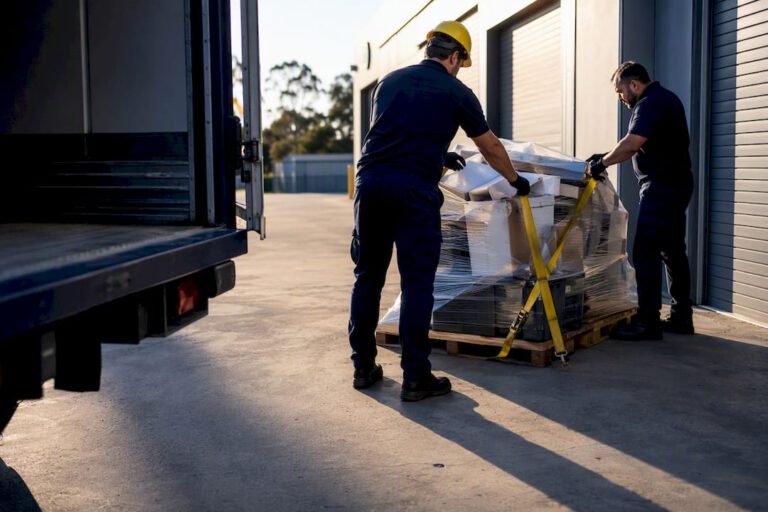
- Palletise heavier equipment and consolidate loads to reduce the number of trips required.
Staging items by floor and disposition pathway before the truck arrives also cuts handling time. Fewer touches means less damage and fewer replacement purchases down the track.
Managing furniture, fit-out items and e-waste responsibly
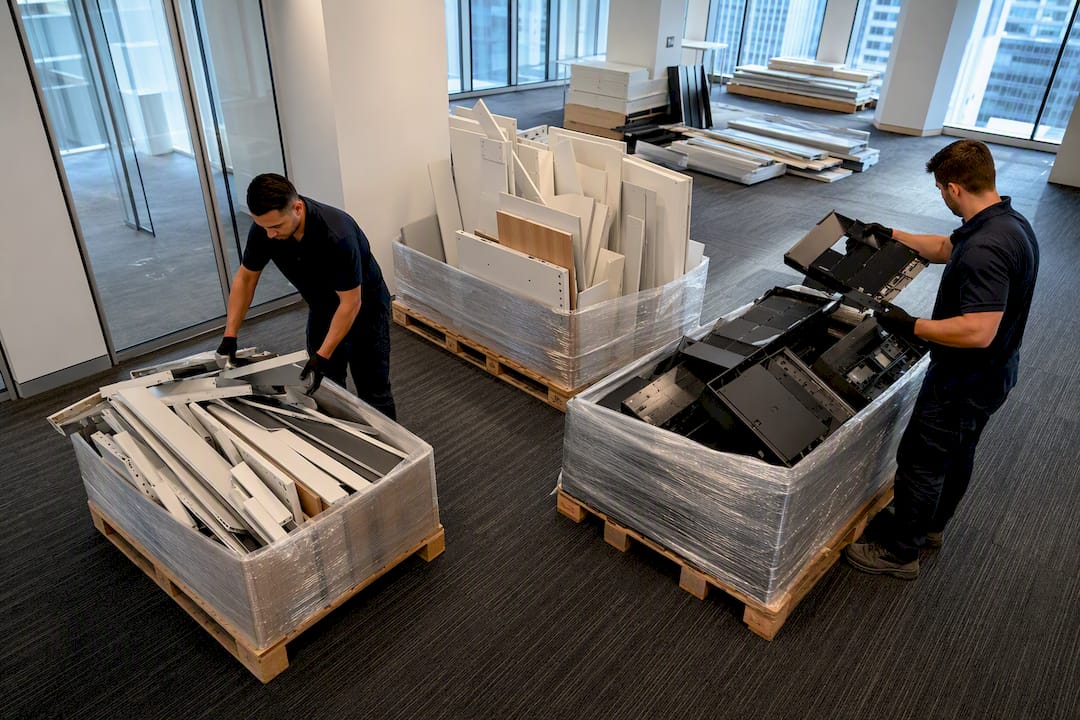
De-fit decisions on joinery and finishes should follow the same hierarchy as furniture: salvage what’s structurally sound, refurbish what’s worn but functional, and demolish only what genuinely can’t be reused. A reception desk with good bones but tired laminate is a refurbishment candidate, not a demolition job.
E-waste needs its own protocol, separate from general furniture disposal, because of data risk.
- Establish a documented chain of custody for every device leaving the building, from desk to certified recycler.
- Use recyclers who can supply written data destruction certificates, not just a verbal assurance.
- Require contract terms that demand diversion evidence and destruction certificates as a condition of payment, not an optional extra.
Pro Tip: Never let IT equipment leave the building without a signed asset transfer log. If a laptop with client data turns up on a resale site six months later, “the removalist took it” won’t hold up.
Transport and emissions: how to cut moving-related carbon
Consolidating loads into fewer, fuller trips is the single biggest lever most businesses have over moving-related emissions, and it costs nothing extra to plan for.
- Combine furniture, e-waste and general waste into consolidated loads instead of separate trips for each category.
- Ask transport providers whether low-emission or electric vehicles are available for your route.
- Plan pickup and delivery routes to avoid peak-hour idling, particularly across Sydney’s CBD.
- Request evidence of vehicle emissions ratings or fleet standards from your provider before booking.
Estimating your move’s carbon footprint doesn’t need to be complicated: total kilometres travelled multiplied by vehicle load gives a rough baseline. If you choose to offset residual emissions, insist on third-party verified credits with transparent reporting, not a vague “carbon neutral” claim with no supporting documentation.
Cost, continuity and stakeholder management during the move
Reuse decisions shift spending from capital purchases to smaller, staggered operating costs, and the savings compound. A refurbished boardroom table costs a fraction of a new one, and donated furniture often qualifies for a tax-deductible receipt.
- Phase the move by department to keep critical functions running during IT cutovers.
- Build contingency time into the schedule for equipment that needs certified data wiping before departure.
- Write diversion evidence and delivery timelines into every removal contract, not just price and date.
Business continuity and sustainability aren’t competing priorities here. A phased move with clear disposition pathways is usually faster to execute than one where decisions get made on the day.
Designing circular fit-outs and meeting disclosure requirements
Circular design treats furniture and joinery as adaptable resources with a second and third life, not disposable items with a single-use lifespan. That means specifying furniture that can be reconfigured, repaired and re-covered rather than replaced outright.
Green Star Fitouts sets a practical framework for lower-waste, adaptable fit-outs, and the guidance matters beyond certification points. Fit-outs are in scope for Scope 3 disclosure from 2026, and a typical commercial fit-out can generate hundreds of tonnes of waste across its lifecycle.
- Specify modular furniture systems that can be reconfigured for future floor plans.
- Consider Furniture-as-a-Service or refurbishment contracts instead of outright purchase.
- Ask suppliers directly what percentage of their fit-out packages use recycled or reclaimed materials.
Circular fit-out strategies like these reduce both waste and embodied carbon while giving procurement teams more flexibility than a straight buy-and-dispose model ever offers.
Practical execution: a 7-step checklist and what to ask partners
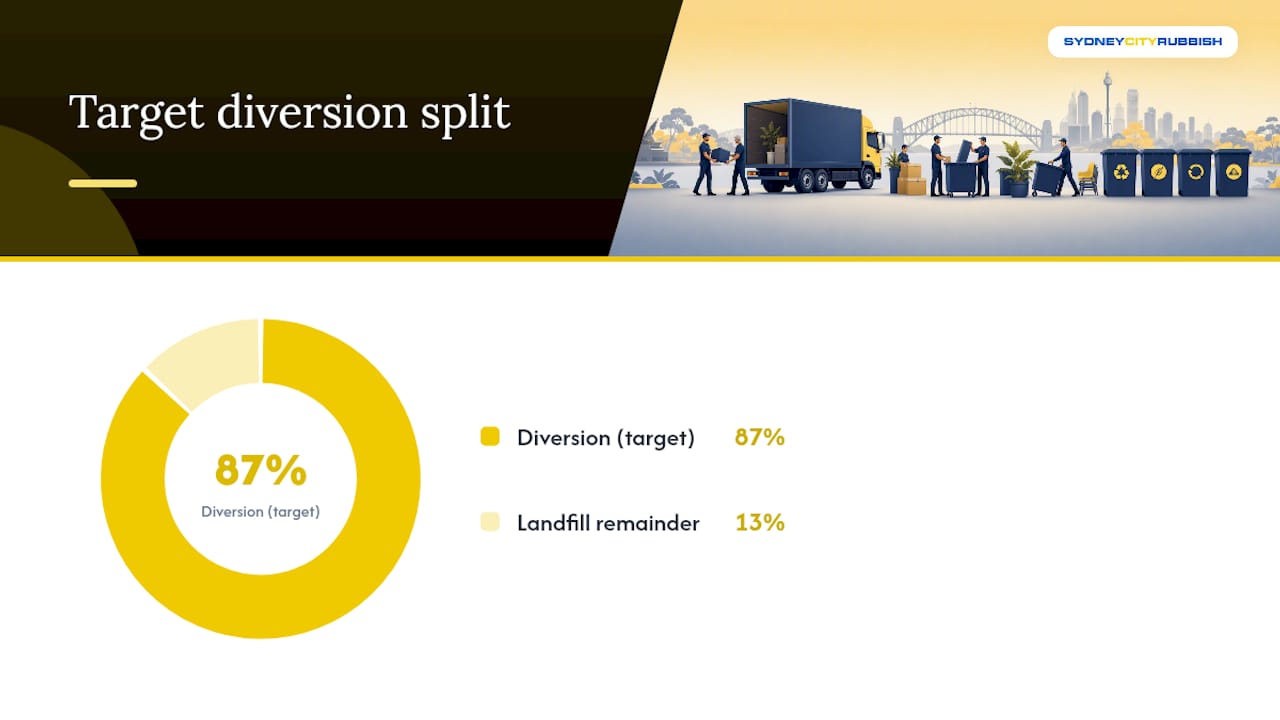
Turn everything above into one sequence: appoint a lead, audit assets, sort by disposition pathway, recover through reuse and resale channels, pack with reusable materials, move in consolidated loads, then report diversion figures against your original target.
Before signing with any removal or recovery partner, ask them directly:
- What’s your typical landfill diversion rate on commercial projects, and can you provide evidence?
- Do you offer carbon-neutral disposal options, and how are they verified?
- Are your e-waste recyclers certified, and will you supply data destruction certificates?
- What insurance covers damage or loss during transport and handling?
Sydney City Rubbish partners with Carbon Neutral to give corporate clients an opt-in carbon-neutral disposal pathway for office relocations, alongside standard removal of furniture, e-waste and construction debris. If you need trucks on-site for a staged clearance, you can hire removal trucks directly, or get a straightforward quote through the Sydney City Rubbish contact page for your next office project.
Short wrap-up and next steps
A sustainable office move works when the asset audit, reuse pathways and e-waste protocols are locked in before the truck is booked.
Sources
- Green Furniture Hub
- Green Star Fitouts — Green Building Council of Australia
- Circular economy office fit-out guide — Pangolin Associates