Retail strip out checklist: prepare, comply, hand over
Before any tool touches your shopfront, do three things: confirm your lease’s make-good scope, locate or produce a schedule of condition with dated photographs, and engage a licensed asbestos or environmental tester if the building’s age suggests risk. In New South Wales, Section 133A of the Conveyancing Act limits a landlord’s recovery to the actual diminution in value, not an inflated wish list. The RICS make-good guidance backs the same sequence.
- Call your leasing solicitor or property manager and pull the make-good clause today.
- Find your original entry photographs, or book a same-week condition survey.
- Ring a licensed asbestos assessor if the fit-out predates 2004 or you’re unsure.
Key Takeaways
A compliant retail strip-out succeeds when the lease review, schedule of condition and hazardous materials testing happen before demolition, not during it.
| Point | Details |
|---|---|
| Start with the lease | Review the make-good clause for scope, caps and timing before booking any contractor. |
| Document condition early | Secure a dated schedule of condition and photographs to rebut inflated claims later. |
| Test before you demolish | Engage a licensed assessor for asbestos or contamination risk ahead of any physical works. |
| Know your statutory limits | NSW’s Section 133A caps recoverable costs at diminution in value, not a wish list of repairs. |
| Book removal early | Sydneycityrubbish provides licensed waste collection, documented disposal and carbon neutral options for Sydney retail strip-outs. |
Table of Contents
- What a proper retail strip out checklist covers before demolition starts
- What order should a retail strip out follow?
- Which hazards and permits can stop a strip out mid-job?
- How do you handle waste and recycling during a strip out?
- How do you keep a strip out site safe and neighbours informed?
- What documents do you need to hand over a completed strip out?
- Quick reference: 10-point retail strip out checklist
- Get help clearing your retail space fast
- Sources
What a proper retail strip out checklist covers before demolition starts
A retail strip out checklist only works if the paperwork comes before the sledgehammer. Rushing straight to demolition without reviewing your lease is the single biggest cause of make-good disputes we see across Sydney’s retail precincts, from Parramatta to the CBD.
Start by assembling every document that defines your obligations: the full registered lease, any fit-out consent or side letters issued when you took occupancy, the original schedule of condition with photographs, approved plans, and records from the previous tenant’s handover if you can get them. Missing even one of these can cost you weeks in negotiation later.
Reading the make-good clause properly means more than skimming it once. Look for the scope of works required, any dollar caps on landlord claims, the notice period, and who bears the cost of items installed under your fit-out consent. Courts often construe ambiguous make-good clauses narrowly, and the conditions attached to your original fit-out approval usually decide whether removal is even required.
Timing matters as much as the paperwork. RICS recommends opening dialogue with your landlord or strata manager six to twelve months before lease expiry, which gives you room for approvals, hazardous materials testing, contractor procurement, and a few contingency days if something goes wrong.
Before you engage anyone, get itemised cost estimates in writing, confirm each contractor holds current insurance and a site-specific SWMS, and appoint a single site supervisor to keep licensed trades coordinated.
- Registered lease, fit-out consent and schedule of condition, gathered in one folder.
- Make-good clause reviewed for scope, caps, timing and payment responsibility.
- Landlord or strata notified 6 to 12 months before expiry.
- Written, itemised quotes and current SWMS collected from every contractor.
Pro Tip: Photograph every wall, floor and fixture the day you get the keys back from your fit-out, not the day before you hand them over. A dated schedule of condition is your strongest evidence if a landlord’s claim later looks inflated.
What order should a retail strip out follow?
The physical works follow a logical sequence, and skipping steps almost always costs more later. For a typical 150 to 300 square metre tenancy, a thorough strip-out runs three to ten working days, longer if asbestos testing or contamination turns up mid-job.
- Inspect the site with your contractor and, where relevant, a hazardous materials consultant before anything is touched.
- Isolate utilities — power, gas, water and data — under licensed supervision.
- Remove fixtures and joinery: shelving, racking, counters, partitions and signage.
- Strip floors and ceilings, including old flooring adhesives, ceiling tiles and lighting rigs.
- Complete remedial repairs flagged by the inspection.
- Final clean to the standard your schedule of condition documents.
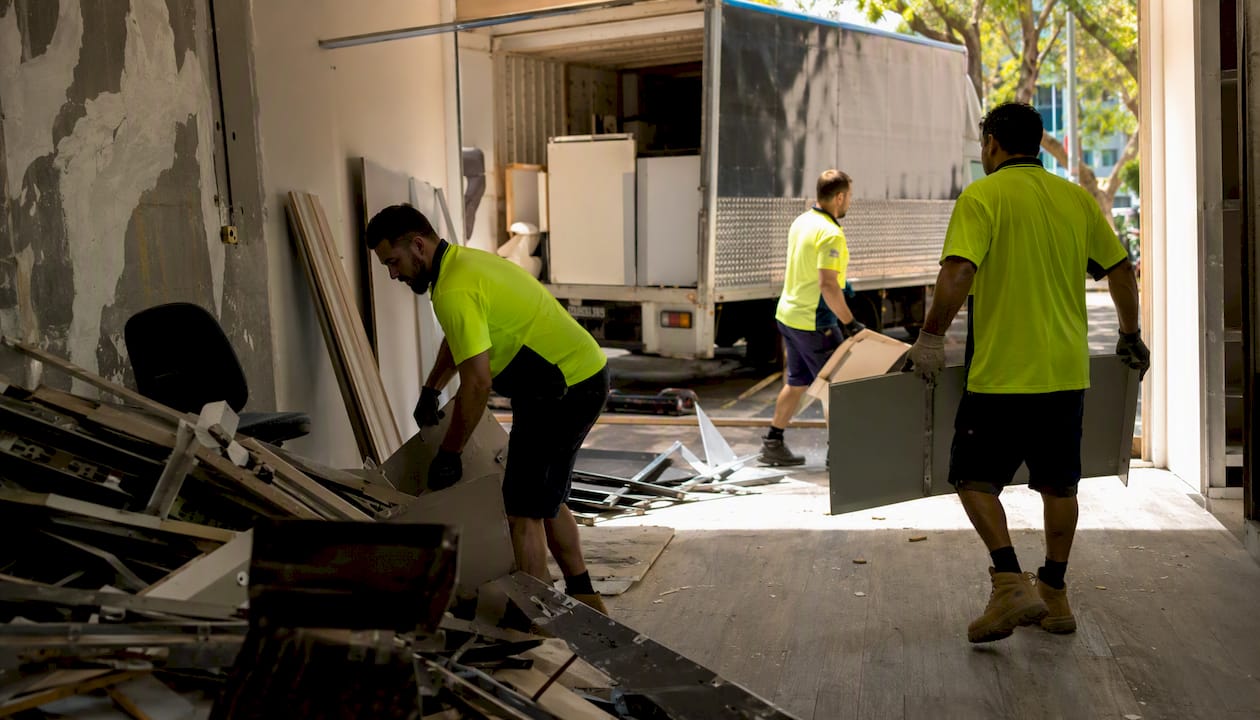
Typical removal items include warehouse racking and retail shelving, joinery and partitions, floor finishes and adhesives, lighting rigs, obsolete cabling, signage, and any refrigeration or plant equipment left behind by the outgoing fit-out.
Each stage needs the right trade attached to it. Licensed electricians handle isolation and rewiring, asbestos removalists manage anything flagged during testing, demolition crews handle structural stripping, and a waste contractor clears debris as it accumulates rather than letting it pile up. Your site supervisor should sign off each stage before the next one starts, and SWMS documents should be visible on site throughout.
- Verify your fit-out consent before removing anything structural or specialised.
- Many fixtures installed under a fit-out consent remain the tenant’s responsibility, not the landlord’s default property.
- Some improvements can stay in place with landlord agreement, saving reinstatement cost entirely.
Pro Tip: Checking your original fit-out approval before demolition often reveals that a mezzanine, shopfront or specialised plant item was never required to come out at all. Tenants routinely over-strip and pay for demolition and reinstatement they didn’t need to do.
Which hazards and permits can stop a strip out mid-job?
Retail strip-outs regularly uncover asbestos in old flooring adhesives, ceiling tiles or fire-rated panels, along with mercury-containing lights, flammable liquids, e-waste, contaminated adhesives and refrigerants that all need specific handling. None of these are optional extras. They’re the reason a strip-out that looked like a five-day job can stretch to two weeks.
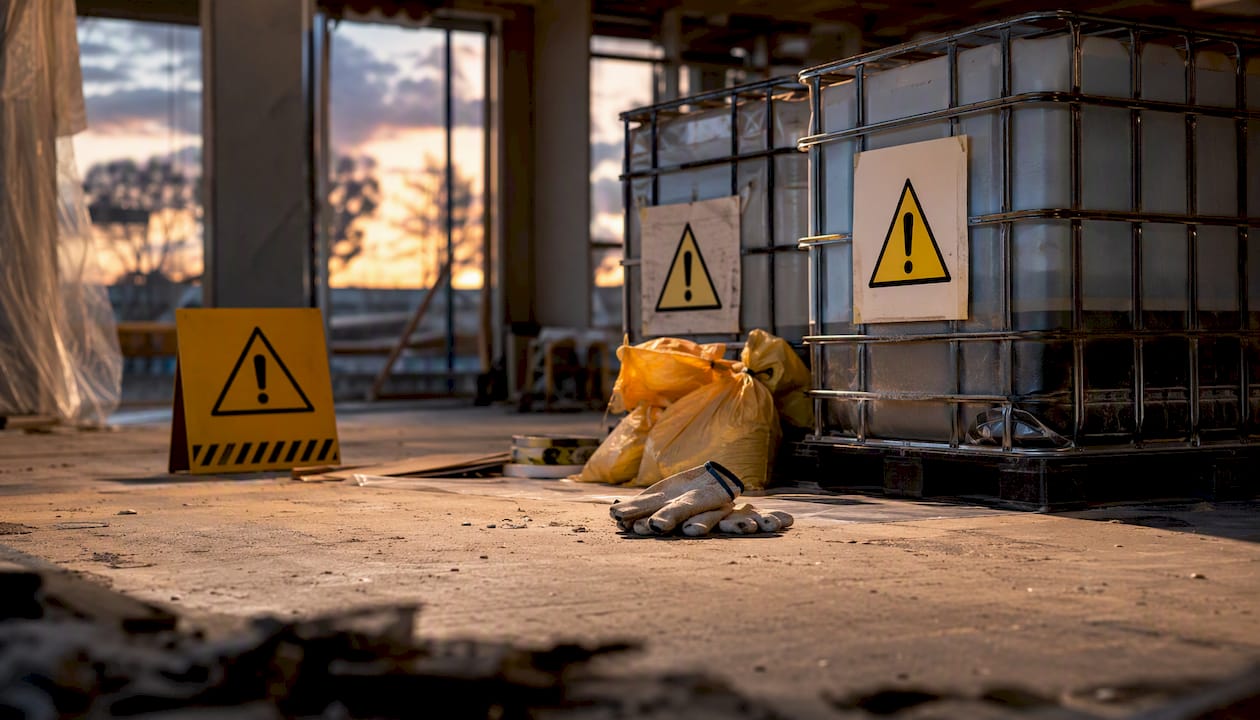
Certain works legally require licensed operators: asbestos removal, electrical isolation and rewiring, and any gas or refrigeration disconnection. Every contractor on site should be working to a site-specific SWMS, and you should hold copies of their current licences before work starts, not chase them afterwards.
If a state variable comes into play, know it changes your position. Section 133A of the NSW Conveyancing Act caps recoverable make-good costs at the actual diminution in the property’s value, meaning a landlord can’t claim more than the real loss in value even if the reinstatement scope looks larger on paper. Other jurisdictions, including Queensland’s retail shop lease framework, apply different statutory caps, which is exactly why early legal review pays for itself.
- Test before you demolish anything in a pre-2004 fit-out.
- Confirm licences for asbestos, electrical and refrigeration trades before booking.
- Document diminution in value if you’re disputing a landlord’s claim.
Pro Tip: A positive asbestos result should pause work immediately, not just the affected area. Build a testing holdback of at least two to three days into your programme so a positive result doesn’t blow out your whole timeline.
How do you handle waste and recycling during a strip out?
Waste segregation on site is what separates a compliant strip-out from an expensive cleanup later. Dedicated skips for general demolition debris, separate containers for e-waste, and licensed carriers for anything hazardous keep your paper trail clean and your costs predictable. Asbestos and e-waste both need a documented chain of custody from the moment they leave the building.
Recycling isn’t just good practice, it reduces your landfill bill. Reclaimable shelving, timber and metal fixtures, and carpet tile take-back schemes can all cut what actually goes to tip, provided your contractor issues certified transfer notes for each load.
Keep every tipping docket, waste manifest and disposal certificate together for your handover pack. If a hazardous load turns up unexpectedly, your truck count and disposal cost will shift, so build a contingency line into your budget rather than treating it as a surprise.
- Segregate waste streams from day one, not at the end of the job.
- Use licensed carriers with documented custody for asbestos and e-waste.
- Keep tipping dockets and manifests together for the final handover pack.
Pro Tip: Ask your waste contractor for carbon neutral disposal options upfront. It often costs no more than standard disposal and gives you a sustainability line for your own reporting.
How do you keep a strip out site safe and neighbours informed?
A site safety plan needs PPE requirements, visible SWMS, clearly marked exclusion zones, and permits for any hot works or confined space entry. Loading dock bookings, service lift coordination and defined noise windows keep disruption to adjacent tenancies manageable, particularly in shared centres where deliveries and rubbish removal need scheduled slots.
Communication matters just as much as the physical safety measures. Notify neighbouring tenants before work starts, keep the building manager in the loop daily, and nominate one person as the single point of contact for out-of-hours issues.
- PPE and SWMS visible on site at all times.
- Loading dock and service lift bookings confirmed before day one.
- One nominated communications lead for tenants and building management.
Pro Tip: Build two or three holdback days into your programme for testing results. A protocol for unexpected findings, with a clear escalation path to the landlord or strata committee, stops small surprises from becoming week-long delays.
What documents do you need to hand over a completed strip out?
Closing out a strip-out properly means producing a final schedule (styled on the RICS Scott schedule format), itemised costs and receipts, photographic evidence, waste dockets, trade licences and certificates, and signed release forms from every contractor.
- Conduct a pre-handover inspection with the landlord or agent.
- Work through any rectification list before final sign-off.
- Verify the final clean against your schedule of condition.
- Agree a formal deed or settlement if both parties accept the final costs.
Your original schedule of condition and dated photographs are what rebut an inflated make-good claim, since they establish the actual standard you’re required to return the space to.
- Keep originals with your solicitor or property manager, not scattered across email threads.
- Retain records for at least six years given standard limitation periods on lease disputes.
Quick reference: 10-point retail strip out checklist
- Lease and make-good clause reviewed (tenant/solicitor).
- Schedule of condition with dated photos secured (tenant).
- Asbestos and hazardous materials tested (licensed assessor).
- Utilities isolated by licensed trades (contractor).
- All contractor licences and SWMS collected (site supervisor).
- Waste segregated and licensed carriers booked (contractor).
- Recycling and disposal dockets tracked (contractor).
- Neighbours and building manager notified (property manager).
- Final inspection completed with rectification list (all parties).
- Full documentation retained for handover pack (tenant/solicitor).
- Print this list, note dates and responsible role beside each item.
- Add signature lines for tenant and property manager before filing.
Get help clearing your retail space fast
Working through a make-good checklist is one thing. Clearing a stripped-out retail tenancy on a tight lease deadline is another problem entirely, and it’s where Sydneycityrubbish does the heavy lifting. Sydneycityrubbish handles the removal side of your strip-out: rubbish and demolition debris collection, licensed disposal with documented dockets for your handover pack, and truck and driver hire so you’re not waiting on availability during your final week.
Every load is tracked, and clients can opt into carbon neutral disposal through Sydneycityrubbish’s partnership with Carbon Neutral, giving you a sustainability record alongside your compliance paperwork. Coverage spans Sydney CBD, Parramatta, Ryde and Greater Western Sydney, so local turnaround stays fast even during peak lease-expiry periods.
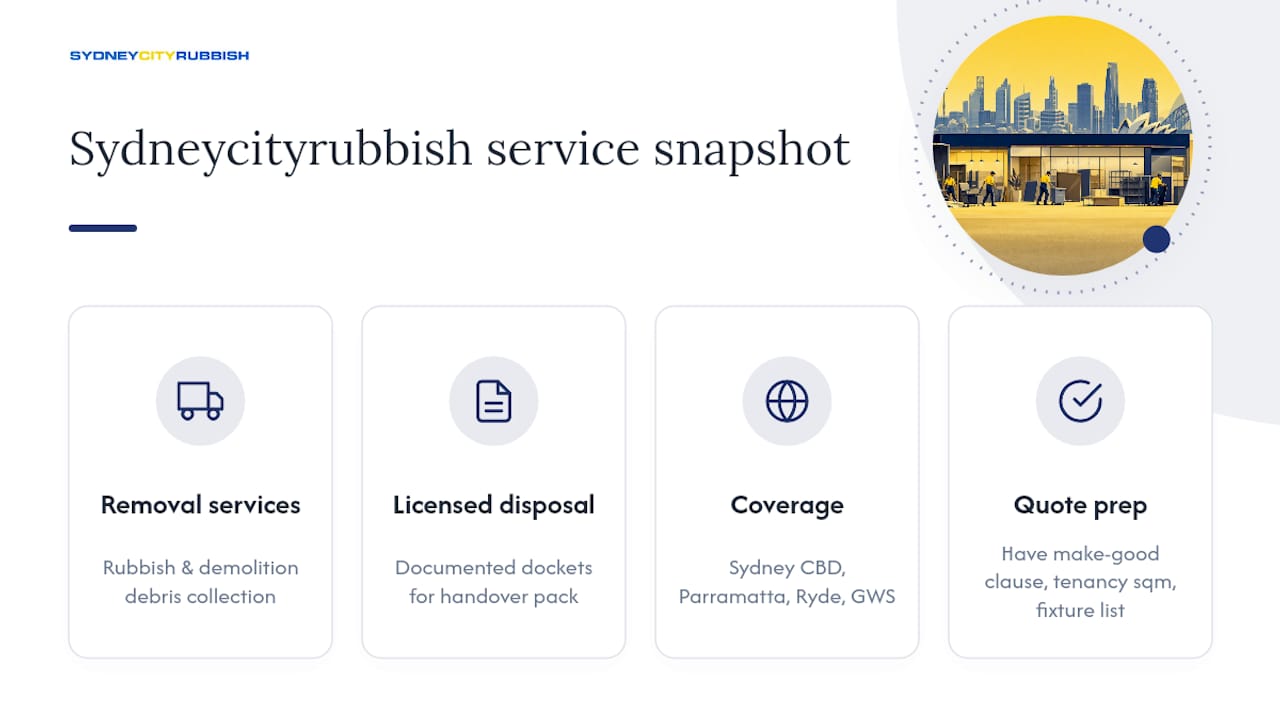
Before you request a quote, have your make-good clause, tenancy area in square metres, and a rough list of fixture types ready. It speeds up the estimate and gets your truck booked in against your actual deadline.
Sources
- Make good Australia (RICS) — 3rd edition (October 2023)
- Make Good Obligations in NSW Commercial Leases: What Landlords and Tenants Need to Know – Jake McKinley
- Retail site strip‑out: the first step to fit‑outs — Shopfitters Melbourne
- What do landlords and tenants need to know about make good obligations in commercial leases? — Mondaq
Get legal advice before signing off on any contested make-good clause. Statutory limits vary by state, and a solicitor familiar with retail leases will read your specific clause more reliably than any generic checklist.