FOGO Mandates Start July 2026: Parramatta Commercial Waste Rules
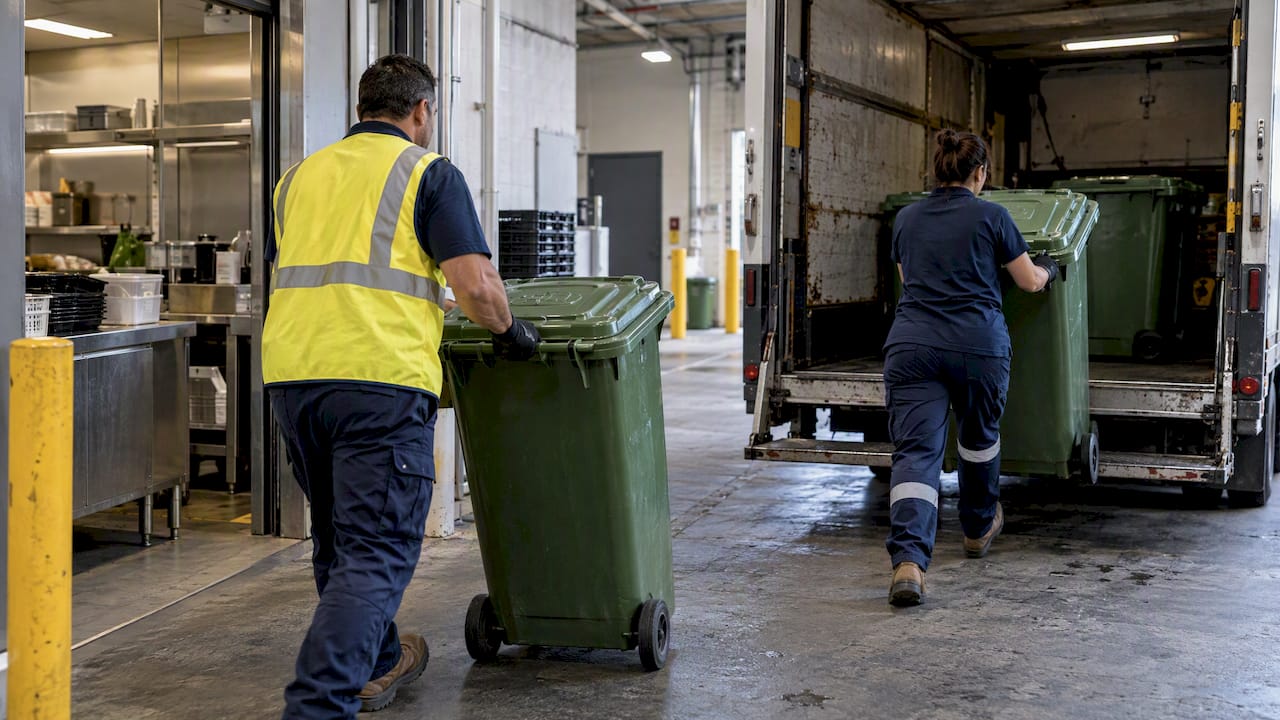
Whether a Parramatta business must separate food waste depends on NSW FOGO thresholds tied to weekly residual bin capacity. Staged mandates begin on 1 July 2026, and premises that meet the threshold must arrange weekly source-separated food-organics collection. If that sounds like your site, the next step is simple: audit your weekly residual capacity and contact Council or a private provider to set up the service.
TL;DR:
- Use EPA guidance to convert 240 litre and 660 litre red bins into weekly capacity, then identify who controls the waste contract.
- Council offers 140 litre and 240 litre garbage bins, but recycling is collected fortnightly, and each bin has a 70 kilogram limit.
- Use Parramatta’s Community Recycling Centre for occasional bulky recyclables or green waste; hazardous materials and large construction loads require a licensed private contractor.
- Book a waste contract review at least two months before your threshold date, and retain invoices and service records as compliance evidence.
- A skip on the road reserve generally needs Council approval, and urgent permit applications must arrive before 9 AM on the prior business day.
Table of Contents
- Local options: who to call for scheduled collection or drop-off
- City of Parramatta commercial waste rules: bins, frequency and applications
- NSW FOGO business mandates: thresholds, dates and who is captured
- Step-by-step compliance checklist for Parramatta businesses
- Permits for skips and kerbside containers in Parramatta
- Where to drop bulky items, and when to call a specialist
- How we support Parramatta businesses through FOGO compliance
- FAQ
- Sources
Local options: who to call for scheduled collection or drop-off
Parramatta businesses generally choose between a private commercial contractor and Council’s own drop-off facility, depending on volume and material type. A private contractor suits sites needing frequent scheduled collections, skips or strip-out removals, while a Council drop-off point works for smaller loads of bulky recyclables or green waste that do not fit a weekly bin service.
| Provider | Google rating | Core services | Best for |
|---|---|---|---|
| Sydney City Rubbish Removal | 4.9★ (204 reviews) | Scheduled FOGO and general collections, ad-hoc commercial removals, site strip-outs | Businesses needing scheduled collections, ad-hoc removals and strip-outs in Parramatta |
| Community Recycling Centre (City of Parramatta) | 4.7★ (26 reviews) | Drop-off for bulky recyclables and green waste | Small businesses with occasional bulky or recyclable drop-off needs |
| Community Recycling Centre | 4.7★ (26 reviews) | Drop-off for recyclables and green waste | Businesses without a regular bulky-waste collection arrangement |
A few points worth checking before you commit to either route:
- Confirm whether bin supply and liners are included in a contractor’s quote, since some agreements charge these separately.
- Ask whether the provider can commit to a fixed weekly collection day, which matters once FOGO thresholds apply.
- Check the Community Recycling Centre page for current drop-off hours before loading a vehicle for a trip.
Council facilities work well for occasional drop-offs, but most commercial operations with daily or weekly volumes will still need a contracted collection service running alongside them.
City of Parramatta commercial waste rules: bins, frequency and applications
Council supplies commercial garbage bins in common sizes of 140 litres and 240 litres, with garbage collected anywhere from weekly up to six times a week depending on need. Recycling collection runs on a fortnightly cycle regardless of how often garbage is picked up.
Operational rules apply to every commercial bin on a Council service, and they are worth knowing before your first collection day:
- Bins go out the evening before collection and must be brought back in within 24 hours of pickup.
- Each bin carries a 70 kilogram weight limit, so dense waste such as masonry or wet food scraps needs separate handling.
- Bins cannot sit in public places outside collection windows without prior Council approval.
- A written application from the property owner or strata manager is required to start, change or cancel a commercial service.
Service availability through Council is not guaranteed for every address, and Council’s commercial waste page notes that requests are assessed case by case. If your premises sits within a strata-managed building, the strata manager typically lodges the application on behalf of all tenants, so check who holds that responsibility before assuming you can apply directly. Businesses outgrowing Council’s bin sizes or collection frequency usually move to a private contractor that can scale with higher volumes or construction-related loads.
NSW FOGO business mandates: thresholds, dates and who is captured
The NSW FOGO mandate rolls out in stages between 2026 and 2030, and each stage lowers the weekly residual waste threshold that triggers compliance. From 1 July 2026, the earliest cohort of very large food waste generators must arrange weekly source-separated food-organics collection, with further thresholds taking effect through 2028 and into 2030 as the rollout widens to capture smaller premises.
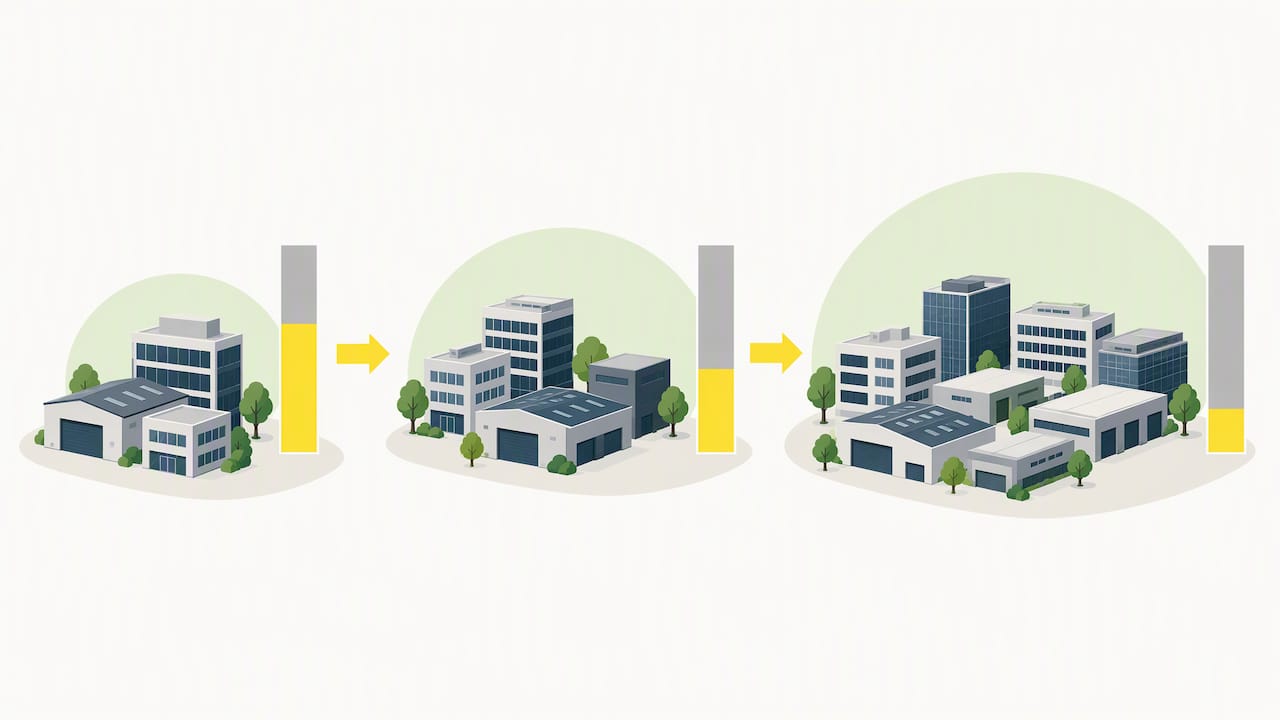
The mandate requires weekly source-separated food-organics collection for captured businesses from 1 July 2026, a frequency set to limit odour and maximise recovery of organic material.
Premises typically in scope include:
- Supermarkets and large grocery retailers generating consistent food waste volumes.
- Hospitality venues such as cafes, restaurants and function centres.
- Educational and health facilities with on-site catering or kitchens.
- Institutional sites with centralised food preparation.
To check where your business sits, convert your current bin mix into weekly volume equivalents using EPA guidance on business mandates, which explains how to translate 240 litre and 660 litre bin counts into the residual capacity figures used for threshold tests. Enforcement sits with local councils for most commercial premises, with the EPA overseeing larger institutional and government sites, and penalties apply for confirmed non-compliance once a premises is captured.
Step-by-step compliance checklist for Parramatta businesses
Getting ahead of the FOGO deadlines is mostly a matter of measuring correctly and locking in a contract before the compliance date arrives, not after.
- Measure your current weekly residual waste by adding up every red-lid bin collection under your contract, then convert that total into 240 litre or 660 litre equivalents.
- Confirm who holds contractual responsibility for your waste service: the property owner, the body corporate or the tenant, since EPA guidance places compliance duty on whoever manages the contract.
- If your premises meets the threshold, arrange weekly source-separated food-organics collection, choose a bin size suited to your kitchen volume and fit caddy liners.
- Label bins clearly and run a short staff briefing so food scraps land in the correct bin from day one.
- Keep collection invoices and service records as evidence of compliance, and review your waste contract well before your threshold date arrives rather than waiting for a Council notice.
Our guidance on immediate steps for Parramatta business waste walks through the audit step in more detail if you are unsure where to start.
Pro Tip: Book your contract review at least two months before your threshold date, since bin and vehicle availability tightens as the compliance deadline approaches.
Permits for skips and kerbside containers in Parramatta
Placing a skip or waste container on the road reserve, rather than entirely within your property boundary, generally requires a permit from Council, and larger or longer-term placements may need a Road Occupancy Licence. Applications are lodged through Council’s road reserve page, which also covers fees and insurance requirements tied to the permit.
A few practical points to factor into your timing:
- Urgent applications must be submitted before 9am on the business day prior to placement.
- Standard lead times are longer, so apply well ahead of a strip-out or demolition start date.
- Coordinate kerbside presentation with your strata or building manager if the container affects shared access or parking.
- Secure the container site properly. Our partner’s guide to construction site storage covers practical ways to cut theft and rehandling on active sites.
Where to drop bulky items, and when to call a specialist
Parramatta’s Community Recycling Centre in North Parramatta accepts bulky recyclables and green waste, making it a practical option for materials your weekly bin service will not take. It suits small, infrequent drop-offs rather than ongoing commercial volumes.
For hazardous materials, clinical waste or large construction loads, a private contractor is the appropriate route since Council’s facilities are not set up to handle these categories. Our office cleanout cost guide for Parramatta includes EPA compliance notes relevant to strata managers handling ad-hoc removals.
- Missed collections, stolen bins or requests for extra bins go through Council’s commercial waste contact line.
- Hazardous or construction debris should go to a licensed contractor, not the Community Recycling Centre.
How we support Parramatta businesses through FOGO compliance
Scheduled commercial rubbish removal, food-waste collection and construction strip-out services are available for Parramatta businesses working through FOGO compliance. A Quick Quote system provides a fast price for scheduled collections or one-off removals, with direct coordination offered with building and strata managers to simplify access and scheduling. A carbon-neutral disposal opt-in is available through a partnership with Carbon Neutral, for businesses seeking sustainability commitments alongside compliance in their waste contracts.
If your weekly residual volumes are approaching a FOGO threshold, assistance with bin sizing and collection frequency is available rather than guessing from a bin chart. Practical next steps:
- Request a Quick Quote for scheduled or ad-hoc commercial removal.
- Book a review of your current commercial rubbish removal contract ahead of your threshold date.
- Call to discuss food waste removal scheduling for your kitchen or hospitality site.
FAQ
Where can I dispose of my waste in Parramatta?
Parramatta businesses can use a scheduled commercial collection through Council or a private contractor for regular waste, and the Community Recycling Centre in North Parramatta for bulky recyclables and green waste drop-offs. Hazardous materials and large construction loads need a licensed private contractor rather than a Council facility.
What is the maximum height allowed for retaining walls in Parramatta City Council?
Retaining wall height limits fall under Council’s development control provisions rather than its commercial waste rules, and the applicable limit depends on the specific zoning and site conditions for your property. Contact Council’s development team directly for the figure that applies to your address, since no single height applies across every zone.
What is the current legislation in Australia regarding waste management?
NSW’s current commercial waste framework centres on the staged FOGO business mandates rolling out from 1 July 2026 through 2030, which require captured businesses to separate food organics for weekly collection. Local councils, including City of Parramatta, enforce the rules for most commercial premises, while the EPA oversees larger institutional sites.
What can you put in a recycle bin in NSW?
Standard NSW recycling bins generally accept paper, cardboard, glass bottles and jars, rigid plastics and metal cans, though exact accepted items can vary slightly between council areas. Items such as food waste, soft plastics, textiles and electronics belong in separate streams, including food-organics collections or a Community Recycling Centre drop-off.