Office Strip Out Timeline: Facility Managers’ Plan for 5 Day Asbestos
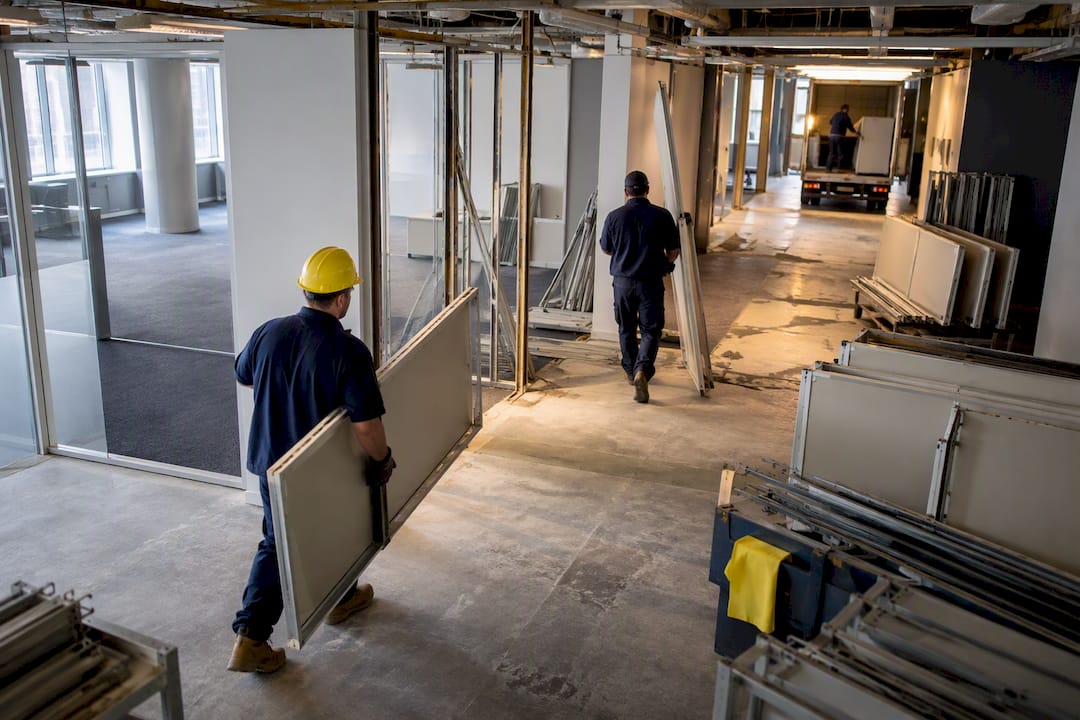
A small suite strip out typically completes within a few working days, a medium tenancy usually takes around one to several weeks, and a large multi-floor project may extend over multiple weeks or longer. The real variable isn’t demolition speed. It’s the gating items: asbestos identification and the five-day SafeWork NSW notification window, building manager approvals and freight bookings, and how much waste has to move through a compliant disposal chain. Below is the week-by-week sequencing and pre-start checklist that determines which end of those bands your project lands on.
TL;DR:
- The presence of asbestos and building-specific booking windows are major factors that can extend project timelines, especially with delays caused by late notifications or restrictions.
- Securing approvals such as lease make-good clauses, freight bookings, and asbestos notifications must happen early, as these have fixed lead times that can cause major schedule setbacks if delayed.
- Phased, zone-based planning allows large projects to stagger noise and freight demands, reducing overall duration and minimizing disruptions across multiple weeks.
- Waste disposal evidence and asbestos clearance certificates are critical for handover and should be collected and verified before demolition completion to prevent delays.
- Using a single supplier for demolition, waste, and hazardous removal streamlines coordination, shortens mobilisation, and ensures consistent disposal documentation throughout the project.
Table of Contents
- Office strip out timeline by project size
- What has to be locked in before you set a start date?
- How is a strip out actually sequenced week by week?
- How do you plan for lawful waste disposal and asbestos compliance?
- How do you get mobilisation and site logistics right?
- What does handover and make-good actually require?
- What are the most common causes of delay?
- How a single-supplier partner tightens the schedule
- Get your dates and freight windows locked in early
- Sources
- FAQ
Office strip out timeline by project size
The office strip out timeline splits roughly into three bands, and the difference between them isn’t just floor area. It’s how many gating approvals stack up before a single wall comes down.
Small suites (under roughly 300 square metres, one or two rooms of joinery and standard ceiling grid) generally strip out in 2 to 5 working days. Most of this work happens after hours or overnight if the building is occupied, because the noisy phases (partition demolition, floor grinding) get scheduled outside the building’s approved hours. Daytime work is often limited to quieter tasks like furniture removal, cabling disconnection, and final waste loadout.
Medium tenancies (a full floor or several hundred square metres with a kitchenette, meeting rooms and mixed floor finishes) typically need 1 to 3 weeks. This band is where multi-night demolition runs into daytime remediation work, such as patching slab penetrations or making good service risers, and where a waste management plan starts earning its keep because multiple material streams are moving simultaneously.
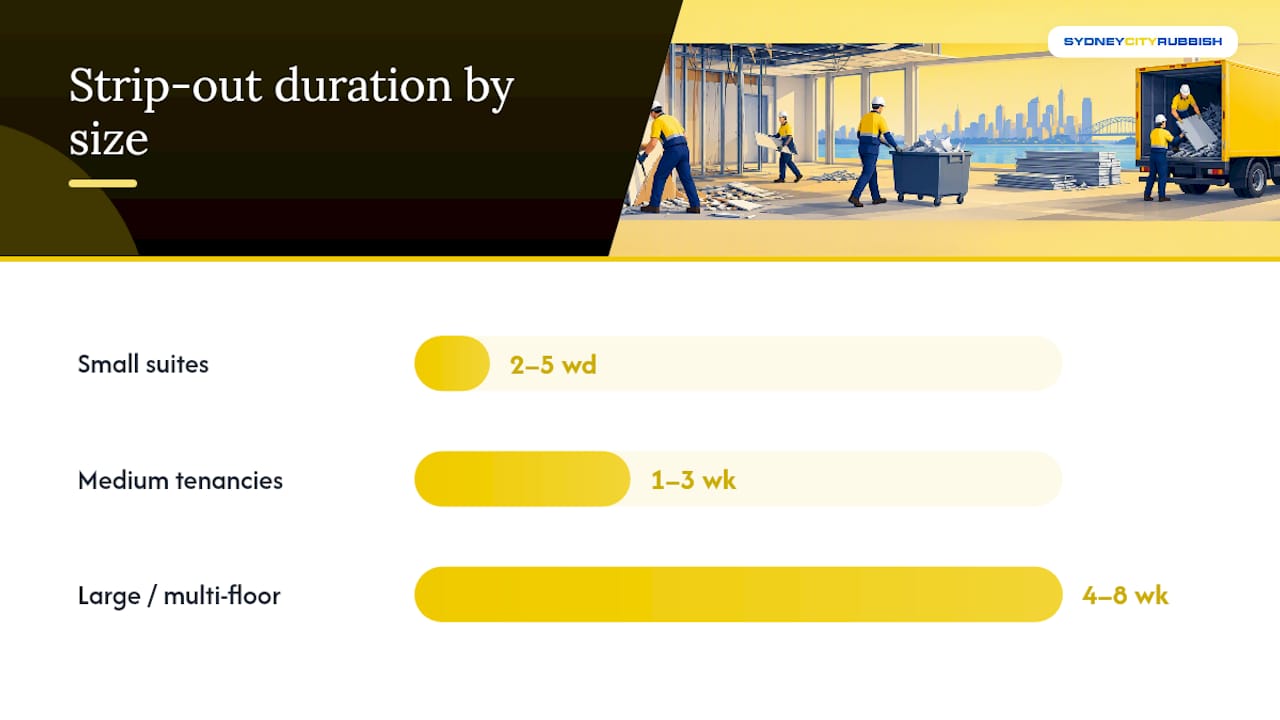
Large or multi-floor projects stretch to 4 to 8 weeks, sometimes longer, and are usually run as a phased programme rather than a single continuous strip. Phasing allows a building to stay partially occupied, staggers freight-window demand, and gives licensed asbestos removal its own clear runway ahead of general demolition.
What actually moves a project from the low end of its band to the high end:
- Asbestos presence and extent. Any friable material, or more than 10 square metres of bonded asbestos, triggers a mandatory five-calendar-day notification to SafeWork NSW before removal can start, and that clock runs before demolition crews mobilise.
- Building rules and booking windows. A building manager who only releases the goods lift for two-hour blocks, three days a week, can add a week to a schedule that would otherwise run in three days.
- Scope creep from hidden conditions. Ceiling voids with unexpected services, or floor finishes glued down in ways the original survey missed, both add days once the ceiling or carpet is actually opened up.
- Waste volume and vehicle access. A site with no dock access and a narrow lift means smaller loads, more trips, and a longer loadout tail at the end of each work night.
If your project sits near the boundary of one of these bands, treat the higher figure as your working assumption and revisit it once the pre-start checklist below is complete.
What has to be locked in before you set a start date?
Setting a start date before these items are confirmed is the single most common cause of schedule blowout on office strip out projects, according to practitioner sequencing guidance that places landlord and statutory approvals ahead of any physical works in the sequence. Fix these before you commit a date to your project plan:
- Lease make-good obligations, in writing. Get the exact clause wording on what must be reinstated versus what can be left, and get any agreed variations from the landlord in writing, not verbally. Ambiguity here causes rework late in the project, when there’s no slack left to absorb it.
- Building manager rules and documentation. Confirm approved working hours, required certificate of currency (COI) for public liability, mandatory site inductions, and any building-specific safety requirements before you book a single contractor.
- Freight and goods-lift booking windows. Most CBD towers require bookings weeks in advance, and the busiest buildings allocate slots on a first-come basis. Book this the moment your scope is confirmed, not once demolition is ready to start.
- Insurance, SWMS and contractor inductions. Every contractor on site needs current insurance, a project-specific Safe Work Method Statement, and to complete the building’s induction process, which itself may take several days to schedule.
- Asbestos register review. Check the building’s asbestos register against the strip out scope before you assume a clean site. If the register is outdated or incomplete, budget time for a pre-start survey, because investigating hazards early is far cheaper on the schedule than discovering asbestos after a ceiling is already open.
Freight-window bookings and asbestos notification sit squarely on the critical path. Everything else can usually run in parallel, but these two items have fixed lead times that no amount of contractor capacity can shorten.
Pro Tip: Ask your building manager for their freight booking calendar before you finalise your contractor’s start date, not after. Some buildings only release booking slots one month ahead, and a mismatch here is the most common reason a confirmed contractor sits idle for a week.
How is a strip out actually sequenced week by week?
Demolition planning that identifies hazards and controls risk before physical work begins is a standard expectation under Safe Work Australia’s demolition guidance, and it shapes the order every competent crew follows. The sequence itself rarely changes regardless of project size. What changes is how many weeks each stage takes.
- Site inspection and scope confirmation, including a walk-through against the asbestos register.
- Statutory and building approvals finalised, including the SafeWork NSW notification if licensed asbestos removal applies.
- Services isolation (power, data, fire, HVAC) coordinated with building management.
- Hazardous material removal, where identified, completed before general demolition begins.
- Ceiling grid and tiles removed, run in parallel with above ceiling services stripout.
- Partitions, joinery and fixed furniture demolished.
- Floor finishes lifted and, where required, floors ground back to base slab.
- Waste removed and documented against the waste management plan.
- Final patch, clean, inspection and handover.
This is consistent with the sequencing that defit and demolition specialists apply when a strip out has to hand a clean floor plate to an incoming tenant’s fitout crew, and it’s worth copying directly into your own project plan.
A small suite (2 to 5 days) might run: night one for services isolation and hazardous material checks; nights two and three for partition demolition and ceiling strip; night four for floor finish removal; day five for waste loadout and a final clean.
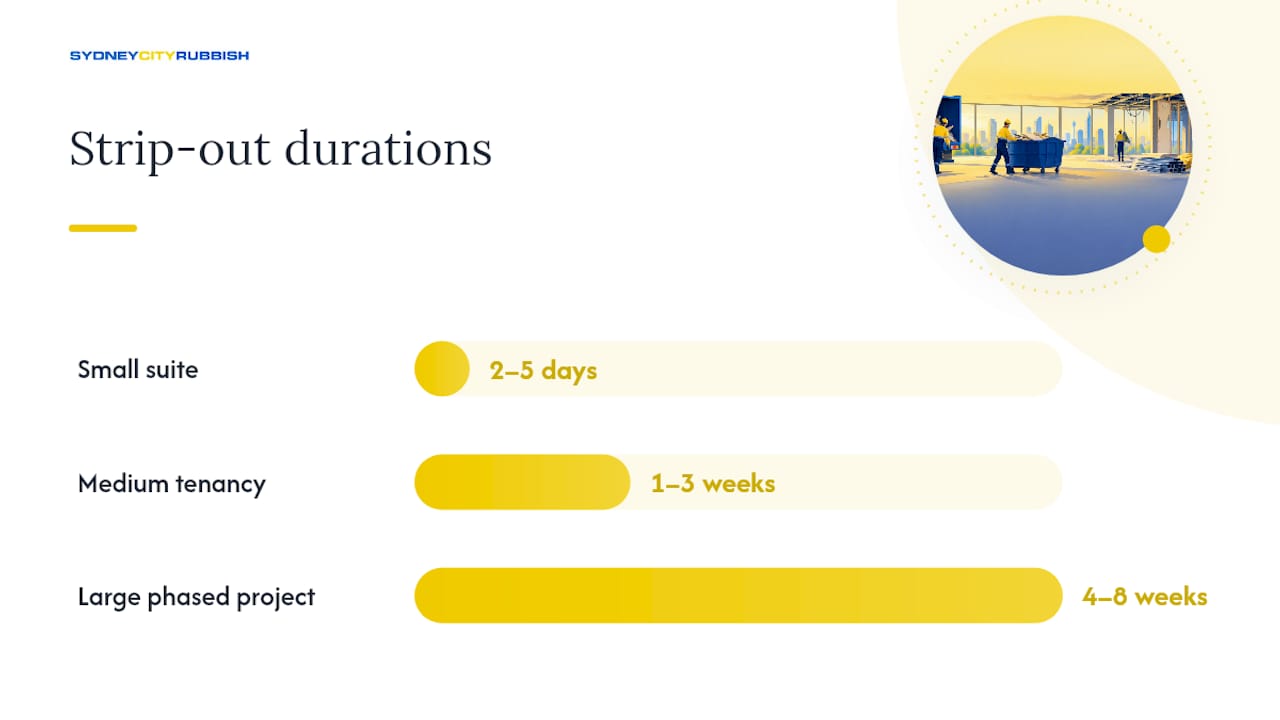
A medium tenancy (1 to 3 weeks) typically front-loads asbestos removal and notification into week one, runs ceiling and partition demolition across week two, often in parallel workstreams on different zones of the floor, then finishes floor grinding, waste removal and make-good in week three.
A large phased project (4 to 8 weeks) breaks the floor plate into zones and staggers the same sequence across each, so freight demand and noisy work don’t collide across the whole building at once. Mobilisation, SWMS sign-off and contractor inductions get locked in per zone, roughly a week ahead of that zone’s demolition start.
The task most commonly scheduled overnight is anything generating noise or dust: partition demolition, floor grinding, and jackhammering. Daytime slots, where the building allows them, usually go to quieter remediation work like patching, painting and final inspections.
How do you plan for lawful waste disposal and asbestos compliance?
Waste and asbestos compliance aren’t paperwork exercises tacked onto the end of a project. They’re scheduling constraints that determine when work can legally start and how fast waste can move off site.
If your pre-start survey identifies more than 10 square metres of bonded asbestos, or any friable material, licensed removal must be notified to SafeWork NSW at least five calendar days before work begins. That five-day window sits before your demolition crew can touch the affected area, so it needs to be lodged the moment your survey confirms the scope, not once your contractor is standing on site ready to start.
SafeWork NSW’s notification requirement mandates a fixed calendar notification period from lodgement to permitted start, regardless of project size or urgency.
A proper waste management plan covers more than a skip bin booking. The NSW EPA requires construction and demolition waste to go to a facility that can lawfully accept it, and both the building owner and the transporter carry responsibility for proving that happened. A solid waste management plan sets out:
- Which material streams are being separated (general waste, timber, metals, plasterboard, hazardous material).
- Which receival facility each stream goes to, and confirmation that facility holds a current environment protection licence or development consent.
- Weighbridge receipts and consignment records for every load, kept as part of the project file.
On the procurement side, tie milestone payments to disposal evidence rather than paying on trust. The EPA’s construction and demolition waste toolkit recommends exactly this kind of payment hold-point, alongside transporter tracking, to reduce the risk of waste ending up somewhere it shouldn’t. Finally, book waste vehicles for early or mid-shift collection rather than end-of-day. A truck arriving at 4:45pm on a job that finishes at 5pm creates a bottleneck that pushes loadout, and sometimes the whole night’s program, into the next shift.
How do you get mobilisation and site logistics right?
Freight and goods-lift bookings are usually the tightest lead time on the whole project, so reserve those slots the day your scope is confirmed, not once contractors are ready to mobilise. Buildings with high tenant turnover often book weeks in advance.
Once the booking is secured, stage trucks, skips and plant around confirmed arrival windows rather than leaving crews to work it out on the day. This matters more in occupied, multi-tenant buildings, where uninterrupted building operation and clear communication with neighbouring tenants count as much as the speed of the strip out itself. Confirm noise limits, after-hours access procedures and security sign-in requirements with the building manager before the first truck arrives.
- Reserve goods-lift and loading dock windows as soon as scope is locked.
- Stage trucks and skips to specific arrival windows, not “sometime in the morning”.
- Confirm after-hours noise limits and security procedures in writing.
- Have a fallback plan (alternate lift, staggered truck timing) if a booking falls through.
Pro Tip: Always confirm a backup freight window with the building manager, even if you don’t think you’ll need it. A single lift breakdown on a booked night can cost an entire shift if there’s no fallback slot already arranged.
What does handover and make-good actually require?
Handover is a protected window in its own right, not an afterthought once demolition finishes. Landlords typically expect the space returned to base building condition, meaning ceiling grid, services and floor finishes match what the lease specifies, with any agreed retained items clearly documented beforehand.
Build in a dedicated inspection window, ideally a day or two before the formal handover date, so any snagging items can be fixed without pressure. A rushed same-day inspection is where disputes over make-good standard usually start.
Documentation to have ready at handover:
- Waste disposal dockets and consignment records for every material stream removed.
- Asbestos clearance certificates, if licensed removal work occurred.
- Current certificates of currency for every contractor who worked on site.
- Photographic record of the completed space against the lease make-good clause.
Walking the landlord’s representative through the space with this documentation in hand, rather than emailing it afterwards, tends to speed up sign-off considerably. For the practical detail on what “clean” actually means at handover, including kitchen and services removal standards, see this guide to what a Sydney office strip out involves.
What are the most common causes of delay?
The recurring culprits are hidden asbestos discovered once ceilings or walls are opened, freight bookings falling through, and waste transporters failing to provide disposal evidence on time.
- Undisclosed asbestos found mid-demolition, restarting the five-day notification clock.
- Building manager freight bookings cancelled or rescheduled with little notice.
- Missing waste dockets holding up milestone payments and, in turn, the schedule.
- Underestimated floor finish removal, particularly glued-down carpet tile or vinyl.
Build a contingency reserve of roughly 15 to 20 percent on both time and budget for medium and large projects, hold final payments until disposal evidence is provided, and have a standing arrangement for extra crews or overtime shifts if a gating item slips.
How a single-supplier partner tightens the schedule
Every handoff between separate trades, a demolition crew, a separate waste contractor, a separate hazardous materials specialist, adds a coordination gap where schedules slip. Some suppliers cover building strip out, makegood and de-fit, ceilings, walls and doors, floor finish removal and grinding, and truck and driver hire under one contractor relationship, which removes several of those handoff points. That matters most for disposal evidence: one supplier tracking waste from a single site means weighbridge receipts and consignment records arrive as a matched set, not a chase across three different companies. Clients can also opt into carbon neutral disposal through a partnership with carbon offset programs, without adding another vendor relationship to manage.
Get your dates and freight windows locked in early
Every timeline in this guide depends on the same thing: confirming approvals, bookings and disposal pathways before demolition starts, not during it. Some companies handle the sequencing set out above under one roof, including building strip out, makegood and de-fit, floor finish removal and grinding, and truck and driver hire, so clients coordinate one contractor relationship instead of separate ones for demolition, waste, and hazardous material handling. That single point of contact is what shortens mobilisation and keeps disposal evidence consistent across the whole job, rather than scattered across multiple invoices and dockets.
If you’re still scoping your project, request a quote through Commercial Waste Removal Sydney to get a scoped timeline that accounts for your building’s freight windows and any statutory notification periods before you commit to a start date.
Sources
- Sequencing defit/demo against next tenant fitout start
- Asbestos notifications | SafeWork NSW
- Construction and demolition waste | EPA NSW
- Demolition | Safe Work Australia
FAQ
How long does a full office strip out take?
A small suite typically takes 2 to 5 working days, a medium tenancy 1 to 3 weeks, and a large multi-floor project 4 to 8 weeks or more. The main variables are asbestos presence, building freight-window availability, and how much waste needs to move through a compliant disposal chain.
Does asbestos removal delay the strip out timeline?
Yes, if more than 10 square metres of bonded asbestos or any friable asbestos is present, SafeWork NSW requires five calendar days’ notice before licensed removal can begin. This notification period sits ahead of general demolition and should be lodged as soon as a pre-start survey confirms the scope.
What approvals do I need before starting an office strip out?
You need lease make-good confirmation in writing, building manager approval for working hours and access, a booked freight or goods-lift window, current contractor insurance and SWMS, and a reviewed asbestos register. Freight bookings and any asbestos notification have the longest lead times and should be actioned first.
How much does an office strip out cost?
Costs vary significantly by floor area, scope and waste volume, so there’s no single figure that applies across projects. Sydneycityrubbish provides scoped quotes through its commercial waste removal service once your project details are confirmed.
What documents are needed at handover?
Landlords typically expect waste disposal dockets, asbestos clearance certificates if licensed removal occurred, current contractor certificates of currency, and photographic evidence of the completed space against the lease make-good clause. Having these ready at the inspection, rather than sent afterwards, speeds up sign-off considerably.