For Strata: Demand Silica Controls for Adhesive Removal From Concrete
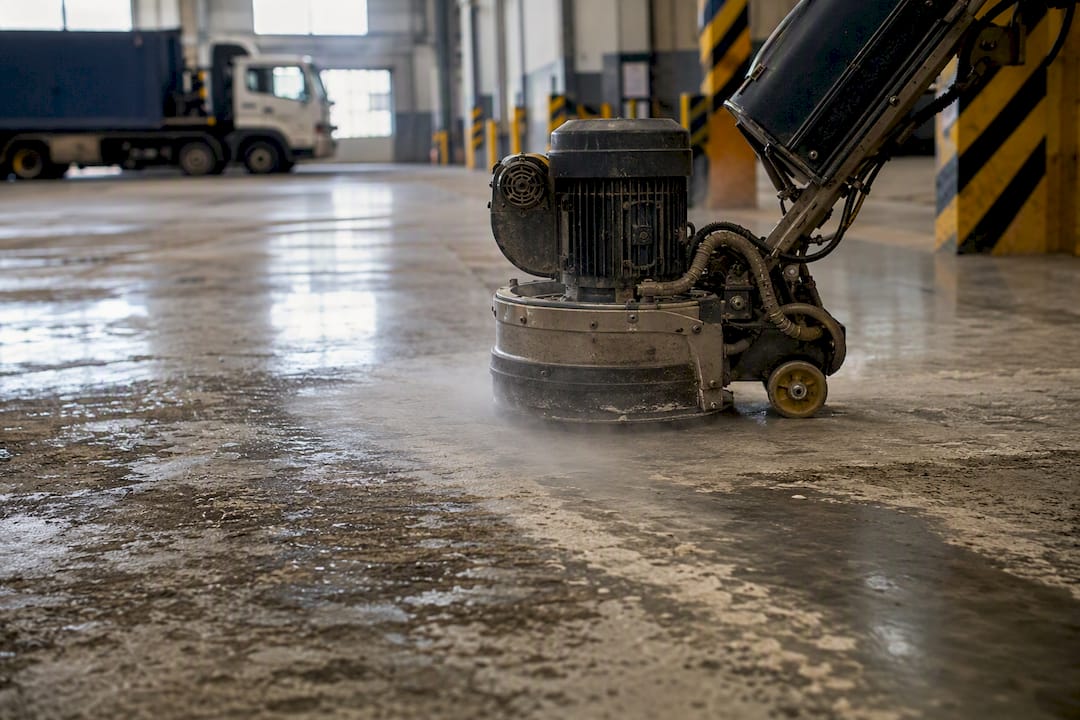
Adhesive removal from concrete is best handled by a specialist contractor using mechanical grinding or scarifying with on-tool dust extraction, followed by documented, compliant waste disposal. If you manage a strata building, office fit-out, or construction site, the immediate action is to shortlist contractors who can prove silica controls and a proper disposal chain, not just quote a price per square metre. Sydney City Rubbish can be engaged for managed removal and carbon-neutral disposal once you know what to ask for.
TL;DR:
- Contractors should specify the adhesive type, area in square meters, and target concrete surface profile when providing quotes to ensure accurate pricing.
- Proper dust controls must follow the hierarchy of elimination, engineering, administrative, and PPE measures, with evidence of compliant equipment and air monitoring required.
- Mechanical removal methods like grinding and scarifying are more reliable and scalable for large areas, while chemical removers suit small, spot repairs but are less effective overall.
- Waste must be contained, documented, and preferably recycled as aggregate, with disposal manifests and destination proof available upon request.
- Using a contractor that combines adhesive removal with managed, carbon-neutral disposal simplifies project coordination and ensures regulatory compliance.
Table of Contents
- What methods do contractors use to remove adhesive from concrete floors?
- What safety and regulatory controls should a contractor follow for silica dust?
- What should you request in an adhesive removal quote?
- How long does adhesive removal take and what drives the cost?
- How should contractors handle adhesive waste and dust disposal?
- Are chemical adhesive removers a viable option for concrete?
- Chemical vs mechanical removal: which wins for commercial floors?
- What preparation happens before adhesive removal starts?
- How do you check the concrete is actually ready afterwards?
- What should you look for when choosing a contractor?
- Managed adhesive removal and carbon-neutral disposal with Sydney City Rubbish
- Sources
What methods do contractors use to remove adhesive from concrete floors?
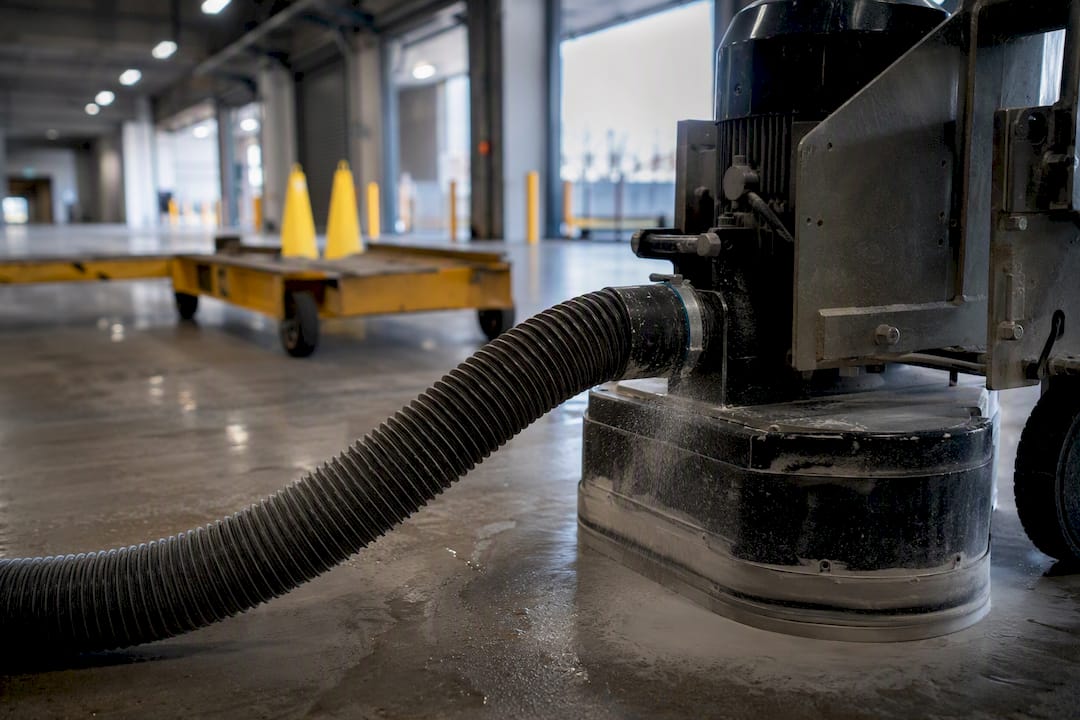
Most commercial jobs come down to four techniques, sometimes used together. Diamond grinding is the workhorse: floor-mounted machines fitted with diamond segments grind away adhesive, paint, and thin coatings while simultaneously profiling the slab. Scarifying uses tungsten-carbide cutters or flails to chip away thicker deposits, such as heavy carpet glue or bituminous membrane, faster than grinding alone but with a rougher finish that usually needs a grinding pass afterwards. Shot blasting fires steel abrasive at the surface, useful for large open floors where the adhesive layer is thin and even. Manual scraping still has a place for edges, corners, and small awkward areas machines cannot reach cleanly.
The residue type drives the choice. Bituminous adhesives are dense and heat-sensitive, so scarifying or grinding with lower-speed passes avoids smearing. Water-based carpet adhesives respond well to a single grinding pass. Epoxy-based tile adhesives are the hardest, often needing scarifying to break the bond before a finishing grind.
Combining methods is standard practice and genuinely saves money. A contractor might scarify heavy bedding compound first, then follow with a grinder to hit the concrete surface profile the next flooring system needs. Running a scraper pass ahead of grinding on thick deposits reduces mobilisation time and leaves the slab ready for the next trade in one visit.
- Diamond grinding: best for thin to moderate residue, doubles as CSP profiling
- Scarifying: best for thick or heat-sensitive adhesive, needs a grinding finish pass
- Shot blasting: best for large, even floors with light coatings
- Manual scraping: best for edges, corners, and spot repairs
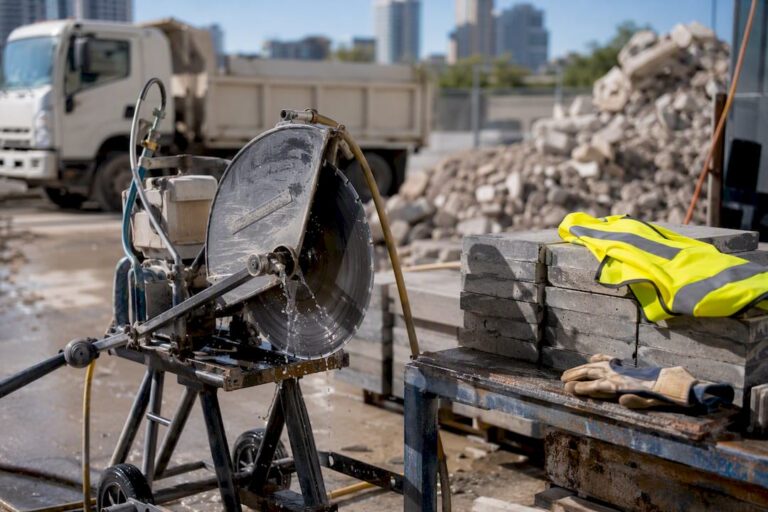
Dry grinding throws far more airborne dust than wet methods, which matters if the building stays occupied during works. On-tool extraction paired with wet suppression is what allows tenants back into adjacent areas sooner.
Pro Tip: Ask the contractor which method they’ll use on your specific adhesive, not just their standard process. A contractor who scarifies bituminous membrane at the wrong speed can scorch the slab and leave a finish no coating will properly bond to.
What safety and regulatory controls should a contractor follow for silica dust?
Grinding, scarifying, and shot blasting concrete all generate respirable crystalline silica (RCS), and exposure is a serious, cumulative health risk for workers and anyone nearby. Any PCBU (person conducting a business or undertaking) modifying concrete has a duty under the Working safely Code of Practice from SafeWork NSW to manage that risk, and dust suppression is not optional or a value-add.
The 2022 national approach set out in the silica dust Code of Practice from WorkSafe Queensland requires PCBUs to run a proper risk-management process for any task generating RCS, not just switch on a vacuum and hope.
Controls follow a hierarchy, and a competent contractor should be able to explain where their approach sits on it:
- Elimination – avoid the dust-generating method entirely where a lower-risk alternative exists.
- Engineering controls – wet cutting/grinding and on-tool local exhaust extraction, which combined cut airborne dust far more than either alone.
- Administrative controls – exclusion zones, job rotation, signage, and scheduling work outside occupied hours.
- PPE and monitoring – properly fitted respiratory protective equipment (RPE) and, on larger jobs, air monitoring to confirm controls are working.
When you’re comparing bids, ask each contractor for a written risk assessment, a method statement naming the specific machines and dust controls, evidence of an M or H class vacuum with HEPA filtration, and an air monitoring plan if the job runs longer than a day or two. A quote that skips all four is a quote to walk away from, regardless of price.
What should you request in an adhesive removal quote?
A comparable quote needs four categories of information. Without them, you’re comparing guesses, not prices.
Scope and method. State the floor area in square metres, the adhesive type if known (bituminous, epoxy, water-based carpet glue), the target CSP, and which method or combination the contractor proposes. This is also where you specify existing adhesive that must come off before new flooring goes down, because a vague “clean the floor” instruction invites shortcuts.
Dust control and safety deliverables. Confirm on-tool extraction specifications, whether wet methods will be used, RPE class for operators, whether air monitoring is included, and how exclusion zones will be managed around your tenants or staff.
Disposal deliverables. Request the containment method for dust and slurry, how waste will be transported, and what documentation you’ll receive confirming where it ends up. If a carbon-neutral disposal option exists, ask for it explicitly.
Commercial terms. Lock down access windows (after hours, weekends), the promised re-occupation time once work finishes, public liability and workers’ compensation insurance, any workmanship warranty, and how variations to scope will be priced and approved.
- Area (m²) and adhesive type
- Target CSP and proposed method(s)
- Dust extraction and RPE specification
- Disposal documentation and carbon-neutral option
- Access windows, insurance, and variation terms
Pro Tip: Put target CSP and re-occupation time in writing before work starts. Verbal assurances about “getting it back to normal quickly” mean nothing if the contractor’s dry-grinding dust cloud keeps your reception area closed for two extra days.
How long does adhesive removal take and what drives the cost?
Productivity depends heavily on the machine, the adhesive, and the slab’s condition, but grinding contractors commonly reference completion rates in the tens of square metres per day for standard residue on a clear floor. Bituminous and heavily bonded epoxy adhesives slow that rate considerably because they need a scarifying pass before grinding can finish the job.
The main cost drivers are:
- Area and adhesive depth – more square metres and thicker deposits mean more machine hours
- Access and traffic management – ground-floor loading dock access is cheaper than hauling machines through a lift lobby after hours
- Target CSP and finishing – a fine profile for resin flooring costs more than a rough profile for carpet tile
- Waste handling and monitoring – slurry containment and air monitoring add line items smaller jobs skip
A small patch repair in a single tenancy might take half a day. A full floor strip across a vacated commercial tenancy before a fit-out typically runs several days depending on area and adhesive type. A full-building strip across multiple levels needs staged scheduling around other trades and access constraints, which is where underquoted timelines usually unravel.
How should contractors handle adhesive waste and dust disposal?
Ground-up adhesive doesn’t disappear when the grinder stops. It becomes dust, slurry, and bagged debris that has to go somewhere, and how it’s contained matters as much as how it’s removed.
Wet grinding produces slurry that needs capturing before it dries on the floor or drains into stormwater. Dry methods produce fine dust that must stay inside a sealed extraction system rather than escaping into bins or bags that rupture during transport. Reputable contractors bag waste securely, use sealed bins for transport, and avoid re-releasing dust when loading trucks.
You’re entitled to ask for documentation proving where your waste actually went: a disposal manifest, the landfill or recycling facility name, and weighbridge or transfer station dockets. Some adhesive-contaminated concrete waste can be crushed and recycled as aggregate rather than landfilled, depending on contamination levels and the facility’s acceptance criteria.
- Slurry captured before it dries or enters drains
- Waste bagged and binned without dust re-release
- Disposal manifest and destination facility named
- Weighbridge or transfer dockets provided on request
Sydney City Rubbish builds carbon-neutral disposal into its commercial waste handling, giving property managers and construction clients a documented, sustainable option without adding extra coordination on their end.
Are chemical adhesive removers a viable option for concrete?
Chemical strippers have a role, but it’s a narrower one than most buyers assume. Solvent-based and citrus-based gel strippers can soften water-based carpet adhesives and some vinyl adhesives enough to scrape away by hand, which suits small areas, spot repairs, or jobs where grinding equipment can’t be mobilised.
Chemical removers struggle with epoxy and bituminous adhesives, which resist most solvents without extended dwell times and repeated applications. They also leave the concrete needing a thorough rinse and dry before any coating or new adhesive goes down, adding a curing delay that mechanical removal avoids. Fumes from solvent-based products require ventilation, and disposal of the resulting sludge carries its own waste classification and handling obligations, similar to the slurry from wet grinding.
For a single office kitchenette or a small storeroom, a chemical stripper might be the pragmatic, low-mobilisation choice. For anything measured in hundreds of square metres, chemical removal alone rarely finishes the job to the CSP a new floor covering needs, and it introduces its own hazardous-material handling requirements that many buyers overlook when comparing it against mechanical options on price alone.
Chemical vs mechanical removal: which wins for commercial floors?
Mechanical removal wins on scale, consistency, and the ability to hit a specific surface profile. Grinding and scarifying strip adhesive and simultaneously texture the concrete to the CSP a new flooring system requires, which chemical stripping cannot reliably deliver on its own. Mechanical methods also finish faster once mobilised, and dust from the process is manageable with on-tool extraction and wet suppression.
Chemical removal wins on low mobilisation cost and gentler handling of the slab surface, which matters where the concrete itself is soft, decorative, or where machine vibration risks damaging adjacent finishes. It also avoids the noise that grinding brings, useful in occupied buildings during business hours.
In practice, the two aren’t always exclusive. A contractor might use a gel stripper to loosen a stubborn edge a grinder can’t reach cleanly, then finish the bulk of the floor mechanically. For any area large enough to justify hiring a specialist contractor, mechanical removal with proper dust controls is the more reliable, more scalable choice, and it’s the approach AS1884-2012 points toward when new flooring adhesion is the end goal.
What preparation happens before adhesive removal starts?
A competent contractor doesn’t just wheel a grinder onto site. The floor gets swept and cleared of loose debris first, because grit and small stones caught under a grinding head chew up diamond segments and slow the whole job down.
Next comes an assessment of what’s actually stuck to the slab. Different adhesives respond to different methods, and a contractor who can’t identify whether they’re dealing with bituminous membrane, epoxy tile adhesive, or old carpet glue is guessing at their own method statement. A simple adhesion or bond test, sometimes just a scraper test in a few spots, tells the contractor how firmly the material is keyed into the concrete and whether it will lift in sheets or need aggressive scarifying.
Moisture testing matters too, particularly before any new floor covering goes down afterwards. A slab that’s been sealed under old adhesive for years can trap moisture that only becomes a problem once it’s exposed and covered again.
Finally, the work area gets isolated: exclusion zones set up, extraction equipment positioned, and any adjacent surfaces protected from dust or slurry migration. Skipping this stage is usually why a “quick job” runs long, and why site managers end up cleaning dust off surfaces three doors down from where the grinder was running.
How do you check the concrete is actually ready afterwards?
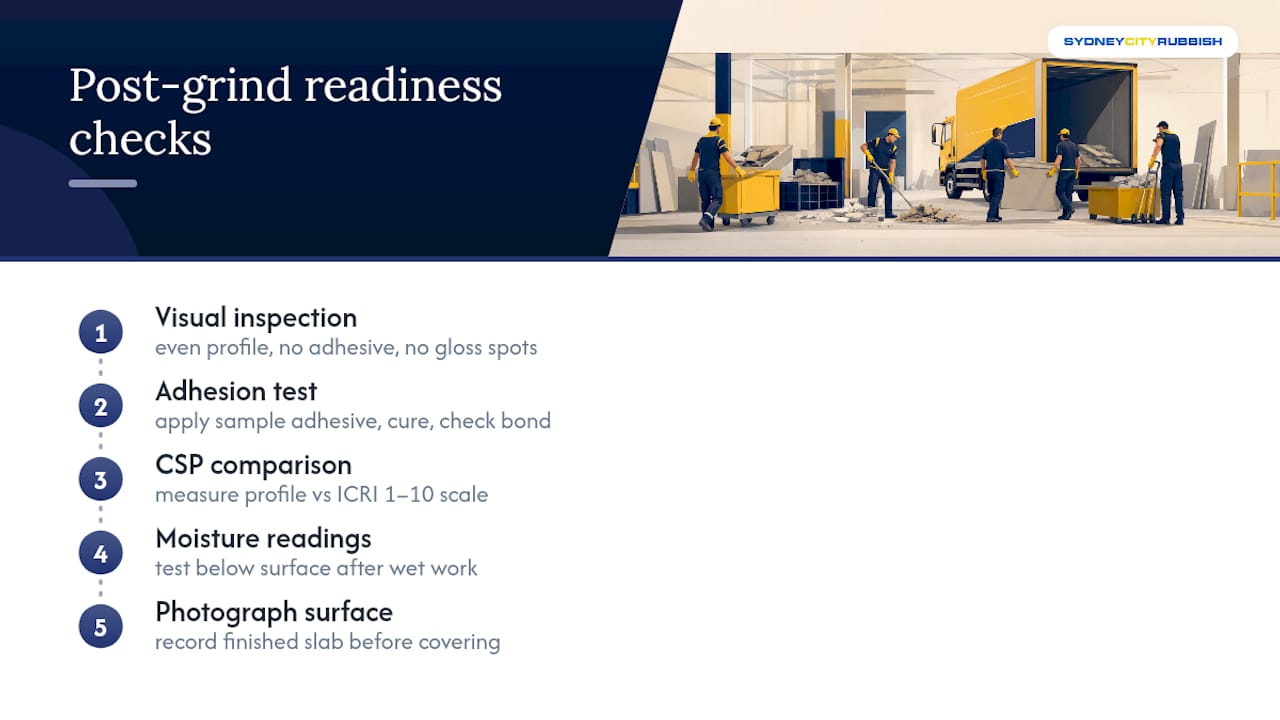
Finishing the grinding pass isn’t the end of the job, it’s the point where you check the contractor actually delivered what was quoted. Visual inspection comes first: the surface should show a consistent, even profile with no patches of leftover adhesive, no gloss spots where residue survived, and no discolouration from overheating during scarifying.
Beyond the visual check, a proper assessment tests whether the surface will actually bond with whatever comes next. This might mean a simple adhesion test with a sample of the new flooring adhesive on a small patch, left to cure and then checked for a proper bond. On larger commercial jobs, a CSP comparison against the ICRI 1 to 10 profile scale confirms the contractor hit the texture your new floor system actually needs, rather than an approximate “close enough” grind.
Moisture readings are worth taking again at this stage too, especially if any wet grinding or slurry containment was used nearby. A slab that reads dry on the surface can still be carrying moisture a few millimetres down, which won’t show up until the new adhesive fails months later.
Photograph the finished surface before covering it. If a flooring issue surfaces down the track, that record is the difference between a straightforward warranty claim and a dispute about who did what.
What should you look for when choosing a contractor?
Price matters, but it’s the last thing to compare, not the first. Start with documentation: does the contractor provide a written risk assessment and method statement naming their actual equipment and dust controls, or do they wave at “standard safety practices” without specifics?
Ask what CSP they’re targeting and how they’ll verify it. A contractor who can’t name a target profile, or who treats CSP as an afterthought, is telling you they haven’t scoped the job properly against what your next flooring trade actually needs.
Check their extraction equipment class. M and H class vacuums with HEPA filtration aren’t interchangeable with a standard shop vacuum bolted to a grinder, and the difference shows up in how much dust ends up on surfaces three metres away rather than staying contained.
Confirm insurance, ask for two recent commercial references (not residential jobs), and get disposal arrangements in writing before the contract is signed, not as a verbal promise on the day. A contractor who treats waste disposal as an afterthought usually treats dust control the same way. The strongest indicator of a contractor worth hiring isn’t their marketing material, it’s whether every one of these questions gets a specific, documented answer instead of a reassurance.
Managed adhesive removal and carbon-neutral disposal with Sydney City Rubbish
If your project needs adhesive removed and the resulting waste handled properly, Sydney City Rubbish gives commercial clients a single point of contact for both, rather than juggling a grinding contractor and a separate waste hauler. Sydney City Rubbish coordinates removal works, dust extraction, and full clean-up as part of its broader demolition, strip-out, and makegood services across offices, retail spaces, and construction sites, so the disposal chain is documented from the moment waste leaves the slab.
Corporate clients can opt into carbon-neutral disposal through Sydney City Rubbish’s partnership with Carbon Neutral, giving strata managers and property owners a sustainable outcome to report on without adding extra coordination on their end. To get a scoped quote, share the floor area, what you know about the adhesive type, and your target CSP if a flooring trade has specified one. Get a free quote from Sydney City Rubbish and get a clear scope, timeline, and disposal plan back before you commit.
Sources
- TECHNICAL BULLETIN – TB037 (ARDEX Australia) – Old adhesives: know the risk
- Working safely: Code of practice (SafeWork NSW)
- Managing respirable crystalline silica dust exposure in construction and manufacturing of construction elements — Code of Practice 2022 (WorkSafe Qld)
- Concrete grinding Sydney for adhesive removal, coatings prep and levelling | Elyment