After-Hours Waste Collection Rules in Sydney for Businesses
In the City of Sydney area, the hours a commercial collection can run depend on the street your bin is collected from, not your premises address. The City’s policy sets four commercial collection time zones, ranging from 24-hour access to a narrow 2am to 4am window. Waste generators who meet a list of conditions do not need individual approval to put commercial waste out. Bins must be back on private property by set deadlines. This guide explains how those rules work for offices, retailers, strata-managed buildings and construction sites, and how to book an after-hours job that stays on the right side of them.
A note on scope: the detailed rules below come from the City of Sydney. Other councils, including North Sydney, Parramatta and Ryde, set their own conditions, and a development consent can impose hours on a specific site. Always confirm with the relevant council and your building’s consent before you lock in a time.
TL;DR
- The City of Sydney defines four commercial collection time zones (Open, Limited, CBD and CBD light rail), and the zone is set by the street where the bin is put out.
- Commercial generators can skip individual approval if they meet the policy’s conditions, including a licensed commercial contractor and a closed-lid bin of no more than 1,100L.
- Bins collected between 7pm and 6am must be off the public place by 8am. Daytime collections must be cleared within 2 hours.
- Glass and grease trap waste have tighter windows than general waste, and some businesses have hours fixed by development consent.
- Keep a written contract that names the collection point, times, method and a licensed disposal facility. Council officers can ask to see it.
Table of Contents
- What counts as an after-hours collection in Sydney
- Do you need approval to put waste out for an after-hours pick-up?
- Rules for the bin itself
- Special hours for glass and grease trap waste
- Getting bins off the street on time
- What your contract needs to say
- What happens if rules are broken
- Planning an after-hours job by site type
- Weekends, public holidays and split hours
- Booking an after-hours collection with us
- FAQ
- Sources
What counts as an after-hours collection in Sydney
There is no single “after hours” definition that applies across Sydney. What matters is whether the collection falls inside the permitted window for the street where the bin sits. For most commercial clients, “after hours” simply means before the office opens or after it closes, which is also when streets are quieter and access to loading areas is easier.
The City of Sydney’s Managing Waste in Public Places Local Approvals Policy sets out four commercial waste collection time zones. Here is how they work in plain terms.
The Open collection time zone allows collection access 24 hours a day, every day. The Limited collection time zone runs from 6am to 10pm Monday to Friday and from 8am to 10pm on weekends and public holidays. The CBD collection zone runs from 7pm to 6am every day, which means commercial collections in the core of the city are pushed into the evening and overnight hours. The CBD light rail collection time zone is the narrowest, at 2am to 4am every day.
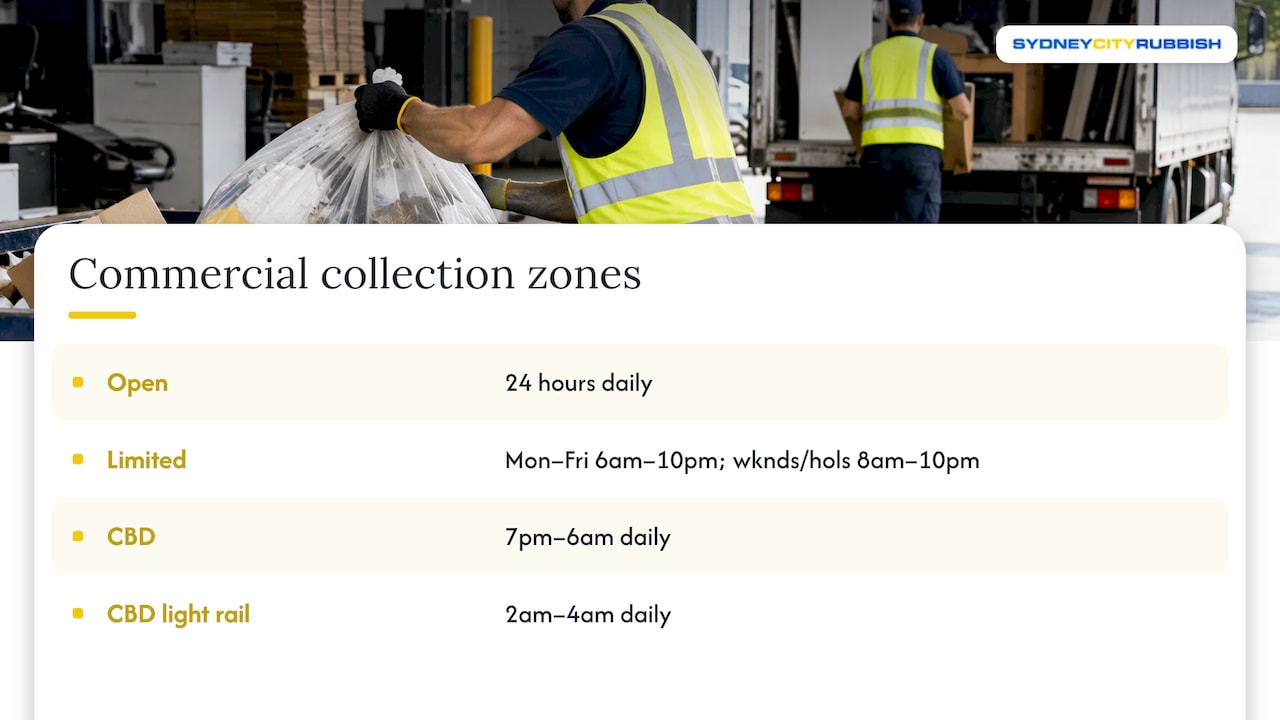
The policy applies these zones to the street on which a bin is put out for collection, not the address of the premises. A building with its front door on one street and its bin store on a lane can fall into a different zone from the one you expect. Before you book, confirm which street your bins are actually presented on.
Day and night guidance from the noise fact sheet
The City’s neighbourhood noise fact sheet gives a general guide. Waste on CBD and arterial or major roads should be collected at night, from 10pm to 6:30am. In residential areas and on minor roads, waste should be collected in the daytime, from 6:30am to 10pm for commercial premises and 6am to 10pm for residential premises.
The same document stresses that collection, including recycling, must happen when it is safe for pedestrians, motorists and the local community. It also notes that some commercial businesses have set collection hours imposed within their development consent. If your consent names hours, those hours govern, whatever the general zone says.
This is why a late-evening pick-up works well on a CBD street and a poor idea beside apartments on a minor road. The same truck, the same bins and the same contractor can be compliant in one location and a noise complaint in another.
Do you need approval to put waste out for an after-hours pick-up?
In most cases, no individual approval is needed, provided you meet the policy’s conditions. The City’s policy states that commercial waste generators are exempt from having to obtain approval to place commercial waste in a public place for collection, provided 24 requirements are met. The ones that matter most day to day are these.
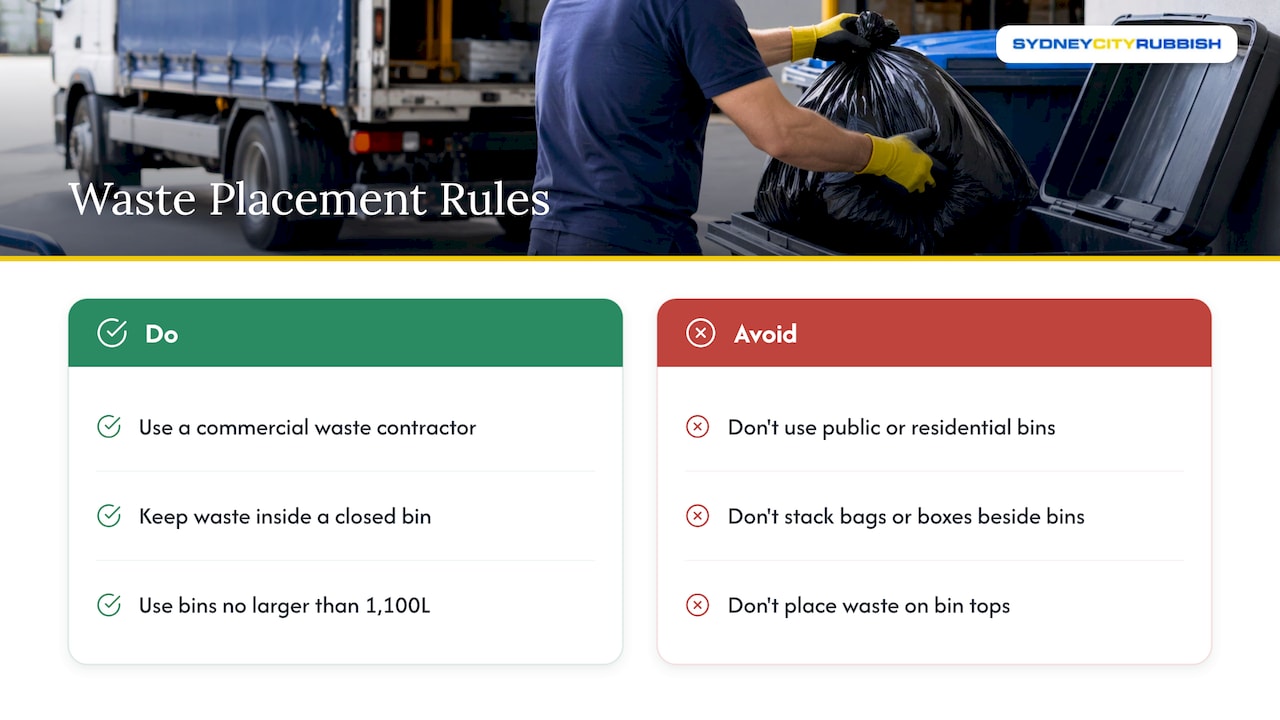
Waste must only be put in a public place for collection and disposal by a commercial waste contractor. Waste must not go into a street litter bin, a park litter bin or a residential waste bin. All waste must sit wholly within a bin with the lid fully closed, and the bin must not exceed 1,100L.
In practice, that means three habits. Use a commercial contractor rather than ad hoc arrangements. Keep staff from topping up public bins with overflow. Never stack bags or boxes beside or on top of a bin, because the City treats waste placed outside a bin in a public place as illegal dumping.
If you want a closer look at how permits and approvals work for the central city, our guide to waste removal permits in the Sydney CBD covers the common situations, and our overview of NSW commercial waste rules sets out the wider compliance steps.
Strata and building management
Council rules are only one layer. Strata schemes and managed commercial buildings usually add their own limits on loading dock hours, lift use, noise and access. The council policy does not replace these, so an after-hours slot that is lawful on the street can still be refused at the building level.
This is where an experienced contractor earns its keep. Our approach is to coordinate directly with building management so access, lift bookings and loading areas are sorted before the truck arrives, rather than discovered on the night.
Rules for the bin itself
After-hours collection often means bins sit on the footpath or laneway overnight without anyone watching them. The City’s policy sets conditions to keep that safe and traceable.
Bins of 660L or larger must have fitted, working brakes and visible reflectors on the outer corners. This matters on sloped streets and for anyone walking past in the dark. Every commercial bin must clearly display the commercial waste contractor’s name and 24-hour contact telephone number. Each bin must also carry a unique identification number that can be traced back to the premises.
The traceability rule has a practical effect. If a bin is overfilled, left out too long or found to contain something it should not, the City can identify whose it is and who collects it. Check that the bins supplied to your site carry that marking before you rely on them for overnight presentation.
The 1,100L ceiling also shapes what you do with bulky items. Furniture, joinery, e-waste and building debris do not fit in a closed-lid bin, so they are not suited to being left in a public place for collection. These loads are better handled by a truck attending on a booked time, loaded from inside your premises or a controlled loading area. If you are sizing a container for a clean-out, our skip bin size guide for Sydney facility managers helps you match volume to the job.
Special hours for glass and grease trap waste
Not all waste follows the general zone times. Two streams are tightly controlled, and they matter for cafes, restaurants, pubs and food retailers in particular.
Under the City’s policy, grease trap waste collection across cycleways is permitted only between 1am and 5:30am every day. Glass bottle collection (excluding commingled recycling and crushed glass) has its own windows by zone:
| Zone | Permitted glass bottle collection |
|---|---|
| CBD light rail zone | 2am to 4am |
| CBD, Monday to Friday | 12pm to 10pm |
| CBD, weekends | 8am to 10pm |
| All other zones, every day | 10pm to 2am |
The source for these times is the same City of Sydney policy. If your venue generates a lot of glass, a general waste contract running at one set time may not be enough. Ask your contractor to confirm in writing when glass is collected and from which street.
Getting bins off the street on time
After-hours rules do not end when the truck leaves. The policy sets deadlines for bringing bins back to private property. If bins are collected between 7pm and 6am, they must be removed from the public place and returned to private property no later than 8am. If bins are collected between 6am and 7pm, they must be removed no later than 2 hours after collection.
Failing to meet these times can leave the waste generator liable to enforcement under sections 626 and 627 of the Local Government Act 1993, according to the City’s policy. For a business, the risk is not only a penalty. A bin left on a footpath into the morning peak blocks pedestrians, collects stray rubbish and invites illegal dumping that the City may attribute to you.
The practical fix is simple: decide who is responsible. In a tenancy, that might be the cleaner, the building’s facilities team or the contractor. Write it into the arrangement so that the 8am deadline is somebody’s job, not everyone’s assumption. The same discipline applies to keeping a property tidy through the year, and a guide on managing property debris year-round shows the value of a routine rather than a reaction.
What your contract needs to say
The City’s policy expects the commercial waste generator to hold a contract for commercial waste services. That agreement should specify the collection point, the collection times, the method of collection, and disposal to a licensed waste facility. If an authorised City of Sydney officer asks, you must be able to produce evidence of a valid contract or something similar.
That is a useful checklist for any quote you receive. Before accepting, confirm four things:
- The exact collection point, including the street, not just the building address.
- The agreed times, and that they fall within the zone for that street and any development consent hours.
- How the waste will be collected, for example from a bin, a loading dock or direct from the floor.
- That disposal goes to a licensed facility, with the paperwork to show it.
We use registered recycling partners for responsible disposal, and we can supply the details you need to keep on file. For many clients, that file is what turns an inspection from a stressful event into a short conversation.
What happens if rules are broken
The consequences are set out in the same policy. City of Sydney rangers or other authorised officers may issue penalty notices, orders, clean-up notices, prevention notices or court attendance notices for non-compliance with relevant legislation. Serious pollution incidents may be prosecuted by state agencies such as the NSW Environment Protection Authority.
The common triggers for a business are predictable. Putting waste in a street litter bin, a park bin or a residential bin. Leaving bags or boxes next to or on top of a bin in a public place. Leaving a bin out past the return deadline. Using a bin without the required contractor details or identification.
None of these are hard to avoid once you know them. They usually arise because a cleaner, tradesperson or staff member improvises at the end of a long day. A short briefing for whoever handles waste on your site is worth more than any later correction.
Planning an after-hours job by site type
The right approach depends on what you are removing and where.
Offices and strata-managed buildings
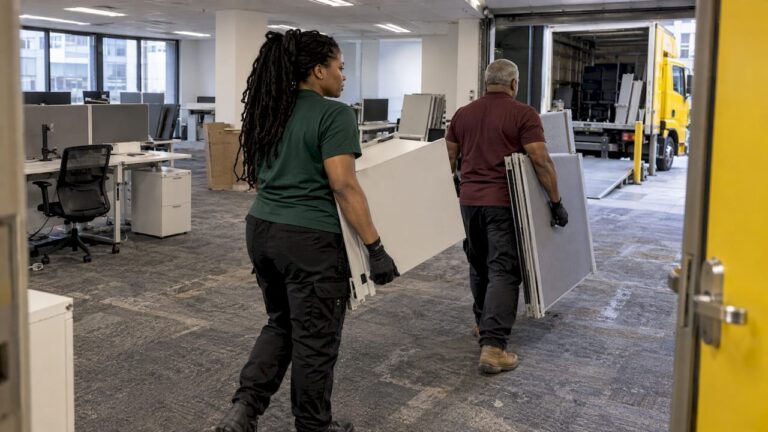
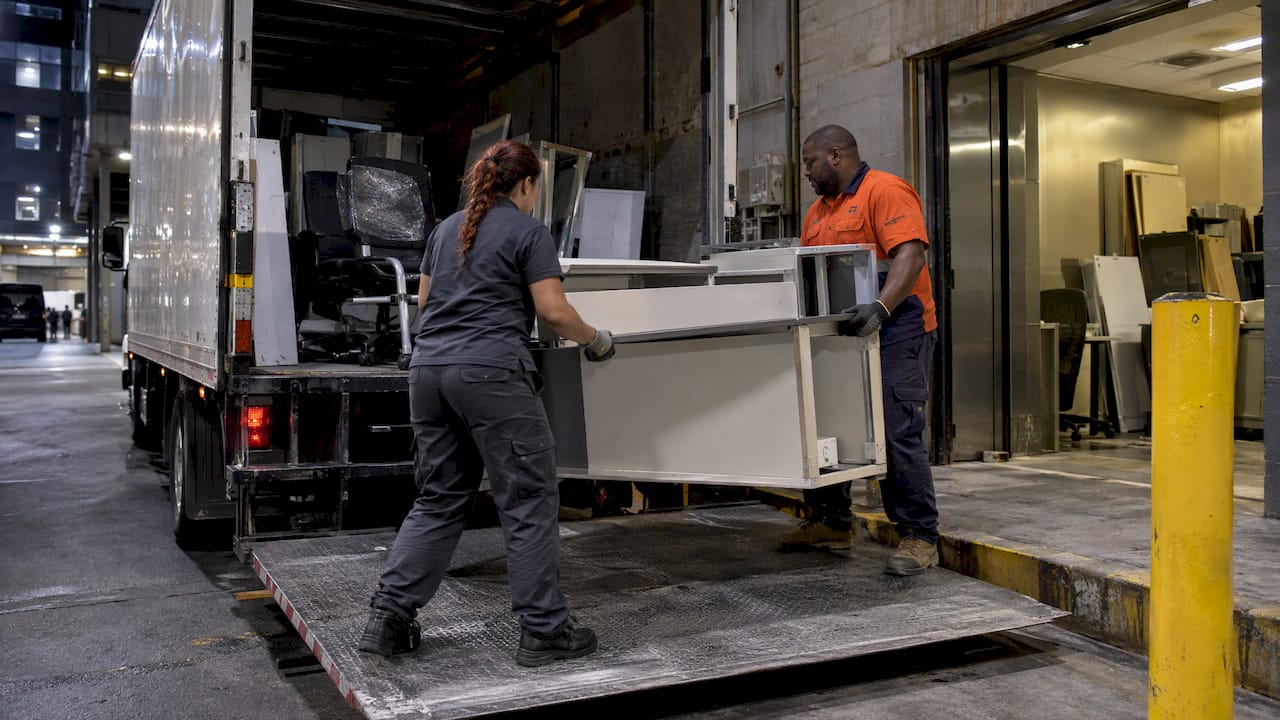
Office clear-outs produce furniture, partitions, e-waste and a lot of paper and cardboard. These loads are bulky, often need lifts, and typically require out-of-hours access to avoid disrupting other tenants. Book the building’s loading dock and lift in advance, confirm any strata or building management conditions on noise and hours, and let the contractor attend on a fixed time with the access arranged. Our bulk refuse collection for Sydney businesses covers these larger loads.
Retail and hospitality
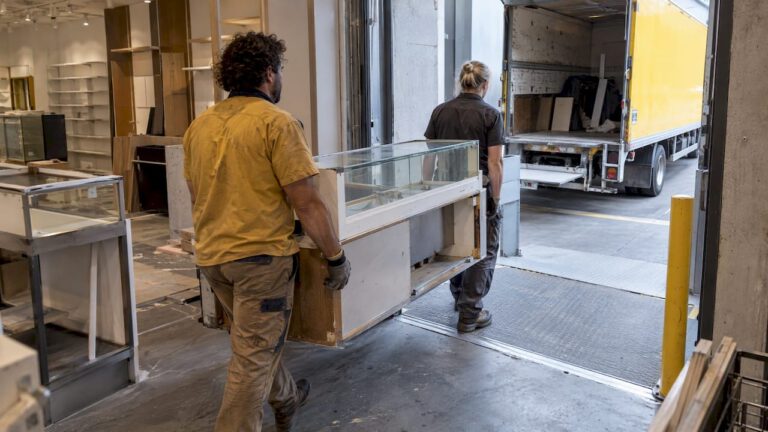
Retail tenancies often have the tightest windows, particularly in the CBD, where collection is pushed to the evening and night. Overnight bin presentation, glass timing and the 8am return deadline all apply. If you are in a shopping centre, the centre’s own loading dock rules will usually sit on top of the council rules.
Construction sites and strip-outs
Building debris, plasterboard, timber and concrete are not what a 1,100L closed-lid bin is for. Construction waste moves by truck and skip on a planned schedule, and the site’s development consent may fix working and collection hours. Sorting at source matters here too, and our pages on mixed demolition waste compliance and waste separation in construction and demolition explain how to keep loads clean and traceable.
End-of-lease and makegood
End-of-lease work is usually deadline-driven. The tenancy has to be handed back by a certain date, and the building often only permits heavy work outside business hours. Plan removal of furniture, joinery, ceilings and floor finishes around building access windows, and read our comparison of defit and make good for Sydney tenants so the scope is clear before work begins.
Weekends, public holidays and split hours
Zone hours change between weekdays and weekends. The Limited zone, for example, opens at 6am on weekdays but 8am on weekends and public holidays, and the CBD glass windows differ between Monday to Friday and weekends. A schedule that works on Thursday night may not work on Sunday morning.
Before you book a weekend or public holiday job, check the street’s zone and the day-specific window. Our page on weekend waste rules in Sydney goes through the split hours, and our guide to after-hours rubbish removal explains how to book so you avoid surcharges.
Booking an after-hours collection with us
We focus on corporate and commercial waste in Sydney, from offices and retail spaces to construction sites and strata-managed buildings. For after-hours work, we coordinate directly with building management for access, provide fast electronic quotes, and guarantee punctuality, with compensation if we are late. We take meticulous cleanup seriously, so nothing is left behind, and clients can opt in to carbon-neutral waste disposal.
For regular commercial collections, see our commercial rubbish removal in Sydney. For clear-outs, strip-outs and makegood, see what we do. Tell us your address, the street the waste is presented on, the type and volume of waste and the time window your building allows. Get a free quote now, and we will confirm a time that fits the rules for your street.
FAQ
What hours can commercial waste be collected in the City of Sydney?
It depends on the street. The City’s policy sets Open (24 hours), Limited (6am to 10pm weekdays, 8am to 10pm weekends and public holidays), CBD (7pm to 6am) and CBD light rail (2am to 4am) zones. Your zone is set by the street where the bin is put out.
Do I need council approval to leave bins out for an overnight collection?
Not individually, if you meet the City’s conditions. These include using a commercial waste contractor, keeping waste wholly inside a closed-lid bin of no more than 1,100L, and never using public or residential bins. A development consent may still set hours for your site.
When must bins be taken off the street after collection?
If bins are collected between 7pm and 6am, they must be back on private property by 8am. If collected between 6am and 7pm, they must be removed within 2 hours. Missing these times can expose you to enforcement under the Local Government Act 1993.
Can I leave extra bags beside my bin for the contractor?
No. The City treats waste placed next to or on top of bins in a public place as illegal dumping. If you have more waste than the bin holds, arrange a larger bin or a booked truck pick-up rather than leaving it outside.
Do these rules apply outside the City of Sydney area?
The zones and deadlines above come from the City of Sydney’s policy. Other councils, such as North Sydney, Parramatta and Ryde, set their own conditions, so confirm with the relevant council and your building before booking.
Sources
- Managing Waste in Public Places Local Approvals Policy, City of Sydney
- Neighbourhood noise fact sheet 2023, City of Sydney
- How to manage property debris year-round