Avoid Bond Loss: Sydney Retail Make Good With Council Compliant Waste
In Sydney, retail make good usually means returning your premises to the condition recorded at the start of your lease, allowing for fair wear and tear. Start by pulling out your lease and condition report today, and book an inspection before you commit to a strip-out date. A local operator can handle strip-out and compliant waste removal once you know the scope.
TL;DR:
- Most make-good obligations require tenants to return premises in the condition recorded at lease start, minus fair wear and tear, but some leases demand full strip-out to base building levels regardless of condition.
- Starting inspections eight to twelve weeks before handover helps avoid delays, especially in confirming scope, obtaining quotes, and arranging waste removal, repair, and reinspection.
- Costs depend heavily on scope, with minor jobs taking one to two weeks and full reinstatements potentially requiring four to eight weeks or more, plus itemized quotes improve scope management.
- Proper waste disposal, including hazardous materials and recycling records, is essential, and contractors should provide written diversion summaries to meet landlord requirements.
- Using experienced, licensed strip-out contractors familiar with retail environments and occupied centres minimizes risk of disputes and simplifies the final inspection process.
Table of Contents
- What does ‘make good’ actually require under a NSW retail lease?
- Your pre-lease-end checklist: what to do and when
- What does retail make-good cost, and how long does it take?
- Waste removal rules and sustainable disposal in Sydney
- How do you choose and brief a make-good contractor?
- Preparing for the final inspection and resolving disputes
- Sydney City Rubbish: strip-out and make-good support that’s ready when you are
- Sources
- FAQ
What does ‘make good’ actually require under a NSW retail lease?
Make good is a contractual obligation, not a fixed legal formula. Your retail lease sets the standard, and the condition report signed at lease start is the document everything gets measured against later.
Guidance from the NSW Small Business Commissioner confirms that most make-good clauses require tenants to hand back premises in the condition recorded at lease start, minus fair wear and tear. That distinction matters in practice. A worn carpet from years of foot traffic is wear and tear; a hole punched through a plasterboard wall for cabling is tenant damage, and you will pay to fix it.
Some leases go further and require stripping back to base building, meaning every partition, ceiling grid, joinery fit out and floor finish you installed comes out, regardless of condition. This is common in shopping centre leases and larger format retail tenancies. The Retail Leases Act 1994 provides the statutory backdrop for these obligations, though the specific make-good clause in your lease is what actually governs the works. Leases also often nominate a process for resolving disagreements, including appointing an independent quantity surveyor if the landlord and tenant can’t agree on scope or cost.
Your pre-lease-end checklist: what to do and when
Retail make good runs smoother when you work backwards from your handover date rather than scrambling in the final fortnight. Here’s the order that avoids the most common delays.
- Review the lease and condition report first. Confirm exactly what “make good” means for your tenancy, whether base building strip-out applies, and whether the lease specifies a quantity surveyor process for disputes.
- Book a site inspection with the landlord or their agent eight to twelve weeks before handover, so both parties agree on scope before quotes go out.
- Get quotes from strip-out and rubbish removal contractors covering fixtures, joinery, flooring, and any structural elements you installed.
- Check for asbestos if your premises pre-date 1990 or if you’re unsure of the building’s history; this needs a licensed assessor before any demolition work starts.
- Coordinate building access with centre or property management, including loading dock bookings, after-hours work approval, and lift bookings for larger fit outs.
- Schedule the strip-out and waste removal, allowing buffer days for unexpected finds behind walls or under flooring.
- Book trades for repairs and redecoration, patching, painting, and floor restoration, after the strip-out but before the reinspection.
- Set a date for landlord reinspection, and keep photographic evidence of the finished space before handing back keys.
Missing any of these steps is what turns a straightforward make good into a dispute. A tenant who skips the early inspection often discovers, weeks before handover, that the landlord expects base building reinstatement they hadn’t budgeted for.
What does retail make-good cost, and how long does it take?
Cost and timeline both come down to how much you built during your tenancy, and how much of it the lease requires you to remove.
The main cost drivers are:
- Strip-out scope — a simple furniture and signage removal costs far less than a full base building strip that includes ceilings, walls and services.
- Floor area — larger tenancies mean more waste volume and more labour hours, scaling costs roughly with square metreage.
- Joinery and fit out removal — custom cabinetry, counters and display fixtures often need specialist removal rather than simple demolition.
- Floor finish restoration — removing tiles, vinyl or timber and grinding back to a clean concrete slab adds meaningful time and cost, particularly where adhesive residue is heavy.
- Hazardous waste handling — asbestos, fluorescent tubes and some adhesives require licensed disposal, which carries a premium over general waste.
Pro Tip: Get your quotes itemised by task, not as one lump sum. A single “strip-out and disposal” figure hides which cost driver is actually blowing out your budget, and makes it far harder to negotiate scope changes with your landlord.
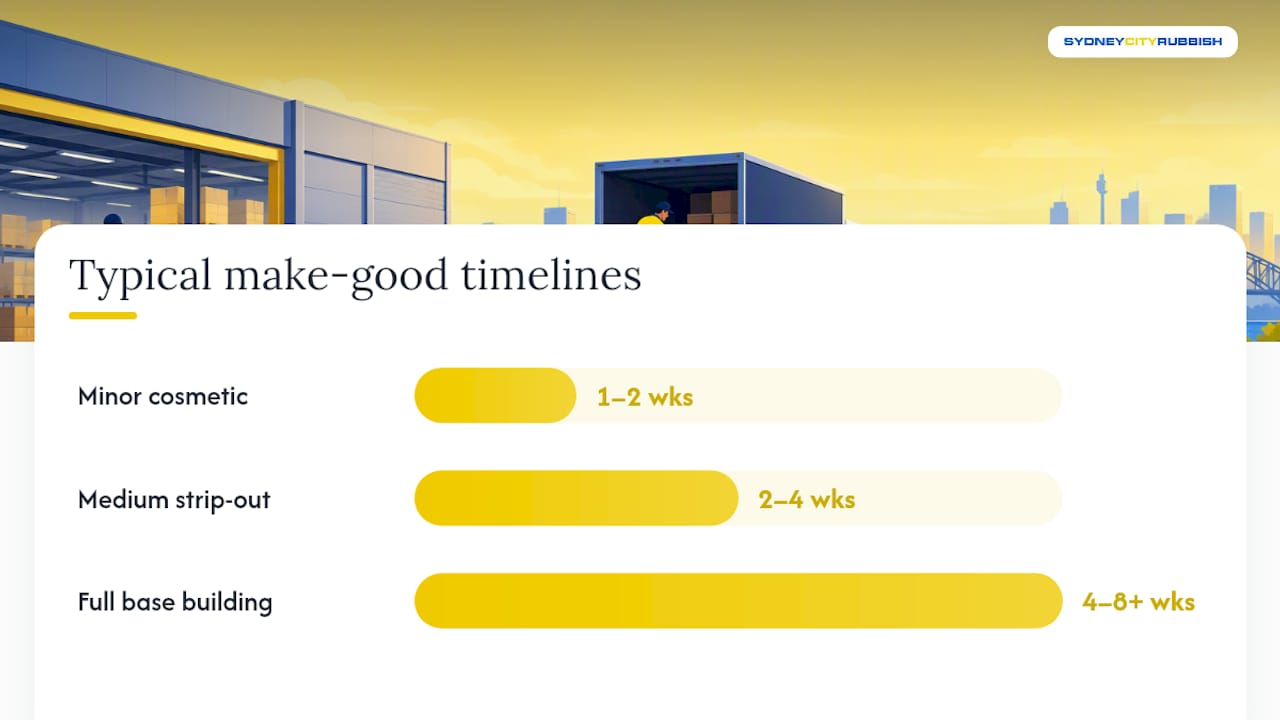
As a rough guide, a minor cosmetic make good (signage, fixtures, minor patching) can often be completed within one to two weeks. A medium strip-out involving partition walls and flooring typically needs two to four weeks. A full base building reinstatement, particularly in a shopping centre with restricted access hours, can run four to eight weeks or longer.
Tenants generally choose between three routes: managing the strip-out themselves with hired trades, engaging a single contractor to run the whole project, or negotiating a cash-in-lieu settlement with the landlord. Self-management can save money but demands time you may not have alongside running a closing store. A single contractor simplifies coordination but costs more upfront. Cash-in-lieu removes the project management burden entirely, though it needs clear written settlement terms to avoid later disputes over what was actually agreed.
Waste removal rules and sustainable disposal in Sydney
Retail strip-outs generate more waste volume than most tenants expect, and the City of Sydney’s business waste guidance sets clear expectations for how construction and demolition waste gets stored, segregated and removed from commercial sites.
Key compliance points to build into your project plan:
- Waste storage areas need enough space for segregated streams, general waste, recyclables and any hazardous materials kept separate until collection.
- Any suspected asbestos requires a licensed removalist and correct disposal documentation before general demolition can proceed.
- Skip bins suit smaller, single-material jobs; a truck-and-driver service handles mixed loads and tight centre access better, particularly where loading dock time is limited.
- Diversion documentation, records showing what was recycled versus landfilled, is increasingly expected by landlords and centre managers as part of handover.
Pro Tip: Ask your removal contractor for a written diversion summary before the final inspection. Landlords increasingly want evidence that waste was handled responsibly, not just removed, and it costs you nothing to request it upfront.
Operators offering a carbon-neutral disposal opt-in, Sydney City Rubbish Removal among them, give tenants a straightforward way to meet these expectations without adding project complexity.
How do you choose and brief a make-good contractor?
Not every removal or demolition operator is set up for retail work inside an occupied shopping centre, and the wrong choice costs you time you don’t have near lease end.
Before signing anything, ask for:
- Current public liability insurance and any trade-specific licences relevant to the work.
- Asbestos handling credentials, even if you don’t expect to find any.
- Recent experience working inside occupied retail centres, including after-hours access and loading dock protocols.
- A line-item scope of works covering timeline, disposal method and evidence of recycling or diversion.
Red flags worth walking away from include verbal-only quotes, no fixed completion date, and reluctance to name their waste disposal facility. A contractor confident in their process will happily itemise all of it.
A workable brief to reuse: state the floor area, list everything to be removed (fixtures, flooring, partitions, signage), specify your required completion date, note any asbestos risk, and ask for a written diversion report on completion. Send this to two or three strip-out specialists before comparing quotes, so you’re comparing like for like rather than guessing at what each quote actually includes.
Preparing for the final inspection and resolving disputes
Bring three things to your final inspection: the original condition report, dated photographs of the completed works, and contractor invoices with waste disposal receipts attached. This is your evidence if the landlord disputes scope or standard of work.
Negotiate early rather than at the inspection itself. If timing makes tenant-led works impractical, a cash-in-lieu settlement can work for both parties, provided the terms are documented in writing before keys change hands. Where landlords need to complete remedial works themselves, factor in extra time for that before your final bond release.
If you can’t reach agreement, the lease may allow nomination of an independent quantity surveyor through AIQS to assess disputed costs. The NSW Small Business Commissioner offers free guidance and mediation support, and NSW Fair Trading handles formal complaints where bond and make-good disputes overlap.
Sydney City Rubbish: strip-out and make-good support that’s ready when you are
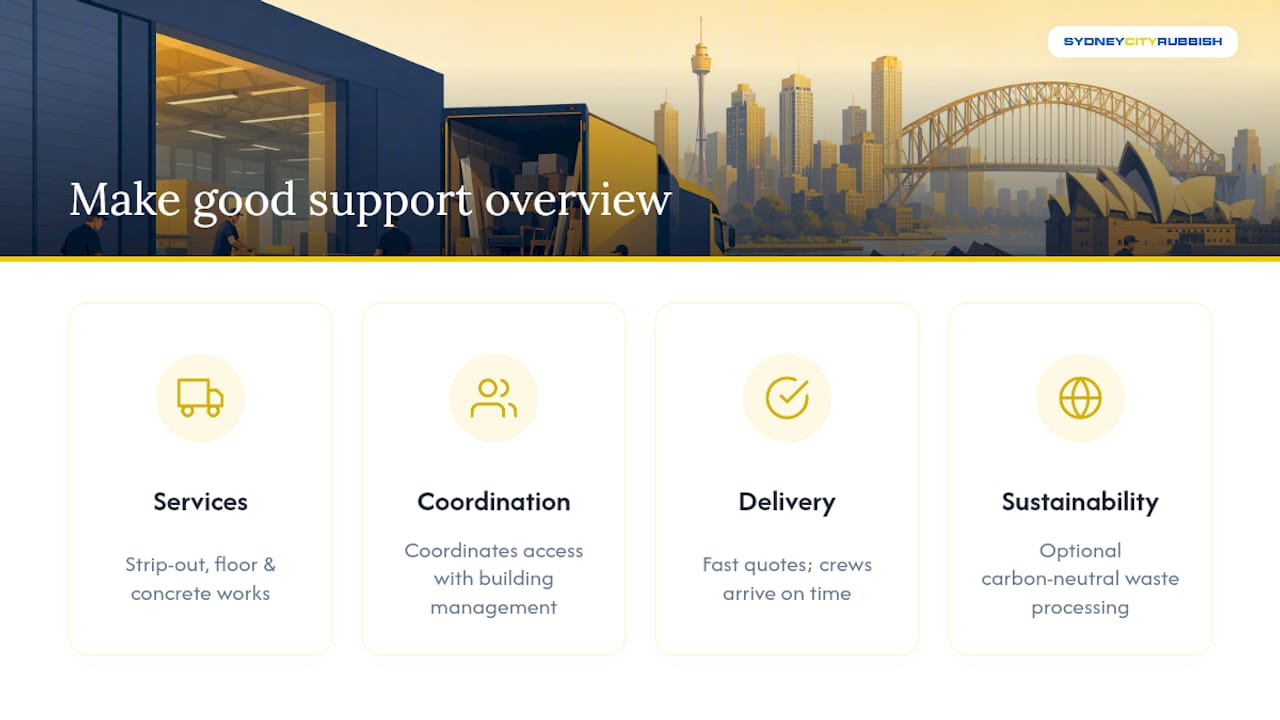
Once your scope is confirmed, the practical challenge is getting the physical works done without adding weeks to your handover. Sydney City Rubbish Removal handles the operational side of retail make good, from building strip-out and commercial rubbish removal through to floor finish removal, concrete grinding and hazardous material handling, coordinated directly with your centre or building management so access approvals don’t hold up the schedule.
Quotes are issued quickly, crews turn up on time, and every job leaves documented evidence of responsible disposal, useful when your landlord asks for diversion records at final inspection. Clients can also opt into carbon-neutral waste processing through Sydney City Rubbish’s partnership with Carbon Neutral, at no added complexity to the project timeline.
If your lease end date is set, the practical next step is a commercial waste removal quote for your site, or a look through the full make good and de-fit service range to see what’s covered before your inspection.
This article is general information, not a substitute for advice from a qualified lawyer. Consult a qualified legal professional about your own circumstances before acting on anything here.
Sources
- ‘Make good’ and retail leases | NSW Small Business Commissioner
- Business waste services | City of Sydney
- Retail Leases Act 1994 No 46
- Tenancy condition report | NSW Fair Trading (PDF)
FAQ
What does “fair wear and tear” actually cover?
Fair wear and tear covers gradual deterioration from normal use, faded paint, worn carpet, scuffed flooring, rather than damage caused by alterations, neglect or accidents. The NSW Small Business Commissioner treats this distinction as central to most make-good disputes.
Do I need to strip back to base building at lease end?
Only if your lease specifically requires it. Some retail leases, particularly in shopping centres, mandate full base building reinstatement regardless of the condition of your fit out, so check your lease terms rather than assuming standard wear-and-tear rules apply.
How much does a retail strip-out cost in Sydney?
Cost depends on floor area, fit out complexity and whether hazardous materials like asbestos are present, so there’s no single figure that applies across all tenancies. Sydney City Rubbish Removal provides quotes based on your specific scope; current pricing details are available directly through their service pages.
What happens if the landlord and I disagree on make-good scope?
Many leases allow nomination of an independent quantity surveyor, often through AIQS, to assess disputed costs objectively. The NSW Small Business Commissioner also offers free guidance and mediation before matters escalate to formal complaint.
Can I negotiate a cash payment instead of doing the works myself?
Yes, cash-in-lieu settlements are common where tenant-led works are impractical due to timing or access constraints. Get the settlement amount and terms confirmed in writing before handing back keys, since a verbal agreement offers no protection if the landlord’s expectations shift later.