Budget $30–$150/m² for Office Strip Out, Checklist for Tenants & PMs
Expect $30 to $150 per square metre for an office strip-out, with a standard 250 m² tenancy typically landing between $8,000 and $20,000 for the strip-out itself. The number that catches most tenants off guard isn’t the strip-out figure at all. It’s the make-good clause buried in the lease, which can push the total well beyond that range once reinstatement and waste disposal are factored in.
TL;DR:
- Strip-out costs vary significantly based on access, material type, and scope, with a typical basic job costing between $30 and $50 per square meter.
- Quotes should specify inclusions and exclusions clearly, especially for services removal, hazardous materials, and scheduling, to prevent unexpected expenses.
- For a standard 250 square meter office, strip-out costs range from $12,500 to $20,000, but complex projects can reach up to $150,000 or more.
- Proper photos, detailed scope, and disposal documentation are essential for accurate quotes and avoiding change orders during work.
- Make-good costs, which involve reinstatement rather than removal, are usually higher and should be negotiated separately to avoid budget blowouts.
Table of Contents
- What does an office strip-out actually include?
- What makes strip-out quotes vary so much?
- How much should a strip-out cost per square metre?
- What should you send a contractor for an accurate quote?
- Is make-good the same thing as a strip-out?
- How long does an office strip-out actually take?
- Do you need permits, and who handles hazardous waste?
- How do you compare contractor quotes properly?
- Why hire a specialist waste and strip-out partner?
- Get a strip-out quote built around your lease, not a guess
- Sources
What does an office strip-out actually include?
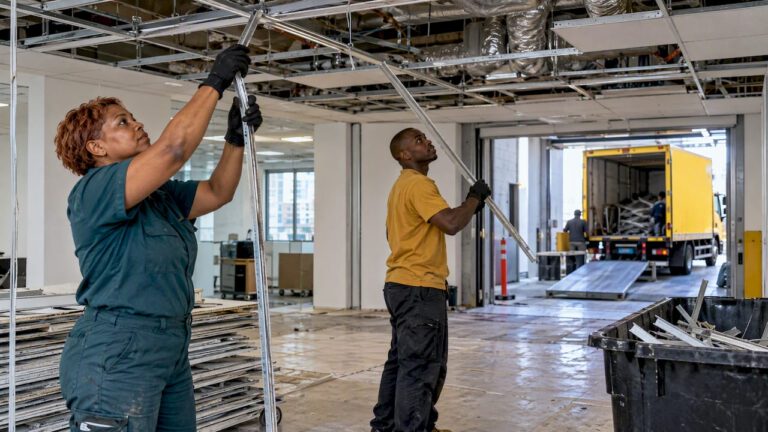
A strip-out removes everything that was added to a tenancy since it was handed over: partitions, suspended ceilings, carpet tiles, joinery, data and power cabling, kitchenettes, and fixed furniture. It strips the space back to a base building shell, ready for either a new tenant’s fit-out or the landlord’s make-good works. What it does not automatically include is putting anything back.
Contractors present pricing three ways, and it pays to know which one you’re looking at before you compare quotes:
- Per-square-metre rate — most common for straightforward tenancies, scaled to floor area
- Fixed job price — a lump sum for a defined scope, useful when the space has been walked through
- Minimum call-out charge — applies to small tenancies where mobilisation costs more than the labour
The quote should spell out inclusions (removal, transport, disposal, floor sweep) and exclusions (asbestos testing, specialist cabling removal, structural repairs). A quote that reads “office strip-out, $X” with nothing broken down is a quote you can’t properly compare against anyone else’s.
What makes strip-out quotes vary so much?
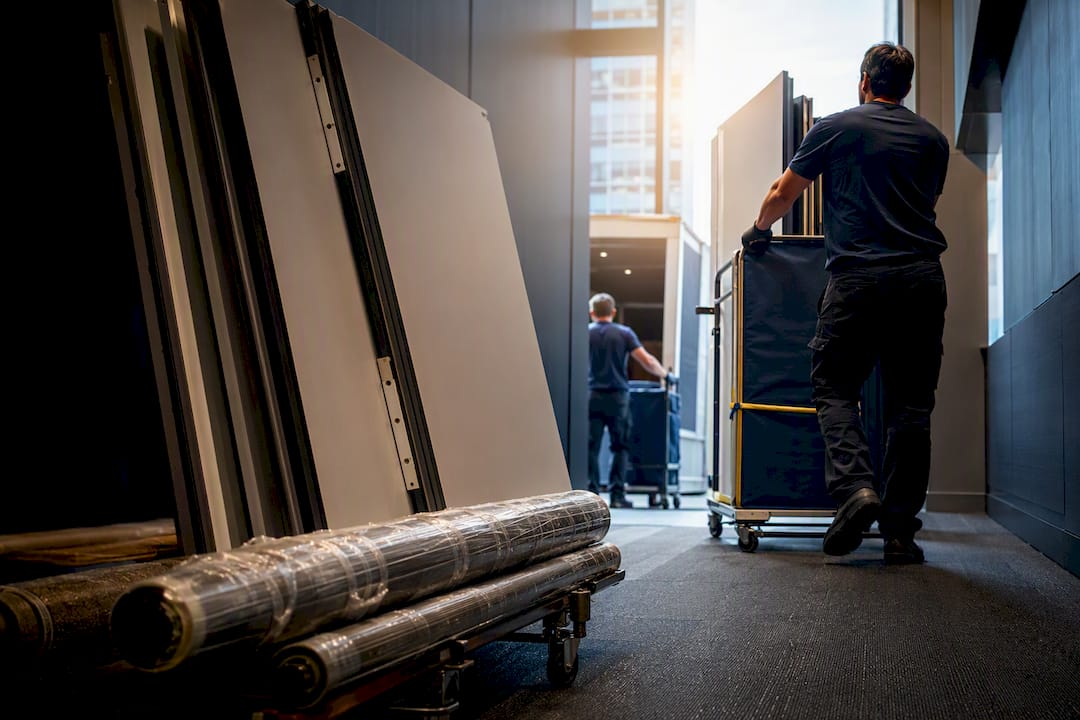
Access is usually the biggest swing factor. A ground-floor tenancy with a loading dock costs far less to clear than a Level 22 suite served by one small goods lift shared with six other tenancies. Sydney Fitout Group notes an access premium of roughly 15 to 25 percent commonly applies where lift bookings, long carries, or restricted loading windows blow out labour hours.
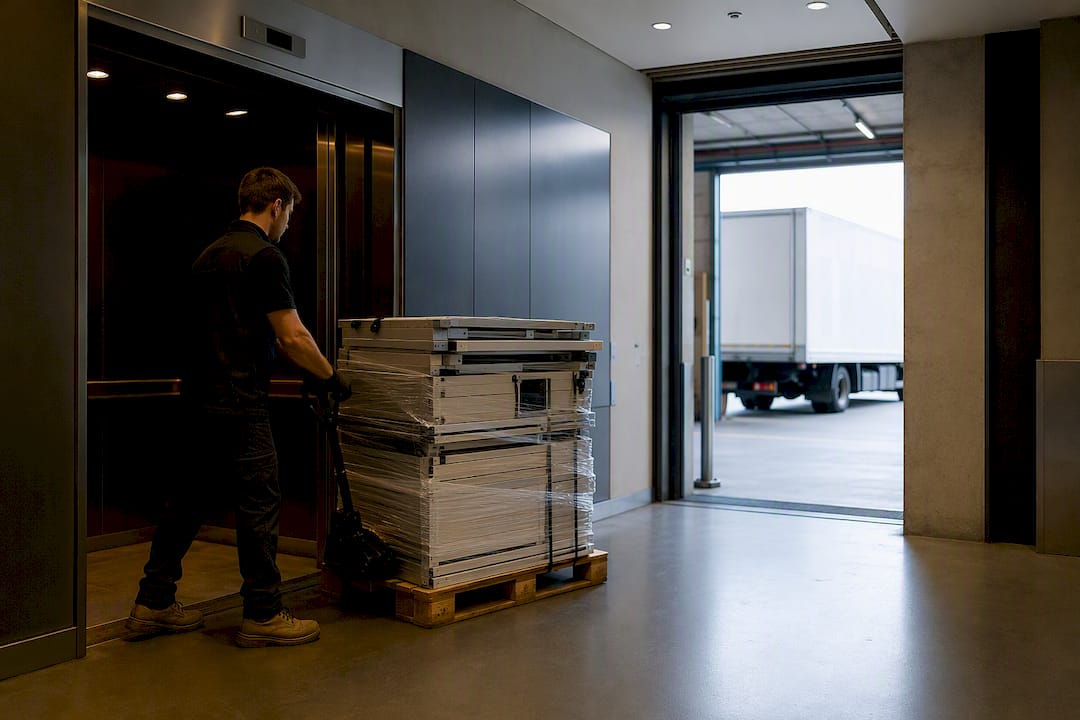
Material type matters just as much. Engineered timber flooring, tiled wet areas, and cement screed take longer to remove and cost more to dispose of than lightweight partition walls and demountable joinery.
Other drivers worth checking before you accept a number:
- Services removal — mechanical and electrical (M&E) disconnection often needs a licensed trade, not general labour
- Hazardous materials — older buildings may carry asbestos in vinyl tiles, ceiling panels, or adhesives, triggering testing and licensed removal under SafeWork NSW demolition guidance
- Scheduling — after-hours or weekend work to satisfy building management rules adds a labour loading
- Building induction and centre-management fees — common in commercial towers, rarely mentioned upfront
- Council or strata conditions — anything touching structure or common property may need separate approval
Pro Tip: Ask every contractor to price the job twice: once for standard business-hours access, once for whatever after-hours or lift-restricted arrangement your building actually requires. The gap between those two numbers tells you exactly how much your building’s logistics are costing you.
How much should a strip-out cost per square metre?
Three benchmark bands cover most Sydney office tenancies:
- Basic strip-out ($30–$50/m²) — open-plan space, carpet tiles, minimal partitioning, easy ground-floor access
- Standard strip-out ($50–$80/m²) — mixed partitioning, suspended ceilings, a kitchenette, moderate cabling, typical mid-rise access
- Complex strip-out ($80–$150+/m²) — dense joinery, tiled amenities, extensive M&E, restricted lift access, or hazardous materials requiring licensed handling
Applied to real tenancies: a 50 m² suite often sits near the minimum call-out charge regardless of band, commonly $2,500 to $4,000 once mobilisation is covered. A 250 m² tenancy in the standard band runs roughly $12,500 to $20,000, so using a detailed checklist déménagement entreprise can help manage the logistics effectively. A 1,000 m² floor in the complex band can reach $80,000 to $150,000 before any make-good works are added on top. Small jobs rarely scale down proportionally. A contractor still has to mobilise a truck, crew, and disposal bins whether they’re clearing 40 m² or 400 m².
What should you send a contractor for an accurate quote?
Vague scopes produce vague quotes, and vague quotes produce change orders once work starts. Give every contractor the same four things:
- Wide photos of every room and the full material route, including lifts, stairwells, and the loading dock
- A room-by-room list naming exactly what gets removed versus retained
- The lease make-good clause, plus any landlord or strata directions and your required completion date
- A request for itemised pricing covering removal, disposal, and any specialist trades, with weighbridge dockets provided at completion
Pro Tip: Photograph the corridor and lift lobby, not just the office itself. A Master Strip Outs review of quote disputes found that missing route photos are one of the most common causes of mid-job price revisions.
Is make-good the same thing as a strip-out?
No, and confusing the two is where budgets blow out. A strip-out clears what the tenant added. Make-good is a lease obligation to return the space to a specified condition, sometimes base building, sometimes a defined earlier state, and it often requires trades that put things back, not just take them away.
Make-good costs in Sydney typically sit in three bands: light reinstatement at $50–$100/m², moderate work at $100–$200/m², and full reinstatement at $200–$350/m². Restoration trades cost more than demolition labour because they involve skilled finishing work, not just removal.
Three ways to handle it:
- Negotiate a payment in lieu of physical works, often cheaper for both parties
- Reach a negotiated settlement on partial make-good scope
- Let the landlord manage reinstatement and bill the tenant a fixed sum
Astris Law notes that most make-good disputes stem from tenants and landlords reading the same clause differently, which makes early clarity worth far more than it costs.
How long does an office strip-out actually take?
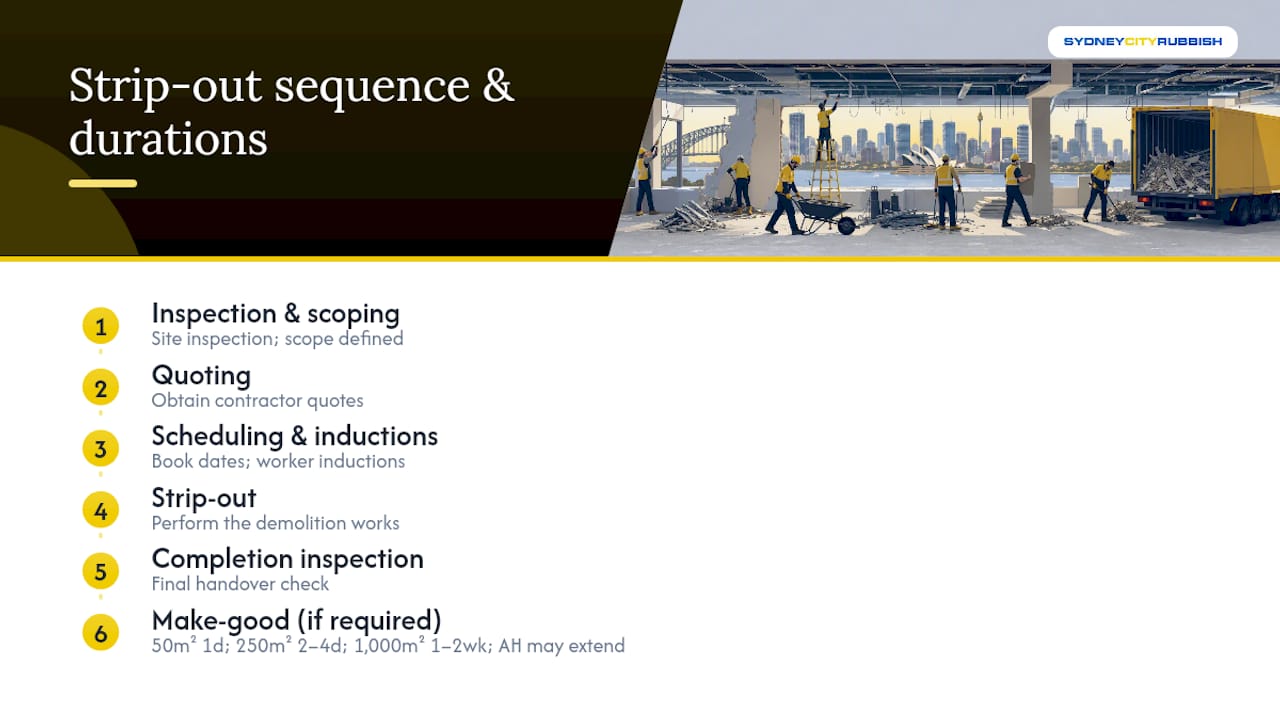
The sequence runs: site inspection and scoping, quoting, scheduling and building inductions, the strip-out itself, a completion inspection, then make-good trades if the lease requires them. A 50 m² tenancy typically clears in a day. A 250 m² floor takes two to four days. A 1,000 m² office can run one to two weeks, longer again if after-hours restrictions limit daily working windows.
Build in a contingency of several days either side of your lease deadline. Sequencing strip-out and make-good back-to-back, rather than leaving a gap for re-quoting, protects you from paying holdover rent while trades are still booked.
Do you need permits, and who handles hazardous waste?
Structural changes or anything touching common property may require council development consent, so check with your local planning authority before demolition starts. Buildings constructed or fitted out before 2004 often carry asbestos in vinyl tiles or ceiling panels, which triggers mandatory testing and licensed removal.
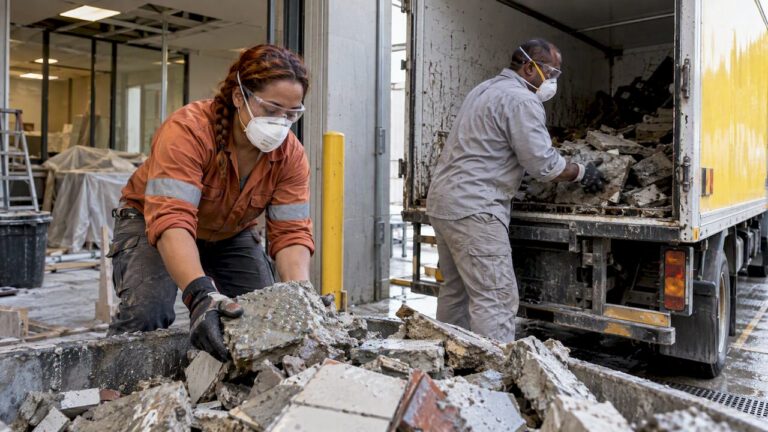
Disposal itself isn’t free or fixed. Mixed construction waste in NSW commonly costs $180 to $400 per tonne to dispose of, and that variability is exactly why you need itemised disposal lines and weighbridge dockets on the final invoice, not a bundled “waste removal included” figure with no paper trail.
How do you compare contractor quotes properly?
Line up quotes against the same checklist, not against the bottom-line figure alone. Every quote should show an itemised scope with clear exclusions, current licences and insurance, asbestos accreditation if the building’s age warrants it, and a stated waste disposal plan with disposal documentation offered as standard.
Red flags to walk away from:
- A single lump sum with no breakdown of labour, transport, and disposal
- Refusal to provide weighbridge dockets or disposal records on request
- No mention of access logistics despite a high-rise or restricted-lift building
Pro Tip: If two quotes differ by more than 20 percent, ask both contractors to price the exact same scope document rather than their own interpretation of a walkthrough. Most gaps close once the scope is standardised. And if your lease allows it, a cash settlement with the landlord in lieu of full make-good is often worth proposing before you even collect strip-out quotes. It can sidestep the reinstatement cost entirely.
Why hire a specialist waste and strip-out partner?
A professional strip-out partner should hand you more than an empty floor. Sydney City Rubbish works across commercial office demolition, truck-and-driver hire, and end-of-lease cleanouts, with a carbon-neutral disposal option for clients who want their waste stream managed responsibly rather than just shifted off-site.
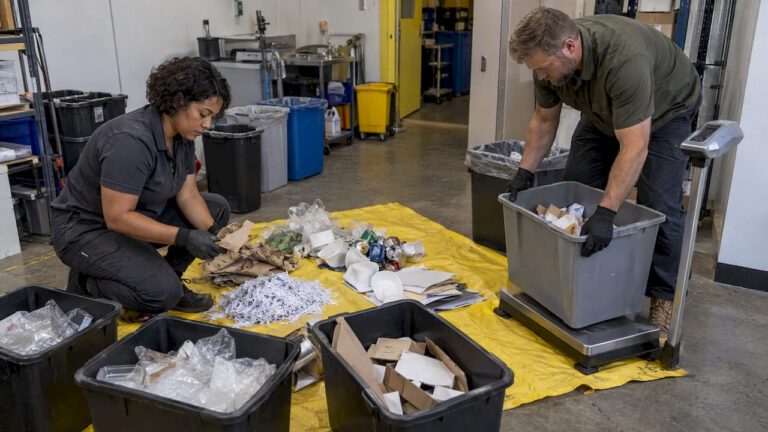
The deliverables worth insisting on from any supplier: weighbridge dockets showing where your waste actually went, a documented breakdown of waste streams, trucks that arrive on the day and time booked, and a swept, clean handover ready for inspection. Anything less leaves you exposed if a landlord or strata manager later questions how the site was cleared.
Get a strip-out quote built around your lease, not a guess
You’ve now got the checklist, the bands, and the traps. What most tenants lack is time to chase three separate contractors for photos, disposal proof, and a scope that actually matches their lease. A specialist waste and strip-out partner can handle commercial strip-outs, demolition, and end-of-lease cleanouts across major Sydney locations, often offering carbon-neutral disposal options integrated into their services.
A dedicated rubbish removal and demolition operator focuses on waste handling, weighbridge documentation, and truck scheduling as core business elements rather than subcontracting those tasks. That matters when your make-good sign-off depends on proving where every tonne of waste ended up.
If you’re weeks out from a lease expiry and need a scope walked through properly, get in touch with the team or check current rubbish removal availability across Sydney to get a quote built around your actual make-good clause, not a generic per-square-metre guess.
Sources
- Office strip out Sydney: cost, process & checklist | Sydney Fitout Group
- Commercial strip-out insights | Gladison
- Make good disputes at lease end: how Brisbane commercial tenants can avoid costly litigation | Astris Law