Avoid Asbestos Risk When Removing Vinyl Glue From Concrete in Sydney
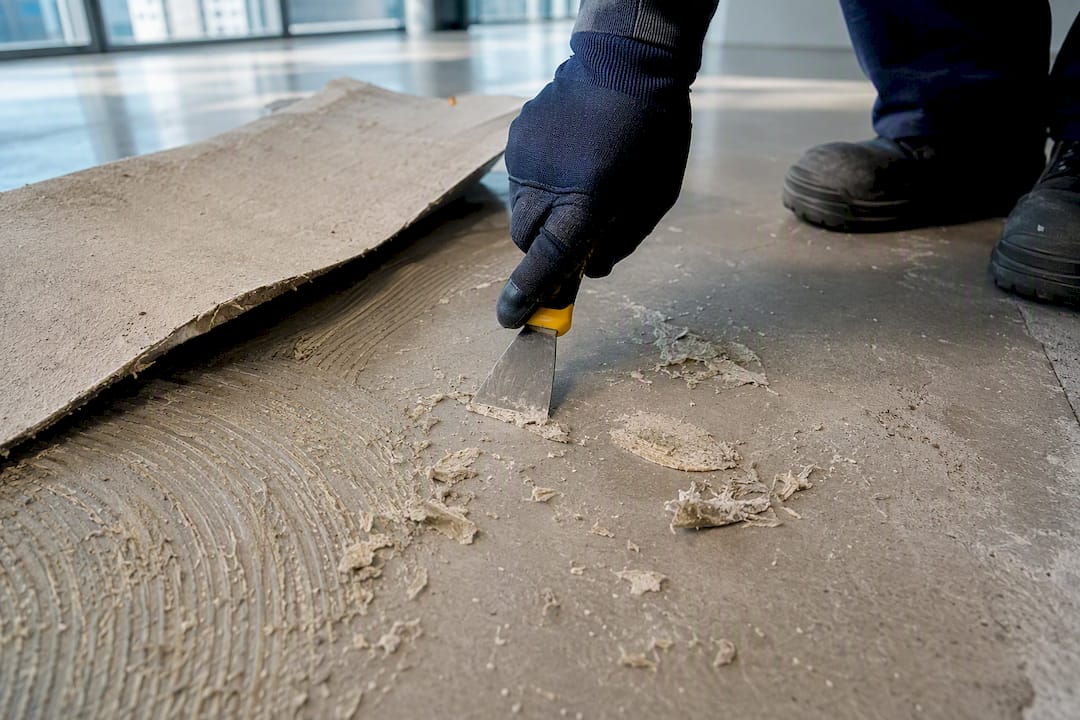
Start with mechanical scraping to clear the bulk of the vinyl glue, then follow with a mastic-rated chemical remover to lift what’s left behind. Most residential and light commercial jobs respond well to this two-stage approach. Stop and call in professional testing the moment you spot black, tar-like cutback mastic or suspect the flooring predates 1990, since that residue may contain asbestos.
TL;DR:
- Mechanical scraping combined with chemical removers is most effective for large areas and stubborn residues, especially when cutback mastic may contain asbestos.
- Use rental tools like walk-behind scrapers or grinders fitted with mastic-rated tooling to speed up extensive removal projects while maintaining dust control and safety protocols.
- Apply a mastic-specific chemical remover after scraping, testing a small area first to avoid damaging the concrete or causing discoloration, and rinse thoroughly afterward.
- Black, tar-like residue on older slabs warrants asbestos testing before further disturbance, with professional removal or encapsulation if asbestos is confirmed.
- Proper site cleanup involves sealing and disposing of debris and chemical rinse water safely, with options to arrange professional waste removal, especially for hazardous materials.
Table of Contents
- Vinyl glue removal concrete methods compared
- Tools, equipment and PPE — what to buy or rent
- How do you chemically remove vinyl glue from concrete?
- What’s the fastest way to scrape glue off concrete?
- Can hot water or a heat gun remove vinyl adhesive?
- Is the black residue on my concrete asbestos?
- Preparing concrete for new flooring after glue removal
- Cleanup and disposal after removing vinyl glue
- When to call Sydney City Rubbish for your flooring project
- Sources
Vinyl glue removal concrete methods compared
Four approaches handle vinyl glue removal from concrete, and each suits a different job. Mechanical scraping is cheap and controllable but slow on large areas. Chemical strippers cut through stubborn residue without heavy labour, though they need dwell time and careful rinsing. Heat and hot water soften pressure-sensitive adhesives quickly but barely touch full-spread mastic. Grinding clears everything fast but demands rental gear, dust control, and a steady hand.
Picking between them comes down to three questions: how big is the floor, what’s the adhesive type, and what tools do you already have access to?
- Small area, light residue: hand scraping plus a heat gun usually finishes the job in an afternoon.
- Stubborn film after scraping: a mastic remover applied per label directions handles what the blade left behind.
- Large area or bonded cutback mastic: grinding with the right tooling, or hiring a walk-behind power scraper, saves your back and your weekend.
Contractors typically default to a hybrid workflow: scrape off the bulk mechanically, then hit the leftover film with a targeted chemical, which combines mechanical and chemical removal for a coating-ready slab without excessive tool wear.
Tools, equipment and PPE — what to buy or rent
A stiff hand scraper with a replaceable blade handles edges and small sections, while a long-handled floor scraper with a generously sized blade set at a low angle clears open floor area without you kneeling for hours. For anything beyond a single room, renting pays off.
- Oscillating multi-tool with a scraper attachment: good for tight corners and stair nosings.
- Walk-behind power scraper: the workhorse for open-plan rooms or small commercial fit-outs.
- Grinders fitted with PCD or mastic-rated tooling: necessary for bonded residue that standard pads can’t shift.
PPE isn’t optional here. Gloves, safety glasses, and an N95 or half-face respirator protect you from dust and chemical fumes, and you’ll want good cross-ventilation or an open door and fan running the whole time. Our guide on demanding proper silica controls breaks down what strata managers and site supervisors should insist contractors provide.
Pro Tip: Rent the power scraper for a half-day block rather than a full day. Most operators clear the bulk of a room in two to three hours once they get the blade angle right.
How do you chemically remove vinyl glue from concrete?
Chemical removal works best as a follow-up step after scraping, not a replacement for it. The workflow is straightforward if you follow the label.
- Choose the right product. Pick a remover labelled specifically for mastics or adhesives, not a generic paint stripper. Some strippers can darken or etch bare concrete, so mismatched product choice is a common DIY mistake.
- Test a small patch first. Apply to an inconspicuous corner and check for discolouration before treating the whole floor. Manufacturer guidance for products like INCRETE UNI-STRIPP recommends this step to catch etching risk early and confirm dwell time for your specific slab.
- Apply and let it dwell. Brush, roller, or sprayer all work depending on product viscosity. Expect a dwell time of roughly half an hour to an hour.
- Agitate and scrape. Once the residue has softened, work it loose with a scraper rather than letting it dry back onto the slab.
- Rinse thoroughly. Any leftover film affects how well new adhesive bonds later.
Commercial mastic removers typically list coverage around 150 sq ft per US gallon as a planning figure, which helps you budget product quantity before you start rather than running short halfway through a room. For heavier coatings, covering the treated area with plastic sheeting traps vapour and boosts dwell effectiveness, cutting down on re-applications.
What’s the fastest way to scrape glue off concrete?
Hold the scraper blade at a low angle, close to flat against the slab, and push forward in long strokes rather than chopping downward. Chopping gouges the concrete surface, which then needs patching before new flooring goes down.
Hand scraping typically covers 50 to 75 sq ft per hour, so a medium sized room takes most of a day solo. Power scrapers and ride-on units multiply that rate substantially, which is why rental gear makes sense once you’re past a single room.
- Standard diamond polishing pads gum up fast on adhesive residue and stop cutting almost immediately.
- PCD (polycrystalline diamond) blades or dedicated mastic-removal blocks are built to shed the gummy build-up that clogs regular abrasives.
- Wet grinding knocks down airborne silica dust but creates runoff you need to capture, not send down a stormwater drain.
- A HEPA-filtered vacuum running alongside the grinder catches fine dust before it spreads through the work area.
Pro Tip: If your scraper starts skipping instead of biting, stop and check the blade edge. A dull blade wastes more time than the five minutes it takes to swap it.
Can hot water or a heat gun remove vinyl adhesive?
Heat works well on pressure-sensitive adhesives and sheet vinyl backing, softening the bond enough to peel large sections by hand. A heat gun run slowly across a small section, followed by immediate scraping while the glue is still warm, handles isolated patches efficiently.
- Keep the heat gun moving to avoid scorching the concrete surface or melting vinyl into a sticky mess.
- Boiling or hot water can soften some water-based adhesives, though it’s unsuitable for every adhesive type and shouldn’t be mixed with vinegar or citrus cleaners near concrete.
- Treat heat as a useful adjunct for stubborn corners, not a standalone method for full-spread mastic across a whole floor.
Is the black residue on my concrete asbestos?
Black, tar-like adhesive residue on older slabs is often cutback mastic, and cutback mastic manufactured before the 1980s and 1990s frequently contains asbestos fibres. Visual inspection alone can’t confirm this. If your flooring predates that window, or you simply can’t identify the installation date, treat the residue as suspect until testing proves otherwise.
- Stop grinding or aggressive scraping immediately if you see this black residue.
- Arrange testing through a licensed asbestos assessor before disturbing the material further.
- Encapsulation, rather than removal, is sometimes an acceptable option depending on the test result and your flooring plans.
- NSW rules govern who can legally handle and dispose of asbestos-containing material, and our guide to asbestos disposal regulations covers what property owners need to arrange.
- Hire a specialist for grinding or removal once asbestos is confirmed. This isn’t a DIY job under any circumstances.
Preparing concrete for new flooring after glue removal
Once the slab is bare, vacuum thoroughly and inspect for gouges or low spots left by scraping. Patch compound needs its full cure time before you proceed, which is usually stated on the product packaging and varies by brand.
- Moisture testing matters more than most DIYers expect. Adhesives and coatings have specific moisture thresholds, and pouring new glue over a slab that’s too wet leads to bond failure months later.
- Leftover chemical residue or fine dust ruins adhesion just as effectively as leftover glue. A final rinse and dry-down pass confirms the surface is genuinely clean, not just visually clear.
- If removal has damaged the concrete profile beyond what patching can fix, a self-levelling screed or overlay is a reasonable alternative to chasing every last imperfection out of the original surface.
Cleanup and disposal after removing vinyl glue
Double-bag vinyl offcuts and dried adhesive debris before it leaves the site, and label anything you suspect is hazardous so it doesn’t get mixed with general waste. Chemical rinse water needs containment too. Don’t let it run into stormwater drains. Check the product’s safety data sheet for correct disposal advice, since requirements vary between mastic removers.
- Bag and seal vinyl fragments and dried glue scrapings separately from general rubbish.
- Collect rinse water in a container rather than hosing it into the yard or gutter.
- Keep suspect asbestos material sealed and untouched until a licensed handler collects it.
- For construction offcuts and plaster waste generated during the same reno, our plaster disposal guide covers classification.
- Larger jobs, tight deadlines, or hazardous material findings are exactly when calling a removal service beats another weekend of skip runs. Partners like EasyMove Services offer similar project logistics support if you’re coordinating a broader clearout alongside the floor.
When to call Sydney City Rubbish for your flooring project
Once the glue’s up and the debris is bagged, the last job is getting it off site, which may be better than renting a skip and hoping it’s big enough. We handle truck and driver hire sized to the actual volume of vinyl offcuts, mastic containers, and patch compound bags your project generates, rather than leaving you paying for a half-empty bin or scrambling to book a second one.
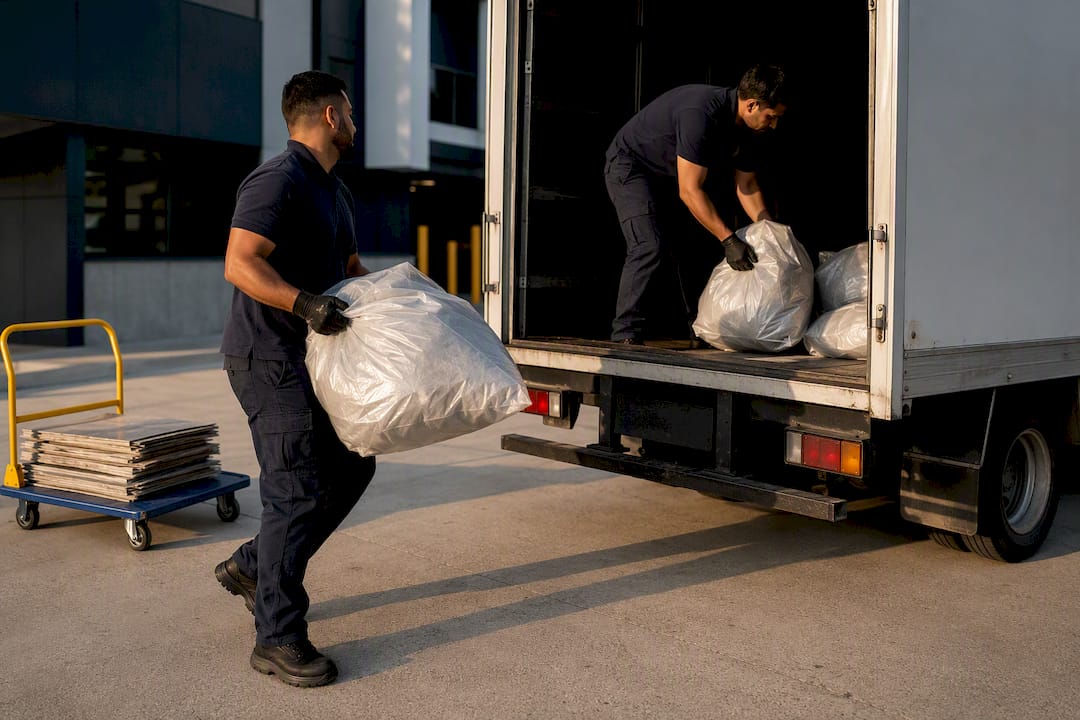
For strata buildings and commercial fit-outs, project pickup can be coordinated around trade schedules to help avoid delays in floor preparation due to waste clearance. If suspected cutback mastic is found, professional advice on handling logistics should be sought once testing confirms the material. Clients seeking a lower environmental impact may have options for carbon-neutral disposal partnerships.
Request a quote through our rubbish removal contact page and include the floor area, a few photos of the debris, and whether you suspect asbestos or other hazardous material. That’s enough for us to size the job and get you a straight answer, not a guess. For bigger fit-out or construction jobs, our main rubbish removal service page covers what’s included and how booking works.
Sources
- Diggers 1L Glue Rid | Bunnings
- How to Remove Carpet Glue from Concrete Floors | ConcreteNetwork
- How to remove vinyl flooring from concrete | D & G Flooring