When a business reaches the end of its lease or prepares for a refurbishment, one of the first decisions is whether a partial or full office strip out is required.
At Sydney City Rubbish, we manage commercial strip out and defit projects across the Sydney CBD every day, and we know how confusing this distinction can be for tenants and building managers. Many clients come to us unsure about the scope of work they need, or what their make good clause actually requires.
Strip outs are a core part of the make good process and play a major role in cost, timelines and disruption. Understanding the difference between a partial office strip out and a full office strip out helps you make informed decisions from the start. It also helps ensure you’re following the most logical process to getting your bond back (if it’s an end of lease defit).
What is a partial office strip out
A partial office strip out involves removing selected fixtures or elements without dismantling the entire fit out. At Sydney City Rubbish, we complete these projects when a business is updating part of the space or when a tenancy is being prepared for new occupants who will reuse some of the existing layout.
This work may include removing workstations, cabinetry, carpets, certain partitions, old signage, redundant data cabling or fixtures that no longer serve the next tenant. Because the scope is targeted, a partial defit is faster, more cost effective and causes less disruption. In many cases, we complete these projects while our clients continue operating onsite.
What is a full office strip out
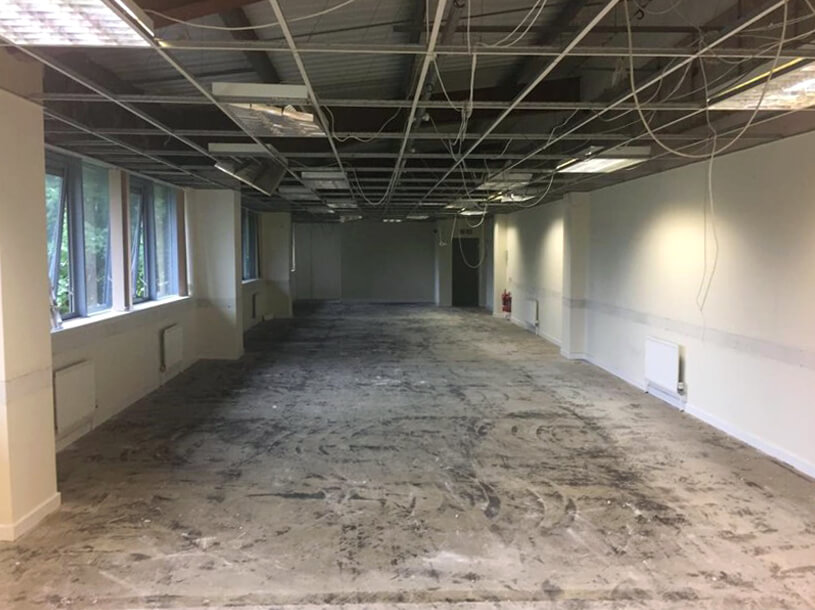
A full office strip out brings the tenancy back to its original condition. We remove everything installed during the tenancy, including internal walls, ceilings, joinery, floor coverings, glazing, lighting, HVAC components, electrical and data systems and any remaining fixtures or furniture.
Full commercial defits are larger, more complex projects that often come with strict deadlines and detailed compliance requirements. We work closely with building managers, engineers and other trades to ensure every stage is completed safely and in line with building regulations, waste management rules and lease obligations.
Key differences between a partial and full strip out
The main difference is scope. A partial defit deals with selected elements, while a full defit involves stripping everything back to the base building.
Disruption also varies significantly. Partial strip outs can often be staged around your operations, while full strip outs require the space to be vacated due to the volume of work and waste involved.
Costs and timelines reflect this difference. Partial projects are generally more economical and faster. Full strip outs require more labour, more planning, controlled removal processes and greater waste handling.
Compliance tends to be more involved in a full strip out, as leases usually require a strict make good inspection before approval.
When a partial office defit is the right choice
A partial office defit is ideal when the changes you require are minimal or focused on specific areas. We commonly recommend this option when clients are updating furniture, removing outdated cabinetry or refreshing the space without changing the overall layout.
It is also suitable when the incoming tenant plans to reuse part of the existing fit out, keeping costs and waste to a minimum. If your lease does not require a return to base building condition, a partial defit may fully meet your obligations.
When a full commercial stripout is required
A full strip out is typically required when your lease mandates a complete make good or when the building owner plans a major refurbishment. You will likely need a full defit if the tenancy includes extensive partitioning, built in joinery, suspended ceilings, server rooms or other constructed elements that must be removed before handover.
We also recommend a full defit when outdated or unsafe services are present. Removing old wiring, heavy fixtures or damaged flooring ensures the next stage of construction starts safely.
Cost considerations for partial vs full strip outs
Partial strip outs cost less because they involve less labour, less waste and a smaller scope of work. These projects are also faster and often require no changes to building access arrangements.
Full commercial defits carry higher costs due to the volume of removal, after hours access requirements, controlled waste movement and the need for a larger team. When preparing a quote, we assess the lease, the size and complexity of the space and the materials involved to provide an accurate estimate.
How strip out requirements affect your make good obligations
Your make good clause plays a major role in deciding whether a partial or full strip out is required. Some leases only require the removal of tenant installed fixtures, while others mandate a complete return to base building condition.
We regularly see tenants surprised by unexpected costs because they misinterpreted their obligations. This is why we always advise reviewing the lease early or allowing us to assess it before confirming the scope.
How long each type of strip out takes
A partial strip out may take only a few hours or a couple of days depending on the size of the project. These are straightforward jobs and usually create minimal disruption.
A full strip out takes longer, often one to two weeks for typical CBD tenancies. Larger or multi level spaces naturally require more time. Sequencing removals and managing controlled access in high rise buildings adds to the complexity.
What to consider before choosing partial vs full services
Key questions include:
- What does your lease require?
- Are you refreshing, relocating or fully vacating?
- Will the next tenant reuse part of the fit out?
- Are any fixtures unsafe or outdated?
- Will retaining some elements benefit your timeline or budget?
Answering these questions will guide you towards the right level of work.
How we manage commercial strip out projects
At Sydney City Rubbish, we take a structured and professional approach to both partial and full defits. We begin with a site inspection and clear plan that aligns with building regulations, access rules and environmental standards.
Our team manages dismantling, waste removal and disposal efficiently, working closely with building managers to ensure smooth access, safe removal and minimal disruption. Whether you need a targeted partial strip out or a complete commercial defit, we handle the entire process from start to finish.