Safe Office Furniture Removal: Sydney’s Carbon Neutral Option
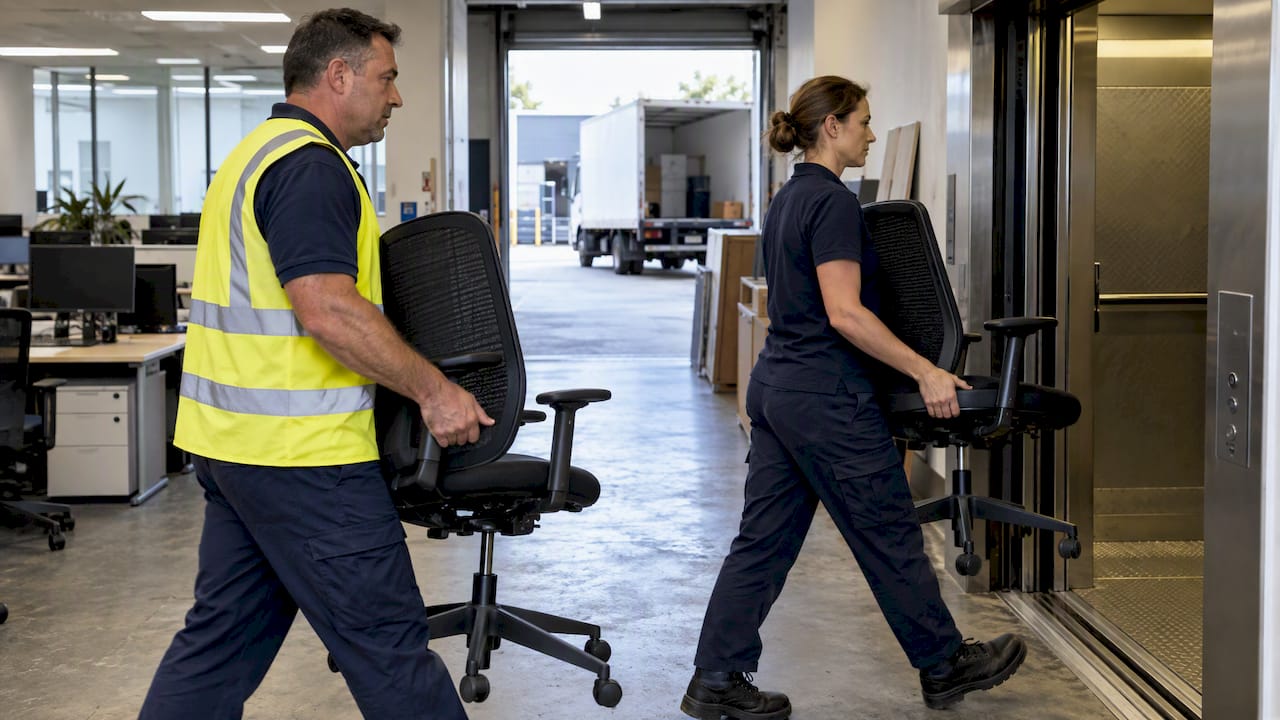
A low-disruption option is to engage a professional commercial removal service that provides trained crews, mechanical aids, covered transport and documented disposal. Expect the provider to coordinate with building management, offer after-hours access and supply paperwork for recycling or donation. Ask for a fixed quote from photos and a floor plan, then confirm it with a site visit.
TL;DR:
- Start the inventory weeks ahead, sort every item into keeping, donation or resale, recycling, or disposal, then confirm loading access, lift bookings, and after hours rules.
- Require a risk assessment, trained crews, mechanical aids, and two person lifts when aids cannot be used; keep loads covered and verify lawful receiving facilities.
- Request a fixed initial quote using photos and a floor plan, then confirm it on site; restricted access, dismantling, electronic waste, and tight schedules raise costs.
- About 95% of commercial furniture waste goes to landfill, so donate or resell usable pieces first and request written recovery reports for remaining materials.
Table of Contents
- What does a professional furniture removal service include?
- How do you plan a safe, low-disruption removal?
- What safety and compliance rules apply?
- What does office furniture removal cost?
- (#how-can-you-dispose-of-office-furniture-responsiblyhttpsbulkywasteieoffice-furniture-disposal)
- How do you choose a removal partner?
- Book safe office furniture removal with us
- FAQ
- Sources
What does a professional furniture removal service include?
A full-service job covers more than a truck and two people. Before you accept a quote, check that it names each of the following items and tasks.
- Item types: desks, chairs, partitions, joinery, whitegoods and e-waste such as monitors and printers.
- Site assessment: a walk-through or photo review so the crew arrives with the right tools and enough people.
- Disassembly and lifting: workstations and fixed joinery taken apart, then moved with two-person lifts or mechanical aids such as trolleys.
- Covered transport: loads secured and covered so nothing escapes on the road.
- Separation at the source: reusable pieces set aside for donation or resale, with timber, metal and e-waste sorted for recycling.
- Building administration: loading dock and lift bookings, insurance certificates, inductions, permits and after-hours coordination.
If a quote lists only “removal and tip fees”, the safety, access and paperwork are probably your problem. Our commercial and office rubbish removal service provides a rubbish removal solution for your business, so your facilities team is not chasing multiple suppliers.
How do you plan a safe, low-disruption removal?
Treat the removal as a small project with an owner, a timeline and a paper trail. Local authorities also recommend treating furniture removal as a project-management task and spotting reusable items early, which avoids landfill fees and opens the door to donation or resale. Use this checklist as your plan or hand it to your facilities team.
- Start the site assessment and item inventory as early as you can, ideally weeks before the removal date.
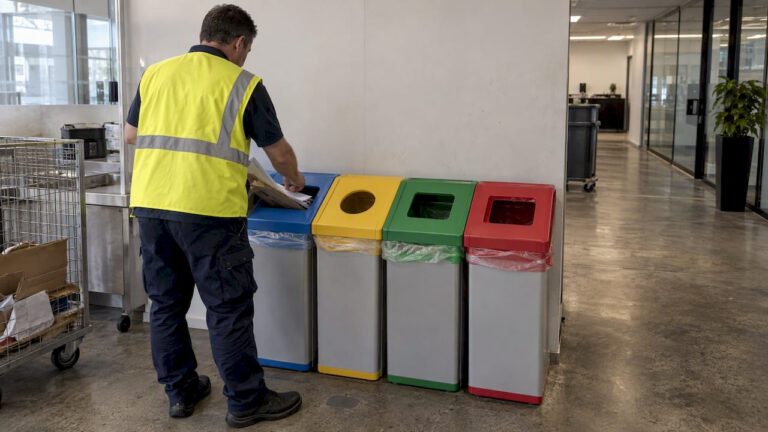
- Sort every item into one of four streams: keep, donate or resell, recycle, or dispose.
- Confirm building rules: loading dock windows, lift bookings, after-hours access and insurance requirements.
- Book trained crews and mechanical aids, and plan two-person lifts with protective equipment for heavy pieces.
- Confirm where each stream is going and request written disposal or resource-recovery documentation.
- Walk the floor after the crew leaves to check for damage and leftover debris.
Pro Tip: Photograph each floor, the lift and the loading dock before work starts. Dated photos settle any later dispute about marks or damage, and they give the provider what it needs for a fixed quote.
If you are moving premises as well, our guide to office rubbish removal when moving shows how to fit the clear-out around the move.
What safety and compliance rules apply?
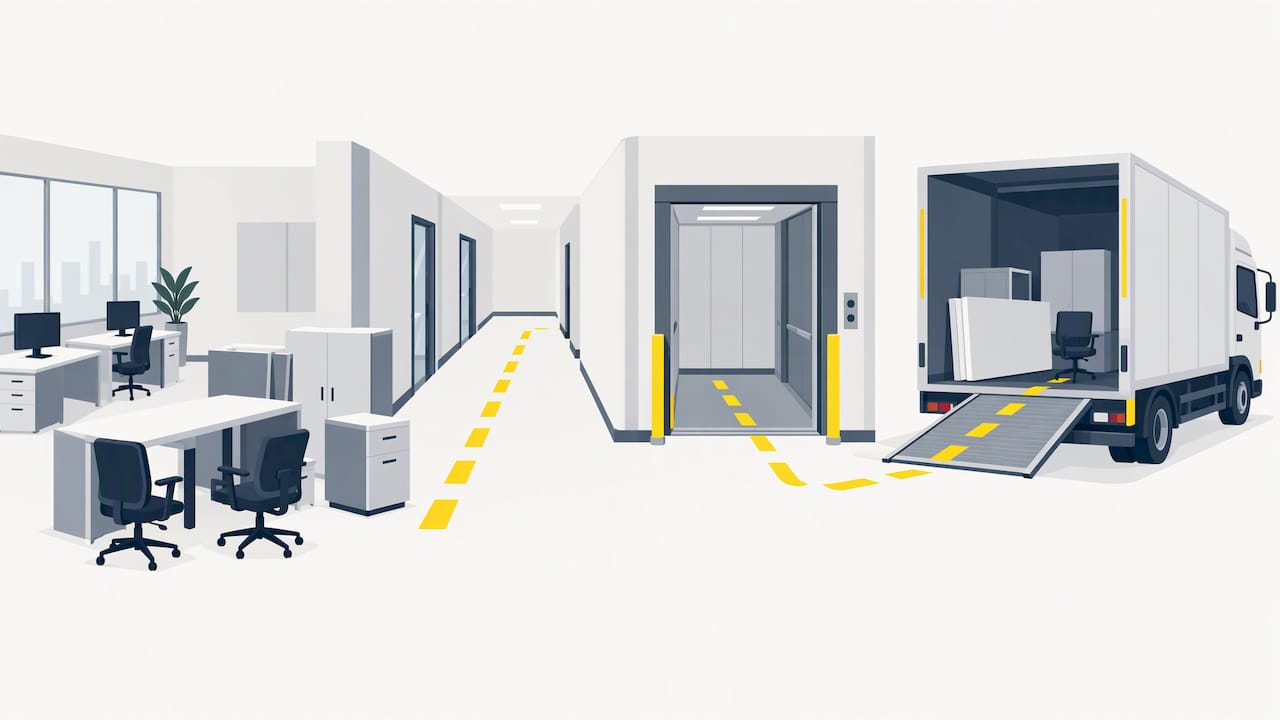
Moving heavy desks and joinery is a hazardous manual task, and employers must assess and manage it. Safe Work Australia’s manual task guidance expects hazardous tasks to be identified, risks eliminated where practicable and controls such as mechanical aids and training applied. The related model code of practice adds good work design: position items between waist and shoulder height where possible and avoid awkward postures.
A competent crew should show you these controls in practice:
- A written risk assessment for the job before anyone lifts anything.
- Mechanical aids for heavy or bulky items, with two-person lifts where aids cannot be used.
- Lifts kept between knuckle and shoulder height wherever possible.
- Training records, site inductions and protective equipment for every worker.
- Disassembly of large joinery on site rather than forcing it through doorways intact.
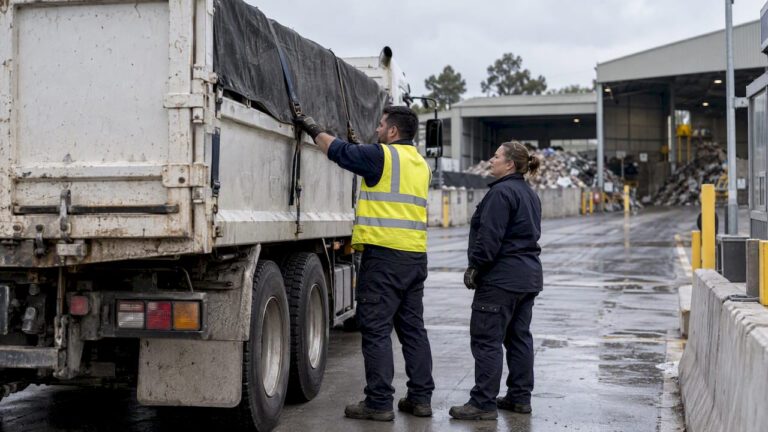
Transport carries its own obligations. The EPA’s rules on transporting waste require loads to be covered and kept from spilling, and sending waste to a place that cannot lawfully receive it is an offence with heavy penalties.
Waste must go to a lawful facility, and loads must be covered in transit. The penalties for wrongly transported or dumped waste are heavy, so ask for the receiving facility’s details in writing.
Ask any provider for safety training evidence, induction records and waste-transfer notes, and confirm what they can supply.
What does office furniture removal cost?
Providers price the job in a few common ways, and understanding them stops a cheap-looking quote from growing later.
- Cubic-metre pricing: you pay for the volume removed, often with a minimum charge.
- Truckload pricing: a set price per truck, suited to larger clear-outs.
- Per-project quotes: one price covering labour, transport, disposal and paperwork.
- Add-ons: after-hours work, building escorts and e-waste handling may be charged separately.
Several things push a price up: restricted access or long carries, heavy joinery that must be dismantled, e-waste that needs specialist handling, and tight time windows that demand a larger crew. The most reliable route to an accurate number is to supply photos and a floor plan for a fixed initial quote, then expect a site visit to confirm the final price. If a quote arrives with no questions about access, lifts or timing, it is a guess.
How can you dispose of office furniture responsibly?
Reuse comes first. Many pieces are still sound, and charities can take large donations when items are planned in advance and of suitable quality. The ReLove charity works with commercial defits and shows how strip-outs can divert good furniture from landfill. Resale or redistribution suits newer desks and ergonomic chairs.
For everything else, separate the streams:
- Timber, metal and e-waste go to separate recycling routes.
- Check each recycler’s reputation and environmental certifications.
- Request receipts or resource-recovery reports so the chain of custody is on paper.
- Leave nothing on the kerbside, which is often illegal dumping.
Be realistic about the starting point. The NSW State of the Environment report notes that approximately 95% of commercial furniture waste ends up in landfill, though circular economy initiatives are trying to lift recovery. That is why a recovery report matters: it shows what your project diverted rather than leaving you to assume. Our furniture disposal and recycling page explains how we sort and route each stream.
How do you choose a removal partner?
A short set of questions separates a reliable provider from a risky one. Ask these before you sign:
- What training do your crews have, which mechanical aids do you use and how are inductions recorded?
- Which facility receives the waste, and will you supply waste-transfer notes?
- What share of the load is recovered, and will you report it in writing?
- Can you work after hours and quote a fixed price from photos and a floor plan?
- Do you guarantee punctuality and a clean finish?
- Is there a carbon-neutral or audited recycling opt-in, and how simple is the booking process?
Red flags are easy to spot: vague answers about where waste goes, no written quote, no mention of insurance or building access, and a price that seems too low for the scope. A provider confident in its process will answer each of these in a sentence or two.
Book safe office furniture removal with us
We remove office furniture for Sydney businesses and coordinate directly with building management. We provide quotes for our services. You can also opt in to carbon-neutral disposal. Ask us about compensation if we run late. To get started, request a fixed quote or site assessment through our commercial waste removal page.
FAQ
What is the cheapest way to get rid of office furniture?
Donation or resale of reusable pieces is usually the cheapest route, because it avoids disposal fees. For the remainder, a single bundled job with one provider often costs less than several separate pickups.
How do you dispose of office chairs?
Reuse first: donate or resell chairs in good condition, since charities can accept large donations when the items are of suitable quality. Worn chairs are best sent for recycling, with the metal, foam and fabric separated where the recycler can handle them.
Can you leave old office furniture on the kerbside?
Generally no. Placing large commercial furniture on the kerbside is often illegal dumping, and lawful transport rules require waste to go to a facility that can legally receive it.
How do you remove office furniture safely?
Assess the job as a hazardous manual task, use mechanical aids and two-person lifts, and keep lifts between knuckle and shoulder height. Engaging trained crews who supply induction records is the simplest way to meet these expectations.
What should you do with old electronics from an office?
Keep monitors, computers and printers out of general waste and send them to a specialist e-waste recycler. The EPA’s electronic waste fact sheet advises checking recyclers’ reputations and environmental certifications.
Sources
- Waste and recycling 2024 | NSW State of the Environment
- Businesses and waste services – City of Sydney
- Transporting waste | EPA
- – Lifting, pushing and pulling (manual tasks) | Safe Work Australia