Sydney Commercial Waste Rules: FOGO Starts July 2026
To meet commercial waste rules in Sydney, you need a private collection contract on site, correctly labelled and stored bins, and a plan for NSW EPA food waste separation, which starts on 1 July 2026. Food businesses must also check Sydney Water trade wastewater requirements. The City of Sydney and the Protection of the Environment Operations Act (POEO) set the baseline. This guide gives you the checklist and the documents to ask for.
TL;DR:
- Multiply bin volume by weekly pickups: food separation starts July 1, 2026, at 3,960L, then thresholds drop to 1,980L in 2028 and 720L in 2030.
- Food businesses that discharge trade wastewater need Sydney Water approval before connecting; retail kitchens commonly need grease traps, regular pump outs by licensed providers, and backflow prevention.
- Publicly placed bins must not exceed 1,100L, display premises and contractor details, have closed lids, and avoid blocking pedestrian or cycling access.
- Waste owners remain responsible after collection, so require dockets naming the receiving facility and verify transporter licences; controlled waste may also need tracking.
- Do not assume commercial compostable packaging belongs in food organics bins; NSW processors often reject it, so check contractor guidance before sorting.
Table of Contents
- What is the quick compliance checklist for your business?
- When do FOGO rules apply to your business, and what should you do?
- What are the City of Sydney rules for bin storage, labelling and placement?
- What do food businesses need to know about trade wastewater and grease traps?
- What records and duty of care apply when waste leaves your site?
- How do you choose a commercial waste provider in Sydney?
- Why do these rules exist, and what do they cost if you ignore them?
- How can we help you meet these rules?
- FAQ
- Sources
What is the quick compliance checklist for your business?
Council rates do not cover business waste, so you must arrange private commercial collections and keep written evidence of your current contract on site for inspection. Work through the list below and tick each item off.
- Confirm your collection contract is current and stored where an inspector can see it.
- Label every bin as required by the City of Sydney. If you need labels, ask the City.
- Keep bins inside your premises where possible, and follow approval and time-zone rules if bins must sit in a public place.
- Check bin condition: lids close, nothing leaks, and bins of 660L or more have working brakes.
- Never leave loose waste beside a bin, because that counts as illegal dumping.
- Keep disposal dockets from your contractor as proof of lawful receival, and check the contractor’s licence on the EPA public register.
Pro Tip: Pin a one-page copy of your contract and your latest docket in the manager’s office, so any staff member can produce them quickly.
When do FOGO rules apply to your business, and what should you do?
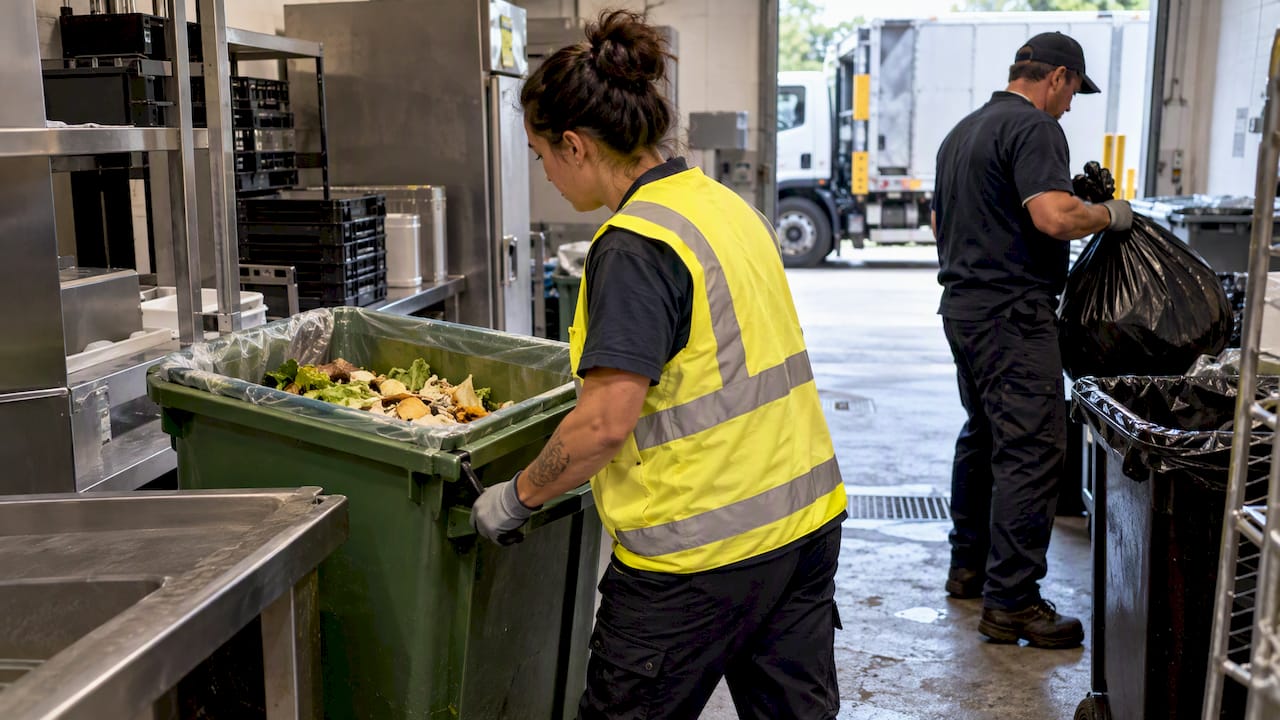
NSW businesses that handle food must separate food waste from general waste in three stages. The NSW EPA staging is tied to how much residual (general waste) capacity you have each week.
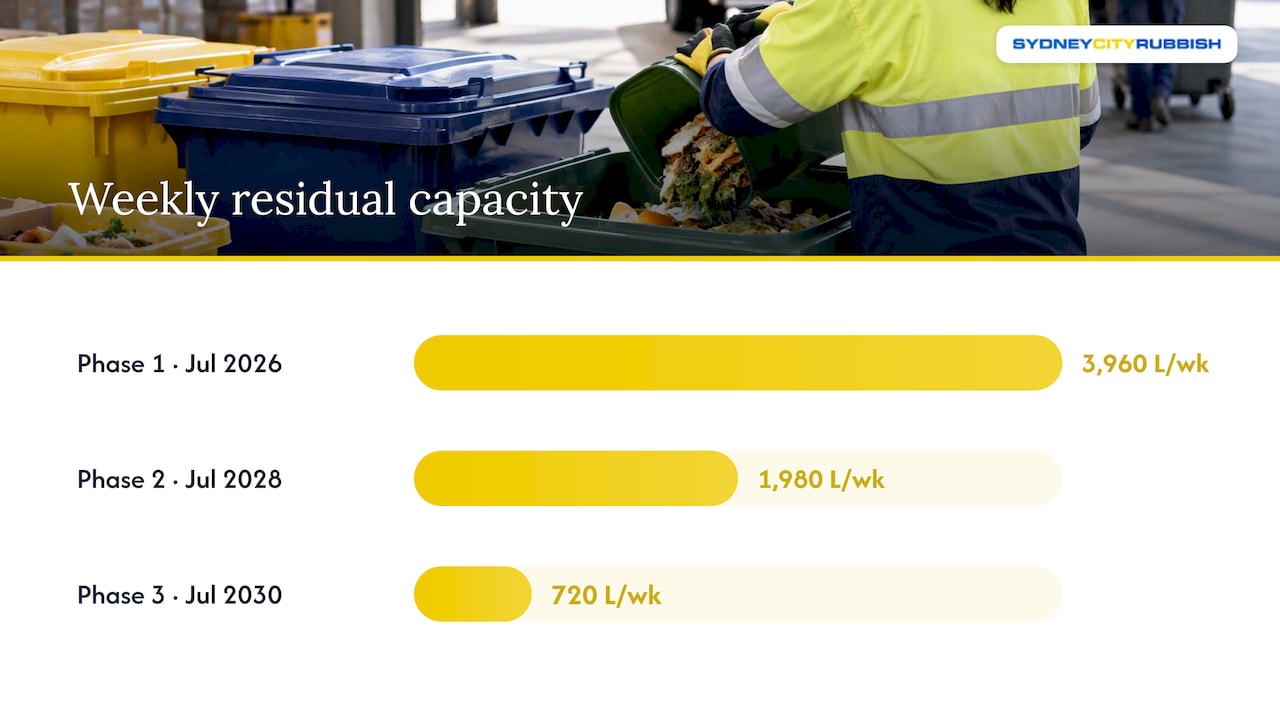
Phase 1 applies from 1 July 2026 at 3,960L per week, Phase 2 from 1 July 2028 at 1,980L per week, and Phase 3 from 1 July 2030 at 720L per week.
Work out your weekly capacity by multiplying bin size by collections. Six 660L bins emptied once a week gives 3,960L, which would put you in Phase 1.
- Run a waste audit for one typical week and note how much of your general waste is food.
- Separate food organics at the source, in the kitchen and prep areas.
- Ask your contractor about a food organics collection and adjust service frequency.
- Check your packaging: commercial compostable packaging is often not accepted by NSW commercial processors, so do not assume it belongs in a FOGO bin. It may need to go to general waste.
What are the City of Sydney rules for bin storage, labelling and placement?
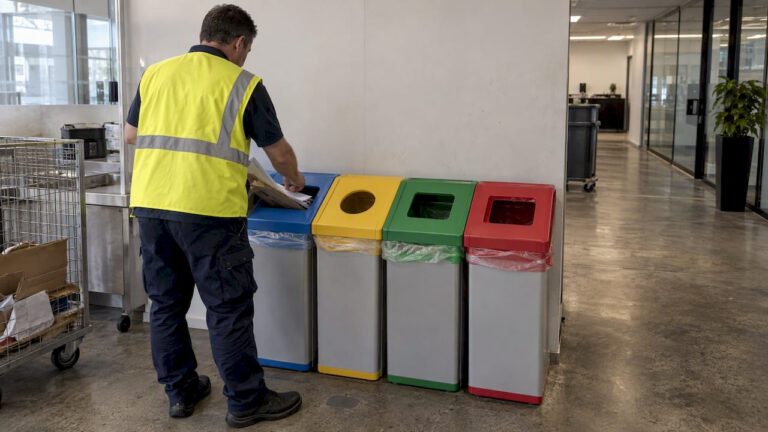
The City of Sydney’s waste guidance for businesses is specific. Bins in public places must hold all the waste, with the lid closed and no loose cardboard stacked beside them. They must be labelled with premises and contractor details and must not exceed 1,100L. Larger bins need brakes and reflectors. Unlabelled bins, or bins left out beyond the allowed times, may be impounded.
- Keep bins inside your property whenever they are not out for collection.
- Never block pedestrian or cycling access, emergency exits or ventilation inlets with bins.
- Return bins within the time allowed after your collection window. Leaving bins out beyond the allowed times may result in them being impounded.
- Lock bins that sit in public places to stop other people dropping rubbish in them.
- Ask your contractor to collect from inside your storage area where the building allows it, which keeps bins off the footpath altogether.
Sydney CBD businesses can find more local detail in our guide to CBD waste rules.
What do food businesses need to know about trade wastewater and grease traps?
If your business discharges trade wastewater, you need approval before connecting, applied for through Sydney Water’s Tap in® process. Sydney Water’s requirements include pre-treatment, backflow prevention and a connection agreement. Retail food businesses commonly need grease traps, and failing to comply can lead to water service restriction or disconnection.
- Mandatory equipment often includes grease traps, in-sink and in-floor bucket traps, and backflow prevention devices.
- Arrange pump-outs at the frequency your approval sets, using a licensed provider.
- Sink-to-sewer food disposers are prohibited, because they speed up corrosion and cause overflows.
- Do not add solvents, chemicals or enzymes to a grease trap. Use licensed pump-outs instead.
Before opening, install approved equipment, book regular pump-outs and keep your connection agreement on file.
Pro Tip: Keep every pump-out receipt in the same folder as your connection agreement. Maintaining a trap costs far less than clearing a blocked line.
What records and duty of care apply when waste leaves your site?
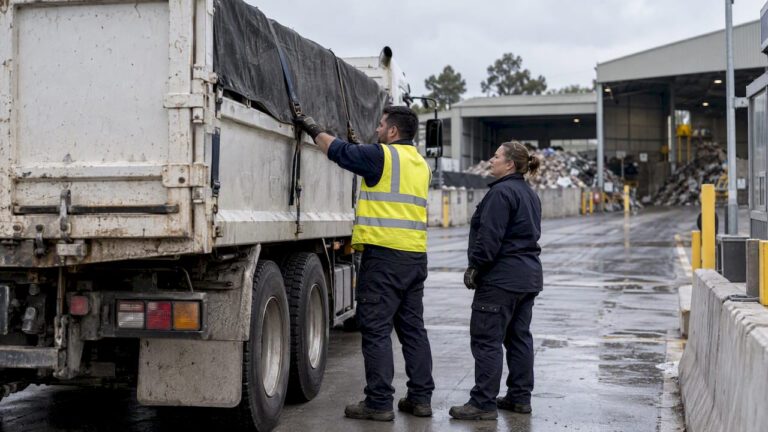
Handing waste to a contractor does not end your responsibility. Under NSW law, owners and managers cannot use lack of knowledge as a defence, and everyone involved must make sure waste reaches a lawfully operating facility. The EPA’s transport rules add that loads must be covered during transport, except loads of only tyres or scrap metal, and vehicles must prevent spills. Taking waste to an unlawful receival site is an offence with heavy penalties.
- Ask for disposal dockets that show where each load was received.
- Check the transporter’s licence on the EPA public register.
- Confirm whether your waste is a controlled type that needs tracking or an environment protection licence.
- Write a lawful-receival clause into your contract so the evidence arrives automatically.
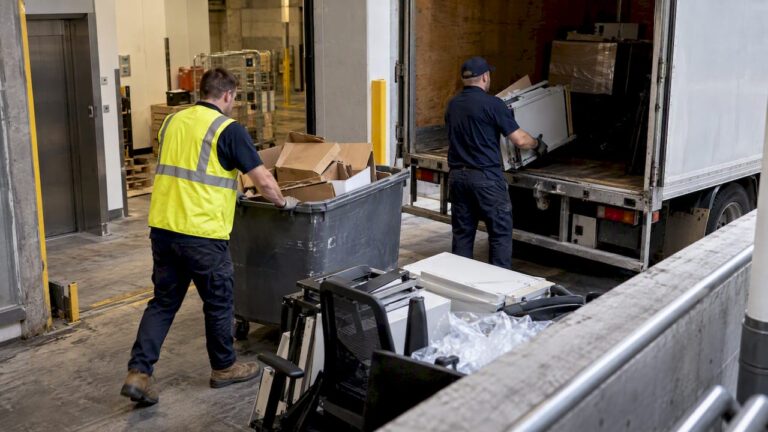
For electronics, a specialist recycler keeps the paper trail tidy. Computer recycling and secure IT disposal covers data destruction and certification for business equipment.
How do you choose a commercial waste provider in Sydney?
Call at least two providers and test them against the same questions. Check licence and insurance, whether they can handle your main waste stream (food organics, construction and demolition, or e-waste), whether they can show evidence of lawful receival, and whether their collection times suit your storage setup. A carbon-neutral option is a useful extra if your tenants or clients ask about sustainability.
| Provider | Core services | Carbon-neutral option |
|---|---|---|
| Sydney City Rubbish Removal | Commercial waste removal, construction waste disposal, strip-outs | Yes, opt-in |
We offer commercial waste removal across Sydney, along with construction waste disposal and building strip-outs. Our carbon-neutral option is opt-in, and we provide quotes for our services.
Questions to ask any contractor before you sign:
- Can you show your licence, and your EPL if your waste type needs one?
- Will you supply disposal dockets for every collection?
- Where does my waste go, and can you name the facility?
- Can you collect from my internal storage area on my schedule?
- Can you separate food organics when my FOGO phase starts?
Why do these rules exist, and what do they cost if you ignore them?
The EPA points to landfill pressure in Greater Sydney as a driver behind mandatory food waste separation, and notes that acting early reduces operating costs as landfill levies rise.
- Unlawful disposal, or sending waste to a non-approved facility, carries heavy penalties for the waste owner as well as the transporter.
- Bins left out or unlabelled can be impounded by council.
- Separating food waste early and checking your contractor properly keeps both fines and rising disposal costs away.
Waste owners remain responsible for where their waste ends up, so documentation is your cheapest protection.
How can we help you meet these rules?
Our services map directly onto the checklist above, and we coordinate with building management so storage and collection times meet the City of Sydney’s rules.
- Scheduled commercial waste collections, with disposal documentation
- Construction waste disposal and office strip-outs
- Handling of hazardous materials and electronics
- A carbon-neutral opt-in for corporate clients
- Fast electronic quoting
Your next step is simple: request a quote for commercial waste removal, and ask us for a sample disposal docket before you book.
FAQ
What comes under commercial waste?
Commercial waste is any waste produced by a business rather than a household. It includes general rubbish, paper and cardboard, food waste, packaging, and construction or office fit-out debris. Because council rates do not cover it, you must arrange a private collection.
What are the new rules for bins in 2026?
From 1 July 2026, NSW businesses that handle food must begin separating food waste from general waste. The first phase applies at 3,960L of weekly residual capacity, with lower thresholds following in 2028 and 2030.
What are the new bin laws in NSW?
The main change is the staged food waste requirement from the NSW EPA, which affects businesses based on their weekly general waste capacity. Councils such as the City of Sydney also set rules on labelling, bin size and placement in public places.
Do I need approval to put bins in a public place?
Yes, generally you need council approval, and placing waste in a public space without it is illegal. Keep bins inside your premises when they are not out for collection, and follow the collection time-zone rules.